




- Beverages
- Frozen Cocktails Market
Frozen Cocktails Market Size, Share, and Growth Forecast, 2026 - 2033
Frozen Cocktails Market by Product Type (Cosmopolitan, Martini, Mojito, Margarita, Strawberry Daiquiri), Flavor (Fruit Flavor, Spices Flavor, Herbs Flavor), Distribution Channel (Specialty Stores, HORECA, Liquor Stores), and Regional Analysis for 2026 - 2033

Frozen Cocktails Market Size and Trends Analysis
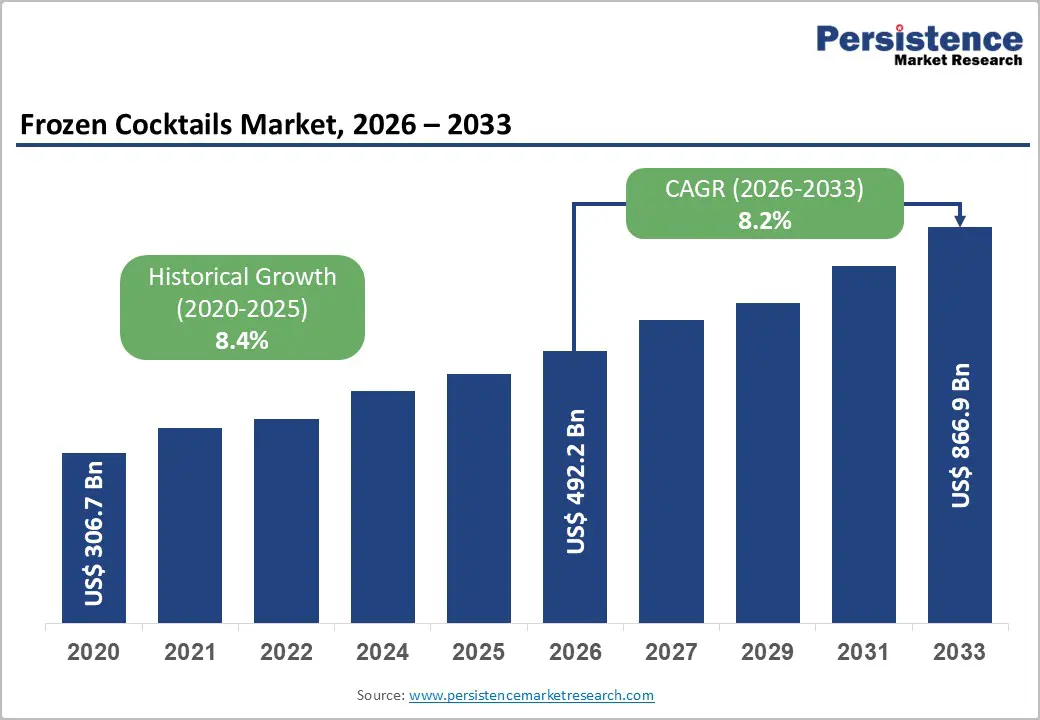
The global frozen cocktails market size is likely to be valued at US$492.2 billion in 2026 and is expected to reach US$866.9 billion by 2033, growing at a CAGR of 8.4% during the forecast period from 2026 to 2033, driven by evolving consumer preferences toward convenient, ready to drink (RTD) alcoholic beverages and continuous innovation in product formats and flavor profiles. The market benefits from the growing appeal of easy-to-serve, bar-quality cocktails for at-home consumption, social gatherings, and outdoor occasions, aligning with increasingly busy lifestyles and the demand for hassle-free indulgence.
Industry analysis indicates that off-trade distribution channels, including retail stores and e-commerce platforms, dominate the market due to wider accessibility and increasing consumer inclination toward home-based consumption. Increasing flavor diversification, such as fruit- and herb-based blends, and the introduction of low-calorie and premium variants that appeal to health-conscious consumers. The market is rising due to rapid urbanization, rising disposable incomes, and a growing young population open to experimenting with flavored alcoholic beverages.
Key Industry Highlights:
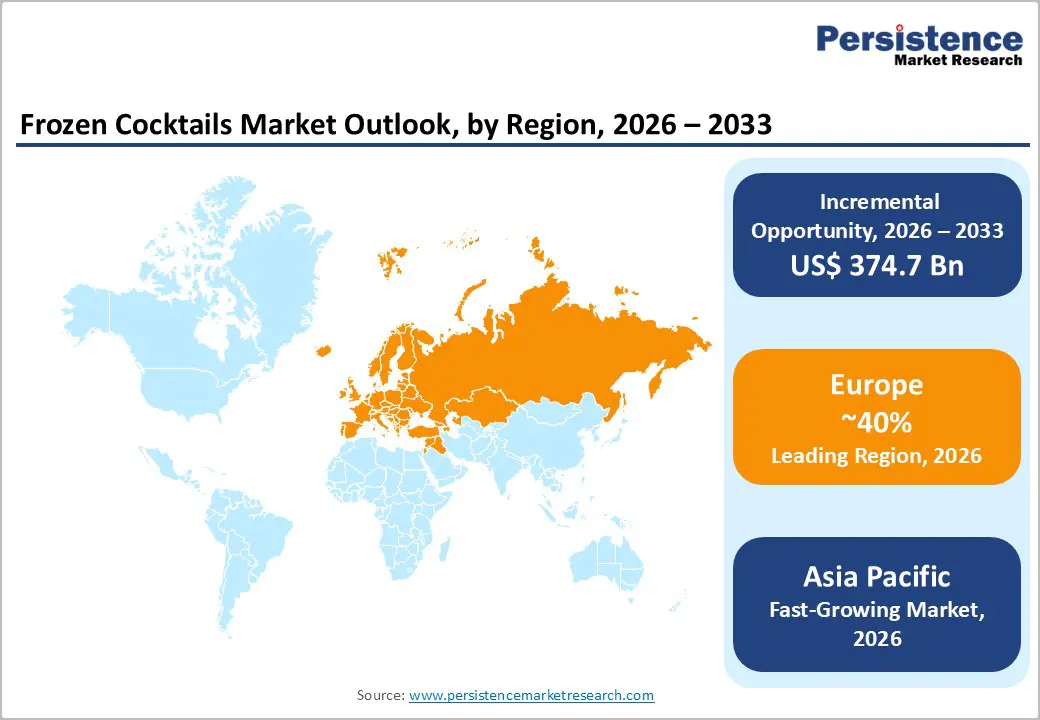
- Leading Region: Europe is anticipated to be the leading region, accounting for a market share of 40% in 2026, driven by premium demand, tourism, and regulatory harmonization across key countries such as the U.K., Germany, France, and Spain.
- Fastest-growing Region: Asia Pacific is likely to be the fastest-growing region, supported by rapid urbanization, young demographics, and expanding demand across China, Japan, India, and ASEAN countries.
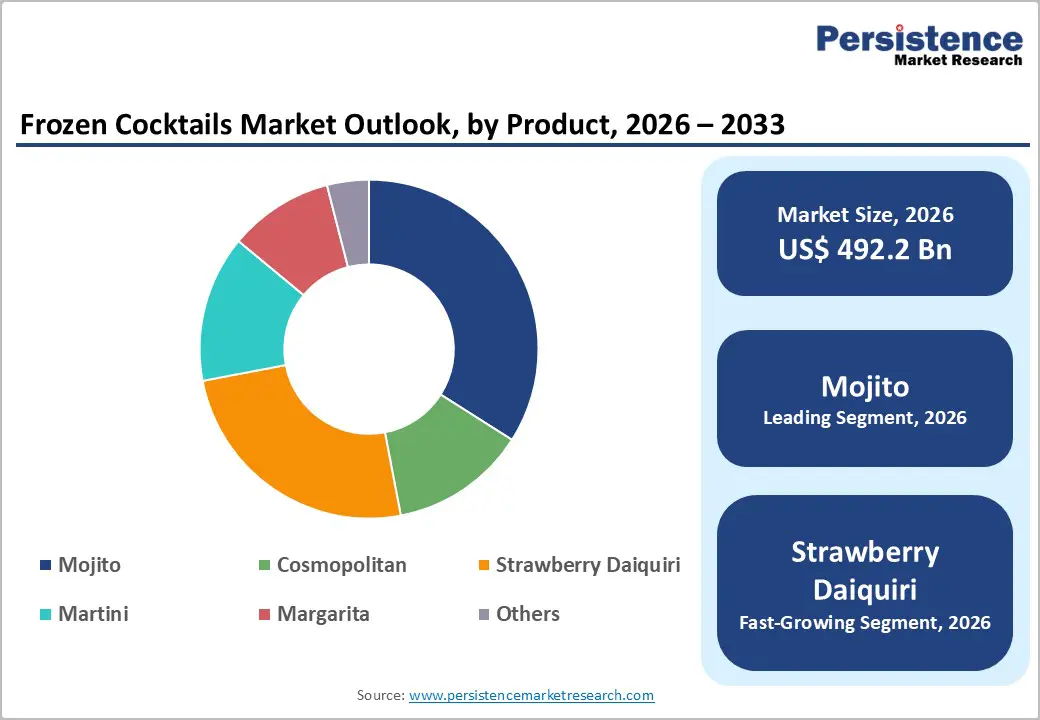
- Leading Product Type: Mojito is projected to be the leading product type in 2026, accounting for 35% of revenue, driven by its refreshing appeal and versatility.
- Leading Flavor Type: Fruit is anticipated to be the leading flavor type, accounting for over 45% of the revenue share in 2026, supported by strong consumer preference for natural and refreshing profiles.
| Key Insights | Details |
|---|---|
|
Frozen Cocktails Market Size (2026E) |
US$492.2 Bn |
|
Market Value Forecast (2033F) |
US$866.9 Bn |
|
Projected Growth (CAGR 2026 to 2033) |
8.4% |
|
Historical Market Growth (CAGR 2020 to 2025) |
8.2% |

Market Factors - Driver, Restraint, and Opportunity Analysis
Driver Analysis- Increasing Demand for Convenient RTD Beverages
The frozen cocktails market is strongly supported by growing consumer preference for convenient, ready-to-drink formats that eliminate the need for preparation and mixing. Busy lifestyles, rising urbanization, and increased at-home consumption are driving consumers to opt for premixed frozen cocktails that offer consistency and ease. These products align well with social occasions, outdoor events, and casual gatherings, where convenience is a key factor. The expansion of retail and e-commerce distribution channels enhances product accessibility, allowing consumers to easily purchase and store frozen cocktails for immediate or future use without requiring specialized bartending skills or ingredients.
The shift in consumption patterns toward experiential drinking without complexity has increased the appeal of frozen cocktails across various demographics, especially millennials and younger consumers. Manufacturers are responding by introducing portable packaging formats such as pouches and single-serve options that cater to on-the-go consumption. The integration of convenience with premium taste experiences allows brands to capture both casual and sophisticated drinkers. This trend is also reinforced by the growing popularity of house parties and informal socializing, where consumers seek high-quality beverages with minimal effort, thereby sustaining demand for frozen RTD cocktail solutions.
Premiumization and Flavor Innovation Trends
Premiumization is a significant growth driver in the frozen cocktails market, as consumers increasingly seek high-quality, bar-like experiences at home. Brands are focusing on superior ingredients, authentic recipes, and unique flavor combinations to differentiate their offerings in a competitive landscape. The introduction of organic, natural, and craft-style frozen cocktails has attracted consumers willing to pay more for enhanced taste and perceived quality. This trend is particularly evident in developed markets, where consumers value artisanal and premium beverage experiences, driving companies to continuously upgrade their product portfolios.
Flavor innovation plays a crucial role in maintaining consumer interest and expanding the market base. Companies are experimenting with exotic fruits, botanical infusions, and seasonal variations to cater to evolving taste preferences. Limited-edition launches and region-specific flavors enhance consumer engagement and brand loyalty. Premiumization and innovation enhance product appeal while helping manufacturers achieve higher profit margins. As consumers increasingly prioritize unique and personalized experiences, the frozen cocktails market continues to evolve with creative flavor profiles and upscale positioning strategies.
Restraint Analysis - Shift toward Non-Alcoholic Beverages
The growing consumer preference for non-alcoholic and low-alcohol beverages poses a notable challenge for the frozen cocktails market. Increasing health awareness, fitness trends, and concerns regarding alcohol consumption are encouraging consumers to reduce their intake of alcoholic drinks. This shift is particularly prominent among younger demographics who are adopting mindful drinking habits and exploring alternative beverage options such as mocktails, flavored waters, and functional drinks.
Social and cultural changes are influencing drinking behavior, with consumers seeking healthier and more responsible consumption patterns. Regulatory pressures and public health campaigns promoting reduced alcohol intake also contribute to this trend. Manufacturers in the frozen cocktails market must adapt by offering low-alcohol or alcohol-free variants to retain consumers who are transitioning away from conventional alcoholic beverages. Failure to address these evolving preferences could limit market growth, making it essential for companies to diversify their product offerings and align with the broader movement toward healthier beverage consumption.
Lower Acceptance of Premium Pricing in Developing Markets
The acceptance of premium-priced frozen cocktails remains limited in several developing markets due to price sensitivity and lower disposable incomes. Consumers in these regions often prioritize affordability over premium experiences, which restricts the penetration of high-end frozen cocktail products. While urban areas may exhibit some demand for premium offerings, a significant portion of the population continues to favor budget-friendly alcoholic beverages.
The lack of widespread awareness of premium frozen cocktails affects consumers' willingness to pay higher prices. Limited exposure to international brands and lower emphasis on premiumization trends in certain regions hinder market adoption. Distribution challenges and higher logistics costs associated with maintaining frozen products also contribute to elevated retail prices. To overcome these constraints, companies need to adopt localized pricing strategies, introduce smaller pack sizes, and focus on cost-effective production methods to improve accessibility and drive growth in developing markets.
Opportunity Analysis - Low/No-Alcohol and Health-Focused Variants
The emergence of low- and no-alcohol frozen cocktails presents a significant opportunity for market expansion, aligning with the shift toward healthier lifestyles. Consumers are increasingly seeking beverages that deliver the same taste and experience as traditional cocktails, but with lower alcohol content. This trend is driven by health-conscious individuals, fitness enthusiasts, and mindful drinkers. By introducing alcohol-free or low-calorie frozen cocktail options, manufacturers can attract a broader consumer base, including those who previously avoided alcoholic beverages.
The incorporation of natural ingredients, organic components, and functional benefits enhances product appeal. Brands are focusing on clean-label formulations and reduced sugar content to meet evolving consumer expectations. Developing innovative recipes that maintain flavor authenticity while offering health benefits can significantly boost market growth. This opportunity enables companies to position themselves as forward-thinking and responsive to consumer needs, ultimately driving product diversification and long-term sustainability in the frozen cocktails market.
Innovation in Flavors and Packaging Formats
Continuous innovation in flavors and packaging formats is creating new growth avenues in the frozen cocktails market. Manufacturers are exploring diverse flavor profiles, including tropical fruits, botanical blends, and fusion combinations, to cater to changing consumer tastes. The introduction of visually appealing and Instagram-worthy products enhances consumer engagement, particularly among younger audiences. Seasonal and limited-edition flavors stimulate demand by offering novelty and exclusivity, encouraging repeat purchases and brand loyalty.
Packaging innovation also plays a crucial role in expanding market reach and improving convenience. Formats such as resealable pouches, single-serve packs, and portable containers are gaining popularity due to their ease of use and storage. Sustainable packaging solutions are also becoming a priority as consumers' environmental concerns grow. By combining flavor creativity with functional and eco-friendly packaging, companies can strengthen their competitive position and tap into emerging trends, ultimately driving sustained growth in the frozen cocktails market.
Category-wise Analysis
Product Type Insights
Mojito is expected to lead the frozen cocktails market, accounting for approximately 35% of revenue in 2026, driven by its refreshing taste profile, light rum base, and strong adaptability across different consumption occasions. Its popularity stems from its balance of mint, citrus, and sweetness, making it widely appealing across both on-trade and off-trade channels. For example, Bacardi Mojito is a ready-to-serve cocktail, which highlights how established brands leverage the mojito format to deliver consistent taste and convenience, reinforcing its leadership position in the category.
Strawberry daiquiris are likely to be the fastest-growing segment, supported by increasing consumer demand for fruit-forward, visually appealing, and indulgent cocktail options. Its vibrant color, sweet flavor profile, and strong association with tropical experiences make it particularly popular among younger demographics and social media-driven consumers. For example, Daily’s frozen strawberry daiquiri pouch, which demonstrates how brands are capitalizing on convenience and flavor appeal to attract a broader consumer base and drive rapid adoption in this segment.
Flavor Type Insights
Fruit flavor is projected to lead the market, capturing around 45% of the revenue share in 2026, supported by strong consumer preference for refreshing, naturally inspired, and easy-to-consume taste profiles. These flavors align with the growing demand for beverages that offer a lighter and more enjoyable drinking experience compared to traditional strong spirits. Fruit flavors are often perceived as more approachable and suitable for casual consumption occasions. For example, Smirnoff Frozen Fruit Punch Cocktail, which reflects how fruit-based offerings continue to dominate through mass appeal and consistent product innovation.
Herbs' flavor is likely to be the fastest-growing, driven by increasing demand for premium, sophisticated, and wellness-oriented cocktail experiences. Consumers are showing greater interest in botanical ingredients such as mint, basil, rosemary, and lavender, which provide unique taste profiles and align with the trend toward natural and functional beverages. For example, Ketel One Botanical frozen spritz illustrates how companies are leveraging botanical ingredients to create premium frozen cocktails that appeal to evolving consumer preferences.
Regional Insights
North America Frozen Cocktails Market Trends
North America is likely to be a significant market for frozen cocktails, driven by high consumer acceptance of ready-to-drink beverages and a well-established culture of convenience. Increasing demand for premium, bar-quality cocktails at home is encouraging brands to innovate with high-quality ingredients and diverse flavor profiles. The region also benefits from advanced retail infrastructure, including supermarkets, liquor chains, and e-commerce platforms that ensure product accessibility.
Consumer willingness to experiment with new flavors and formats. Health-conscious trends are also influencing product development, with low-calorie and reduced-sugar variants gaining traction. Companies are focusing on innovative packaging, such as resealable pouches and eco-friendly materials, to align with sustainability expectations. For example, Constellation Brands Inc., which leverages its strong distribution network and brand portfolio to expand frozen cocktail offerings and cater to evolving consumer preferences across the region.
Europe Frozen Cocktails Market Trends
Europe is expected to be the leading region, accounting for 40% market share in 2026, driven by a well-established cocktail culture and high tourism activity. Consumers in the region increasingly prefer premium and artisanal beverage options that offer authentic taste experiences. The growth of outdoor dining, festivals, and travel-related consumption significantly increases demand for frozen cocktails. The region benefits from regulatory harmonization across countries, which facilitates smoother cross-border trade and product availability, enabling manufacturers to expand their reach efficiently across multiple markets.
Sustainability and premiumization are the key trends shaping the European market, with consumers showing a strong preference for eco-friendly packaging and natural ingredients. Brands are increasingly focusing on clean-label products and innovative flavor combinations to attract sophisticated consumers. For example, Manchester Drinks has expanded its frozen cocktail portfolio by introducing innovative pouch-based formats tailored to evolving consumer preferences.
Asia Pacific Frozen Cocktails Market Trends
The Asia Pacific region is likely to be the fastest-growing, driven by rapid urbanization, rising disposable incomes, and a growing young population. Consumers in countries such as China and India are becoming more open to experimenting with Western-style alcoholic beverages, including frozen cocktails. The expansion of organized retail and e-commerce platforms is improving product accessibility, while rising tourism in Southeast Asia is increasing demand.
The region also benefits from strong manufacturing capabilities, enabling cost-effective production and scalability for frozen cocktail products. Companies are focusing on flavor localization, introducing tropical and region-specific variants to cater to diverse consumer preferences. Innovative marketing strategies targeting younger demographics and urban consumers are accelerating growth. For example, The Absolut Group, which is expanding its presence in Asia Pacific through premium offerings and strategic distribution initiatives, aligns with the region’s increasing demand for high-quality and innovative alcoholic beverages.
Competitive Landscape
The global frozen cocktails market exhibits a moderately fragmented structure, driven by the presence of both established multinational beverage companies and emerging regional players focusing on innovation and niche positioning. The market is characterized by a mix of large-scale manufacturers leveraging strong distribution networks and smaller agile brands introducing unique flavors and packaging formats to capture consumer interest. Increasing entry of craft producers and startups has intensified competition, while moderate entry barriers such as regulatory compliance, cold-chain logistics, and brand recognition continue to shape competitive dynamics.
With key leaders including Constellation Brands Inc., Bacardi Limited, Diageo plc, Manchester Drinks, and Harvest Hill Beverage Company, the market reflects a balance between global dominance and regional specialization. These players compete through continuous product innovation, premiumization strategies, and expansion of distribution channels across both on-trade and off-trade segments.
Key Industry Developments:
- In March 2026, Tilray Brands partnered with The Magnum Ice Cream Company to launch a new range of “Popsicle Hard” ready-to-drink alcoholic beverages inspired by classic Popsicle flavors, targeting adult consumers with nostalgic taste profiles. The product line includes flavors such as cherry, orange, and grape, and is being rolled out across major retail channels in the U.S.
- In June 2025, Chili's Grill & Bar launched a new lineup of premium PATRÓN-based frozen margaritas, including innovative variants such as Flamingo Freeze and Arctic Drift, focusing on high-quality ingredients and flavor customization to enhance consumer experience and meet rising demand for premium frozen cocktails.
Companies Covered in Frozen Cocktails Market
- Manchester Drinks
- Harvest Hill Beverage Company
- LIC Craft Cocktails
- SMART ICE TRADING B.V
- Snobar Cocktails
- Constellation Brands Inc.
- J Marr Group
- The Absolut Group
- Arbor Mist Winery
- NICE Drinks
Frequently Asked Questions
The global frozen cocktails market is projected to reach US$492.2 billion in 2026.
Rising consumer demand for convenient, ready-to-drink alcoholic beverages, along with increasing premiumization and flavor innovation, drives the frozen cocktails market.
The frozen cocktails market is expected to grow at a CAGR of 8.4% from 2026 to 2033.
Growth opportunities lie in low/no-alcohol variants, innovative flavors, and advanced packaging formats catering to evolving consumer preferences.
Manchester Drinks, Harvest Hill Beverage Company, LIC Craft Cocktails, and Constellation Brands Inc. are the leading players.


