




- Medical Devices
- Diabetic Socks Market
Diabetic Socks Market Size, Share, Trends, Growth, and Regional Forecast, 2026 to 2033
Diabetic Socks Market by Product Type (Regular socks, Smart socks), by Material Type (Polyester, Cotton, Nylon, Spandex, Lycra, Others), by Distribution Channel, and Regional Analysis from 2026 to 2033

Diabetic Socks Market Share and Trends Analysis
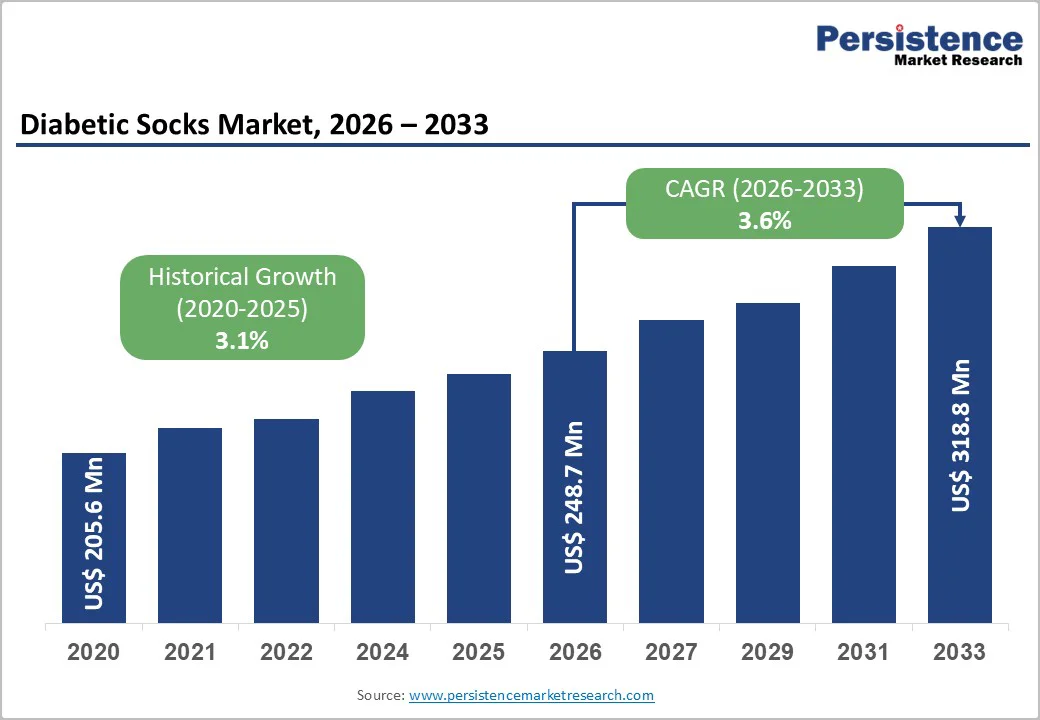
The global diabetic socks market size is estimated to grow from US$248.7 million in 2026 to US$318.8 million by 2033, growing at a CAGR of 3.6% during the forecast period from 2026 to 2033.
The market is gaining momentum as foot care becomes a priority for the rising global diabetic population. These specialized socks are designed with seamless construction, moisture-wicking fabrics, non-binding cuffs, and cushioning to prevent blisters, ulcers, and circulation issues. Growing awareness of diabetic foot complications, along with the increase in elderly and obesity-associated diabetes cases, is boosting product adoption.
E-commerce, hospital pharmacies, and podiatric recommendations are widening access. Innovation, such as antimicrobial yarns, silver-infused textiles, and smart sensor-based socks, is expanding value offerings. As preventive care becomes more affordable and essential, diabetic socks are emerging as a mainstream medical-wear category.
Key Industry Highlights:
- The growing global burden of diabetes is driving consistent demand for protective foot-care products. Diabetic socks are increasingly recommended to prevent ulcers, blisters, and infections, especially among elderly and neuropathy patients.
- Patients and caregivers are now prioritizing preventive healthcare rather than treating complications after onset.
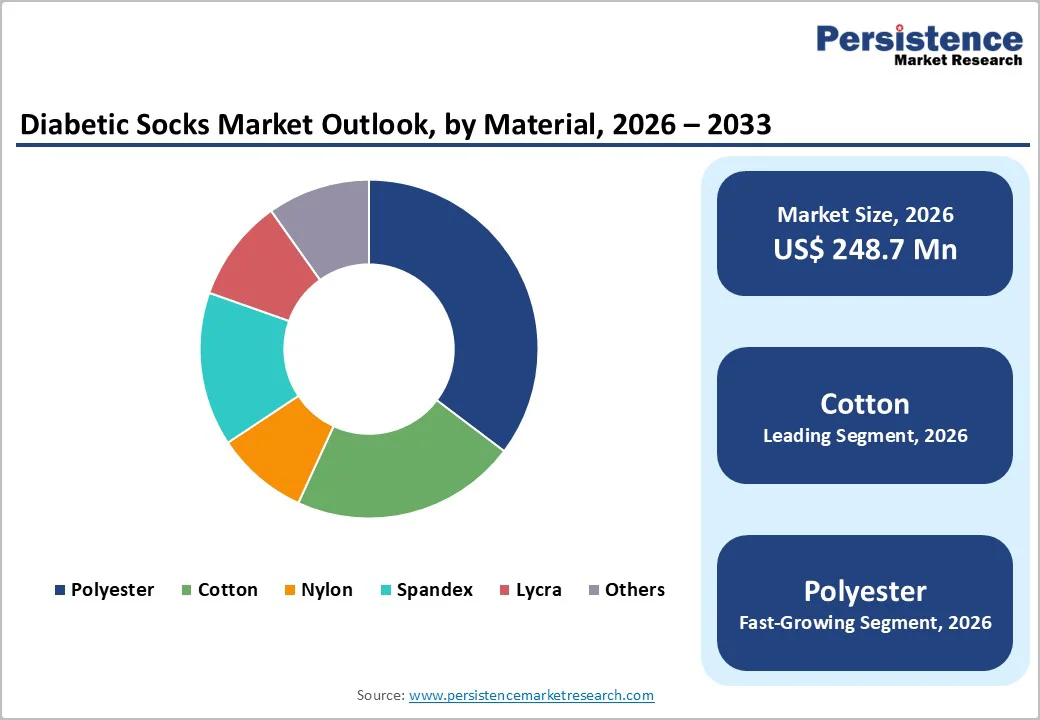
- Leading Material: Cotton dominates because it offers high breathability, moisture absorption, softness, and comfort for sensitive skin, which are essential for preventing blisters, irritation, and infections in diabetic patients.
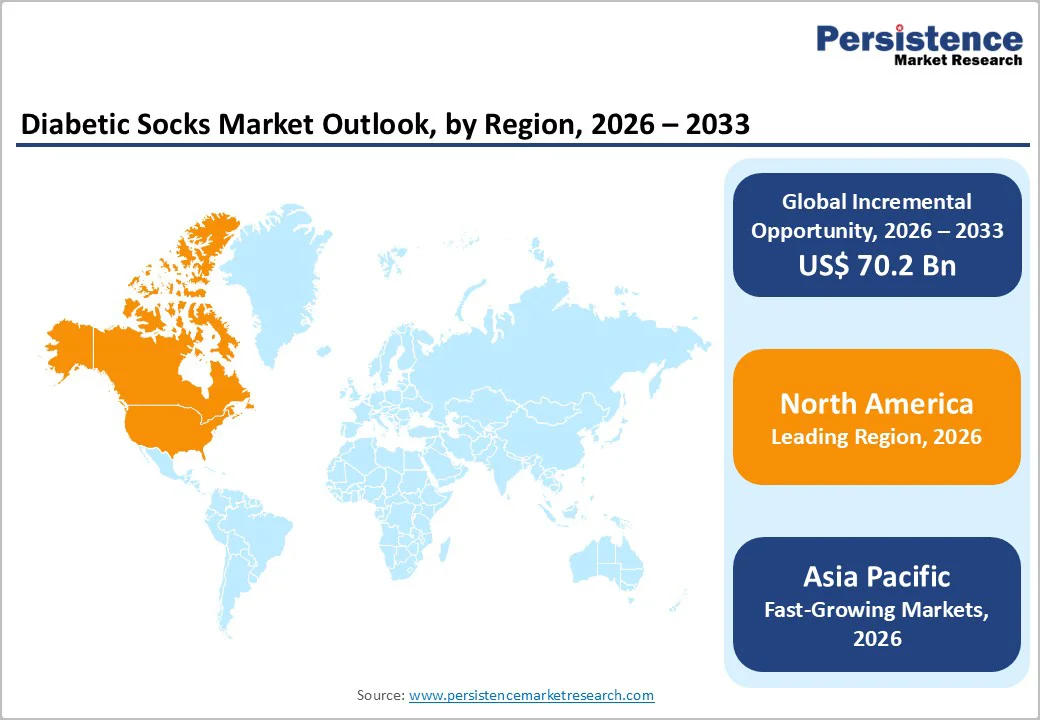
- Leading Region: North America accounts for the largest market share due to a high prevalence of diabetes, especially among elderly populations.
| Key Insights | Details |
|---|---|
| Diabetic Socks Market Size (2026E) | US$248.7 Mn |
| Market Value Forecast (2033F) | US$318.8 Mn |
| Projected Growth (CAGR 2026 to 2033) | 3.6% |
| Historical Market Growth (CAGR 2020 to 2024) | 3.1% |
Market Dynamics
Driver - Rising Incidences of Neuropathy
Rising neuropathy incidence is emerging as one of the most powerful demand catalysts for diabetic socks worldwide. Peripheral neuropathy reduces sensation in the feet, making patients unaware of small cuts, pressure points, and temperature changes that can quickly develop into ulcers or serious infections. As more diabetics experience numbness, nerve pain, burning, and balance issues, protective foot-care products are becoming essential rather than optional.
Diabetic socks with seamless interiors, cushioned soles, and non-elastic binding help prevent skin breakdown, reduce shear forces, and improve micro-circulation during daily walking. Healthcare professionals are increasingly emphasizing these socks as a first line of defense to avoid foot complications and amputations, driving consistent adoption across both elderly and newly diagnosed patients.
Restraints - Proliferation of Counterfeit and Low-Quality Products
The proliferation of counterfeit and low-quality diabetic socks is one of the most damaging restraints for the market. Many unregulated manufacturers sell ordinary or poor-grade socks falsely labeled as “diabetic,” using low-cost synthetic materials that lack breathability, cushioning, moisture-wicking, or seamless construction.
These products not only fail to protect against pressure points and ulcers but can also worsen foot conditions by causing sweating, friction, irritation, fungal growth, or allergic reactions. As a result, many first-time users, especially in price-sensitive regions, lose trust in the category and hesitate to repurchase even genuine therapeutic socks.
This dilution of customer confidence disrupts brand loyalty, weakens pricing power for authentic players, and slows the adoption of clinically effective diabetic foot-care solutions.
Opportunity - Emergence of Smart ulcer-detection socks
Smart ulcer-detection socks represent one of the most transformative opportunities in diabetic foot-care innovation. By embedding micro-sensors into the fabric, these socks continuously track temperature variations, perspiration levels, and pressure points that are early indicators of tissue damage and ulcer formation. Data can be transmitted to mobile apps or clinician dashboards, enabling timely intervention before wounds develop.
This preventive, technology-driven approach can significantly reduce hospitalization costs, amputations, and caregiver burden. As telehealth adoption rises and AI-based remote monitoring becomes mainstream, smart socks can evolve into a core component of home-based diabetic foot-care management, unlocking strong demand from high-risk patients worldwide.
Category-wise Analysis
By Product Type Insights
Regular diabetic socks lead the market because they offer an affordable and highly accessible solution for everyday foot protection, making them suitable for the vast majority of diabetic patients. Their seamless construction, soft cushioning, moisture-wicking fabrics, and non-binding fit effectively minimize friction, blisters, and pressure-related injuries without requiring digital technology.
They are widely recommended by physicians, podiatrists, and diabetes clinics as a first-line preventive care product. Additionally, regular socks are available across hospital pharmacies, retail stores, and e-commerce platforms in various price ranges, driving large-volume adoption. In contrast, smart socks remain a premium niche due to higher cost and limited awareness.
By Material Insights
Cotton is the leading material segment in the diabetic socks market because it provides superior comfort, breathability, and moisture absorption-features essential for preventing friction, blisters, and infections in diabetic patients. Its soft texture reduces skin irritation and supports long hours of wear, making it ideal for sensitive and neuropathic feet.
Cotton also regulates temperature effectively, minimizing sweating and fungal risk. Manufacturers prefer cotton due to its versatility, ease of blending with antimicrobial and elastic fibers, and cost-effectiveness for mass production. Strong consumer preference for natural, skin-friendly fabrics further reinforces cotton’s dominant position compared to synthetic alternatives.
Region-wise Insights
North America Diabetic Socks Market Trends
North America is witnessing strong growth in the diabetic socks market driven by high diabetes prevalence, increasing awareness of diabetic foot complications, and routine clinical recommendations for preventive foot-care. Consumers are shifting toward premium socks with seamless design, cushioning, and antimicrobial properties to avoid ulcers and infections.
Smart diabetic socks with temperature and pressure sensors are gaining early adoption among high-risk patients. E-commerce and subscription-based foot-care plans are expanding recurring purchases, while hospitals and podiatry centers remain major prescription channels. Fashion-oriented designs and athletic diabetic socks are also trending, especially among younger and active diabetic populations across the U.S. and Canada.
Asia Pacific Diabetic Socks Market Trends
The Asia Pacific region is emerging as a high-growth market for diabetic socks due to the rapidly increasing diabetic population, rising obesity rates, and greater awareness of preventive foot-care. Affordability and availability through pharmacies, medical stores, and online platforms are accelerating adoption across India, China, Japan, and Southeast Asia.
Demand is shifting from basic cotton socks to cushioned, antimicrobial, and seamless variants, supported by local textile innovation. Partnerships between hospitals and manufacturers, along with diabetic screening camps, are boosting product visibility. Growing middle-class spending and expanding digital retail are further positioning Asia Pacific as a key future growth hotspot in this segment.
Competitive Landscape
The diabetic socks market is moderately fragmented, with competition driven by product innovation, pricing, and distribution reach. Established medical textile brands and orthopedic footwear companies dominate through strong clinical endorsements, hospital partnerships, and wide pharmacy networks.
New entrants and D2C brands are intensifying competition by offering fashionable designs, subscription models, and online promotions. Manufacturers are differentiating products with antimicrobial fibers, bamboo and copper blends, gel cushioning, and seamless knitting to gain share. Smart sensor-enabled diabetic socks are emerging as a premium niche backed by digital-health startups and tech collaborations.
Key Industry Developments:
- In June 2025, ZenToes, a leader in effective, affordable, and holistic foot care solutions, announced the launch of its latest innovation next-generation Compression Socks which became available at Target, Walmart, and on Amazon.
Companies Covered in Diabetic Socks Market
- Orthofeet Inc.
- SIGVARIS
- SIMCAN ENTERPRISES INC.
- 3M
- Veba Inc.
- Siren Care
- Intersocks S.R.L.
- THORLO, Inc
- Cupron
- Creswell Sock Mills
- Others
Frequently Asked Questions
The global diabetic socks market size is projected to be valued at US$248.7 Mn in 2026.
The Global Diabetic Socks Market is driven by the rising prevalence of diabetes and increasing awareness of diabetic foot complications such as ulcers, infections, and neuropathy.
The global market is poised to witness a CAGR of 3.6% between 2026 and 2033.
Pediatric and adolescent diabetic socks, addressing an underserved segment as diabetes rises among younger populations.
Orthofeet Inc., SIGVARIS, 3M, SIMCAN ENTERPRISES INC., and others.


