




- Medical Devices
- Aesthetic Lasers Market
Aesthetic Lasers Market Size, Share, and Growth Forecast, 2026 - 2033
Aesthetic Lasers Market by Product Type (Ablative Lasers, Non-Ablative Lasers, Others), Application (Hair Removal, Skin Rejuvenation, Others), End-user (Dermatology Clinics, Medical Spas, Cosmetic Surgery Centers, Hospitals), and Regional Analysis for 2026 - 2033

Aesthetic Lasers Market Share and Trends Analysis
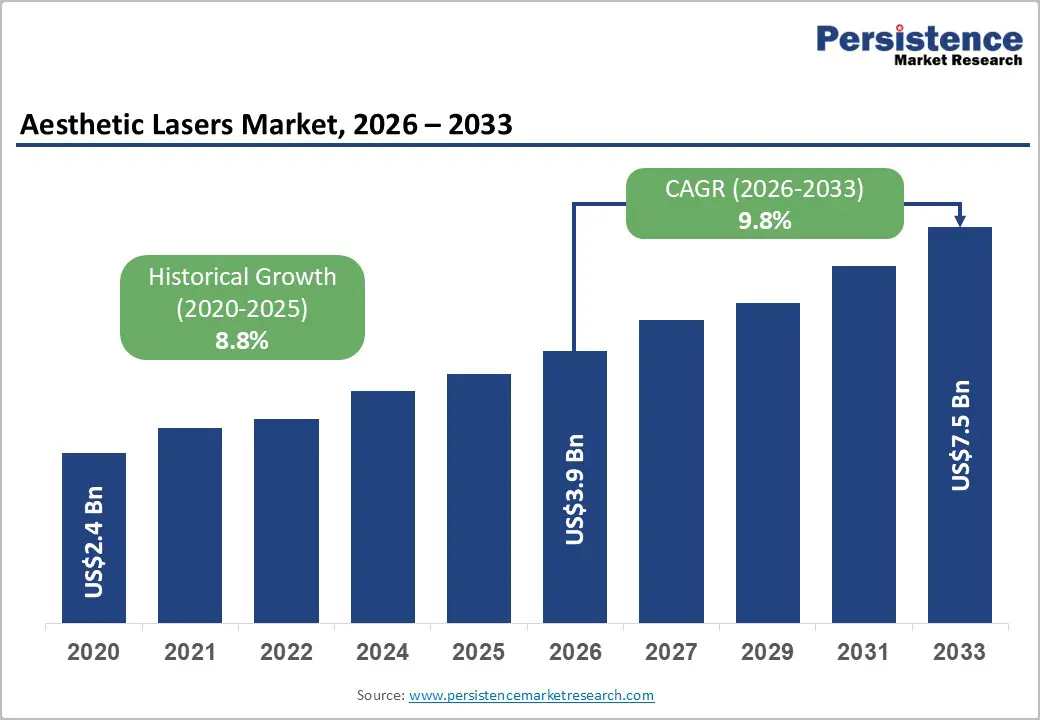
The global aesthetic lasers market size is likely to be valued at US$3.9 billion in 2026 and is projected to reach US$7.5 billion by 2033, growing at a CAGR of 9.8% during the forecast period from 2026 to 2033, driven by rising demand for non-invasive aesthetic treatment solutions, increasing spending on cosmetic dermatology, and advancements in skin rejuvenation laser systems and laser hair removal devices.
Expanding medical spa networks, growing awareness of personalized treatments, and higher demand for acne scar, pigmentation, and tattoo removal procedures are supporting procedural growth. In addition, AI-enabled treatment customization and regulatory approvals for safer technologies are improving precision and clinical outcomes across the medical aesthetic devices market.
Key Industry Highlights:
- Dominant Treatment Trends: Rising demand for minimally invasive cosmetic procedures continues to accelerate the adoption of laser hair removal devices and skin rejuvenation laser systems, supported by increasing consumer spending on aesthetic dermatology and personalized treatments.
- Leading Product Type: Ablative lasers are expected to lead the market with approximately 29% revenue share in 2026, while the picosecond laser market is projected to register the fastest growth through 2033 due to rising demand for advanced tattoo and pigmentation removal procedures.
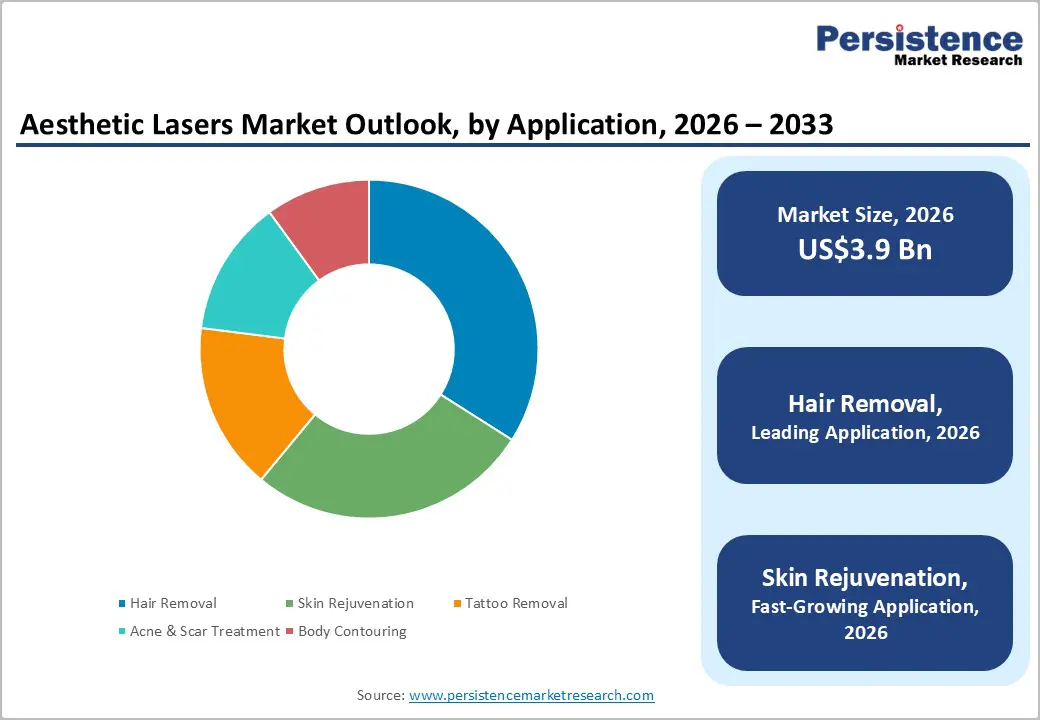
- Dominant Application Segment: Hair removal is anticipated to account for nearly 34% of market revenue in 2026, while skin rejuvenation is likely to witness the fastest expansion during 2026 - 2033, driven by increasing anti-aging and scar reduction treatments.
- Leading End-user: Dermatology clinics are projected to dominate with approximately 38% share in 2026, while medical spas are expected to emerge as the fastest-growing end-user segment due to expanding wellness-focused aesthetic services.
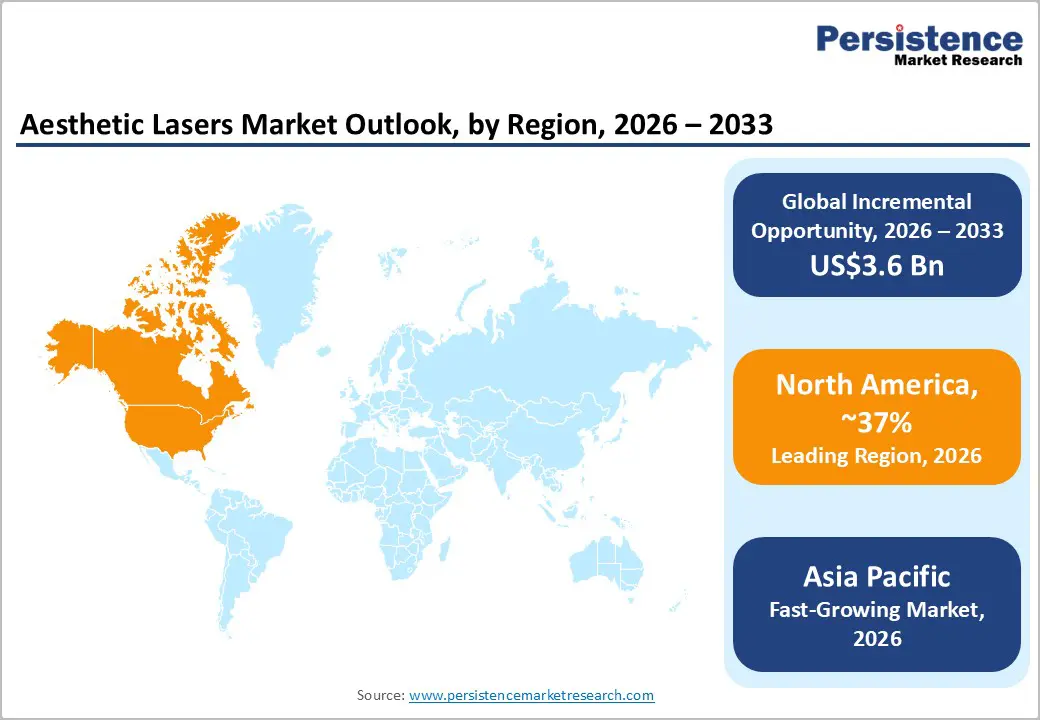
- Regional Leadership: North America is poised to maintain leadership with nearly 37% global market share in 2026, while Asia Pacific is expected to record the fastest growth through 2033, supported by rising medical tourism and expanding cosmetic dermatology infrastructure.
- Competitive Environment: Strategic developments focus on AI-integrated laser platforms, Asia Pacific expansion initiatives, and the next-generation fractional laser treatment market and picosecond technologies to improve treatment precision and operational efficiency.
DRO Analysis
Driver - Growing Demand for Minimally Invasive Cosmetic Procedures
The rising preference for minimally invasive cosmetic procedures continues to drive growth in the global cosmetic laser devices market. According to the International Society of Aesthetic Plastic Surgery (ISAPS), non-surgical aesthetic procedures surpassed 19 million globally, with laser-based treatments widely used for skin resurfacing, hair reduction, and pigmentation correction. Demand is increasing among consumers aged 25-45 due to shorter recovery periods, lower procedural risks, and improved treatment outcomes compared with surgical alternatives.
Key market trends supporting growth include rising disposable incomes, increasing urbanization, strong social media influence on appearance-focused spending, and growing acceptance of preventive aesthetic care. Advancements in fractional laser treatment market technologies and picosecond systems are improving treatment precision while reducing downtime. In addition, medical spas and dermatology clinics are increasingly investing in multi-functional laser platforms capable of performing multiple aesthetic procedures, supporting higher adoption across the non-invasive aesthetic treatment market.
Restraint - High Equipment Costs and Regulatory Compliance Challenges
High capital investment requirements for advanced dermatology laser equipment continue to limit adoption, particularly among small clinics and independent aesthetic centers. Premium laser platforms can cost between US$ 70,000 and US$ 250,000 depending on treatment capabilities, while additional expenses related to maintenance, consumables, software upgrades, and practitioner training further increase operational costs.
Regulatory compliance also remains a key challenge in the medical aesthetic devices market. In the U.S., devices must meet stringent FDA approval standards, while European manufacturers face strict Medical Device Regulation (MDR) requirements covering safety and clinical evaluation. Lengthy approval timelines and evolving compliance standards increase commercialization costs and delay product launches. In addition, pricing pressure from low-cost regional manufacturers and inconsistent reimbursement structures may restrict profit margins, particularly in emerging markets.
Opportunity - Expansion of Medical Aesthetic Services in Emerging Economies
Emerging economies across Asia Pacific, Latin America, and the Middle East are creating strong growth opportunities for the global aesthetic lasers market. Rising middle-class populations, expanding medical tourism, and increasing investments in private dermatology infrastructure are driving demand for laser hair removal devices, pigmentation correction systems, and tattoo removal laser market technologies. Countries including India, Thailand, South Korea, Brazil, and the UAE are witnessing higher procedural volumes due to improving affordability and growing awareness of cosmetic dermatology.
The opportunity is particularly strong in tier-2 cities where medical spas and aesthetic clinics are expanding rapidly. Manufacturers are introducing compact and cost-efficient laser platforms tailored to emerging-market demand, while partnerships with aesthetic service providers are improving financing access for smaller clinics. In addition, AI-assisted treatment planning and combination therapy approaches are expected to further support adoption across the cosmetic laser devices market.
Category-wise Analysis
Product Type Insights
Ablative lasers are expected to lead the global aesthetic lasers market with nearly 29% share in 2026, driven by strong demand for skin resurfacing, scar reduction, wrinkle treatment, and pigmentation correction procedures. CO2 and Er:YAG systems continue to witness high adoption across dermatology clinics due to their precision and long-term clinical outcomes. Supporting this trend, Fotona strengthened its focus on advanced resurfacing and multi-application laser systems in 2025 to meet rising demand for premium anti-aging treatments.
The picosecond laser market is projected to record the fastest growth through 2033 as consumers increasingly prefer treatments with lower downtime and improved precision. Demand is rising for tattoo removal, melasma management, and pigmentation correction procedures using ultra-short pulse technologies. Reflecting this shift, Rejuva Fresh introduced an upgraded platform in 2025, integrating picosecond and fractional technologies for advanced resurfacing and tattoo removal applications.
Application Insights
Hair removal is projected to account for approximately 34% of market revenue in 2026, maintaining leadership within the laser hair removal devices segment. Rising demand for long-term hair reduction solutions, increasing male grooming trends, and wider availability of package-based treatments continue to support growth. In 2025, Candela Corporation expanded deployment of its GentleMax Pro Plus systems to improve treatment speed and compatibility across multiple skin types.
Skin rejuvenation is expected to witness the fastest growth during the forecast period, supported by rising demand for anti-aging, acne scar reduction, and pigmentation correction procedures. Consumers are increasingly adopting minimally invasive treatments using advanced skin rejuvenation laser systems and hybrid resurfacing technologies. In 2025, Candela’s Glac? treatment launch introduced new skin purification and rejuvenation solutions aligned with growing preventive skincare trends.
End-user Insights
Dermatology clinics are anticipated to dominate the market with nearly 38% share in 2026, supported by specialized physician expertise and access to advanced dermatology laser equipment. Patients continue to prefer certified clinics for complex resurfacing and pigmentation procedures due to higher treatment reliability and personalized care. In 2025, Fotona Face and Neck Laser Aesthetics expanded promotion of non-invasive collagen remodeling and resurfacing treatments across dermatology-focused practices.
Medical spas are projected to witness the fastest growth through 2033, as consumers increasingly seek convenient and wellness-focused aesthetic services. Growth is being supported by expanding franchise networks, portable laser systems, and rising demand for minimally invasive cosmetic procedures. Reflecting this trend, Ideal Image strengthened its laser treatment capabilities across its medspa network in 2025 through expanded deployment of advanced Candela systems.
Regional Analysis
North America Aesthetic Lasers Market Trends
North America is projected to account for nearly 37% of global market revenue in 2026, supported by strong adoption of minimally invasive cosmetic procedures and advanced aesthetic technologies. Rising demand for preventive anti-aging treatments, laser facials, and personalized skincare continues to strengthen the regional medical aesthetic devices market, particularly across expanding medical spa networks and specialty dermatology clinics.
U.S. Aesthetic Lasers Market Trends
The U.S. is expected to contribute approximately 72% of the North America market in 2026, driven by high consumer spending on skin rejuvenation and long-term aesthetic maintenance treatments. Trends such as “glass skin,” preventive aesthetic care, and combination laser therapies are gaining popularity among younger consumers. In 2025, the American Academy of Dermatology (AAD) highlighted growing adoption of AI-assisted skin analysis and multi-platform laser treatments, reflecting the market’s shift toward personalized cosmetic dermatology.
Canada Aesthetic Lasers Market Trends
Canada is projected to account for nearly 11% of the regional market in 2026, supported by increasing demand for medically supervised skincare and non-surgical anti-aging procedures. Consumers are increasingly adopting collagen-stimulating and pigmentation-correction laser treatments as part of long-term wellness routines. In 2025, Canadian dermatology organizations expanded certified laser safety and practitioner training initiatives, supporting wider adoption of advanced resurfacing technologies across clinics and medspas.
Europe Aesthetic Lasers Market Trends
Europe represents a mature yet steadily growing market, supported by rising demand for natural-looking cosmetic enhancements and preventive skincare treatments. Increasing adoption of hybrid resurfacing technologies, wellness-focused aesthetic services, and minimally invasive procedures continues to strengthen growth across the regional cosmetic laser devices market.
Germany Aesthetic Lasers Market Trends
Germany is expected to hold approximately 24% of the regional market in 2026, supported by advanced dermatology infrastructure and strong adoption of clinically validated aesthetic technologies. Consumers increasingly prefer physician-led resurfacing and scar management procedures focused on safety and long-term skin health. In 2025, dermatology innovation forums across Germany emphasized AI-integrated skin analysis and next-generation energy-based aesthetic technologies.
France Aesthetic Lasers Market Trends
France is projected to account for nearly 18% of the regional market in 2026, driven by strong consumer focus on luxury skincare, preventive anti-aging treatments, and subtle aesthetic enhancement. The popularity of “skin quality” procedures, including laser facials and collagen-stimulating therapies, continues to rise among urban consumers and wellness-focused clinics. In 2025, aesthetic and beauty events in Paris showcased increasing demand for combination laser therapies integrating resurfacing, pigmentation management, and regenerative skincare technologies.
Asia Pacific Aesthetic Lasers Market Trends
Asia Pacific is projected to register the fastest growth through 2033, due to rising disposable incomes, expanding beauty consciousness, and strong medical tourism activity. Demand for skin brightening, acne scar reduction, and pigmentation correction procedures continues to rise rapidly, while local manufacturing capabilities are improving accessibility of advanced laser systems across the region.
China Aesthetic Lasers Market Trends
China is expected to contribute approximately 36% of the regional market in 2026, supported by rapid growth in private aesthetic clinics and increasing social media-driven beauty trends. Younger consumers are increasingly adopting laser-based skin brightening, acne scar treatment, and contouring procedures influenced by digital beauty culture and livestream commerce platforms. In 2025, Bloomage Biotech expanded investments in aesthetic medicine technologies and dermatology-focused treatment solutions to strengthen its cosmetic healthcare portfolio.
South Korea Aesthetic Lasers Market Trends
South Korea is projected to account for nearly 21% of the regional market in 2026, maintaining its position as a global hub for cosmetic innovation and aesthetic procedure adoption. “Glass skin” trends, preventive skincare, and routine laser maintenance therapies remain highly popular among consumers. In 2025, leading Korean aesthetic conferences focused on combination therapies integrating lasers, regenerative skincare, and AI-assisted diagnostics, reinforcing the country’s influence on global cosmetic dermatology trends.
Competitive Landscape
The global aesthetic lasers market is moderately consolidated, with leading companies such as Candela Corporation, Cynosure, Lumenis, and Alma Lasers accounting for a significant share of global revenue. These players continue to strengthen their positions through investments in AI-assisted treatment systems, multi-functional laser platforms, and advanced minimally invasive technologies. Strong dermatologist partnerships and continuous product innovation remain key competitive advantages.
The companies such as Lutronic, Fotona, and Sciton are expanding through specialization in picosecond, resurfacing, and combination laser therapies. High equipment costs and regulatory requirements continue to limit new entrants, although rising demand for portable systems and medical spa-focused technologies is creating opportunities for emerging brands. The market is expected to witness gradual consolidation through strategic partnerships, product innovation, and regional expansion initiatives.
Key Industry Developments:
- In February 2026, Cynosure Lutronic received regulatory approvals for its Clarity II dual-wavelength laser in China and Japan, strengthening access in two of Asia’s most regulated aesthetic markets and expanding clinical applications in hair removal and vascular treatments
- In January 2026, Boston Scientific announced a US$14.5 billion acquisition of Penumbra in 2026, marking one of the largest medtech deals of the year. The acquisition strengthens its broader energy-based and minimally invasive device portfolio, signaling accelerating consolidation across the medical aesthetics and device ecosystem as companies expand into high-growth therapeutic segments.
Companies Covered in Aesthetic Lasers Market
- Cynosure
- Lumenis
- Candela Corporation
- Cutera
- Alma Lasers
- Fotona
- Lutronic
- Sciton
- Syneron Candela
- Aerolase
- Asclepion Laser Technologies
- Quanta System
- Venus Concept
- El.En. Group
- Jeisys Medical
Frequently Asked Questions
The global aesthetic lasers market is projected to reach US$3.9 billion in 2026.
Rising demand for minimally invasive cosmetic procedures and growing adoption of advanced laser technologies drive the market.
The aesthetic lasers market is expected to grow at a CAGR of 9.8% from 2026 to 2033.
Expanding medical spas, rising medical tourism, and growing demand for personalized aesthetic treatments create major growth opportunities.
Candela Corporation, Cynosure, Lumenis, and Alma Lasers are key players in the aesthetic lasers market.


