




- Processed Food
- Vegan Salted Caramel Cream Wafer Bars Market
Vegan Salted Caramel Cream Wafer Bars Market Size, Share, and Growth Forecast, 2026 - 2033
Vegan Salted Caramel Cream Wafer Bars Market by Product Type (Chocolate Coated Wafer Bars, Non-Chocolate Coated Wafer Bars), Application (Retail, Food Services), and Regional Analysis for 2026 – 2033

Vegan Salted Caramel Cream Wafer Bars Market Size and Trends Analysis
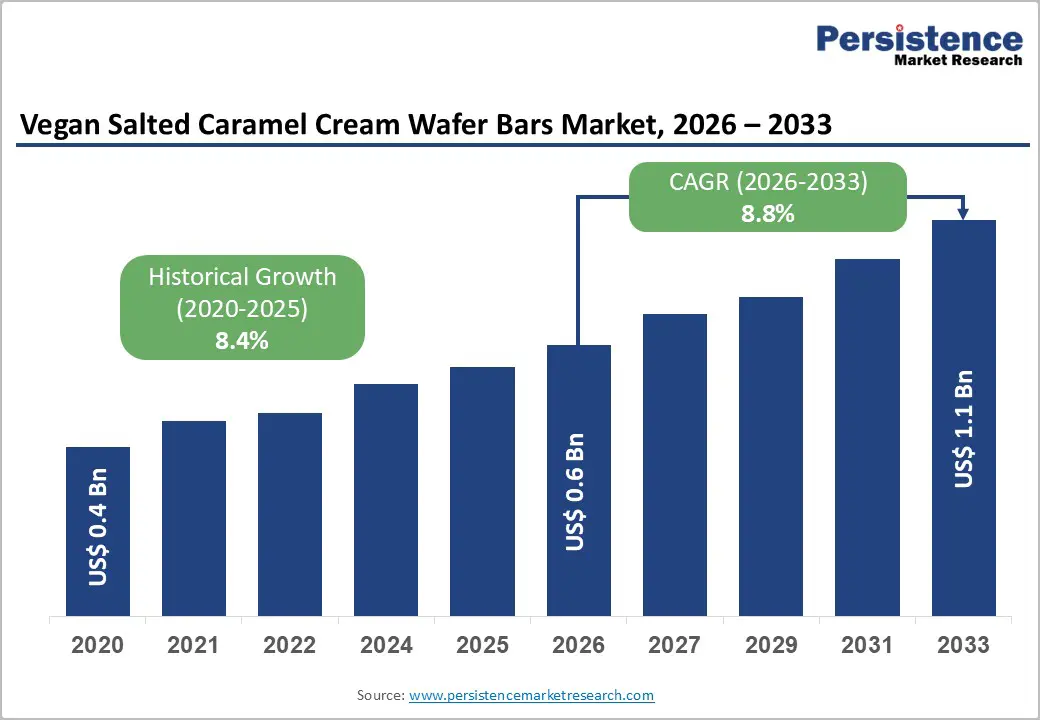
The global vegan salted caramel cream wafer bars market size is likely to be valued at US$0.6 billion in 2026, and is expected to reach US$1.1 billion by 2033, growing at a CAGR of 8.8% during the forecast period from 2026 to 2033, driven by rising consumer preference for plant-based snacks, increasing demand for indulgent yet ethical treats, and the popularity of salted caramel flavor profiles in vegan confectionery. Increasing adoption of vegan diets, health-conscious snacking, and clean-label products remains a major driver of the vegan salted caramel cream wafer bars market growth.
Key Industry Highlights:
- Leading Region: North America, anticipated to account for a 42% market share in 2026, driven by a strong vegan consumer base and premium snack demand in the U.S.
- Fastest-growing Region: Asia Pacific, fueled by rising vegan awareness, urbanization, and expanding retail channels in China and India.
- Dominant Product Type: Chocolate-coated wafer bars, to hold approximately 58% of the market share, as chocolate enhances indulgence and appeal.
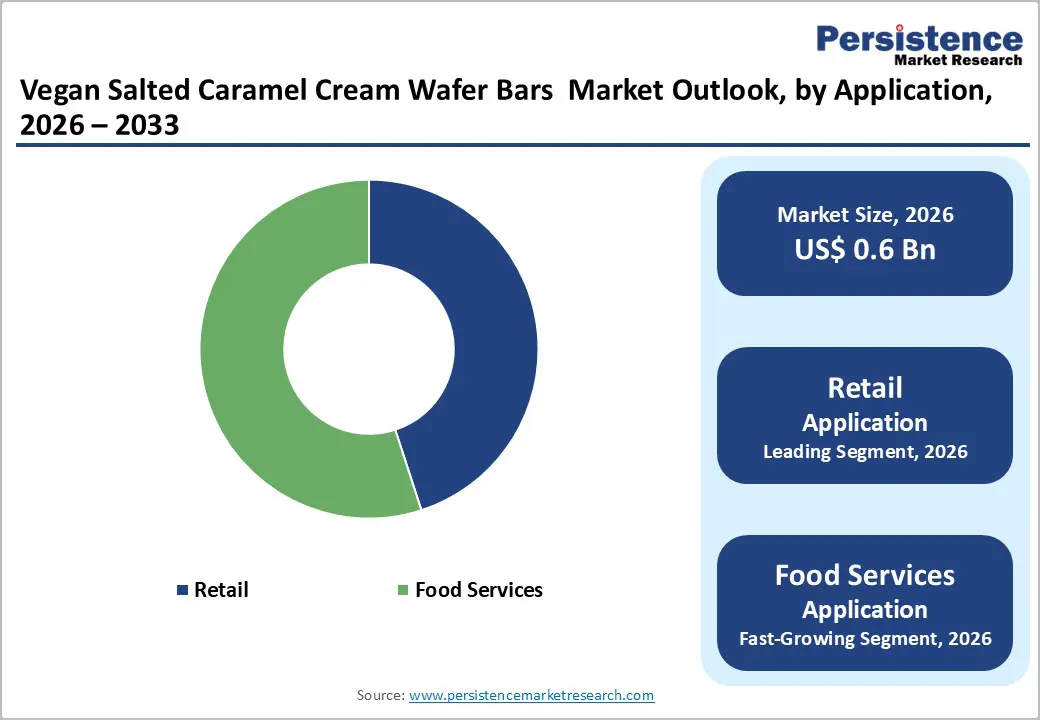
- Leading Application: Retail, set to dominate due to strong off-the-shelf availability and impulse purchases.
| Key Insights | Details |
|---|---|
|
Vegan Salted Caramel Cream Wafer Bars Market Size (2026E) |
US$0.6 Bn |
|
Market Value Forecast (2033F) |
US$1.1 Bn |
|
Projected Growth CAGR (2026-2033) |
8.8% |
|
Historical Market Growth (2020-2025) |
8.4% |
Market Factors – Driver, Restraint, and Opportunity Analysis
Driver Analysis - Rising Demand for Plant Based Products
Consumer preferences are increasingly shifting toward plant-based foods as people become more conscious of their health, ethical choices, and environmental impact. Plant-based products are perceived as healthier alternatives to traditional animal-derived snacks because they often contain fewer saturated fats, lower cholesterol, and more natural ingredients. This perception has encouraged individuals to seek snacks that align with their nutritional goals while still satisfying their taste cravings.
Ethical considerations also play a significant role in this trend. Many consumers are motivated by concerns over animal welfare and the desire to reduce their ecological footprint. Choosing plant-based snacks, such as vegan salted caramel cream wafer bars, allows them to indulge in sweet treats without contributing to animal exploitation or intensive livestock farming practices. Environmental awareness further reinforces this behavior. Plant-based ingredients generally require fewer natural resources, such as water and land, and produce lower greenhouse gas emissions compared to conventional animal-based ingredients.
Growing Vegan & Flexitarian Population
The rise in vegan and flexitarian diets has significantly expanded the potential consumer base for vegan salted caramel cream wafer bars. More people are consciously reducing or eliminating animal products from their diets, seeking snacks that align with their ethical, health, and environmental values. For individuals following vegan diets, plant-based wafer bars offer a convenient indulgence that satisfies sweet cravings without compromising their dietary principles.
Flexitarians, who occasionally consume animal products but prioritize plant-based options, further contribute to market growth. This group is often experimental with food choices, looking for innovative snacks that combine taste, nutrition, and ethical considerations. Vegan salted caramel cream wafer bars fit this need perfectly, offering both indulgence and alignment with flexible plant-based lifestyles. Urbanization and rising health consciousness have also encouraged this dietary shift. Consumers are increasingly aware of the impact of animal-based products on personal health and the environment, prompting a preference for plant-based alternatives. Younger generations, influenced by social media and wellness trends, are more willing to adopt vegan or semi-vegan lifestyles, creating sustained demand for such snack options.
Restraint Analysis - Price Sensitivity & Higher Costs
Vegan salted caramel cream wafer bars often carry a higher price point compared to conventional snack bars due to the specialized plant-based ingredients and production processes involved. Ingredients such as almond or oat-based creams, organic sweeteners, and natural flavorings are typically more expensive than standard dairy, sugar, or artificial alternatives. These higher input costs are reflected in retail pricing, which can limit the appeal of these products to price-conscious consumers.
Many buyers compare snack options based on cost per serving, and even health-conscious or ethically motivated consumers may opt for lower-priced alternatives if the price differential is significant. This creates a barrier for broader market penetration, especially in regions where disposable income is limited or consumers are less familiar with plant-based products. The production of vegan wafer bars may require specialized equipment or processes to maintain texture, flavor, and shelf life, further increasing manufacturing costs.
Intense Competition from Alternatives
The market for vegan salted caramel cream wafer bars faces strong competition from a wide variety of snack options that appeal to similar consumer needs. Traditional wafer bars, chocolate bars, protein bars, granola bars, and other indulgent or on-the-go snacks are widely available and often have established brand loyalty. Many consumers are accustomed to these conventional alternatives, which makes it challenging for newer vegan products to capture attention and market share.
Price and familiarity play a major role in this competition. Conventional snacks are often priced lower due to economies of scale and readily available ingredients, which can make vegan alternatives seem less accessible to budget-conscious shoppers. Consumers may be hesitant to try vegan products if they perceive them as less flavorful, less indulgent, or experimental compared to familiar snacks.
Opportunity Analysis - Online Retail & D2C Growth
The expansion of online retail and direct-to-consumer (D2C) channels presents a significant opportunity for vegan salted caramel cream wafer bars. These channels allow brands to reach a broader and more diverse audience beyond the limitations of physical stores. Consumers increasingly prefer the convenience of shopping from home, especially for niche or specialty products that may not be widely available in supermarkets or local stores. Online platforms enable easy comparison, discovery of new products, and access to detailed information about ingredients, nutritional benefits, and sustainability practices, which are particularly important for plant-based buyers.
D2C channels also provide brands with greater control over customer engagement and experience. By selling directly to consumers, companies can gather insights on purchasing behavior, preferences, and feedback, allowing them to tailor flavors, packaging, and promotions more effectively. Subscription models, bundle offers, and limited-edition launches can further enhance brand loyalty and repeat purchases. Digital marketing and social media can amplify visibility, connecting brands with health-conscious, vegan, or flexitarian communities. Targeted campaigns, influencer partnerships, and online content create awareness and drive trial without relying solely on traditional retail shelf space.
Clean Label & Allergen-friendly Products
Consumer demand for transparent ingredient lists and allergen-friendly options is reshaping the snack market, creating strong opportunities for vegan salted caramel cream wafer bars. Shoppers increasingly scrutinize labels, seeking products free from artificial additives, preservatives, and synthetic colors, as well as those made with recognizable, natural ingredients. Wafer bars that highlight clean, simple formulations resonate with health-conscious consumers who prioritize both nutrition and taste.
Allergen concerns further influence purchasing decisions. Many people have sensitivities to dairy, gluten, nuts, or soy, and plant-based snack options can cater to these dietary needs. By offering allergen-friendly wafer bars such as dairy-free, gluten-free, or nut-free variants, brands can attract a wider audience, including those with dietary restrictions, parents seeking safe snacks for children, and individuals adopting vegan or flexitarian lifestyles. Clear labeling and allergen-conscious formulations also build consumer trust. Shoppers are more likely to experiment with new products when they feel confident that the product aligns with their health and safety requirements. This transparency can differentiate a brand in a crowded market and encourage repeat purchases.
Category-wise Analysis
Product Type Insights
Chocolate-coated wafer bars are anticipated to dominate and be the fastest-growing product type, accounting for 58% share in 2026. Their dominance stems from a combination of taste, appearance, and broad consumer appeal. The chocolate coating adds a rich, indulgent flavor that complements the sweet-salty caramel filling, making the snack more satisfying and enjoyable compared to non-coated alternatives. Beyond taste, the glossy chocolate layer enhances visual appeal, making the bars more attractive for impulse purchases and gifting purposes. The rise of plant-based chocolate alternatives has also expanded accessibility, allowing vegan consumers to enjoy chocolate-coated treats without compromising dietary choices.
Chocolate-coated wafer bars lend themselves to innovation, such as adding nuts, flavored drizzles, or textured inclusions, further enhancing their desirability. LoveRaw, a UK-based plant-based chocolate company, has successfully launched chocolate-coated vegan salted caramel wafer bars. Their Salted Caramel Cre&m Wafer Bar combines crisp wafers with a smooth salted caramel center, all coated in vegan caramel and plant-based chocolate, providing a completely vegan alternative to traditional chocolate-covered wafer snacks.
Application Insights
The retail segment is projected to dominate, with nearly 45% of the share in 2026, due to widespread availability across supermarkets, health food stores, and online platforms. Easy access in physical stores encourages impulse purchases, while consistent presence in trusted outlets builds repeat buying behavior. LoveRaw’s plant-based Cre&m® Wafer Bars, including the Salted Caramel Cream Wafer Bar, are available both on the brand’s website and in physical stores. These vegan wafer bars are stocked in supermarket chains like Booths and selected Boots locations across the U.K., ensuring easy access for everyday shoppers beyond online platforms.
Food services represent the fastest-growing application, fueled by demand in cafes, gyms, and corporate wellness programs that increasingly offer plant-based snacks to meet the preferences of health-conscious and vegan consumers. These settings provide convenient, on-the-go options for customers seeking indulgent yet ethical treats. Gyms and wellness programs often feature wafer bars as post-workout or energy-boosting snacks, while cafes include them as grab-and-go desserts. Earthlings Cafe, a vegan-focused café in India, caters to health- and lifestyle-conscious consumers. While it does not exclusively sell wafer bars, the café demonstrates how plant-based snacks such as vegan energy and snack bars, alongside smoothies and other plant-based meals, can be incorporated into café menus. This approach meets growing customer demand for convenient, on-the-go vegan treats in social and fitness-oriented settings, highlighting the potential of food service channels to promote plant-based snack consumption.
Regional Insights
North America Vegan Salted Caramel Cream Wafer Bars Market Trends
North America is expected to dominate, capturing 42% of the revenue in 2026, fueled by increasing health awareness, ethical considerations, and a desire for indulgent yet plant-based snacks. Consumers are increasingly seeking alternatives to traditional dairy and sugar-laden treats, making vegan wafer bars an attractive option that combines taste with nutritional and ethical benefits. Salted caramel, a popular flavor, adds indulgence and broad appeal, encouraging both trial and repeat purchases among diverse consumer groups, including vegans, flexitarians, and health-conscious individuals.
Retail expansion and online availability are key trends shaping the market in this region. Supermarkets, specialty health stores, and e-commerce platforms provide easy access to vegan wafer bars, supporting both impulse and planned purchases. Brands are also innovating with premium ingredients, such as organic cocoa, plant-based caramel, and nut inclusions, to cater to consumers’ growing demand for high-quality, clean-label products. The integration of these bars into food service and wellness channels, including cafés, gyms, and corporate programs, encourages on-the-go consumption. Sustainability and ethical sourcing are also influencing buying decisions, with North American consumers increasingly favoring brands that align with their environmental and social values.
Europe Vegan Salted Caramel Cream Wafer Bars Market Trends
Europe market is gaining momentum as consumers embrace plant based eating and seek alternatives to traditional snacks that align with health, ethical, and environmental values. European shoppers increasingly prioritize products free from animal derived ingredients and artificial additives, making vegan wafer bars an appealing choice for both vegans and flexitarians who want indulgent taste without compromise. The popularity of salted caramel as a flavor also resonates strongly in this region, helping these bars stand out on shelves and in online assortments.
Retail diversification is a key trend across Europe. Vegan wafer bars are widely available not only in conventional supermarkets and health food chains but also in specialty stores and online marketplaces, improving accessibility for a broad range of consumers. In urban centers, consumers often discover these snacks through curated grocery sections or boutique vegan brands, fostering trial and repeat purchases. Product innovation is also shaping the market. European consumers show strong interest in clean label and high quality ingredients such as organic plant proteins, natural caramel, and ethically sourced chocolate coatings. Manufacturers are responding with varied formats, textures, and premium variants that cater to evolving taste preferences.
Asia Pacific Vegan Salted Caramel Cream Wafer Bars Market Trends
Asia Pacific is expected to be the fastest-growing region, driven by evolving consumer lifestyles and changing dietary habits. Rapid urbanization and increasing health awareness are encouraging consumers to explore alternatives to traditional snacks, particularly those perceived as healthier and ethically produced. Plant-based options are gaining traction in major cities, where younger, trend-conscious consumers are more willing to experiment with new flavors and indulgent formats such as salted caramel, which offers a balanced blend of sweetness and subtle savory notes.
Retail expansion is a defining trend. Vegan wafer bars are becoming more widely available in supermarkets, health stores, and online marketplaces, giving consumers easier access to specialty snacks that were previously limited to niche outlets. E commerce platforms are particularly important in markets such as India, China, and Southeast Asia, where digital shopping continues to grow rapidly and allows brands to reach consumers far beyond major urban centers. Product differentiation is also shaping the market. Manufacturers are introducing variations that incorporate local tastes or premium ingredients, such as rice based wafers, coconut derived fillings, or regional flavors paired with salted caramel, to appeal to diverse palates. Clean label and allergen friendly positioning resonate with consumers who are increasingly mindful of ingredient quality and food transparency. Younger consumers, particularly millennials and Gen Z, are driving demand for plant based snacks as part of flexible diets that emphasize both wellness and sustainability.

Competitive Landscape
The global vegan salted caramel cream wafer market is being significantly shaped by the expansion of retail channels. Vegan wafer bars are now widely available across supermarkets, specialty health stores, and online platforms, increasing their accessibility beyond niche segments to a broader consumer base. E-commerce is gaining particular momentum in regions such as India, China, and Southeast Asia, allowing brands to reach consumers beyond major urban centers and capture demand in emerging markets.
Product differentiation is becoming a key competitive factor in the market. Manufacturers are introducing innovative variants tailored to local tastes, incorporating ingredients such as rice-based wafers, coconut-based fillings, and regionally inspired flavors alongside popular options like salted caramel. A strong focus on clean-label formulations and allergen-friendly ingredients is further enhancing consumer appeal, especially among those who value transparency and high-quality products. Demand is also being driven by younger demographics, including millennials and Gen Z, who are increasingly adopting plant-based snacks as part of flexible lifestyles centered on health, convenience, and sustainability..
Key Industry Developments:
- In 2025, LoveRaw Ltd expanded its vegan wafer bar range with enhanced salted caramel cream variants using improved plant-based formulations.
- In 2024, Aloha launched a new line of protein-enriched vegan salted caramel cream wafer bars targeting health-conscious consumers.
Companies Covered in Vegan Salted Caramel Cream Wafer Bars Market
- LoveRaw Ltd
- Honey Stinger
- Pure Protein
- Swoffle LLC
- Original Kastner Austria
- Aloha
- No Cow
- My Vega Co.
- The Nature’s Bakery
- The Garden of Life
- GoMacro LLC
- Lifestyle Evolution Inc.
- The Julian Bakery
Frequently Asked Questions
The global vegan salted caramel cream wafer bars market is projected to reach US$0.6 billion in 2026.
The growing vegan and flexitarian population is driving demand for plant-based salted caramel cream wafer bars as a convenient, ethical snack.
The vegan salted caramel cream wafer bars market is poised to witness a CAGR of 8.8% from 2026 to 2033.
Rising demand for clean-label and allergen-friendly snacks is boosting the appeal of vegan salted caramel cream wafer bars.
Key players in the vegan salted caramel cream wafer bars market include LoveRaw Ltd, Aloha, GoMacro LLC, The Nature’s Bakery, and No Cow.


