




- Processed Food
- Superfood Snacks Market
Superfood Snacks Market Size, Share and Growth Forecast, 2026-2033
Superfood Snacks Market by Product Type (Fruit-Based Superfood Snacks, Others), Functional Benefit (Protein & Muscle Support, Gut Health, Others), Distribution Channel (Supermarkets, Convenience Stores, Others), and Regional Analysis for 2026-2033

Superfood Snacks Market Size and Trends Analysis
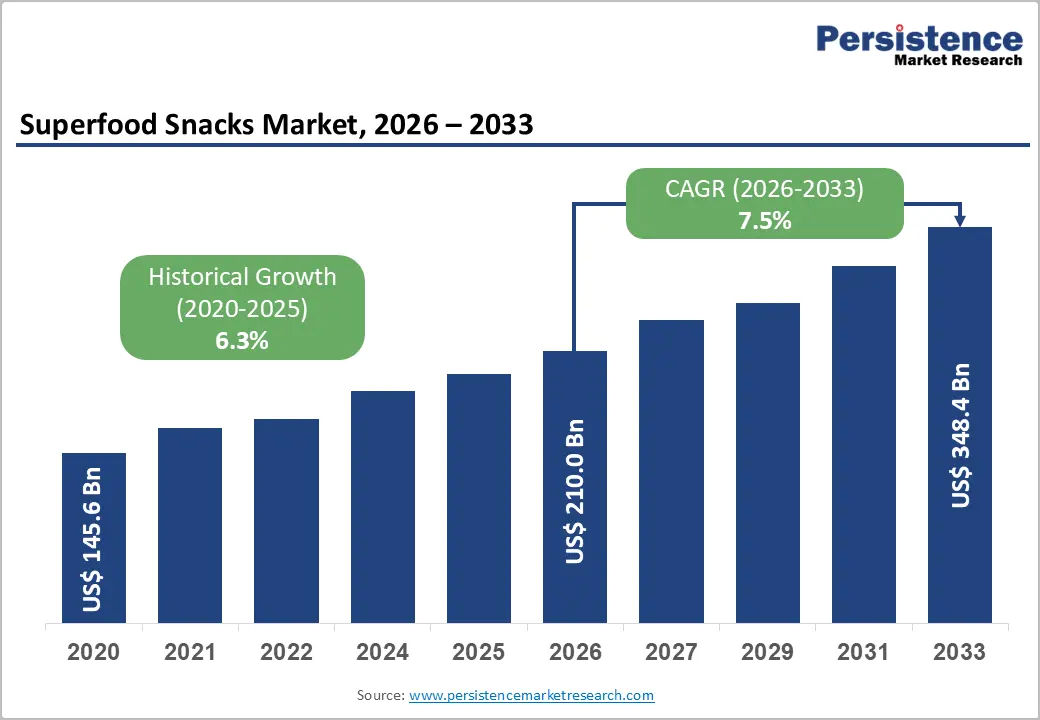
The global superfood snacks market size is likely to be valued at US$210.0 billion in 2026 and is projected to reach US$348.4 billion by 2033, growing at a CAGR of 7.5% during the forecast period from 2026 to 2033, driven by rising demand for healthy snacks, growing awareness of preventive nutrition, and increasing consumption of convenient functional foods.
Expanding adoption of plant-based diets, wider availability of nutrient-dense snack products, and the use of ingredients such as berries, nuts, seeds, and ancient grains continue to support growth. Additionally, increasing e-commerce penetration and ongoing innovation in functional snacking are enabling manufacturers to meet evolving consumer wellness preferences.
Key Industry Highlights:
- Dominant Product Type: Fruit-based superfood snacks are set to command around 34% of the market share in 2026, while plant-based protein snacks are projected to be the fastest-growing segment at 7.1% CAGR through 2033, supported by growing demand for plant-based and protein-rich nutrition.
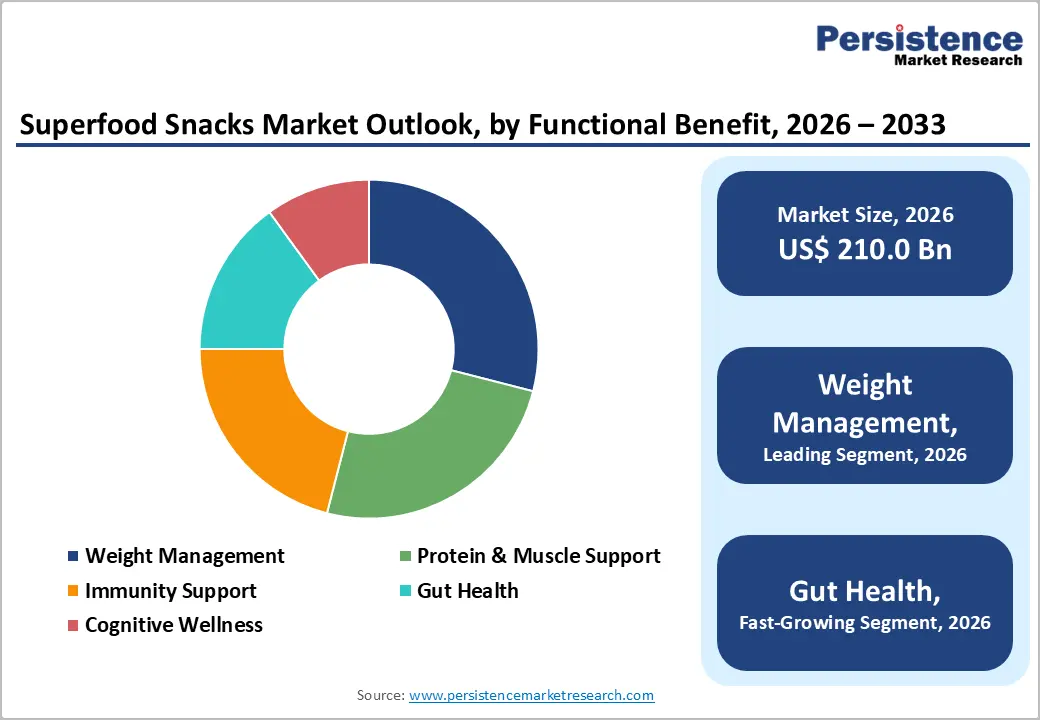
- Leading Functional Benefit: Weight management is expected to lead with approximately a 29% share in 2026, whereas gut health is likely to register the fastest growth at 7.3% CAGR during 2026–2033, driven by increasing consumer focus on digestive wellness and microbiome health.
- Dominant Distribution Channel: Supermarkets are anticipated to account for about 42% of revenue in 2026, while online retail is slated to be the fastest-growing channel at 8.1% CAGR from 2026 to 2033, reflecting the rapid expansion of e-commerce and direct-to-consumer sales.
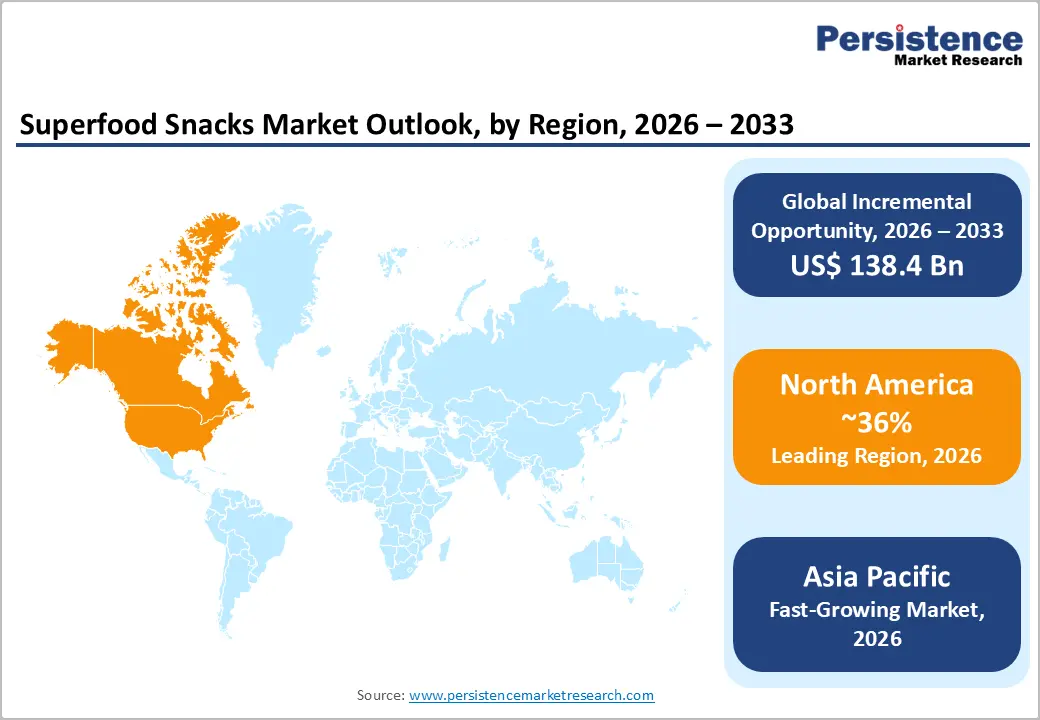
- Regional Leadership: North America is poised to dominate with an estimated 36% market share in 2026, while Asia Pacific is expected to record the fastest regional growth through 2033, supported by rising health awareness, urbanization, and expanding middle-class populations.
- Competitive Environment: Competitive dynamics are centered on plant-based product innovation, clean-label formulations, functional ingredient integration, and premium snack portfolio expansion, alongside investments in digital commerce and personalized nutrition platforms.
DRO Analysis
Driver - Rising Consumer Demand for Functional and Nutrient-Dense Snacking
The primary growth driver for the superfood snacks market is the accelerating shift toward health-focused food consumption. According to the World Health Organization (WHO), over 2.5 billion adults were overweight in 2022, including more than 890 million living with obesity, increasing consumer focus on preventive nutrition and healthier eating habits. Additionally, the International Food Information Council (IFIC) 2024 Food & Health Survey found that 73% of consumers actively consider health benefits when purchasing foods and beverages, while protein, fiber, and immune-support ingredients rank among the most sought-after nutritional attributes.
Growing demand for foods containing antioxidants, plant proteins, omega-3 fatty acids, probiotics, and natural ingredients is expanding the addressable market for superfood snacks. This trend has encouraged major food manufacturers and emerging brands to increase investments in clean-label, functional, and nutrient-dense snack innovations, supporting sustained category growth across retail channels.
Restraint - Supply Chain Volatility and Premium Ingredient Costs
The market continues to face challenges associated with the sourcing and pricing of key superfood ingredients. Many high-demand ingredients, including quinoa, chia seeds, cacao, blueberries, and acai berries, are produced in limited geographic regions, increasing exposure to climate-related supply disruptions. The Food and Agriculture Organization (FAO) reported that global food commodity prices remained significantly above pre-pandemic averages during recent years due to weather variability, geopolitical tensions, and logistics disruptions.
Furthermore, obtaining certifications such as organic, non-GMO, Fair Trade, and sustainability labels adds additional operational costs for manufacturers. Premium superfood ingredients can cost multiple times more than conventional snack ingredients, limiting mass-market affordability and constraining adoption in price-sensitive economies. These cost pressures often compress margins and create challenges for brands seeking to maintain competitive pricing while preserving ingredient quality and nutritional value.
Opportunity - Expansion of Personalized Nutrition and Plant-Based Snacking
A significant market opportunity is emerging from the rapid adoption of personalized nutrition and plant-based dietary lifestyles. According to the Good Food Institute (GFI), global retail sales of plant-based foods continue to expand as consumers increasingly seek sustainable and health-oriented alternatives. Simultaneously, the United Nations projects that the global middle-class population will surpass 5 billion people by 2030, creating a larger consumer base for premium health and wellness products.
Digital nutrition platforms, wearable health technologies, and AI-driven dietary recommendations are encouraging consumers to purchase foods tailored to specific goals such as gut health, weight management, immunity, and protein intake. This trend is creating opportunities for manufacturers to launch targeted superfood snack products incorporating probiotics, prebiotics, adaptogens, botanical extracts, and plant proteins. The growing reach of e-commerce and direct-to-consumer channels further enhances market access, allowing brands to scale personalized product offerings and strengthen customer engagement.
Category-wise Analysis
Product Type Insights
Fruit-based superfood snacks are expected to account for approximately 34% of the global market in 2026, making them the largest product category. Their dominance is supported by strong consumer demand for naturally nutrient-dense foods rich in antioxidants, vitamins, and fiber. According to the U.S. Department of Agriculture (USDA), berries remain among the fastest-growing fruit categories in functional foods due to their high polyphenol content, while dried fruit snacks continue gaining traction as consumers seek minimally processed alternatives to conventional confectionery products.
Plant-based protein snacks are projected to register the fastest growth, with a CAGR of 7.1% through 2033. The segment is benefiting from the continued rise of flexitarian eating patterns and increased protein consumption among younger consumers. According to the Good Food Institute (GFI), plant-based food sales have consistently outpaced conventional food growth in several developed markets, encouraging snack manufacturers to launch products featuring pea protein, chickpeas, lentils, and seed blends. Improvements in taste and texture technologies are further accelerating category adoption.
Functional Benefit Insights
Weight management is anticipated to hold approximately 29% of market revenue in 2026, supported by growing consumer focus on calorie control and healthier snacking habits. The World Health Organization (WHO) reported that more than 890 million adults worldwide were living with obesity in 2022, driving demand for snacks formulated with higher protein, fiber, and lower sugar content. As a result, brands are increasingly positioning superfood snacks as convenient tools for appetite control and balanced nutrition.
Gut health is expected to be the fastest-growing functional segment, expanding at a CAGR of 7.3% between 2026 and 2033. Demand is being fueled by growing scientific evidence linking gut microbiome health to immunity, digestion, and overall well-being. The International Scientific Association for Probiotics and Prebiotics (ISAPP) has highlighted rising consumer awareness of microbiome-supporting diets, leading manufacturers to incorporate prebiotic fibers, fermented ingredients, and probiotic cultures into snack products. This trend is particularly strong among Millennials and Gen Z consumers seeking proactive wellness solutions.
Distribution Channel Insights
Supermarkets are projected to account for approximately 42% of market revenue in 2026, maintaining their position as the dominant sales channel. Their leadership is supported by extensive product visibility, promotional activity, and expanding health-food sections. Major retailers such as Walmart Inc., Tesco plc, and Carrefour S.A. have expanded wellness-focused shelf space in recent years, increasing accessibility for mainstream consumers and strengthening category penetration.
Online retail is forecast to be the fastest-growing channel, recording a CAGR of 8.1% through 2033. According to the United Nations Conference on Trade and Development (UNCTAD), global e-commerce adoption accelerated significantly following the pandemic and continues to reshape food purchasing behavior. Direct-to-consumer brands, personalized nutrition platforms, and subscription-based snack services are enabling manufacturers to engage consumers more effectively while offering targeted product recommendations. The ability to access niche superfood brands and compare nutritional attributes online is expected to sustain strong channel growth throughout the forecast period.
Regional Analysis
North America Superfood Snacks Market Trends
North America is expected to account for approximately 36% of the global superfood snacks market in 2026, supported by the region's mature health and wellness food ecosystem. A key trend is the growing consumer shift toward functional ingredients that deliver specific health benefits, including protein, fiber, probiotics, and antioxidants. According to the International Food Information Council (IFIC), 54% of U.S. consumers in 2024 followed a specific eating pattern or diet, reflecting increasing demand for purpose-driven nutrition. This trend continues to accelerate consumption of superfood snacks positioned around immunity, digestive health, and energy support.
U.S. Superfood Snacks Market Trends
The U.S. is estimated to hold nearly 78% of the North America market. The country benefits from strong adoption of plant-based and functional foods, with the Good Food Institute reporting that plant-based food retail sales exceeded US$8 billion in the U.S. in recent years. Snack manufacturers are increasingly incorporating ingredients such as chia, flax, blueberries, and pea protein to meet demand for nutrient-dense products. Product innovation is also being fueled by the growing popularity of personalized nutrition and wellness-focused food subscriptions.
Canada Superfood Snacks Market Trends
Canada is anticipated to account for approximately 14% of the regional market in 2026. Consumer demand is increasingly focused on organic and clean-label products, supported by the country's strong natural food retail sector. According to the Canadian Organic Trade Association, over 70% of Canadian households regularly purchase organic products, creating favorable conditions for superfood snack adoption. Demand is particularly strong for fruit-based, seed-based, and minimally processed snacks positioned around natural nutrition and sustainability.
Europe Superfood Snacks Market Trends
Europe is projected to represent approximately 28% of global market revenue in 2026. The region's superfood snacks market is being shaped by growing demand for plant-based diets, reduced-sugar products, and sustainably sourced ingredients. According to the European Commission, nearly 53% of consumers consider environmental impact when purchasing food products, encouraging brands to combine nutritional benefits with responsible sourcing. This has increased demand for snacks containing nuts, seeds, oats, berries, and botanical ingredients.
Germany Superfood Snacks Market Trends
Germany is estimated to account for approximately 24% of the Europe market in 2026. The country remains Europe's largest organic food market, with the German organic sector surpassing €16 billion (US$18.5 billion) in annual sales according to industry associations. Consumers increasingly seek snacks with natural ingredients and functional benefits, particularly protein support and digestive wellness. This has encouraged retailers and manufacturers to expand premium superfood snack offerings across mainstream distribution channels.
U.K. Superfood Snacks Market Trends
The U.K. is likely to hold around 18% of the regional market in 2026. Demand is being driven by growing interest in healthier snacking and plant-based lifestyles. According to the UK's Food Standards Agency, a rising proportion of consumers actively monitor sugar and calorie intake when selecting food products. This trend has accelerated the launch of protein bars, fruit-based snacks, and fiber-enriched products formulated to support wellness goals while maintaining convenience.
Asia Pacific Superfood Snacks Market Trends
Asia Pacific is expected to capture approximately 24% of global market revenue in 2026 and is projected to be the fastest-growing regional market through 2033. Rising disposable incomes, increasing urbanization, and growing awareness of preventive healthcare are accelerating demand for functional snack products. The region also benefits from the abundant availability of traditional superfoods such as turmeric, moringa, matcha, millet, nuts, and tropical fruits, which are increasingly being incorporated into modern packaged snack formats.
China Superfood Snacks Market Trends
China is estimated to account for nearly 38% of the Asia Pacific market in 2026. Consumer spending on health and wellness products continues to rise, supported by increasing awareness of nutrition and healthy aging. According to the National Bureau of Statistics of China, the country's middle-income population exceeds 400 million people, creating a substantial consumer base for premium and functional snack products. Demand is particularly strong for products containing traditional ingredients such as goji berries, red dates, and herbal extracts with perceived health benefits.
India Superfood Snacks Market Trends
India is projected to represent approximately 18% of the regional market in 2026 and is among the fastest-growing country markets. A major trend is the resurgence of traditional nutrient-dense ingredients, particularly millets. Following the International Year of Millets initiative, millet production in India exceeded 17 million tonnes, according to government data, encouraging manufacturers to develop millet-based snack products positioned around nutrition and sustainability. Growing health awareness among urban consumers and increasing availability of healthy snack brands through e-commerce platforms continue to support robust market growth.
Competitive Landscape
The global superfood snacks market is moderately fragmented, with leading companies including Nestlé S.A., PepsiCo Inc., Mondelez International, Inc., and Kellanova collectively accounting for a substantial share of market revenue. These established players leverage strong retail distribution networks, diversified healthy-snacking portfolios, and extensive R&D capabilities to strengthen their positions in plant-based, protein-rich, and functional snack categories.
Meanwhile, specialized brands such as KIND LLC, Clif Bar & Company, and Laird Superfood, Inc. are focusing on premium formulations, clean-label ingredients, and direct-to-consumer channels to capture health-conscious consumers. While competition remains intense, growing demand for functional nutrition is encouraging acquisitions, portfolio expansion, and strategic partnerships, with larger companies increasingly acquiring emerging wellness brands to strengthen their presence in the fast-growing superfood snacks segment.
Key Industry Developments:
- In January 2026, Crisp Power opened a US$15 million manufacturing facility in Texas to expand production of its protein pretzel portfolio. The investment strengthens domestic manufacturing capacity, improves supply-chain efficiency, and supports growing consumer demand for protein-enriched snack products.
- In October 2025, Western Smokehouse Partners accelerated its expansion strategy, targeting a production capacity of 1.1 billion meat sticks annually by 2026. The move reflects rising demand for convenient high-protein snacks and highlights increasing industry investment in scaling functional and protein-focused snack categories.
Companies Covered in Superfood Snacks Market
- Nestlé S.A.
- PepsiCo Inc.
- Mondelez International
- Kellanova
- General Mills Inc.
- The Hershey Company
- Clif Bar & Company
- KIND LLC
- Nature's Path Foods
- Navitas Organics
- SunOpta Inc.
- Lotus Bakeries
- Hain Celestial Group
- Simply Good Foods Company
- Laird Superfood Inc.
Frequently Asked Questions
The global superfood snacks market is projected to reach US$210.0 billion in 2026.
Rising demand for healthy snacking, functional nutrition, and plant-based food products drives market growth.
The superfood snacks market is expected to grow at a CAGR of 7.5% from 2026 to 2033.
Manufacturers can capitalize on personalized nutrition, gut-health products, and expanding online retail channels.
Major players include Nestlé S.A., PepsiCo Inc., Mondelez International, Inc., Kellanova, and General Mills, Inc.


