




- Nutraceuticals & Functional Foods
- Hazelnut Market
Hazelnut Market Size, Share, Growth, and Regional Forecast, 2026 - 2033
Hazelnut Market by Product Type (Whole Hazelnuts, Hazelnut Kernels, Hazelnut Paste, Hazelnut Butter, Hazelnut Oil, and Others), Form (Whole, Powdered, Sliced, Chopped, Paste, and Oil), by Nature (Organic and Conventional), (Food & Beverages, Personal Care & Cosmetics, Pharmaceuticals, Nutraceuticals & Dietary Supplements, and Foodservice Industry) Distribution Channel (B2B (Supermarkets & Hypermarkets, Convenience Stores, Specialty Stores, and Online Retail) and B2C), and Regional Analysis from 2026 - 2033

Hazelnut Market Share and Trend Analysis
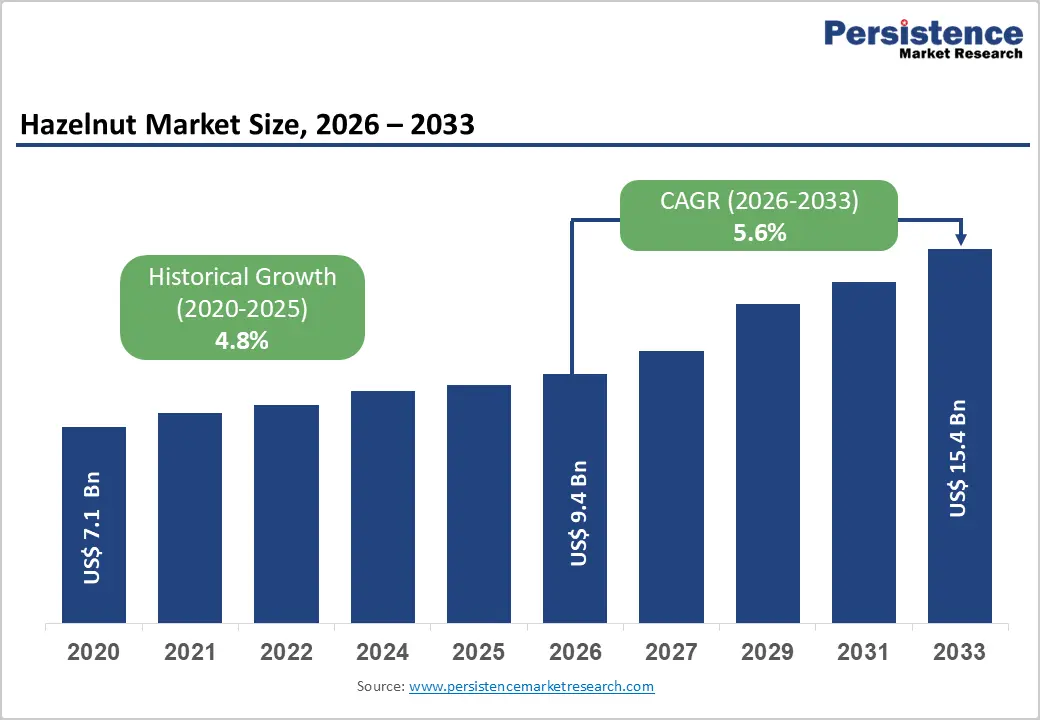
The global hazelnut market size is estimated to grow from US$ 9.4 billion in 2026 to US$ 15.4 billion, projected to record a CAGR of 5.6% during the forecast period from 2026 to 2033. Increasing consumer preference for nutritious snacks, premium confectionery products, and plant-based food ingredients is significantly supporting the expansion of the global hazelnut industry. Hazelnuts are experiencing a strong use across chocolates, bakery products, spreads, cereals, dairy alternatives, snack bars, and flavored beverages owing to their rich taste profile and high nutritional content.
Growing awareness regarding the health benefits associated with nuts, including healthy fats, antioxidants, vitamins, and dietary fiber, is further encouraging consumption among health-conscious consumers. Rising demand for clean-label, organic, and minimally processed food products is also accelerating the adoption of hazelnut-based ingredients across mainstream and premium food categories. Simultaneously, innovation in hazelnut spreads, dairy-free beverages, protein snacks, and gourmet confectionery products continues to broaden application potential globally. Expansion of organized retail networks, increasing café culture, and rapid growth of premium packaged foods across emerging economies are collectively strengthening long-term market development.
Key Highlights:
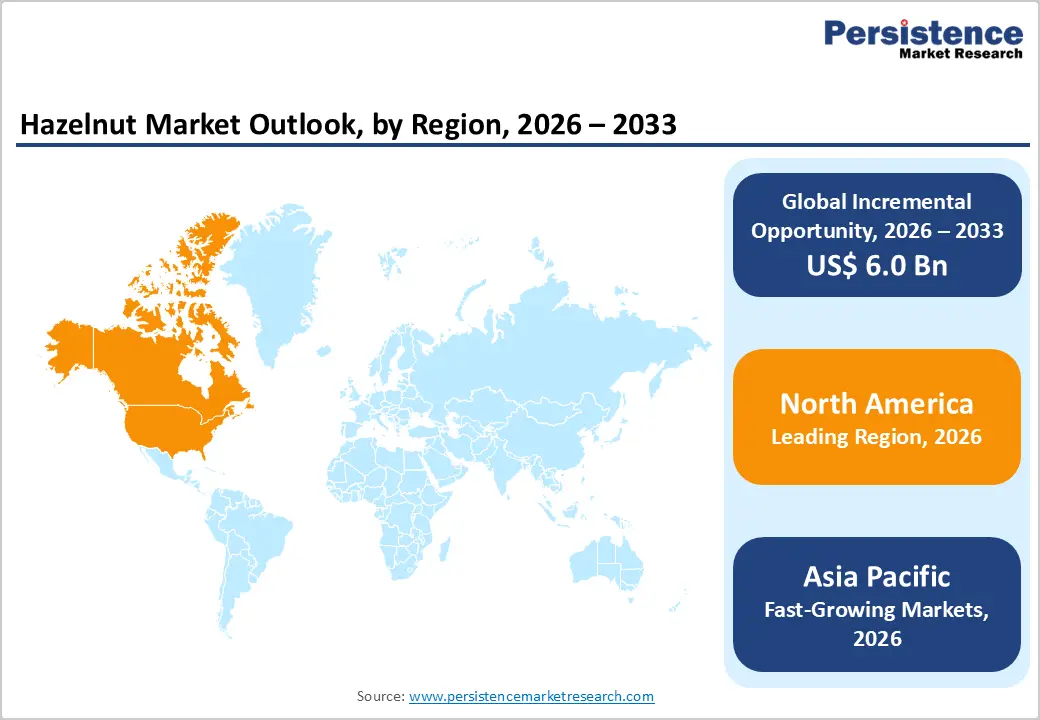
- Leading Region: Europe dominates the global market with 38.2% share, supported by strong hazelnut production capacity, established confectionery industries, and high consumption of premium bakery and chocolate products.
- Fast-Growing Market: Asia Pacific is one of the fast-growing markets due to rapid urbanization, increasing disposable incomes, expanding café culture, and growing demand for healthy snacks and premium confectionery products.
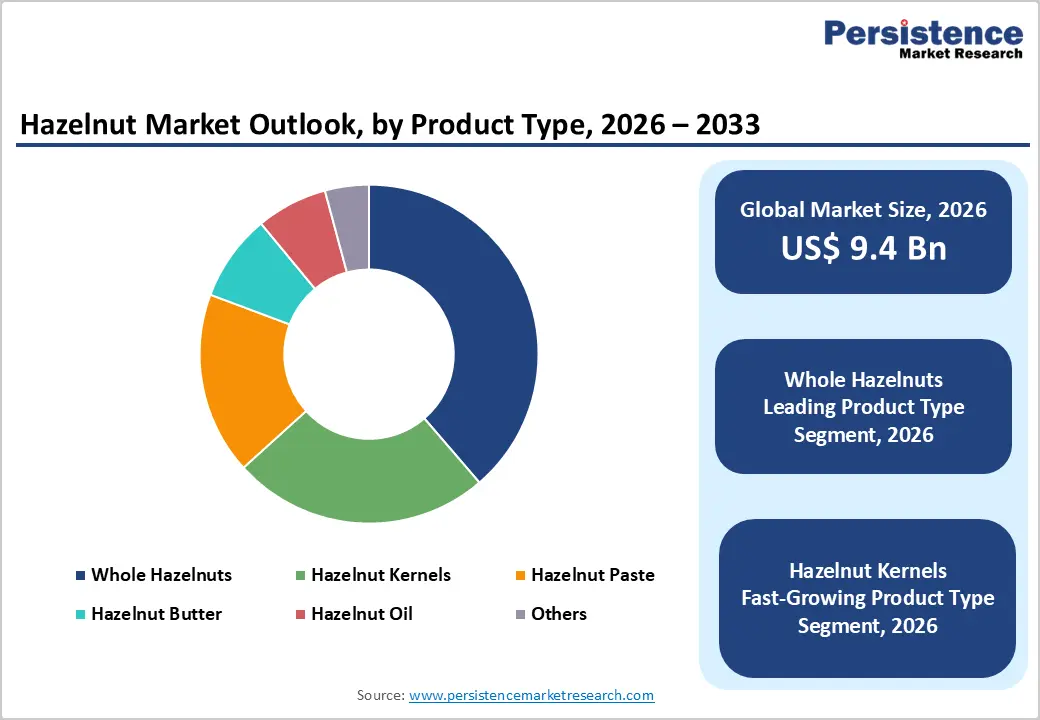
- Leading Product Type Segment: Whole hazelnuts account for 38.7% share, driven by the rise in use in chocolates, bakery products, cereals, snack mixes, and minimally processed healthy food applications.
- Leading Form Segment: Whole form holds 34.5% share owing to strong consumer preference for natural, roasted, and flavored hazelnut products across retail and foodservice channels.
Market Dynamics
How Does the Increasing Consumption of Premium Confectionery and Healthy Snack Products Support Global Demand?
Rising consumer preference for nutritious snack ingredients and premium confectionery products is significantly accelerating global demand for hazelnuts across multiple food applications. Hazelnuts are increasingly incorporated into chocolates, spreads, bakery products, breakfast cereals, snack bars, dairy alternatives, and flavored beverages due to their rich flavor profile and high nutritional value.
Growing awareness regarding the health benefits associated with nuts, including healthy fats, dietary fiber, antioxidants, vitamins, and plant-based proteins, is encouraging wider consumption among health-conscious consumers. In addition, the rapid expansion of functional foods and clean-label product categories is strengthening the integration of hazelnuts into premium packaged foods and wellness-oriented formulations.
The growing popularity of plant-based diets and natural food ingredients is further driving demand for hazelnut-derived products such as hazelnut milk, butter, flour, and oils. Food manufacturers are increasingly investing in innovative hazelnut-based formulations to meet evolving consumer expectations for taste, nutrition, and sustainability. Expansion of café culture and premium dessert consumption across emerging economies is also contributing to the rising utilization of hazelnut ingredients in beverages and confectionery fillings. Additionally, increasing retail penetration, growth of online grocery platforms, and rising disposable incomes in developing regions continue to strengthen long-term market growth prospects globally.
How Does the Supply Chain Volatility and Climate Sensitivity Create Challenges for Stable Production and Pricing?
The industry continues to face several operational and environmental challenges that restrict consistent supply availability and market stability. One of the primary concerns is the heavy dependence on a limited number of hazelnut-producing countries, particularly Turkey, which exposes the global supply chain to regional climatic fluctuations, crop diseases, and geopolitical uncertainties.
Adverse weather conditions such as frost, droughts, excessive rainfall, and temperature instability can significantly affect harvest quality and annual production volumes, leading to substantial price volatility across international markets. These fluctuations create procurement and cost-management challenges for food manufacturers relying on hazelnut-based ingredients.
In addition, hazelnut cultivation requires long production cycles, specialized farming practices, and considerable labor involvement, increasing overall production costs. Smaller growers often face difficulties in adopting advanced agricultural technologies and sustainable farming methods due to financial limitations. The market also encounters challenges associated with fluctuating export regulations, transportation costs, and supply chain disruptions affecting timely distribution. Rising competition from alternative nuts, including almonds, walnuts, and cashews further intensifies pricing pressure within snack and confectionery categories. Moreover, premium pricing of processed hazelnut ingredients may limit adoption in price-sensitive developing markets. Concerns related to allergen labeling regulations and quality standard compliance also continue to create commercialization and operational complexities for manufacturers globally.
How Do Expansion in Plant-Based Food Innovation and Premium Ingredient Applications Opening New Growth Avenues?
Rapid transformation in consumer dietary preferences and premium food consumption patterns is generating strong growth opportunities for hazelnut manufacturers and ingredient suppliers worldwide. Increasing adoption of plant-based diets is creating rising demand for hazelnut-derived alternatives including dairy-free beverages, vegan spreads, nut-based creams, protein snacks, and functional bakery products.
Hazelnuts offer favorable nutritional characteristics and distinctive flavor profiles, making them highly attractive for manufacturers developing premium clean-label and wellness-focused formulations. Growing interest in natural ingredients and minimally processed foods is also strengthening commercial opportunities across organic and specialty food categories.
The expansion of artisanal confectionery, gourmet desserts, and premium café beverages is further accelerating demand for roasted hazelnuts, hazelnut pastes, syrups, and flavored fillings. Emerging markets across Asia Pacific and Latin America are witnessing rapid growth in disposable incomes and westernized eating habits, supporting increased consumption of chocolate spreads, snack bars, and indulgent bakery products containing hazelnuts. Technological advancements in roasting, processing, and flavor preservation techniques are improving product quality and expanding application versatility for industrial food manufacturers.
In addition, sustainability-focused sourcing initiatives and investments in regenerative agriculture are creating opportunities for companies to strengthen brand positioning and attract environmentally conscious consumers. Expansion of e-commerce food retail and direct-to-consumer premium snack brands is expected to further enhance long-term market potential globally.
Category-wise Analysis
By Product Type, Whole Hazelnuts Lead the Market Due to Strong Consumption Across Confectionery, Bakery, and Healthy Snacking Categories
Whole hazelnuts are projected to account for 38.7% of the global hazelnut market in 2026, supported by rising consumer preference for minimally processed, nutrient-rich, and natural food ingredients. Their widespread application across chocolates, confectionery fillings, bakery products, breakfast cereals, and snack mixes continues to drive substantial commercial demand globally. Increasing awareness regarding the health benefits associated with hazelnuts, including healthy fats, antioxidants, fiber, and plant-based protein content, is further strengthening product adoption among health-conscious consumers. The segment is also benefiting from growing demand for premium and artisanal confectionery products, particularly across Europe and North America.
In addition, expansion of clean-label and plant-based food categories has encouraged manufacturers to incorporate whole hazelnuts into functional snacks and dairy alternatives. Rising popularity of on-the-go healthy snacking, combined with increasing retail availability of roasted and flavored hazelnut products, continues to reinforce the dominant position of whole hazelnuts within the global market landscape.
By Application, Food & Beverages Segment Dominates Owing to the Expanding Use of Hazelnuts in Confectionery, Dairy, and Premium Processed Foods
Food & beverages are expected to capture 63.2% of the global hazelnut market in 2026, driven by extensive utilization of hazelnuts across confectionery, bakery, dairy products, spreads, beverages, and snack applications. Strong global demand for chocolate-based products and premium dessert formulations continues to accelerate hazelnut consumption among large-scale food manufacturers. The segment also benefits from increasing incorporation of hazelnuts into plant-based beverages, protein snacks, breakfast products, and functional foods as consumers increasingly prioritize nutrition and natural ingredients.
Growing interest in gourmet and indulgent food experiences has further expanded the use of hazelnut pastes, oils, and roasted kernels in premium food formulations. In addition, rapid innovation in flavored coffee beverages, ice creams, cereal bars, and dairy alternatives is creating sustained ingredient demand across international markets. Growth in modern retail channels, expansion of café culture, and increasing consumer spending on premium packaged foods continue to strengthen the leadership of the food & beverages segment globally.
By Distribution Channel, Supermarkets & Hypermarkets Maintain Strong Position Due to Broad Product Availability and High Consumer Purchasing Volume
Supermarkets & hypermarkets are anticipated to hold the largest share of 41.3% in 2026, primarily supported by extensive product visibility, diverse brand availability, and strong consumer preference for organized retail purchasing. These retail formats provide broad access to hazelnut-based products including spreads, chocolates, roasted nuts, bakery ingredients, flavored beverages, and healthy snack items under both premium and private-label categories. Increasing urbanization and evolving consumer shopping habits have significantly accelerated foot traffic toward large-format retail stores offering convenience and product variety in a single location. The segment is also benefiting from aggressive promotional campaigns, bulk purchasing options, and expanding shelf space dedicated to healthy and functional food products. Additionally, growing penetration of international confectionery brands and premium packaged foods across emerging economies continues to support higher hazelnut product sales through supermarket channels. Strong retail infrastructure expansion and increasing consumer inclination toward branded food products are further reinforcing the dominance of supermarkets & hypermarkets in the global hazelnut market.
Regional Insights
North America Hazelnut Market Trends
North America accounts for approximately 34.6% of the global hazelnut market in 2026, driven by strong consumption of confectionery products, growing demand for plant-based snacks, and increasing use of hazelnuts in bakery and dairy applications. The region benefits from advanced food processing infrastructure, high penetration of premium chocolate brands, and rising consumer preference for nutrient-rich ingredients. Growing demand for hazelnut spreads, flavored beverages, and clean-label snack products is further supporting market expansion. Increasing investments in functional foods and premium confectionery innovation continue to strengthen regional demand.
U.S. Hazelnut Market Trends
The U.S. dominates the regional market with nearly 27.8% global market share and is projected to grow at a CAGR of 10.1% by 2033. Growth is driven by rising demand for premium chocolates, hazelnut spreads, plant-based beverages, and healthy snack products. Expanding application of hazelnuts in bakery and dairy alternatives is further supporting market penetration.
Canada Hazelnut Market Trends
Canada accounts for around 4.9% of the global market and is expected to grow at a CAGR of 8.8%. Rising consumer preference for organic snacks, increasing demand for nut-based ingredients, and growing adoption of functional food products are supporting market growth. Expansion of premium confectionery and clean-label food categories is also contributing to increased hazelnut consumption.
Europe Hazelnut Market Trends
Europe represents approximately 38.2% of the global hazelnut market, supported by strong hazelnut production, high consumption of confectionery products, and expanding use in bakery and snack applications. The region benefits from established processing infrastructure, strong export capabilities, and increasing demand for premium and organic food ingredients. Rising popularity of hazelnut-based spreads, dairy products, and plant-based alternatives is accelerating market growth. Growing innovation in chocolate confectionery and functional foods continues to support regional expansion, particularly across Western and Central Europe.
Germany Hazelnut Market Trends
Germany holds nearly 7.9% global market share and is projected to expand at a CAGR of 7.5%–8.7%. Market growth is supported by strong demand for premium bakery products, chocolates, and hazelnut-based spreads. Increasing consumer preference for organic and clean-label food ingredients is further driving product innovation and market adoption.
UK Hazelnut Market Trends
The UK accounts for approximately 5.8% of the global market and is anticipated to grow at a CAGR of 9.1%. Rising demand for healthy snacks, premium confectionery products, and plant-based food alternatives is driving growth. Increasing use of hazelnuts in dairy-free beverages and bakery applications is further strengthening market expansion.
Asia Pacific Hazelnut Market Trends
Asia Pacific holds approximately 21.7% of the global hazelnut market and is the fast-growing market, with a positive CAGR. Growth is driven by rapid urbanization, increasing disposable incomes, and rising demand for premium confectionery and healthy snack products. Expanding middle-class populations and growing awareness regarding plant-based nutrition are supporting market adoption across emerging economies. The region is also witnessing strong growth in bakery chains, café culture, and modern retail channels. Increasing investments by international food brands and rising popularity of hazelnut-flavored beverages and spreads are further accelerating market development.
China Hazelnut Market Trends
China leads the regional market with approximately 9.6% global market share and is projected to reach a positive CAGR in the coming years. Rising consumption of premium chocolates, bakery products, and flavored beverages is driving demand. Expansion of domestic food manufacturing and increasing preference for healthy nut-based snacks are further supporting market growth.
India Hazelnut Market Trends
India accounts for nearly 4.8% of the global market and is expected to reach a CAGR of 14.1%. Growing urbanization, rising demand for premium confectionery, and increasing adoption of healthy snack products are supporting expansion. Rapid growth of café chains, bakery outlets, and e-commerce-based food retail is further accelerating hazelnut product consumption.
Competitive Landscape
The global hazelnut market is highly competitive, with strong participation from Ferrero International S.A., Olam Group Limited, Balsu Gida Sanayi ve Ticaret A.S., Durak Findik Sanayi ve Ticaret A.S., and Arslanturk Agricultural Products. These companies leverage extensive sourcing networks, advanced processing technologies, and diversified hazelnut product portfolios to strengthen market presence and improve supply chain efficiency. Rising demand for healthy snacks, confectionery products, plant-based ingredients, and premium bakery applications is accelerating product innovation and production expansion across the industry. Market participants are strengthening global distribution capabilities, expanding processing facilities, forming strategic partnerships with food manufacturers, and increasing investments in sustainable hazelnut cultivation and value-added product development to meet evolving consumer preferences.
Key Industry Developments:
- In May 2025, Ferrero Rocher® expanded its product portfolio with the launch of Ferrero Rocher Chocolate Squares, bringing the brand’s signature flavors and textures into a new, shareable format. The product comes in five indulgent varieties: Milk Hazelnut, Dark Hazelnut, White Hazelnut, Caramel Hazelnut, and an Assorted mix.
- In August 2024, the Turkish Hazelnut Association, in collaboration with the Nuts and Dry Fruits Council of India, introduced the “Miracle Nut” campaign in India as part of a strategic four-year promotional initiative aimed at expanding hazelnut awareness and consumption.
- In February 2024, Chose Foods launched a better-for-you chocolate hazelnut spread made with 100% pure avocado oil, targeting consumers seeking clean-label, healthier, and minimally processed food alternatives. The launch also highlights growing innovation in premium nut-based spreads focused on improved nutrition and ingredient transparency.
Global Hazelnut Market – Key Insights & Details
| Key Insights | Details |
|---|---|
|
Historical Market Value (2020) |
US$ 7.1 Bn |
|
Current Market Value (2026) |
US$ 9.4 Bn |
|
Projected Market Value (2033) |
US$ 15.4 Bn |
|
CAGR (2026-2033) |
5.6% |
|
Leading Region |
Europe, 38.2% share |
|
Dominant Application |
Food & Beverages, 63.2% share |
|
Top-ranking Product Type |
Supermarkets & Hypermarkets, 41.3% |
|
Incremental Opportunity |
US$ 6.0 Bn |
Companies Covered in Hazelnut Market
- Ferrero International S.A.
- Olam Group Limited
- Balsu Gida Sanayi ve Ticaret A.S.
- Durak Findik Sanayi ve Ticaret A.S.
- Arslanturk Agricultural Products
- Gürsoy Tarimsal Ürünler Gida Sanayi ve Ticaret A.S.
- Northwest Hazelnut Company
- Holmquist Hazelnut Orchards, LLC
- American Hazelnut Company
- Poyraz Poyraz Findik Entegre Sanayi ve Ticaret A.S.
- Yilmaz Findik Entegre Sanayi Ticaret A.S.
- Kanegrade Limited
- Progida Tarim Ürünleri Sanayi ve Ticaret A.S.
- Noberasco S.p.A.
- V. Besana S.p.A.
- Others
Frequently Asked Questions
The global hazelnut market is projected to be valued at US$ 9.4 Bn in 2026.
Rising demand for healthy snacks, plant-based ingredients, and hazelnut-based confectionery products is driving growth in the global hazelnut market.
The global hazelnut market is poised to witness a CAGR of 5.6% between 2026 and 2033.
Expanding applications in dairy alternatives, functional foods, premium bakery products, and hazelnut oil-based cosmetics are creating significant growth opportunities in the global hazelnut market.
Ferrero International S.A., Olam Group Limited, Balsu Gida Sanayi ve Ticaret A.S., Durak Findik Sanayi ve Ticaret A.S., and Arslanturk Agricultural Products are some of the key players in the hazelnut market.


