




- Nutraceuticals & Functional Foods
- GABA Supplements Market
GABA Supplements Market Size, Share, and Growth Forecast 2026 - 2033
GABA Supplements Market by Form (Capsules, Lozenges, Powder, Gummies), by Application (Stress & Anxiety Relief, Sleep Support, Brain Health, Mood Enhancement, Sports Nutrition), Distribution Channel (Online Stores, Pharmacies, Supermarkets, Others), and Regional Analysis, 2026 - 2033

GABA Supplements Market Share and Trends Analysis
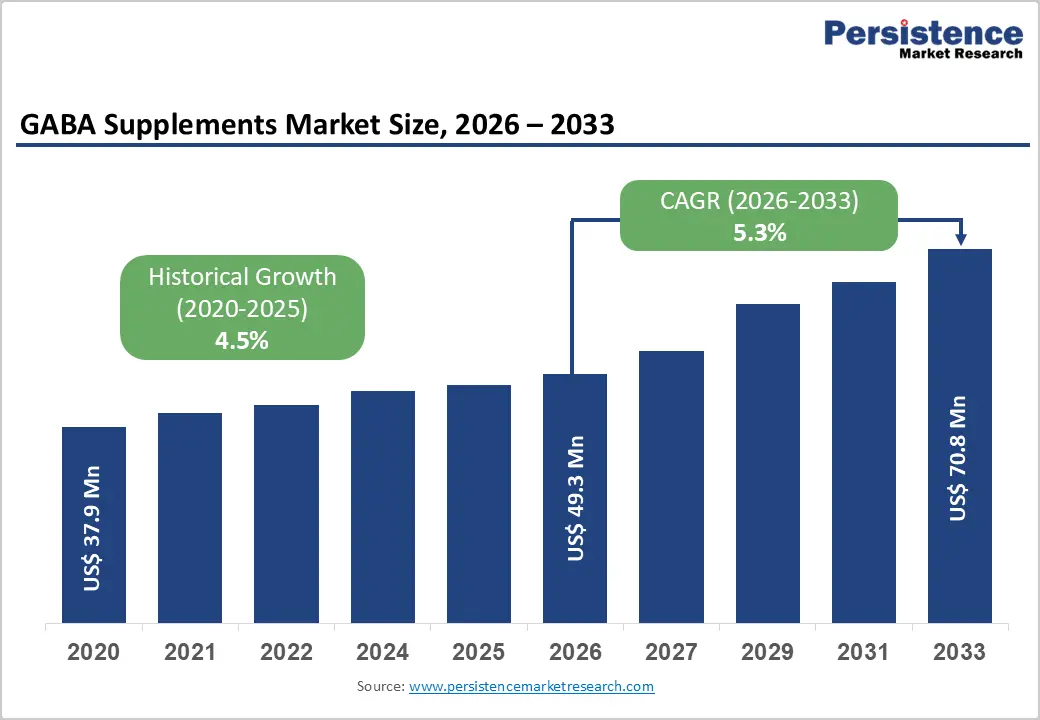
The global GABA supplements market size is expected to be valued at US$ 49.3 million in 2026 and projected to reach US$ 70.8 million by 2033, growing at a CAGR of 5.3% between 2026 and 2033. Growing consumer focus on emotional wellness, sleep quality, and non-prescription relaxation solutions is supporting steady demand for gamma-aminobutyric acid (GABA) supplements across capsules, powders, and gummies, especially as scientific literature continues to examine their role in stress and sleep support.
The market is also benefiting from broader acceptance of GABA ingredients in food and supplement formats, ongoing innovation in fermentation-based ingredients, and expanding digital supplement retail infrastructure across developed and emerging economies.
Key Market Highlights:
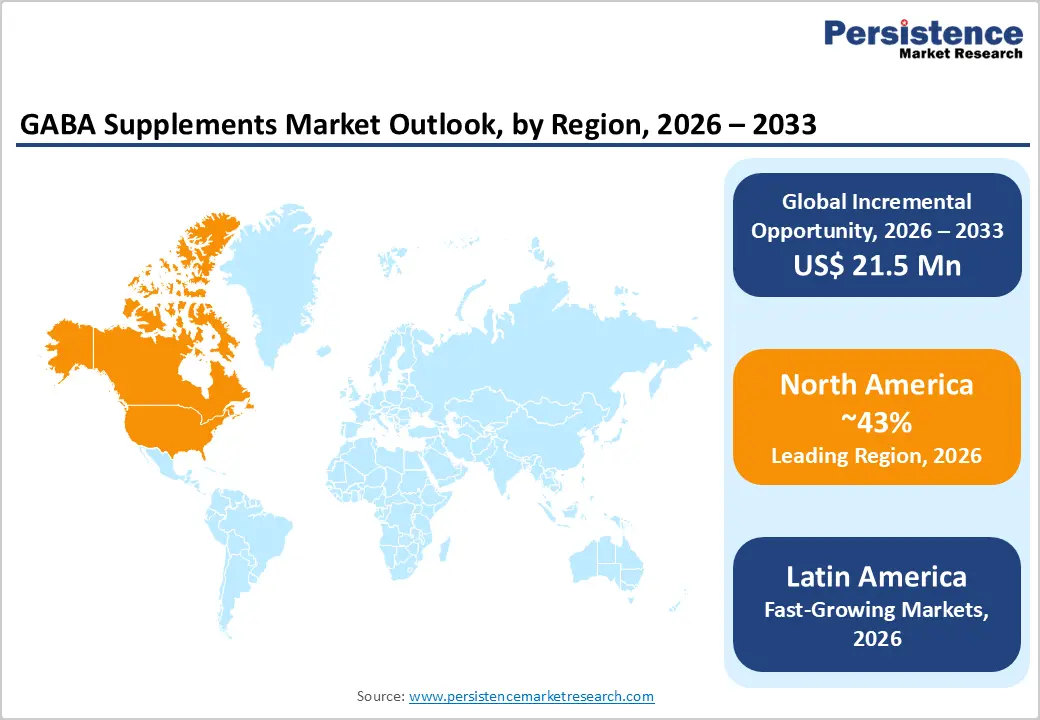
- North America leads the global GABA supplements market due to strong consumer awareness of stress and sleep support, mature retail and e-commerce infrastructure, and a highly developed dietary supplement innovation ecosystem centered in the United States.
- Latin America is expected to be the fastest-growing regional market, supported by expanding pharmacy retail, rising awareness of preventive mental wellness, and increasing digital access to premium nutraceutical products in key urban consumer markets.
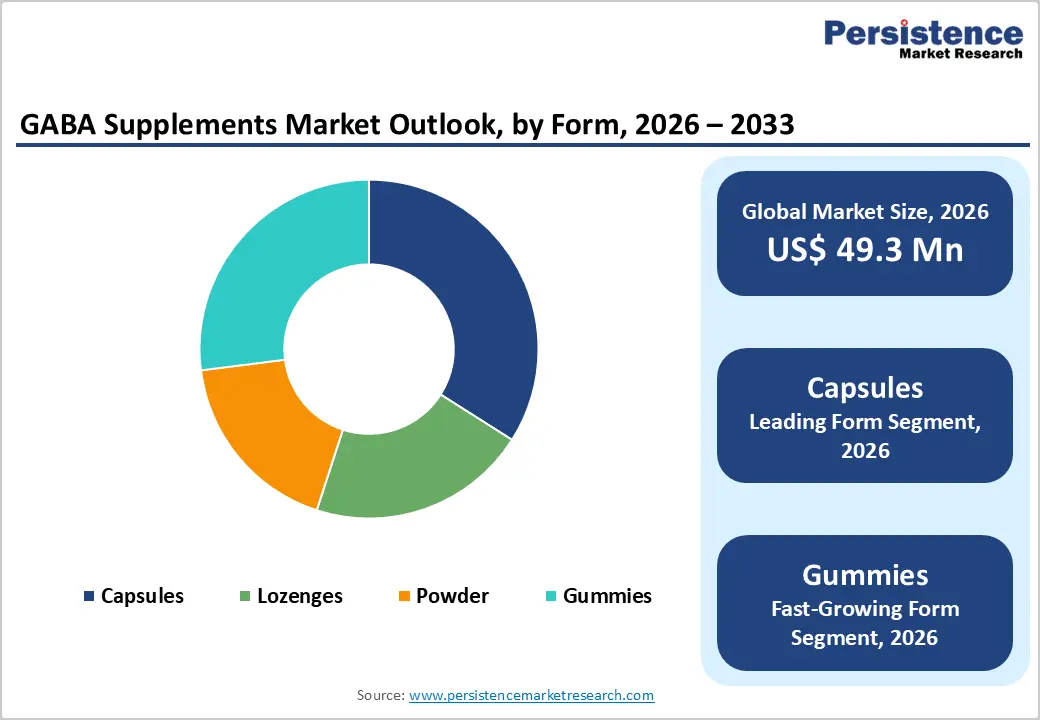
- Capsules remain the dominant product form because they offer precise dosing, practitioner credibility, easy inventory management, and compatibility with premium formulations that target relaxation, stress support, and broader neuro-wellness needs.
- Gummies are emerging as the fastest-growing form segment as consumers increasingly prefer more enjoyable, convenient, and lifestyle-oriented supplement formats that improve adherence and expand adoption among younger wellness-focused buyers.
- A major market opportunity lies in clinically supported combination products that pair GABA with probiotics, L-theanine, magnesium, and botanicals to address sleep quality, emotional balance, and stress resilience through differentiated premium positioning.
| Global Market Attributes | Key Insights |
|---|---|
| GABA Supplements Market Size (2026E) | US$ 49.3 million |
| Market Value Forecast (2033F) | US$ 70.8 million |
| Projected Growth CAGR (2026 - 2033) | 5.3% |
| Historical Market Growth (2020 - 2025) | 4.5% |

Market Dynamics
Market Growth Drivers
Rising stress burden and sleep-related consumer demand
A major growth driver for the GABA supplements market is the rising burden of daily stress, sleep disturbance, and mood imbalance, which is prompting consumers to seek nutraceutical products that fit into preventive wellness routines. A systematic review of oral GABA studies found that while evidence remains limited, several placebo-controlled human studies reported positive effects on stress-related measures, which has helped sustain consumer and brand interest in the category. This matters commercially because GABA is strongly associated with calming and inhibitory neurotransmission, making it a familiar ingredient for products positioned around relaxation and nighttime support. As mental wellness becomes a core purchasing criterion in dietary supplements, GABA products are gaining stronger relevance in stress & anxiety relief, mood enhancement, and sleep-support portfolios.
Ingredient legitimacy and fermentation-led product innovation
Another important growth driver is the strengthening regulatory and technological foundation for GABA ingredients, particularly those produced through controlled fermentation systems. The U.S. Food and Drug Administration (FDA) received GRAS Notice 000595 for gamma-aminobutyric acid, reflecting formal safety review for specified food uses and helping normalize GABA as a mainstream functional ingredient rather than a niche compound. In Europe, the Food Safety Authority of Ireland (FSAI) assessed BIOGABA®, a novel fermented GABA ingredient, showing that structured pathways exist for advanced GABA-containing products under novel food frameworks. These developments give supplement companies greater confidence in ingredient sourcing, safety documentation, and formulation consistency, while branded fermentation-based GABA helps suppliers compete on purity, origin, and science-backed positioning.
Market Restraints
Limited human evidence and cautious efficacy interpretation
One of the key restraints in the GABA supplements market is that the human evidence base remains relatively narrow compared with more established sleep and relaxation ingredients. The 2020 systematic review identified only 14 eligible placebo-controlled studies and concluded that evidence for stress benefits was limited, while evidence for sleep benefits was very limited because of small sample sizes and heterogeneous methods. This limits the strength of consumer-facing claims and may make healthcare practitioners more cautious when recommending GABA over ingredients with broader clinical support, including melatonin, magnesium, or L-theanine.
Strict claim frameworks and classification complexity
Another restraint is the regulatory complexity surrounding health claims, ingredient categorization, and permissible marketing language across jurisdictions. In the European Union, health-claim approval standards remain strict, especially for psychological and sleep-related benefits, which restricts how directly supplement brands can communicate product efficacy unless supported by strong evidence. In the United States, industry discussions around whether certain GABA preparations are legacy dietary ingredients, new dietary ingredients, or GRAS ingredients can create compliance complexity and increase documentation requirements for market participants.
Market Opportunities
Sleep-support innovation and combination formulas
A major opportunity for manufacturers lies in building multi-ingredient sleep and relaxation products where GABA functions as part of a broader neuro-wellness system rather than a standalone supplement. Newer consumer preferences favor formulas that combine GABA with L-theanine, magnesium, melatonin, botanicals, or probiotic components, particularly for bedtime routines and stress decompression products sold through digital wellness channels. This is commercially attractive because combination products can better address multiple symptom clusters, such as racing thoughts, poor sleep onset, and mild anxiety, while also enabling stronger differentiation and premium pricing. Companies that back these formulations with targeted clinical studies on sleep latency, next-day calmness, or perceived stress can gain a meaningful credibility advantage in a crowded supplement market.
Expansion into nootropics and sports recovery
Another promising opportunity is the use of GABA in cognitive wellness and sports recovery products, where emotional regulation, composure, and sleep quality increasingly influence purchase decisions. The broader scientific discussion around the gut-brain axis, neurotransmission, and mental resilience is creating space for GABA to appear in nootropic blends, esports support products, and recovery-oriented sports nutrition formats. This opportunity aligns especially well with fast-growing gummy and stick-pack delivery systems that appeal to younger users and active consumers seeking convenience. As brands explore mood-plus-performance positioning, GABA can serve as a bridge ingredient between stress support, recovery support, and functional daily wellness supplementation.
Category-wise Analysis
Form Insights
Capsules are the leading form segment in the GABA supplements market and account for about 34% of the total market share in 2025. Their leadership is supported by precise dosage control, strong consumer familiarity, shelf stability, and broad acceptance in practitioner-recommended supplement regimens. Capsule delivery also suits higher-strength GABA formulations and combination products, which is important because consumers using relaxation or sleep aids often prefer measured, repeatable intake rather than flexible scoops or confectionery-style dosing. Major brands such as NOW Foods, Thorne Research, Solgar Inc., and Pure Encapsulations LLC have helped reinforce the credibility of capsule-based positioning through clinician-oriented branding and standardized formulations. At the same time, gummies are emerging as the fastest-growing segment because they improve palatability, broaden appeal among younger adults, and align with the wider premiumization trend in chewable supplements.
Application Insights
Among applications, stress & anxiety relief is the leading segment, estimated to account for around 31% of market share in 2025. This leadership is logical because GABA is best known commercially and scientifically for its association with inhibitory neurotransmission and calming pathways, making stress-reduction the most intuitive consumer use case. Even though clinical evidence is not yet conclusive, existing human studies and reviews are sufficient to keep GABA visible in relaxation-focused formulations and wellness marketing centered on everyday stress management. In contrast, Sleep Support is expected to be the fastest-growing application segment as more consumers look for habit-friendly alternatives to stronger pharmaceutical sleep interventions and show rising interest in nighttime nutritional routines that combine GABA with other calming ingredients.
Distribution Channel Insights
Online stores are the leading distribution channel for GABA supplements and are estimated to contribute around 48% market value in 2025. This channel leads because consumers researching mood, sleep, and stress supplements frequently compare ingredient combinations, review user feedback, and purchase directly from brand websites or large e-commerce marketplaces. Online retail is especially important for GABA because education influences conversion; brands often need more space to explain ingredient science, dosage, and stack compatibility than traditional store shelves can provide. The fastest-growing channel is Pharmacies, where evidence-aware consumers increasingly seek pharmacist guidance for mild sleep problems, stress management, and mood support through non-prescription nutraceuticals rather than first-line drug therapy. This dual-channel pattern supports both premium direct-to-consumer growth and broader mainstream credibility.
Regional Insights
North America GABA Supplements Market Trends and Insights
North America leads the GABA supplements market, driven by strong consumer awareness around mental wellness, stress management, and sleep health. Rising cases of anxiety, insomnia, and work-related stress have significantly increased demand for calming and relaxation supplements, positioning GABA as a popular ingredient in daily wellness routines. The region benefits from a well-established nutraceutical industry, supported by advanced retail infrastructure and widespread availability across pharmacies, health stores, and e-commerce platforms.
Consumers in the U.S. and Canada show a high preference for scientifically backed and clean-label products, encouraging manufacturers to introduce natural, fermented GABA formulations and combination products with ingredients like melatonin and L-theanine. Additionally, the growing trend of personalized nutrition and preventive healthcare is further accelerating product innovation. Strong digital penetration and influencer-driven marketing are also boosting online sales of GABA supplements. Moreover, regulatory support for dietary supplements and the presence of key market players contribute to continuous product launches and brand expansion, reinforcing North America’s dominant position in the global market.
Asia Pacific GABA Supplements Market Trends and Insights
Asia Pacific is emerging as a high-growth region in the GABA supplements market, driven by rising urbanization, increasing stress levels, and growing awareness of mental wellness. Countries such as China, Japan, India, and South Korea are witnessing strong demand for sleep aids and relaxation supplements due to hectic lifestyles and work pressure.
The region benefits from a long-standing cultural acceptance of functional foods and nutraceuticals, particularly in Japan, where GABA-infused products are widely consumed. Increasing disposable incomes and expansion of middle-class populations are enabling higher spending on preventive healthcare and dietary supplements. Additionally, the rapid growth of e-commerce platforms and digital health awareness campaigns is improving product accessibility across urban and semi-urban areas. Local manufacturers are actively launching affordable and innovative formats such as gummies and powders to cater to diverse consumer preferences. Supportive government initiatives promoting health and wellness, along with rising investments in the nutraceutical sector, are further accelerating market growth in Asia Pacific.
Competitive Landscape
The GABA supplements market is characterized by a moderately fragmented and highly competitive landscape, with the presence of both established nutraceutical manufacturers and emerging regional players. Companies compete primarily on product quality, pricing strategies, and innovation in formulations such as combination blends and clean-label offerings. Continuous investment in research and development, along with clinical validation, is becoming a key differentiator to build consumer trust. Additionally, strong distribution networks and expanding e-commerce channels are intensifying competition. New entrants are leveraging digital marketing and direct-to-consumer models to challenge established brands, while private label products are increasing price pressure across mass-market segments.
Key Developments:
- In February 2026, Bonafide Health launched Noctera, a hormone-free and melatonin-free dietary supplement designed to address sleep disturbances associated with menopause. The product was formulated to improve sleep quality and duration by targeting hormonal imbalances, particularly the disruption of GABA and glutamate pathways caused by declining estrogen levels.
- In October 2025, Japan-based Sankyo Foods launched a new range of GABA-enriched sprouted brown rice products under its retail arm Food Base, targeting the growing mental wellness segment. The company introduced a microwavable “Genmai Gokochi” series featuring four rice blends combined with traditional ingredients such as barley, adzuki beans, and black rice to enhance both nutrition and taste.
- In September 2025, microbiome-focused company Seed Health launched a new category of supplements called Co-Biotics, expanding beyond traditional probiotics into broader daily health solutions. These products were designed to target both the human body and the gut microbiome simultaneously, reflecting a more holistic approach to supplementation.
Companies Covered in GABA Supplements Market
- NOW Foods
- Thorne Research
- Solgar Inc.
- Nature’s Way Products LLC
- Jarrow Formulas Inc.
- Pure Encapsulations LLC
- Swanson Health Products
- Life Extension
- GNC Holdings LLC
- Himalaya Wellness Company
- Pharma Foods International Co., Ltd.
- Kyowa Hakko Bio Co., Ltd.
Frequently Asked Questions
The global GABA supplements market is estimated to reach US$ 49.3 million in 2026, reflecting steady demand from consumers seeking stress relief, sleep support, and mood-balancing dietary supplements.
Demand is being driven by rising awareness of stress management and sleep quality, greater interest in neuro-wellness supplements, and the growing availability of branded fermented GABA ingredients supported by formal safety review pathways.
North America is the leading regional market, supported by strong supplement consumption in the United States, a mature e-commerce ecosystem, and a favorable innovation environment for mood and sleep support products.
A major opportunity lies in premium, clinically supported combination products that integrate GABA with sleep, stress, and gut-brain-axis ingredients to serve increasingly sophisticated consumer wellness needs.
Major companies include NOW Foods, Thorne Research, Solgar Inc., Nature’s Way Products LLC, Jarrow Formulas Inc., Pure Encapsulations LLC, Swanson Health Products, Life Extension, GNC Holdings LLC, Pharma Foods International Co., Ltd., and Kyowa Hakko Bio Co., Ltd.


