




- Medical Devices
- Energy-based Skin Tightening Market
Energy-based Skin Tightening Market Size, Share, Growth, and Regional Forecast, 2026 to 2033
Energy-based Skin Tightening Market by Product (Handheld Devices, Tabletop / Standalone Devices, Others), Technology (Radiofrequency (RF) Technology, Ultrasound Technology, Laser Energy, Infrared (IR) / Light Energy, Others), Application (Wrinkle Reduction, Skin Lifting, Cellulite Reduction, Body Contouring, Anti-Aging, Others), End User (Dermatology Clinics, Cosmetic Clinics, Medical Spas, Hospitals, Others), and Regional Analysis from 2026 to 2033

Energy-based Skin Tightening Market Size and Share Analysis
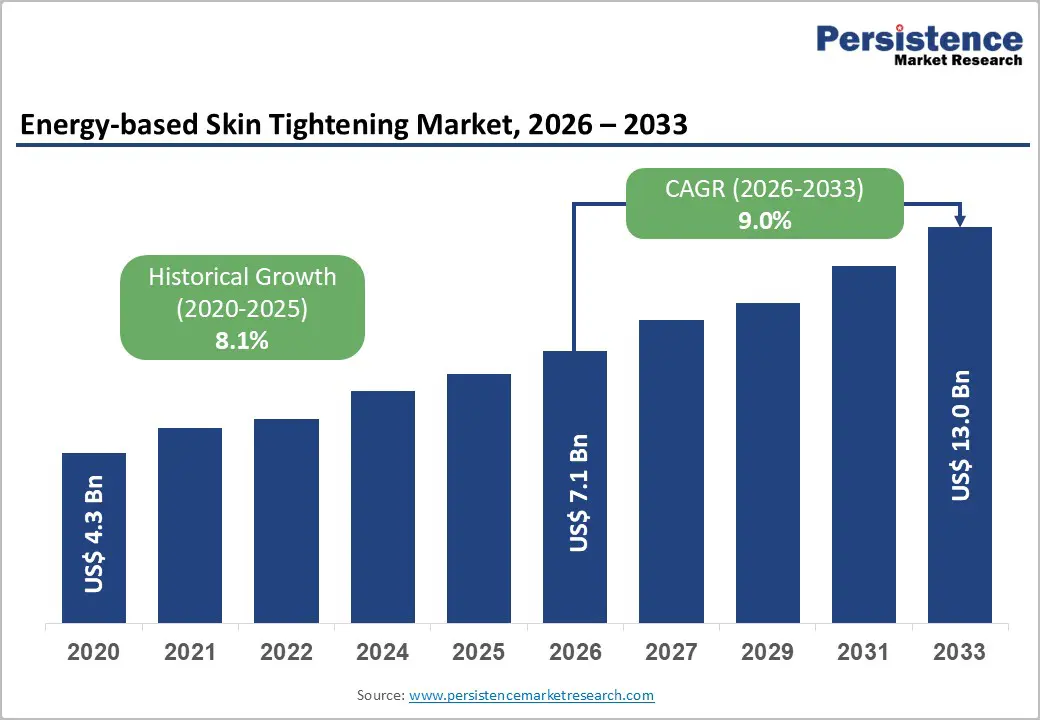
The global energy-based skin tightening market is estimated to grow from US$ 7.1 Bn in 2026 to US$ 13.0 Bn by 2033. The market is projected to record a CAGR of 9.0% during the forecast period from 2026 to 2033.
The energy-based skin tightening industry is growing steadily, driven by rising demand for non-invasive aesthetic procedures, increasing awareness of anti-aging treatments, and advancements in device technology. North America leads with established clinics and advanced infrastructure, while Asia-Pacific is expanding rapidly due to growing beauty consciousness, rising disposable incomes, and higher adoption of innovative, AI-enabled skin-tightening solutions.
Key Industry Highlights
- Dominant Segment: Radiofrequency (RF) devices are emerging as the leading segment, holding 36.1% market share in 2025, driven by demand for non-invasive skin tightening, minimal downtime, and efficacy across multiple skin types. These devices stimulate collagen remodeling, improve skin elasticity, and support facial and body contouring. Advanced platforms increasingly integrate real-time temperature monitoring and AI-guided treatment protocols, enhancing safety, personalization, and patient satisfaction.
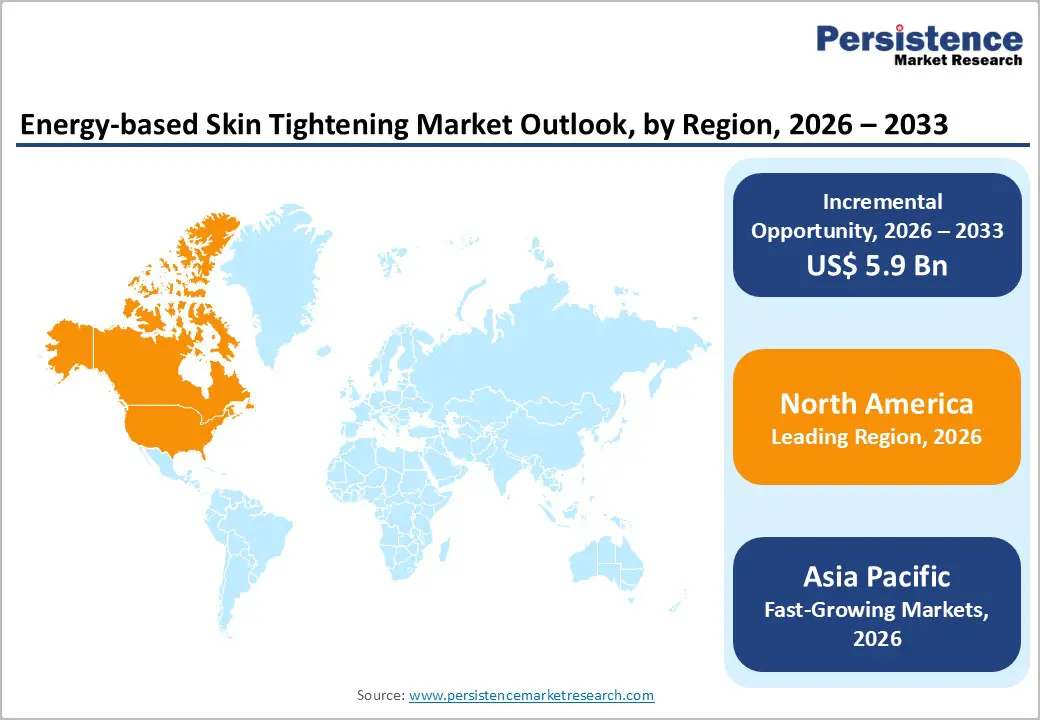
- Dominant Region: North America leads with a 41.2% market share in 2025, supported by high aesthetic awareness, established dermatology and cosmetic clinics, and favorable regulatory frameworks. Asia-Pacific is the fastest-growing region due to rising disposable incomes, a growing beauty-conscious population, and increasing adoption of non-surgical cosmetic procedures.
- Market Drivers: Growth is fueled by rising demand for non-invasive cosmetic procedures, increasing prevalence of skin laxity with aging, advances in energy-based technologies (RF, ultrasound, laser), growing awareness of aesthetic treatments, and integration with personalized treatment plans.
- Market Opportunity: Key opportunities include multi-technology combination devices, home-use skin-tightening solutions, AI-assisted treatment planning, expansion into emerging markets, integration with dermatology and plastic surgery clinics, and partnerships between device manufacturers and aesthetic service providers.
| Report Attribute | Details |
|---|---|
|
Global Energy-based Skin Tightening Market Size (2026E) |
US$ 7.1 Bn |
|
Market Value Forecast (2033F) |
US$ 13.0 Bn |
|
Projected Growth (CAGR 2026 to 2033) |
9.0% |
|
Historical Market Growth (CAGR 2020 to 2025) |
8.1% |
Market Dynamics
Driver – Rising demand for non-invasive cosmetic procedures globally
The global increase in demand for non-invasive cosmetic procedures is a primary driver of the energy-based skin tightening market, as these treatments offer aesthetic enhancements with minimal risk, reduced recovery time, and no surgical incisions. According to the International Society of Aesthetic Plastic Surgery (ISAPS), in 2023, nearly 19.1 million non-surgical aesthetic procedures were performed worldwide, exceeding the number of surgical procedures and continuing a multi-year growth trend in minimally invasive treatments. Over the past four years, non-surgical procedures have surged by approximately 40%, reflecting broad shifts in patient preferences toward treatments that balance effectiveness with convenience and safety. This rising procedural volume creates direct incentives for clinics to adopt energy-based technologies such as radiofrequency, ultrasound, and laser devices that tighten skin without surgery, expanding market demand and service offerings.
Market estimates further substantiate that energy-based platforms are key beneficiaries of this trend. Reliable market analysis indicates that the non-invasive aesthetic treatment market, which includes energy-based devices, was valued in the mid-teens of billions of USD by 2025 and continues to grow at a strong compound annual growth rate. Energy-based devices account for about 35% of the total non-invasive treatments market, with substantial user uptake beyond injectables and other services in recent years. This statistical momentum, when combined with consumer shifts toward non-surgical solutions, as evidenced by large procedural growth rates, underscores how rising preference for non-invasive cosmetic care is materially expanding the installed base and usage of energy-based skin-tightening devices globally.
Restraints – High cost of advanced energy-based skin-tightening devices
One significant restraint on the energy-based skin-tightening market is the high capital costs of advanced devices, which limit adoption among smaller clinics and practices. Professional-grade laser, radiofrequency (RF), and ultrasound systems typically range from USD 40,000 up to USD 200,000 or more per unit, creating a substantial upfront investment barrier for independent or resource-limited providers. These high equipment prices are coupled with ongoing expenses such as annual maintenance contracts (often 10–15% of device cost) and consumables, elevating the total cost of ownership over the device lifespan. Such financial burdens make it difficult for many practices, particularly in developing regions, to procure the latest energy-based technologies, thereby restricting overall market penetration and slowing expansion into price-sensitive segments.
The high-cost environment also translates into elevated per-treatment pricing, which can deter patient uptake and necessitate repeat sessions for optimal outcomes. For instance, reputable sources note that a typical skin tightening session in markets like the United States may cost between USD 1,500 and USD 3,500, with advanced procedures sometimes exceeding these figures, and most cosmetic insurance coverage does not reimburse such services. This out-of-pocket expense dampens demand among middle-income consumers and limits access to treatment, particularly in cost-sensitive regions. Combined with limited reimbursement frameworks and the concentration of advanced systems in larger dermatology chains, the high cost of devices and treatments remains a material constraint on broader market growth.
Opportunity – Development of combination/multi-technology devices for enhanced efficacy
An important growth opportunity in the energy-based skin-tightening market lies in the development of combination or multi? products.technology devices that deliver enhanced clinical outcomes by simultaneously targeting multiple skin layers and mechanisms. Devices combining radiofrequency (RF), microneedling, high-intensity focused ultrasound (HIFU), or laser modalities are gaining traction because they more effectively stimulate collagen and elastin production than single-technology systems, leading to improvements in skin texture, firmness, and tightening with minimal downtime. For example, RF-based microneedling platforms such as Morpheus8 and Profound RF have been engineered to deliver RF energy through microneedles that penetrate more deeply into the dermis, offering clinically meaningful improvements in skin elasticity and patient satisfaction. Integrated technologies thus provide a more comprehensive approach to skin rejuvenation and support broader adoption in dermatology and cosmetic practice settings.
Reliable clinical and industry observations substantiate the value of multi-modal approaches. According to procedure statistics for non-surgical skin tightening treatments, RF microneedling devices alone account for approximately 34% of the segment, indicating strong user preference for combined technology platforms. Furthermore, devices integrating multiple energy types (e.g., RF plus ultrasound) have seen adoption increases of over 20% in leading clinics, driven by their ability to address both superficial and deeper tissue layers in a single session. These multi-technology systems also align with patient demand for efficient, outcome-focused treatments and support clinic revenue diversification. As regulatory clearances continue to validate combined modalities, these hybrid platforms are positioned to expand accessibility and drive innovation across aesthetic device portfolios.
Category-wise Analysis
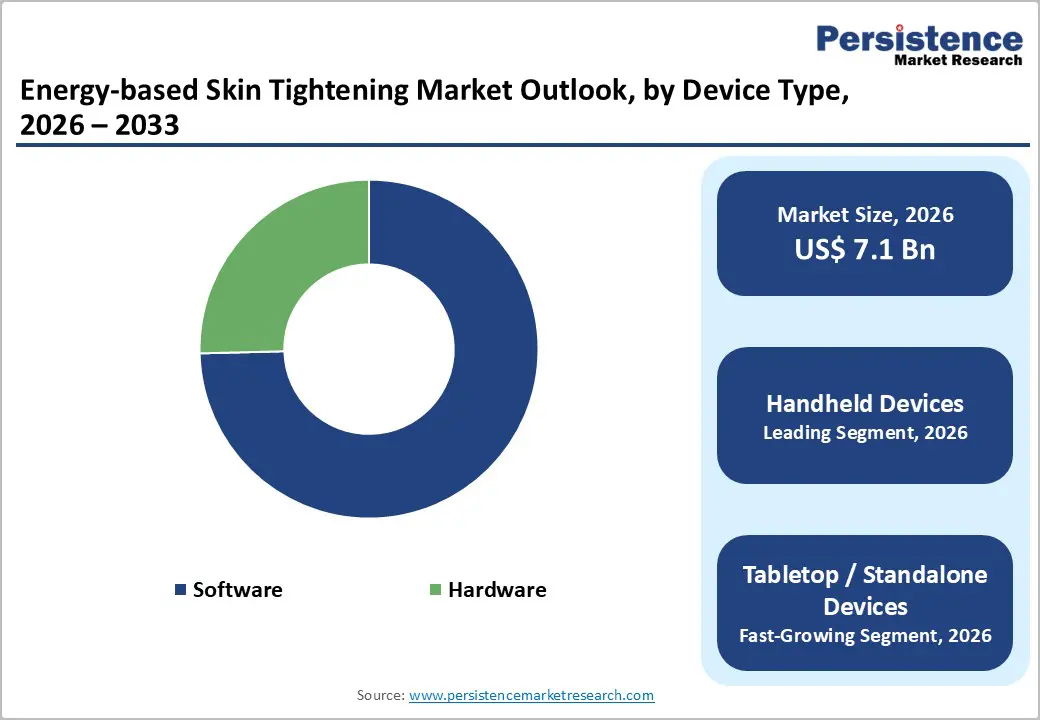
By Device Type, Handheld Devices Dominate the Energy-based Skin Tightening Market
Handheld devices dominate with 53.4% share of the global market in 2025, because they align with the strong consumer shift toward minimally invasive, convenient aesthetic treatments that fit everyday lifestyles. Data from the American Society of Plastic Surgeons (ASPS) shows that in the United States in 2023, minimally invasive procedures outnumbered surgical ones by nearly 8:1, with over 18 million non-surgical treatments performed; this reflects broad patient preference for procedures that deliver results with minimal downtime, fewer risks, and no incisions. Handheld platforms are inherently portable, require less clinic infrastructure than console-based systems, and can be deployed across diverse treatment rooms and med-spa settings, making them particularly attractive to practices seeking to offer flexible, targeted care for skin laxity and rejuvenation without major capital investment.
By Technology, Radiofrequency (RF) Technology dominates due to safe, non-invasive collagen stimulation, versatility, and widespread clinical adoption
Radiofrequency (RF) technology dominates the energy-based skin tightening market because it delivers proven, safe, and versatile non-surgical results that stimulate collagen and elastin production, addressing aging-related skin laxity without incisions or long recovery times. RF energy penetrates the deep dermal layers to heat tissues and trigger neocollagenesis, improving skin elasticity and firmness; clinical studies show this method produces measurable tightening effects with minimal risk and a same-day return to routine activities. In the United States alone, more than 188,000 Americans underwent RF skin-tightening procedures in 2020, underscoring widespread clinical adoption and acceptance. Moreover, RF’s efficacy across various body areas and skin types enhances its appeal among dermatologists and patients seeking a non-invasive alternative to surgery.
Regional Insights
North America Energy-Based Skin Tightening Market Trends
North America dominates the energy-based skin tightening market with 53.4% share in 2025, due to high consumer awareness of cosmetic procedures, advanced healthcare infrastructure, and widespread availability of dermatology and aesthetic clinics. According to the American Society of Plastic Surgeons (ASPS), in 2022, Americans underwent over 18 million minimally invasive cosmetic procedures, highlighting strong adoption of treatments like radiofrequency and ultrasound-based skin tightening. High disposable incomes, a beauty-conscious population, and strong cultural acceptance of aesthetic enhancements further support the uptake of procedures. Additionally, well-established regulatory frameworks ensure safety and efficacy of energy-based devices, encouraging providers to adopt the latest technologies. These factors collectively make North America the largest regional market for energy-based skin tightening.
Europe Energy-based Skin Tightening Market Trends
Europe is an important region in the energy-based skin tightening market due to high consumer awareness, an aging population, and a well-established dermatology and cosmetic care infrastructure. According to Eurostat, the population aged 65 and over in the European Union was 20.3% in 2019 and is projected to reach 29.4% by 2050, driving increased demand for anti-aging and skin-rejuvenation treatments. Countries such as Germany, France, and the UK have widespread private and outpatient cosmetic services, making non-invasive procedures like radiofrequency and ultrasound-based skin tightening widely accessible. Additionally, European consumers are generally early adopters of innovative medical technologies, and strong regulatory frameworks ensure safety and efficacy, further supporting the adoption of energy-based aesthetic devices
Asia-Pacific Energy-based Skin Tightening Market Trends
Asia Pacific is the fastest-growing region for energy-based skin tightening, as demographic shifts, rising disposable incomes, and increasing aesthetic awareness converge to drive demand for non-invasive cosmetic care. The World Bank reports that the Asia Pacific middle class surpassed 2 billion people by 2022, significantly increasing discretionary spending on personal care and elective procedures. Urbanization is also high, with about 2.3 billion people living in urban areas in 2023, improving access to clinics and aesthetic services. Moreover, OECD data shows the share of people aged 65+ in parts of the Asia Pacific is set to roughly double by 2050, which drives demand for anti-aging treatments that include energy-based skin tightening. This combination of economic capacity, urban access, and aging demographics underpins rapid regional growth.
Market Competitive Landscape
Leading applications in the energy-based skin tightening market include facial and body skin tightening, wrinkle reduction, and skin rejuvenation. Devices stimulate collagen, improve elasticity, and enhance appearance with minimal downtime. High adoption across dermatology clinics, med spas, and cosmetic centers drives growth, while AI-assisted monitoring and personalized treatment protocols support precise, effective, and safe outcomes.
Key Industry Developments:
- In October 2025, Cynosure and Lutronic redefined skin resurfacing with the launch of their eCO2 3D Laser, introducing advanced technology for more precise and effective skin treatments. The device combined enhanced fractional CO2 laser capabilities with improved safety and recovery features to target wrinkles, scars, and skin texture issues. Clinics reported faster procedures, better patient outcomes, and higher satisfaction rates, marking a significant innovation in non-invasive aesthetic dermatology.
- In April 2025, Cynosure and Lutronic announced that their XERF device received Health Canada clearance, marking a major milestone for non-invasive skin tightening. The device was designed to deliver effective skin firming and rejuvenation treatments without surgery, using advanced energy-based technology. Clinics highlighted its safety, precision, and patient comfort, positioning XERF as a next-generation solution in aesthetic dermatology and expanding access to non-surgical anti-aging treatments across Canada.
Companies Covered in Energy-based Skin Tightening Market
- Cynosure, Inc.
- Alma Lasers Ltd.
- Lumenis Ltd.
- Cutera, Inc.
- Solta Medical, Inc.
- Venus Concept Ltd.
- Sciton, Inc.
- Bausch Health Companies Inc.
- Merz Pharma GmbH & Co. KGaA
- Syneron Medical Ltd.
- Hologic, Inc.
- El.En. S.p.A.
- Fotona d.o.o.
- Lutronic Corporation
- Lynton Lasers Ltd.
- ThermiGen LLC
- EndyMed Medical Ltd.
- Genesis Biosystems
- Sofwave Medical Ltd.
- Classys Inc.
- Others
Frequently Asked Questions
The global energy-based skin tightening market is projected to be valued at US$ 7.1 Bn in 2026.
Rising demand for non-invasive procedures, aging population, technological advancements, and increasing aesthetic awareness drive growth.
The global energy-based skin tightening market is poised to witness a CAGR of 9.0% between 2026 and 2033.
Opportunities include multi-technology devices, home-use solutions, emerging markets expansion, AI integration, and clinic partnerships.
Cynosure, Inc., Alma Lasers Ltd., Lumenis Ltd., Cutera, Inc., Solta Medical, Inc., Venus Concept Ltd.


