




- Medical Devices
- ECG Devices Market
ECG Devices Market Size, Share, and Growth Forecast 2026 - 2033
ECG Devices Market by Product (ECG Resting System, ECG Holter Monitoring System, ECG Stress Testing System, Cardiopulmonary Stress Testing System), End-user, and Regional Analysis, 2026 - 2033

ECG Devices Market Size and Trend Analysis
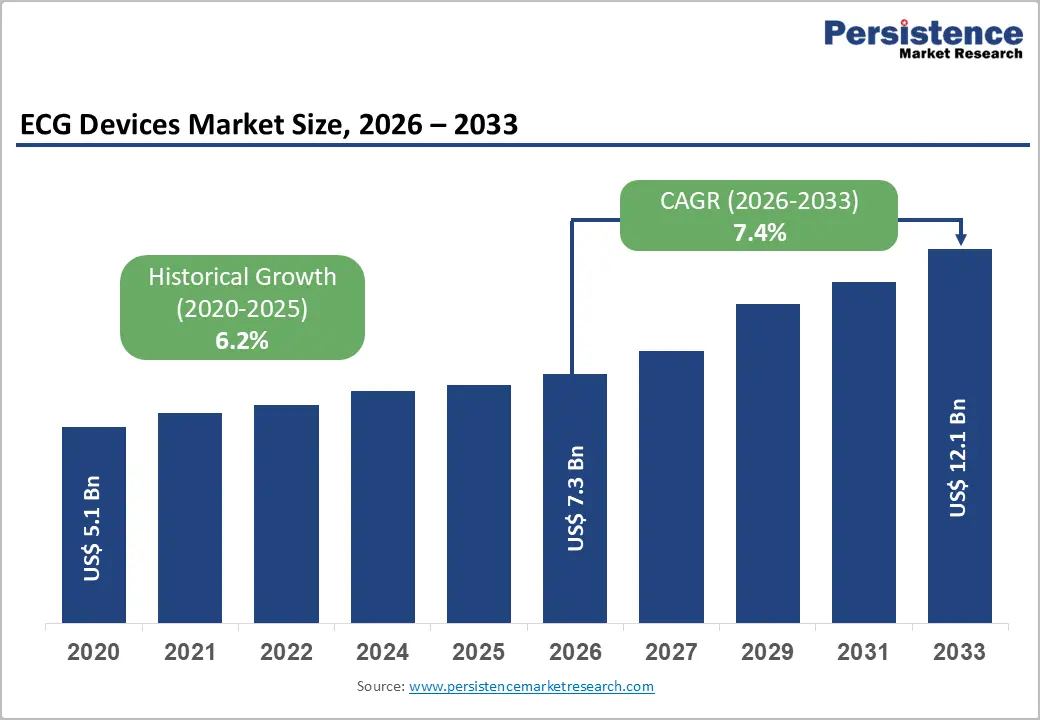
The global ECG devices market size is expected to be valued at US$ 7.3 billion in 2026 and projected to reach US$ 12.1 billion by 2033, growing at a CAGR of 7.4% between 2026 and 2033.
The growth is driven by the rising global prevalence of cardiovascular diseases, rapid technological advances in wearable and remote cardiac monitoring, and expanding healthcare infrastructure in emerging economies. The World Health Organization (WHO) identifies cardiovascular disease as the world's leading cause of death, accounting for approximately 17.9 million deaths annually and a rise in clinical demand for electrocardiography across hospital, ambulatory, and home-care settings.
The concurrent adoption of AI-powered ECG analysis, digital health integration, and the proliferation of telehealth platforms is broadening the addressable market beyond traditional hospital settings, accelerating demand from diagnostic centers and ambulatory care facilities globally.
Key Industry Highlights:
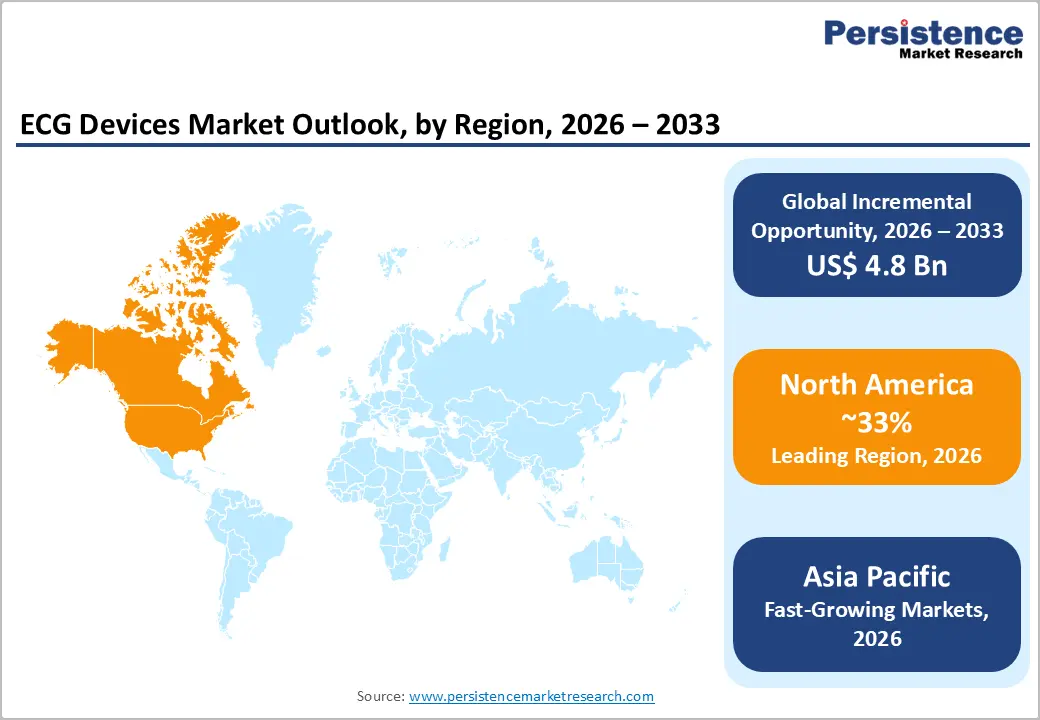
- Leading Region: North America leads with 33% share due to high cardiovascular disease burden, advanced cardiac diagnostic infrastructure, strong FDA support, and favorable reimbursement for remote cardiac monitoring.
- Fast-Growing Market: Asia Pacific is likely to achieve a fast-growth due to China’s cardiac screening initiatives, India’s expanding hospital infrastructure, and rising cardiovascular disease prevalence across ASEAN nations.
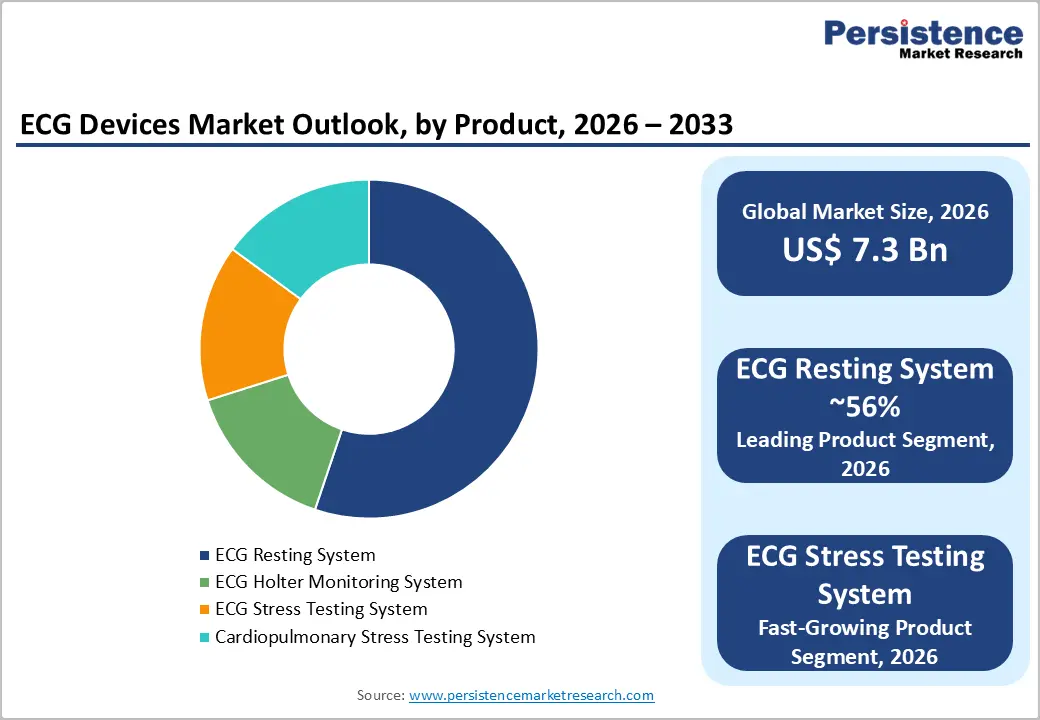
- Dominant Product Segment: ECG resting systems dominate with 56% share, driven by their universal use as frontline cardiac diagnostic tools across hospitals, clinics, and diagnostic centers globally.
- Fast-Growing Product Segment: ECG Stress Testing Systems grow fastest due to preventive cardiology programs, guideline-based coronary risk stratification, and rising use in wellness and sports medicine.
- Key Opportunity: Remote cardiac monitoring platforms offer major growth potential supported by CMS telehealth reimbursement expansion and increasing adoption of wearable ECG patches.
Market Dynamics
Does the Rise in Global Cardiovascular Disease Burden Drive Diagnostic Demand?
Cardiovascular disease (CVD) remains a primary driver for the ECG devices market globally. The WHO reports that CVDs account for approximately 17.9 million deaths per year, representing 32% of all global mortality, with coronary heart disease and stroke as the leading contributors. The American Heart Association (AHA) estimates that nearly 48% of all U.S. adults have some form of cardiovascular disease, creating an enormous and growing patient population requiring routine electrocardiographic monitoring.
Additionally, atrial fibrillation (AFib), one of the most common cardiac arrhythmias, affects over 33 million patients globally according to data published in the Journal of the American College of Cardiology (JACC), generating persistent demand for both resting ECG systems in clinical settings and long-term Holter monitoring solutions for ambulatory arrhythmia detection and management.
Technological Advancements in Wearable and Remote ECG Monitoring Expanding Market Scope
The rapid integration of artificial intelligence (AI), cloud connectivity, and miniaturized sensor technology into ECG devices is significantly expanding the addressable market beyond traditional hospital-based 12-lead resting systems. The U.S. Food and Drug Administration (FDA) has cleared multiple AI-powered ECG analysis algorithms, including those developed by iRhythm Technologies Inc. (Zio patch) and AliveCor technology partners, that enable continuous, single-lead cardiac monitoring via wearable patches and consumer devices.
The FDA's De Novo pathway has facilitated faster commercialization of novel ECG technologies, with the agency granting clearances for over 150 AI-based cardiac diagnostic tools by 2023, according to the FDA's AI/ML-based Software as a Medical Device (SaMD) action plan. This innovation wave is creating new demand segments in remote patient monitoring, telehealth cardiology, and consumer health wearables that augment rather than replace traditional clinical ECG device procurement.
Restraints - Rising Data Privacy Concerns May Affect Adoption of Cloud-connected ECG Devices
Despite the rising prevalence of cardiovascular diseases, demand for ECG devices has witnessed specific roadblocks. The industry has been facing rising scrutiny from regulatory bodies, which has caused delays in product approvals and market entry.
Strict safety and accuracy requirements set by agencies like the European Medicines Agency (EMA), China's National Medical Products Administration (NMPA), and the U.S. Food and Drug Administration (FDA) must be met by conventional ECG devices. Data privacy norms like HIPAA and GDPR, especially for cloud-connected devices, have also created hindrances, declining adoption in healthcare facilities handling confidential patient information. For instance, in 2022, iRhythm Technologies, a significant company in the field of ECG monitoring, experienced a decline in stock prices of more than 30% when the U.S. FDA rejected its next-generation Zio monitor on regulatory grounds.
Such challenges prove that it is becoming increasingly difficult for key players to launch new ECG devices in the global market. It may create hindrances for market growth to a certain extent.
Opportunities - Surging Focus on Athlete Cardiac Health to Spur Development of New ECG Devices
Use of ECG devices in sports medicine and athletic performance is anticipated to create new opportunities for market players. Individual athletes, sports organizations, and professional teams are gradually realizing the significance of cardiac health monitoring in high-intensity training and competition.
Athletes, especially those with undiagnosed cardiac conditions, are more likely to experience exercise-induced cardiac events. According to a report published in JAMA Cardiology, every year, in the U.S., sudden cardiac death accounts for around 75% of all athlete-related deaths. As a result, ECG screening is now required as part of pre-participation medical evaluations by various sports governing bodies.
For instance, professional football players must get an ECG examination before big tournaments as part of FIFA's Pre-competition Medical Assessment (PCMA) to identify any possible cardiac issues. Owing to the aforementioned factors, medical device companies are anticipated to invest in research activities to come up with new ECG devices for the sports industry.
Category-wise Analysis
Product Insights
The ECG Resting System is the dominant product segment in the global ECG devices market, accounting for approximately 56% of market share in 2025. Resting ECG systems encompassing standard 12-lead electrocardiographs used in routine clinical examinations, pre-operative assessments, and emergency cardiac triage represent the foundational diagnostic tool of cardiology practice globally. Their dominance reflects both their clinical indispensability and their broad deployment across all healthcare settings, from primary care clinics to tertiary hospitals.
The American Heart Association (AHA) endorses 12-lead resting ECG as the standard first-line cardiac diagnostic test, and the sheer volume of clinical encounters requiring baseline cardiac assessment ensures consistently high procurement volumes. Manufacturers, including GE Healthcare, Koninklijke Philips N.V., and Welch Allyn (Hill-Rom Company, Inc.) maintain strong market positions in resting ECG systems through established hospital supply relationships and continuous platform innovation incorporating AI-assisted interpretation features.
End-user Insights
Hospitals represent the leading end-user segment in the ECG devices market, capturing approximately 52% of global market share in 2025. Hospitals serve as the primary institutional buyers for the full spectrum of ECG device categories from resting 12-lead systems in emergency departments and cardiology wards to advanced Holter monitoring systems and cardiopulmonary stress testing equipment in specialized cardiac diagnostic units.
The American Hospital Association (AHA) reports approximately 6,120 registered hospitals in the United States, each procuring ECG equipment across multiple clinical departments. Globally, the WHO estimates approximately 136,000 hospitals worldwide, representing the core institutional procurement base for ECG devices. The hospital segment benefits from bulk procurement programs, long-term service contracts, and integration with hospital information systems (HIS) and electronic health records (EHR), making it the most commercially significant end-user channel for ECG device manufacturers.
Regional Insights
North America ECG Devices Market Trends and Insights
North America leads the global ECG devices market with approximately 33% market share in 2025, driven by the highest per-capita incidence of cardiovascular disease diagnoses, advanced healthcare infrastructure, strong FDA regulatory framework, and robust adoption of AI-integrated and remote cardiac monitoring technologies. The region is characterized by high procedural volumes, comprehensive insurance reimbursement for ECG-based diagnostics, and rapid commercialization of wearable ECG monitoring platforms across telehealth and ambulatory care channels.
U.S. ECG Devices Market Size
The United States accounts for approximately 88% of North America's ECG devices market, reflecting its dominant position as the world's largest medical device market. The CDC reports that heart disease is the leading cause of death in the U.S., responsible for approximately 695,000 deaths annually. High cardiac procedure volumes, CMS reimbursement frameworks for remote cardiac monitoring, and strong commercial traction of ambulatory ECG monitoring solutions collectively sustain robust U.S. market demand.
Europe ECG Devices Market Trends and Insights
Europe represents the second-largest regional market for ECG devices, supported by universal healthcare systems, strong clinical cardiology infrastructure, and progressive adoption of digital health and remote cardiac monitoring across Germany, the U.K., France, and the Nordics. Regulatory harmonization under the EU Medical Device Regulation (EU MDR 2017/745) and growing investment in cardiac disease prevention programs are key regional trends. Increasing adoption of AI-powered ECG interpretation and cross-border telehealth cardiology services is accelerating demand for connected ECG platforms.
Germany ECG Devices Market Size
Germany accounts for approximately 23% of Europe's ECG devices market, anchored by a comprehensive statutory health insurance system covering over 90% of the population and a strong network of cardiology hospitals and specialist clinics. Germany's high prevalence of cardiovascular risk factors and advanced cardiac intervention infrastructure sustain consistent demand for resting, Holter, and stress testing ECG systems. Schiller AG maintains a strong regional market presence through its broad ECG product portfolio.
U.K. ECG Devices Market Size
The U.K. represents approximately 15% of Europe's ECG devices market, underpinned by the National Health Service (NHS), which handles millions of cardiac diagnostic encounters annually. The NHS Long Term Plan commits to expanded cardiovascular disease prevention and earlier detection through broadened ECG screening programs. Growing NHS investment in digital cardiology and remote monitoring services is accelerating demand for wearable and connected ECG platforms from providers including iRhythm Technologies.
France ECG Devices Market Size
France accounts for approximately 13% of European ECG device demand, supported by a universal healthcare system administered by Assurance Maladie that provides broad reimbursement for cardiac diagnostic procedures. France's national cardiovascular prevention strategy and a well-developed network of cardiologists and diagnostic imaging centers sustain high ECG device utilization rates. Demand for Holter monitoring and stress testing systems is growing as French cardiology practices expand ambulatory diagnostic capabilities.
Asia Pacific ECG Devices Market Trends and Insights
Asia Pacific is the fastest-growing regional market for ECG devices, propelled by rapidly expanding cardiovascular disease burdens, significant healthcare infrastructure investment, and growing government cardiac health screening initiatives across China, India, Japan, and ASEAN nations. China is the region's largest individual market, with the National Health Commission of China prioritizing cardiovascular disease prevention under the Healthy China 2030 plan and deploying AI-powered ECG screening programs across community health centers. Rising urbanization and lifestyle-related cardiac risk factors are amplifying regional ECG diagnostic demand.
India ECG Devices Market Size
India represents approximately 9% of Asia Pacific's ECG devices market, with demand expanding rapidly alongside healthcare infrastructure growth under the Ayushman Bharat health scheme. India carries a high and rising burden of coronary artery disease and heart failure the Indian Heart Association estimates that Indians develop heart disease approximately 10 years earlier than Western counterparts creating substantial unmet demand for affordable ECG diagnostic solutions across hospital and clinic settings.
Japan ECG Devices Market Size
Japan accounts for approximately 17% of Asia Pacific's ECG devices market, reflecting its mature and technologically advanced healthcare system. Japan's Ministry of Health, Labour and Welfare (MHLW) mandates periodic cardiovascular health screenings for workers and elderly populations, creating a consistent institutional demand base for ECG resting and Holter monitoring systems. Fukuda Denshi Co. Ltd. and Nihon Kohden Corporation both headquartered in Japan are globally respected ECG device manufacturers serving domestic and international markets.
Competitive Landscape
The global ECG devices market is moderately consolidated, with multinational medical technology leaders including GE Healthcare, Koninklijke Philips N.V., Nihon Kohden Corporation, Fukuda Denshi Co. Ltd., and Schiller AG commanding significant combined market share through diversified product portfolios spanning resting, Holter, stress testing, and wearable ECG platforms. Key differentiators include AI-powered diagnostic algorithm integration, EHR/HIS connectivity, telehealth platform compatibility, and breadth of service and calibration networks.
Emerging competitive dynamics include digital health startups disrupting ambulatory monitoring with wearable patch technologies, strategic acquisitions of AI diagnostic software companies, and expansion into Asia Pacific through local manufacturing partnerships. Companies such as iRhythm Technologies Inc. are redefining the ambulatory monitoring segment with subscription-based remote monitoring business models.
Key Developments
- In January 2026, AliveCor received U.S. Food and Drug Administration (FDA) clearance for the next generation of KAI 12L, the AI engine powering the Kardia 12L ECG System, enabling detection of five additional cardiac determinations and increasing the total number of cleared determinations to 39.
- In September 2025, AliveCor announced the launch of its Kardia 12L electrocardiogram (ECG) system in India, introducing the world’s first AI-powered handheld 12-lead ECG system featuring a single-cable design.
- In December 2024, DocGo Inc. broadened its partnership with SHL Telemedicine to integrate the SmartHeart® portable 12-lead ECG device across DocGo mobile health care units. Initially launched in New York, this extended partnership will now provide cutting-edge cardiovascular diagnostics to patients' homes and underserved areas in other markets.
- In September 2024, OMRON Healthcare Korea introduced OMRON Complete, its new home-use medical device that can simultaneously measure ECG and blood pressure. The device helps in preventing the risk of complications like heart failure and stroke among individuals at risk for cardiovascular diseases.
Global ECG Devices Market – Key Insights & Details
| Key Insights | Details |
|---|---|
|
Historical Market Value (2020) |
US$ 5.1 Billion |
|
Current Market Value (2026) |
US$ 7.3 Billion |
|
Projected Market Value (2033) |
US$ 12.1 Billion |
|
CAGR (2026–2033) |
7.4% |
|
Leading Region |
North America, 33% market share (2025) |
|
Dominant Product Category |
ECG Resting System, ~56% market share (2025) |
|
Top-Ranking End User |
Hospitals, ~52% market share (2025) |
|
Incremental Opportunity (2026–2033) |
US$ 4.8 Billion |
Companies Covered in ECG Devices Market
- GE Healthcare
- Koninklijke Philips N.V,
- Welch Allyn (Hill- rom Company, Inc.),
- Schiller AG
- Fukuda Denshi Co. Ltd.,
- Nihon Kohden Corporation,
- Mortara Instrument, Inc.
- Spacelabs Healthcare, Inc.
- iRhythm Technologies Inc,
- ACS Diagnostics
- Medicomp Inc.
- Hemodynamics Company LLC
- Midmark Corporation
- Scottcare
- Others
Frequently Asked Questions
The global ECG Devices market size is estimated to be valued at US$ 7.3 billion in 2026.
Rising cardiovascular disease prevalence, increasing atrial fibrillation cases, AI-powered wearable ECG innovations, FDA-cleared diagnostic tools, and expanding CMS telehealth reimbursement are major ECG device demand drivers.
North America leads the global market with approximately 33% market share in 2025.
The strongest growth opportunity lies in telehealth-enabled ambulatory ECG monitoring, driven by CMS reimbursement expansion, wearable ECG patches, remote monitoring adoption, and rising cardiovascular risk populations.
Leading companies in the global market include GE Healthcare, Koninklijke Philips N.V, Welch Allyn (Hill- rom Company, Inc.), and Schiller AG.


