




- Nutraceuticals & Functional Foods
- Biotin Supplement Market
Biotin Supplement Market Size, Share, and Growth Forecast 2026 - 2033
Biotin Supplement Market by Product Type (Capsules, Tablets, Gels, Beverages/Drinks, Gummies, Powders), by Sales Channel (Supermarkets/Hypermarkets, Specialty Store, E-commerce, Pharmacies, Others), by Regional Analysis, 2026 - 2033

Biotin Supplement Market Share and Trends Analysis
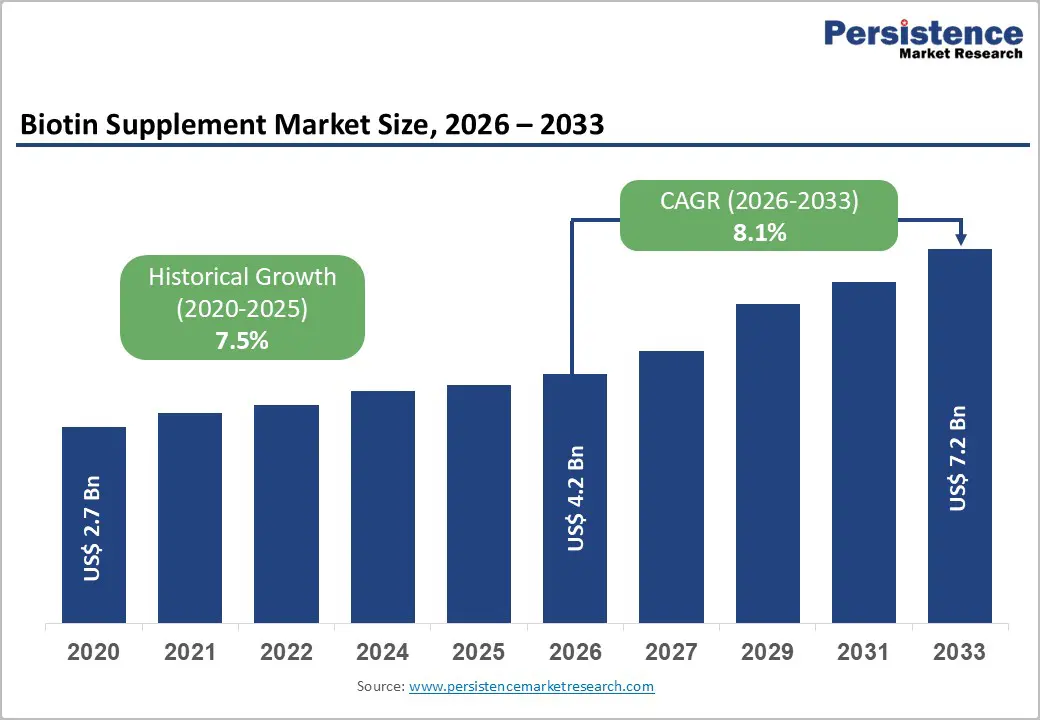
The global biotin supplement market size is expected to be valued at US$ 4.2 billion in 2026 and projected to reach US$ 7.2 billion by 2033, growing at a CAGR of 8.1% between 2026 and 2033.
Growth is supported by rising consumer interest in hair, skin, and nail wellness, wider use of dietary supplements in preventive health, and stronger retail availability across pharmacy and e-commerce channels. Consumer adoption is also reinforced by product innovation in gummies and capsules, while brand trust remains important because biotin may interfere with some laboratory tests, prompting clearer labeling and safety communication.
Key Industry Highlights:
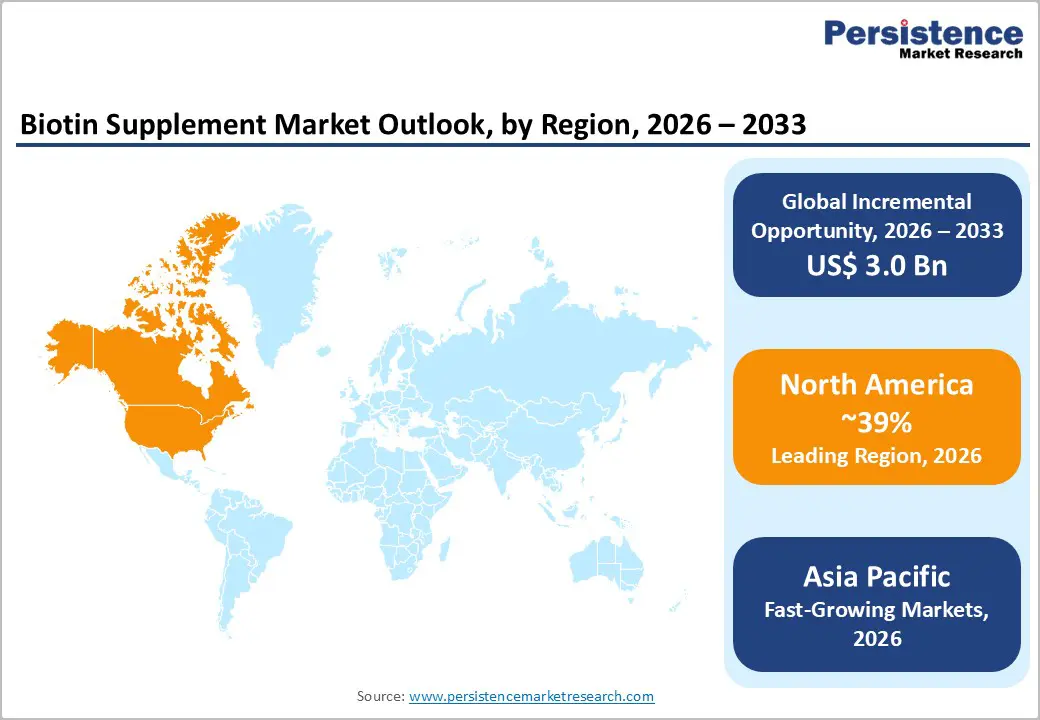
- Regional Leadership: North America leads the Biotin Supplement Market with 39% share in 2025, supported by strong supplement culture, advanced retail infrastructure, and high consumer awareness around beauty and wellness.
- Fast-growing Market: Asia Pacific is the fastest-growing region, helped by rising digital supplement adoption, beauty-focused consumers, and expanding manufacturing advantages across China, India, Japan, and ASEAN.
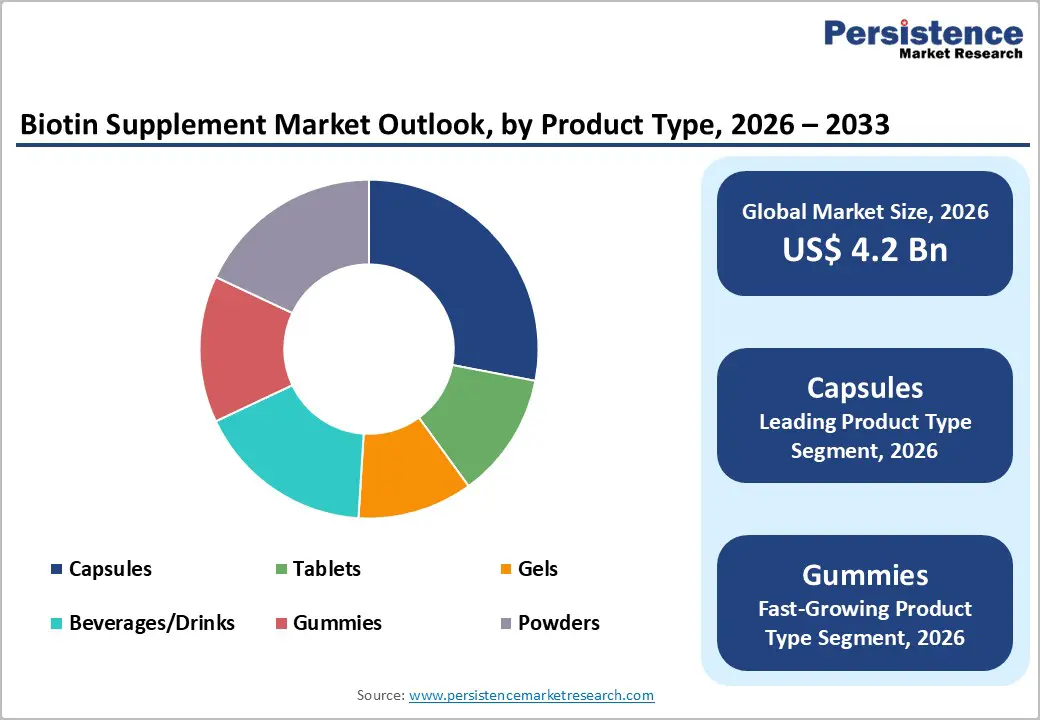
- Leading Product: Capsules remain the dominant product type with 28% share in 2025 because they offer dosage precision, broad familiarity, and strong compatibility with pharmacy and online sales.
- Fast-growing Product: Gummies are the fastest-growing product format because they combine convenience, taste, and strong appeal among younger wellness buyers seeking beauty-oriented supplements.
- Opportunity: The strongest opportunity lies in compliant premiumization, where brands can pair clear labeling, science-backed communication, and digital commerce to build trust in a category affected by biotin-related lab-test concerns.
| Key Insights | Details |
|---|---|
| Biotin Supplement Market Size (2026E) | US$ 4.2 billion |
| Market Value Forecast (2033F) | US$ 7.2 billion |
| Projected Growth CAGR (2026 - 2033) | 8.1% |
| Historical Market Growth (2020 - 2025) | 7.5% |

Market Dynamics
Market Growth Drivers
Beauty-and-wellness positioning is expanding demand
The growing beauty-and-wellness positioning is a major driver accelerating demand in the biotin supplements market, as consumers increasingly view nutrition as an essential part of their personal care routines. Rather than relying solely on topical products, individuals are shifting toward a “beauty-from-within” approach, where supplements play a key role in enhancing hair strength, skin health, and nail quality.
Biotin, known for its role in supporting keratin production, has gained strong recognition as a core ingredient in this segment. This shift is particularly evident among younger consumers and working professionals who seek convenient, preventive solutions to address concerns such as hair fall, dull skin, and brittle nails caused by stress, pollution, and lifestyle changes.
Social media influence, celebrity endorsements, and digital health awareness campaigns have further amplified the appeal of ingestible beauty products. Additionally, the convergence of the nutraceutical and cosmetics industries has led to the development of innovative combination supplements that blend biotin with collagen, vitamins, and minerals, enhancing perceived efficacy. As consumers increasingly prioritize holistic wellness and self-care, biotin supplements are being positioned not just as health products but as daily beauty essentials, significantly driving market growth.
Preventive health and omnichannel retail are widening access
Preventive healthcare awareness and the rapid expansion of omnichannel retail are significantly driving the growth of the biotin supplements market. Consumers are increasingly shifting from reactive treatment to proactive health management, focusing on maintaining hair, skin, and nail health through daily supplementation. Biotin, being strongly associated with visible beauty benefits, has gained popularity as part of routine wellness and self-care regimens, particularly among urban and younger populations. At the same time, the evolution of omnichannel retail, integrating offline and online sales platforms, has greatly improved product accessibility and consumer reach.
Traditional pharmacies and supermarkets continue to play a key role in building trust, while e-commerce platforms and direct-to-consumer websites offer convenience, wider product choices, subscription models, and personalized recommendations. Social media integration and influencer marketing further support seamless product discovery and purchase across channels. Additionally, quick commerce and doorstep delivery services are making supplements readily available, even in tier 2 and tier 3 cities. This combination of preventive health orientation and seamless retail access is not only expanding the consumer base but also encouraging repeat purchases, thereby accelerating overall market growth for biotin supplements.
Restraints - Labeling and diagnostic interference create trust friction
Labeling challenges and diagnostic interference associated with biotin supplements act as a significant restraint on market growth by creating trust and safety concerns among consumers and healthcare professionals. Many biotin products are marketed with high-dose formulations for hair, skin, and nail benefits, but labels often lack clear guidance on appropriate dosage, potential risks, or interactions with medical tests.
Excessive biotin intake is known to interfere with certain laboratory diagnostics, particularly immunoassays used for thyroid function tests, cardiac markers, and hormone levels, leading to inaccurate results and possible misdiagnosis. This has raised concerns among regulatory bodies and clinicians, prompting warnings and increased scrutiny of supplement labeling practices. As awareness of this issue grows, consumers may become more cautious about adopting high-dose biotin supplements, especially without medical supervision.
Additionally, healthcare providers may hesitate to recommend such products due to the risk of diagnostic errors. The lack of standardized labeling regulations across regions further complicates the situation, leading to inconsistent product information and reduced consumer confidence. Together, these factors create friction in market adoption, limit repeat purchases, and push manufacturers to invest more in transparency, education, and compliance to maintain credibility and trust.
Clinical Evidence for Beauty Claims Remains Limited
Another restraint is that the strongest consumer claims around hair and nail benefits are not supported by robust clinical evidence. The NIH Office of Dietary Supplements notes that evidence for biotin improving hair, nail, and skin health is limited mainly to small studies and case reports. That weak evidence base can reduce long-term credibility and limits how aggressively brands can position products without risking consumer skepticism or regulatory scrutiny. In a category where many products look similar, this makes differentiation harder and can push pricing competition, especially in commodity-style tablets and powders.
Opportunities - Popularity of Gummies to Drive More Demand
The clearest near-term opportunity is the shift toward gummies, the fastest-growing product format in the market. Gummies combine convenience, taste, and strong social-media friendliness, which helps brands reach younger consumers and first-time supplement users who may not prefer capsules or tablets. The format also fits beauty-from-within positioning, where consumers often look for products that feel more lifestyle-oriented than clinical. This creates room for innovation in flavor, clean-label formulations, sugar reduction, and combination products with collagen, zinc, or multivitamins. Brands that can combine biotin with a strong consumer experience are likely to capture incremental demand faster than traditional pill formats.
Category-wise Analysis
Product Type Insight
Capsules lead the product type category with a 28% market share in 2025 because they offer dosage precision, broad consumer familiarity, and a strong fit with legacy supplement buying habits. They are especially favored by consumers who prioritize routine use, high potency, and less sugar than gummies. Capsules also support private-label and branded strategies equally well, which keeps them dominant in pharmacies and online nutrition channels. At the same time, their leadership is strengthened by easy cross-selling with multivitamins and beauty supplements, making them a core format for brands like Nature’s Bounty and NOW Foods.
Sales Channel Insights
E-commerce is the leading sales channel in the Biotin Supplement Market because buyers increasingly prefer convenient replenishment, product comparison, subscription ordering, and access to a wider brand assortment. Online channels also support content-driven conversion, which is important for a category tied to beauty, wellness, and ingredient education. Brands can use detailed product pages, reviews, and influencer-led discovery to convert first-time buyers more effectively than in-store merchandising alone. This channel advantage is especially visible for premium and niche offerings, while pharmacies remain important for trust and physical accessibility. The digital model also supports faster launches and easier format testing.
Regional Insights
North America Biotin Supplement Market Trends and Insights
North America leads the market with a 39% share in 2025, supported by high supplement penetration, strong consumer awareness, and a mature retail network across pharmacies, mass retail, and digital platforms. The U.S. remains the regional growth engine because consumers actively buy hair, skin, and nail supplements, and major brands have built broad awareness through years of marketing and distribution. The regulatory backdrop is important too: the FDA has issued guidance on biotin interference in diagnostic testing, which has pushed companies toward clearer labeling and more transparent dosage communication. That environment favors established brands with compliance capability and strong consumer trust.
Innovation is also concentrated in North America, where formulation upgrades, rapid-release softgels, and “beauty-from-within” blends are widely marketed. Retailers and brands use omnichannel strategies to defend shelf space while maintaining subscription and direct-to-consumer growth online. The region benefits from a sophisticated wellness ecosystem that rewards science-led storytelling, recognizable trademarks, and product reliability. This is why companies such as Church & Dwight, Nature Made, and Natrol remain highly visible in category leadership discussions.
Asia Pacific Biotin Supplement Market Trends and Insights
The Asia Pacific biotin supplement market is emerging as a high-growth region, driven by rising health awareness, increasing disposable incomes, and a strong cultural emphasis on hair and skin care. Consumers across countries such as China, India, Japan, and South Korea are becoming more conscious of preventive healthcare and beauty-from-within solutions, leading to higher adoption of biotin-based supplements. The growing influence of social media, beauty influencers, and K-beauty trends has significantly boosted demand for products targeting hair growth, skin health, and nail strength.
Additionally, rapid urbanization and changing lifestyles have increased concerns related to hair fall, stress, and nutritional deficiencies, further supporting market expansion. The region is also witnessing a surge in demand for convenient formats such as gummies and ready-to-drink supplements, particularly among younger consumers. E-commerce platforms are playing a crucial role in market penetration by improving product accessibility and enabling direct-to-consumer sales. Moreover, the expansion of local nutraceutical manufacturers and the entry of global brands are intensifying competition and driving product innovation. Regulatory frameworks are gradually evolving to ensure product quality and safety, enhancing consumer trust. Overall, the Asia Pacific is expected to witness robust growth, supported by a large population base and increasing inclination toward wellness and personalized nutrition.
Competitive Landscape
The biotin supplement market is characterized by moderate to high competition with a mix of global leaders and numerous regional players. Large companies leverage strong brand recognition, extensive distribution networks, and diversified product portfolios to maintain market share, while smaller and niche brands compete through targeted offerings such as clean-label, vegan, and combination formulations. Innovation remains a key differentiator, with companies focusing on advanced delivery formats and multi-ingredient products to enhance efficacy and consumer appeal. The rise of e-commerce and direct-to-consumer models has further intensified competition by lowering entry barriers. Additionally, pricing pressure in mass segments and increasing regulatory scrutiny are pushing brands toward quality assurance and clinical validation to sustain competitiveness.
Key Developments:
- In November 2025, Niagen Bioscience launched Tru Niagen Beauty, expanding its product portfolio into the beauty-from-within segment. The product was introduced as a NAD+-focused supplement designed to support skin, hair, and nail health at the cellular level, marking the company’s strategic entry into the nutricosmetics category.
- In June 2025, CelluHair announced the launch of an advanced hair wellness formula backed by natural ingredients, aimed at addressing hair loss through a comprehensive, science-based approach. The product combined rice bran oil, biotin, hydrolyzed keratin peptides, and natural DHT-blocking compounds to improve follicle health and stimulate hair regrowth at the cellular level.
Companies Covered in Biotin Supplement Market
- Nature’s Bounty
- NOW Foods
- Church & Dwight
- Jarrow Formulas
- Life Extension
- Nestlé
- Nature Made
- Garden of Life
- Pure Encapsulations
- Natrol
- Solgar
- Nature’s Way
- Sports Research
Frequently Asked Questions
The global Biotin Supplement Market is expected to be valued at US$ 4.2 billion in 2026.
The strongest driver is consumer demand for hair, skin, and nail wellness supplements, combined with wider retail access through e-commerce and pharmacies.
North America leads the market with a 39% share in 2025 due to strong supplement adoption and a mature wellness retail ecosystem.
Demand for gummies and other consumer-friendly formats, especially across Asia Pacific, where digital wellness adoption is growing rapidly.
Key players include Nature’s Bounty, NOW Foods, Church & Dwight, Jarrow Formulas, Life Extension, Nestlé, Nature Made, Garden of Life, Pure Encapsulations, Natrol, Solgar, Nature’s Way, and Sports Research.


