




- Pharmaceuticals
- Skin Boosters Market
Skin Boosters Market Size, Share, and Growth Forecast, 2026 - 2033
Skin Boosters Market by Product Type (Mesotherapy, Micro-Needle (Microneedling)), Ingredient (Hyaluronic Acid (HA), Others), End-user (Dermatology Clinics, Medical Spas (MedSpas), Hospitals, Medical Aesthetic Clinics, Others), and Regional Analysis for 2026 - 2033

Skin Boosters Market Share and Trends Analysis
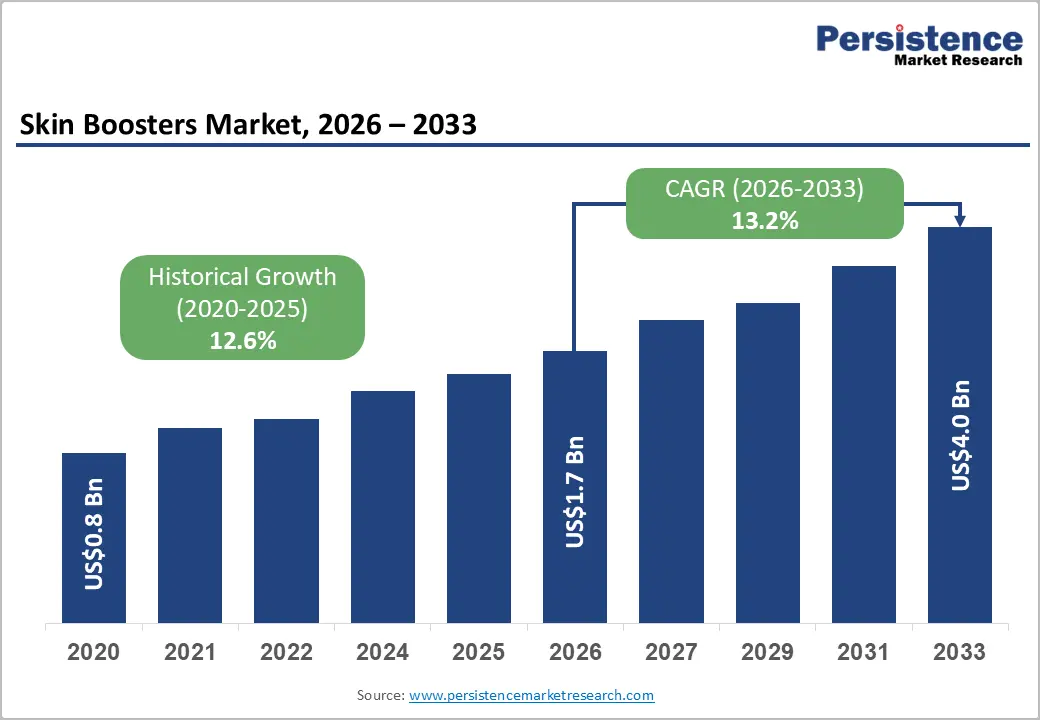
The global skin boosters market size is likely to be valued at US$1.7 billion in 2026 and is estimated to reach US$4.0 billion by 2033, growing at a CAGR of 13.2% during the forecast period from 2026 to 2033, driven by rising demand for minimally invasive aesthetic procedures, growing awareness regarding skin rejuvenation, and increasing acceptance of preventive cosmetic treatments among a wider age demographic.
Regulatory frameworks supporting product quality, safety, and practitioner training are strengthening confidence in injectable and device-based skin enhancement procedures.
Key Industry Highlights:
- Leading Product Type: Mesotherapy is set to hold around 58% revenue share in 2026, driven by established clinical protocols and broad physician adoption across dermatology networks.
- Fastest-Growing Product Type: Micro-needle (Microneedling) is projected as the fastest-growing segment, supported by device-assisted delivery innovation and patient preference for lower-discomfort procedures.
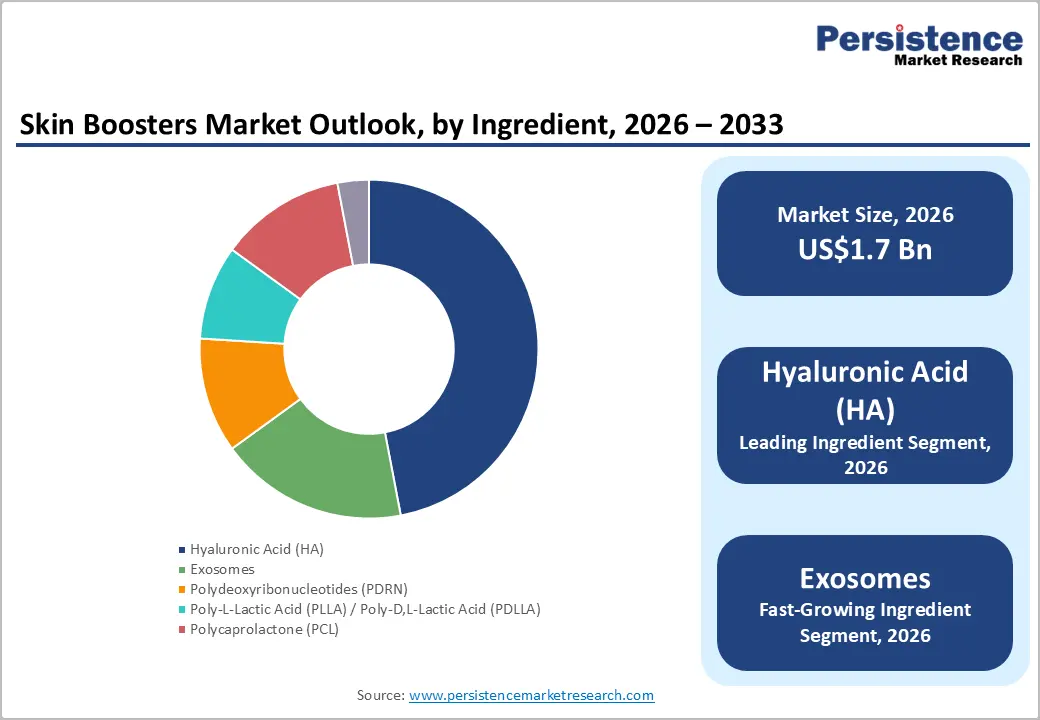
- Leading Ingredient: Hyaluronic acid (HA) is estimated to hold roughly 47% revenue share in 2026, due to its unmatched clinical track record, regulatory approval breadth, and physician familiarity worldwide.
- Fastest-Growing Ingredient: Exosomes are forecast to record the fastest ingredient-level growth, driven by emerging regenerative clinical evidence and accelerating investment from Korean and Chinese biotechnology manufacturers.
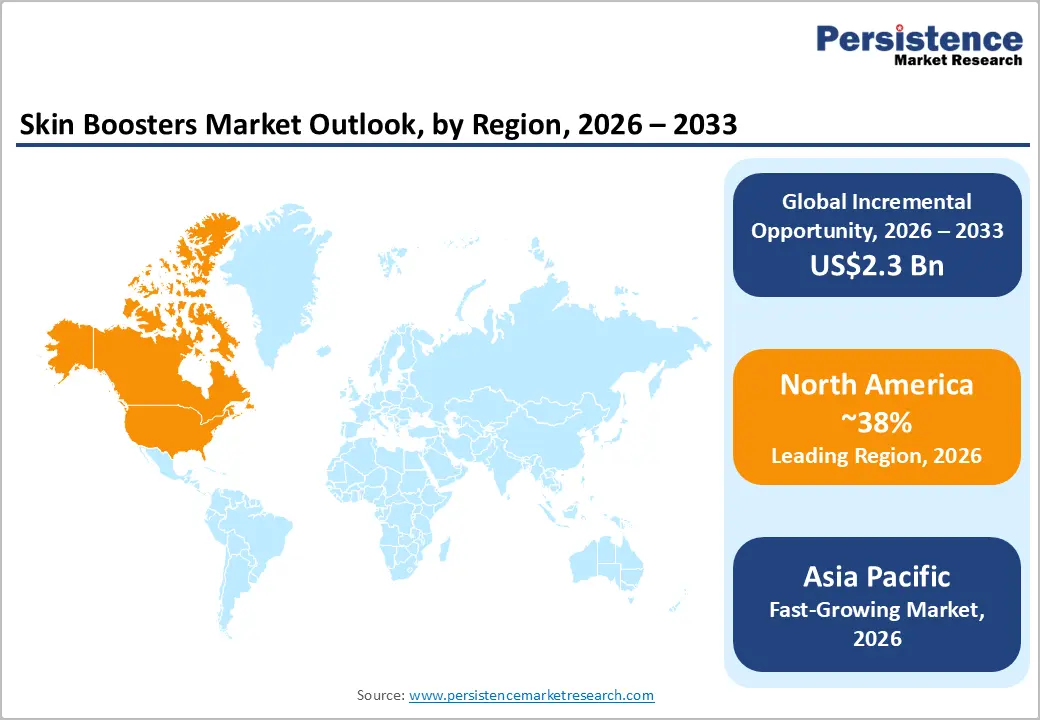
- Regional Leadership: North America is projected to capture roughly 38% of the market share by 2026, driven by advanced aesthetic infrastructure.
- Key Opportunity: Exosome-based formulations represent an emerging area of interest, although regulatory pathways remain under development in many markets.
DRO Analysis
Driver - Advancements in Regenerative and Bioactive Skin Enhancement Technologies
Continuous innovation in biomaterials and regenerative medicine is improving the effectiveness of skin quality enhancement procedures. Manufacturers are introducing formulations containing hyaluronic acid, polydeoxyribonucleotides, collagen stimulators, and bioactive compounds designed to improve tissue hydration and cellular regeneration. Improved formulation stability and precision delivery methods are enhancing treatment consistency and patient satisfaction.
The U.S. Food and Drug Administration reported a continued rise in medical device and injectable product approvals supporting aesthetic medicine applications through 2025. Regulatory validation of innovative formulations is encouraging clinical adoption and investment in advanced treatment platforms. Enhanced efficacy profiles are increasing patient retention rates, supporting recurring procedure demand and expanding revenue opportunities for aesthetic service providers.
Restraint - Complex Supply Chain Requirements for Advanced Biomaterials
Production of high-quality injectable formulations depends on specialized raw materials, stringent manufacturing controls, and regulatory compliance processes. Supply chain disruptions affecting active ingredients, sterile packaging components, or cold-chain logistics can influence product availability and increase operational costs across the value chain.
Manufacturers may face extended validation timelines and regulatory documentation requirements when introducing new ingredients or production facilities. These factors can increase development expenses and compress operating margins. Capacity expansion initiatives may encounter delays, limiting the pace of commercial scale-up despite rising treatment demand.
Opportunity - Expansion of Preventive Aesthetic Medicine among Younger Consumers
A growing consumer focus on preventive skincare is creating opportunities for earlier adoption of skin booster procedures. Younger adults increasingly seek treatments aimed at maintaining skin hydration, texture, and elasticity before visible signs of aging become pronounced. This shift is expanding the addressable patient population beyond traditional anti-aging treatment segments.
Companies can capitalize on this trend through personalized treatment protocols, subscription-based maintenance programs, and digital consultation platforms. Integration of skin diagnostics with customized booster formulations can strengthen treatment outcomes and patient engagement. Preventive treatment positioning supports recurring revenue streams and expands long-term market penetration opportunities.
Category-wise Analysis
Product Type Insights
Mesotherapy is expected to lead the skin boosters market, accounting for approximately 58% of revenue in 2026. The segment benefits from well-established clinical protocols, broad physician familiarity, and extensive use across dermatology practices globally. Firms such as Fillmed Laboratories have anchored mesotherapy product lines within aesthetic clinic formularies, reinforcing their dominant revenue position. Multi-ingredient cocktail formulations continue to differentiate the segment.
Micro-needle (microneedling) is likely to represent the fastest-growing segment, propelled by device-assisted delivery innovations and rising patient preference for precision treatment. Companies such as Dermapen World have commercialized microneedling platforms that integrate skin booster delivery, expanding the modality. Lower procedure discomfort and shorter recovery times relative to traditional needle injection techniques are widening adoption among younger patient demographics.
Ingredient Insights
Hyaluronic acid (HA) is projected to lead the market, capturing around 47% of the revenue share in 2026. HA-based formulations benefit from the longest clinical track record, established biocompatibility, and widespread physician training. Galderma's Restylane Skin Booster line exemplifies the commercial dominance of HA across global clinic networks. Product format diversity spanning different cross-linking densities sustains category breadth and demand.
Exosomes are likely to be the fastest-growing segment, fueled by emerging clinical evidence supporting superior regenerative outcomes relative to conventional biostimulators. Benev has introduced exosome-based skincare formulations that are being evaluated and adopted by selected aesthetic practices. Growing investment from Korean biotechnology firms in scalable exosome manufacturing is accelerating pipeline development and reducing per-unit costs, broadening commercial viability.
End-User Insights
Dermatology clinics are likely to be the leading segment with a projected 38% of the skin boosters’ market share in 2026, due to physician-supervised treatment protocols and strong patient trust. Clinics affiliated with networks such as the American Academy of Dermatology consistently report high procedural volumes for injectable biostimulators. Clinical credentialing and post-treatment monitoring capabilities reinforce dermatology clinics as the preferred setting for first-time and repeat patients.
Medical Spas (MedSpas) are anticipated to be the fastest-growing segment, fueled by expanding franchise models and the integration of skin booster protocols into wellness-oriented service menus. Medspa chains such as Ideal Image are deploying standardized treatment offerings across multi-location networks. Accessible appointment availability, competitive pricing, and lifestyle-oriented branding are attracting a younger and first-time consumer base that traditionally avoided dermatology clinic settings.
Regional Insights
North America Skin Boosters Market Trends
North America is anticipated to be the leading region, accounting for a market share of 38% in 2026, driven by strong adoption of minimally invasive aesthetic procedures, advanced dermatology infrastructure, and broad availability of premium skin rejuvenation treatments. Regulatory oversight, extensive practitioner networks, and increasing consumer spending on aesthetic services are supporting sustained procedure volumes.
U.S. Skin Boosters Market Insights
The U.S. is projected to account for approximately 79% of North America revenue in 2026. High consumer expenditure on aesthetic treatments, strong physician participation in cosmetic medicine, and rapid adoption of regenerative skincare technologies are supporting market expansion. Investments from major aesthetic companies and increasing demand for preventive skin treatments are contributing to sustained growth across clinical settings.
Canada Skin Boosters Market Insights
Canada is expected to capture nearly 21% of North America revenue in 2026. Growing awareness regarding skin rejuvenation treatments, increasing availability of certified practitioners, and expansion of medical aesthetic clinics are supporting adoption. Rising preference for minimally invasive procedures is encouraging wider utilization of skin booster therapies among diverse age groups.
Europe Skin Boosters Market Trends
Europe is anticipated to account for a market share of 29% in 2026, driven by established aesthetic medicine practices, strong regulatory standards, and increasing demand for skin quality enhancement procedures. Continuous product innovation and growing acceptance of injectable cosmetic treatments are supporting regional development. Expansion of specialized dermatology centers is further strengthening treatment accessibility.
Germany Skin Boosters Market Insights
Germany is forecast to contribute around 22% of Europe revenue in 2026. Strong physician-led treatment adoption, advanced healthcare infrastructure, and growing demand for evidence-based aesthetic procedures are supporting market expansion. Increasing utilization of premium skin rejuvenation solutions is driving procedure growth across dermatology and aesthetic medicine facilities.
U.K. Skin Boosters Market Insights
The U.K. is likely to represent approximately 18% of Europe revenue in 2026. Rising consumer interest in non-surgical cosmetic procedures and increasing investment in medical aesthetic services are supporting demand. Expansion of practitioner training programs and treatment quality initiatives is encouraging wider adoption of advanced skin booster therapies.
Asia Pacific Skin Boosters Market Trends
Asia Pacific is forecast to be the fastest-growing market for skin boosters, stimulated by increasing beauty consciousness, expanding middle-income populations, and rapid growth of aesthetic treatment infrastructure. Growing investment in dermatology clinics, aesthetic centers, and advanced skincare technologies is accelerating treatment adoption. Rising awareness regarding preventive skincare is creating significant long-term growth opportunities.
China Skin Boosters Market Insights
China is expected to account for nearly 36% of Asia Pacific revenue in 2026. Rapid expansion of cosmetic medicine facilities, increasing consumer spending on aesthetic treatments, and strong demand for non-surgical skin rejuvenation procedures are supporting market growth. Domestic innovation in regenerative skincare technologies is strengthening competitive activity and treatment availability.
Japan Skin Boosters Market Insights
Japan is projected to contribute approximately 21% of Asia Pacific revenue in 2026. A large aging population, high acceptance of technology-driven aesthetic procedures, and growing interest in skin maintenance treatments are supporting demand. Continuous innovation in injectable formulations and emphasis on treatment safety are contributing to market expansion.
Competitive Landscape
The global skin boosters market is moderately fragmented, characterized by the presence of multinational aesthetic medicine companies alongside specialized dermatology and regenerative skincare manufacturers. Competition is shaped by product innovation, clinical validation, physician training programs, and expansion of distribution networks. Major participants include AbbVie, Galderma, Merz Aesthetics, Teoxane Laboratories, and IBSA Derma.
Companies are focusing on advanced hyaluronic acid technologies, regenerative formulations, and personalized treatment solutions to strengthen competitive positioning. Strategic collaborations with aesthetic clinics and dermatology networks are supporting commercial expansion. Product differentiation through efficacy, treatment longevity, and practitioner adoption remains a key factor influencing competitive dynamics across developed and emerging markets.
Key Industry Developments:
- In June 2025, Hydrafacial launched the HydraFillic with Pep9 Booster, a peptide-based skin booster designed to improve hydration, skin firmness, and the appearance of fine lines and wrinkles through non-invasive skin rejuvenation treatments.
- In May 2025, Prollenium launched REVANESSE RENEW+, a hyaluronic acid-based skin booster in Canada, strengthening innovation in skin hydration and skin rejuvenation treatments.
Companies Covered in Skin Boosters Market
- AbbVie Inc.
- Galderma SA
- Merz Aesthetics
- Teoxane Laboratories
- IBSA Derma
- Sinclair Pharma
- Croma-Pharma GmbH
- REVITACARE
- Koru Pharma Co., Ltd.
- Caregen Co., Ltd.
- Mastelli S.r.l.
- Medytox Inc.
- Bloomage Biotechnology Corporation Limited
- Huons Global
- Prollenium Medical Technologies Inc.
Frequently Asked Questions
The global skin boosters market is projected to reach US$1.7 billion in 2026.
Rising demand for minimally invasive aesthetic procedures and increasing consumer focus on skin rejuvenation and preventive skincare drive the skin boosters market.
The skin boosters market is poised to witness a CAGR of 13.2% from 2026 to 2033.
Expansion of regenerative skin booster technologies and growing adoption of preventive aesthetic treatments among younger consumers create key market opportunities.
Some of the key market players include AbbVie, Galderma, Merz Aesthetics, Teoxane Laboratories, and IBSA Derma.


