




- Beauty & Personal Care
- Makeup Remover Products Market
Makeup Remover Products Market Size, Share, and Growth Forecast 2026 - 2033
Makeup Remover Products Market by Product Type (Cleansing Water, Wipes, Cleansing Oils, Cream & Lotion Removers, Meme Coins), Skin Type (Dry Skin, Oily Skin, Combination Skin, Sensitive Skin), Ingredient Type (Natural, Synthetic), Distribution Channel (Supermarkets/Hypermarkets, Pharmacies, Specialty Stores, Online Retail), and Regional Analysis, 2026 - 2033

Makeup Remover Products Market Size and Trend Analysis
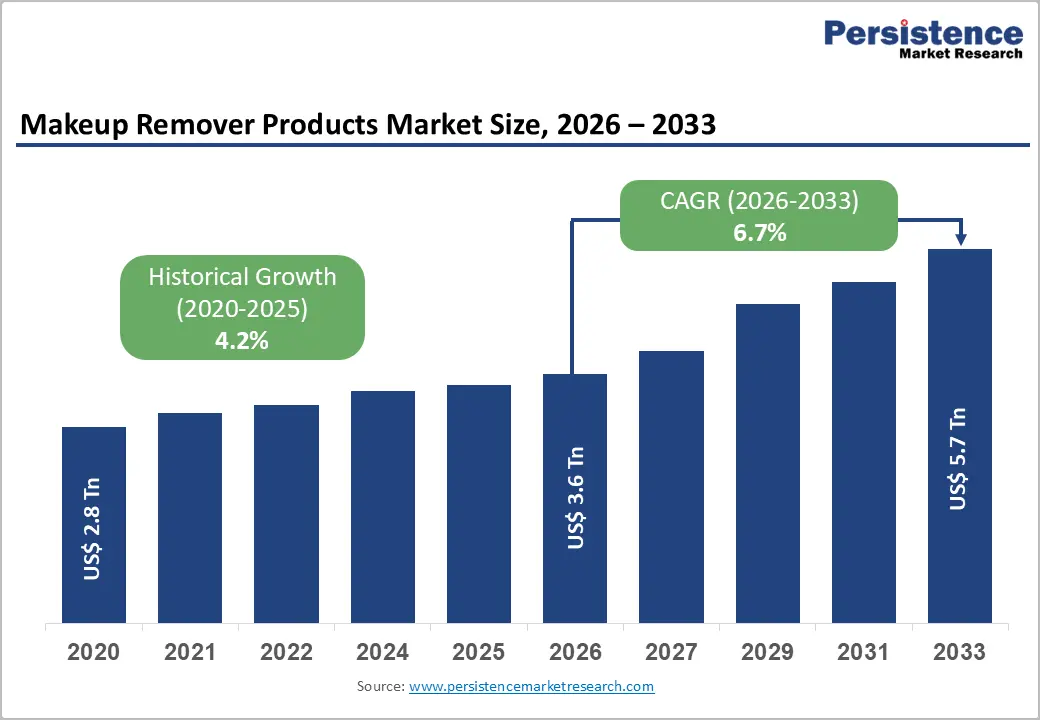
The global makeup remover products market size is expected to be valued at US$ 3.6 billion in 2026 and projected to reach US$ 5.7 billion by 2033, expanding at a CAGR of 6.7% during the forecast period.
Rising consumer awareness regarding skincare routines, increasing daily makeup usage, and growing demand for gentle cleansing solutions across all age groups. The rapid influence of social media beauty trends and celebrity-endorsed skincare routines continues to boost product adoption worldwide. In addition, rising preference for clean-label, natural, alcohol-free, and skin-friendly formulations is encouraging manufacturers to introduce innovative micellar waters, cleansing balms, and oil-based removers through both offline and online retail channels.
Key Industry Highlights:
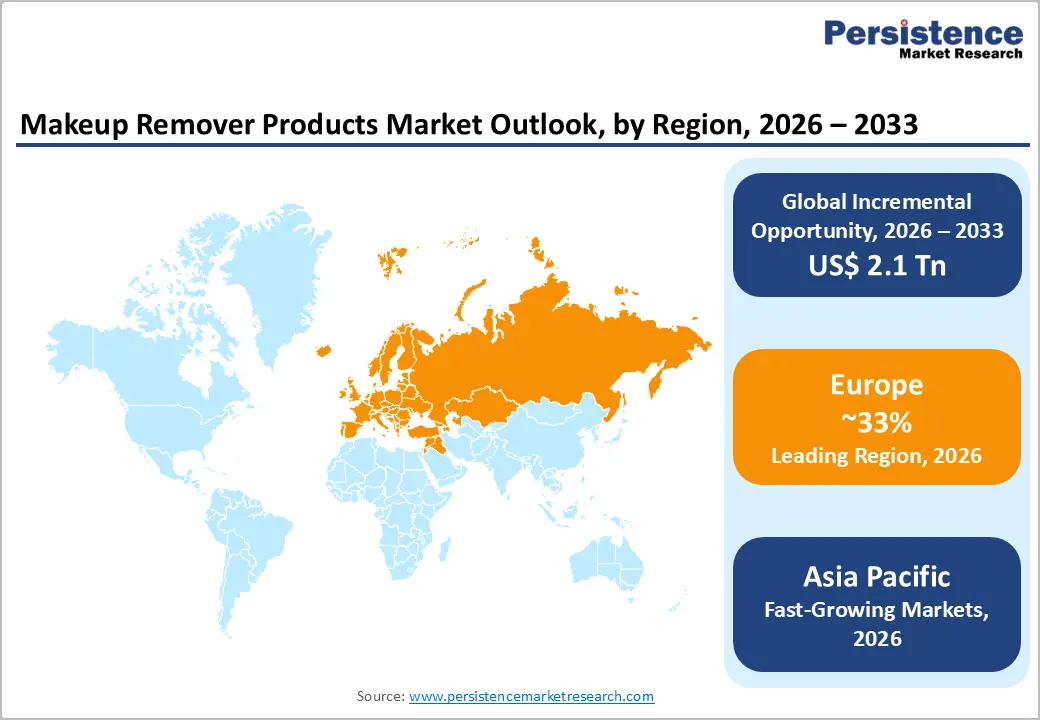
- Leading Region: Europe leads the makeup remover products market with 33% share in 2025, supported by luxury skincare demand and strict cosmetic safety regulations.
- Fast-Growing Market: Asia Pacific is the fast-growing market driven by rapid urbanization, rising beauty awareness, and expanding skincare consumption across emerging economies.
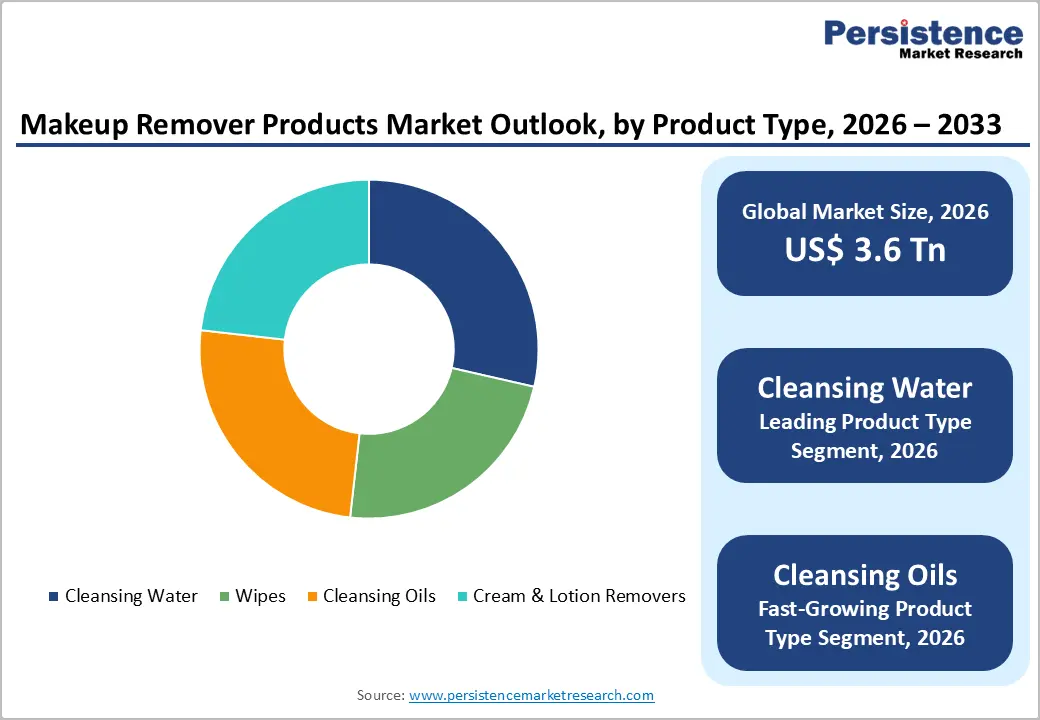
- Leading Category: Cleansing water is likely to dominate with 34% share in 2026 due to convenience, gentle formulations, and growing popularity in daily skincare routines.
- Fast-Growing Category: Cleansing oils are witnessing strong growth owing to increasing demand for effective waterproof makeup removal and nourishing skincare benefits.
- Key Opportunity: Rising consumer preference for natural and organic skincare products creates opportunities for clean-label, sustainable, and plant-based makeup remover formulations globally.
Market Dynamics
Driver - Growing Consumer Preference for Gentle Skincare and Clean Ingredients
Rising awareness regarding skincare hygiene and the harmful effects of leaving makeup on overnight is significantly driving demand for makeup remover products worldwide. Consumers are increasingly adopting complete skincare routines that include cleansing and makeup removal as essential daily practices. Growing concerns related to acne, skin irritation, clogged pores, and premature aging are encouraging the use of mild and dermatologically tested formulations suitable for sensitive skin conditions.
The increasing popularity of clean beauty trends is further accelerating market growth, especially among younger consumers seeking natural, alcohol-free, fragrance-free, and cruelty-free products. Brands are responding by launching botanical-based micellar waters, cleansing balms, and oil removers with nourishing ingredients such as aloe vera, chamomile, and green tea extracts. This shift toward skin-friendly formulations is strengthening brand loyalty and supporting premium product adoption across global beauty markets.
Expanding Influence of Digital Commerce and Beauty Content Trends
The rapid growth of e-commerce platforms and beauty-focused social media content has significantly increased consumer exposure to makeup remover products. Online tutorials, skincare influencers, and celebrity beauty routines continue to educate consumers about effective cleansing practices, boosting demand for specialized removers designed for waterproof and long-lasting cosmetics. Digital retail channels also provide consumers with wider product accessibility, competitive pricing, and personalized recommendations.
Beauty brands are increasingly leveraging influencer partnerships, live-stream shopping, and targeted digital campaigns to attract younger audiences and improve product engagement. Subscription-based beauty boxes and customer reviews further encourage trial purchases and repeat buying behavior. The convenience of online shopping, combined with growing smartphone penetration and digital payment adoption, is helping makeup remover brands expand their reach in both developed and emerging urban markets worldwide.
Restraints - Regulatory Compliance Challenges Increase Production and Development Costs
Strict cosmetic safety regulations regarding preservatives, synthetic chemicals, and allergen disclosure are creating challenges for makeup remover product manufacturers. Regulatory authorities across multiple regions are tightening restrictions on ingredients such as parabens, sulfates, and artificial fragrances due to rising consumer safety concerns. Compliance with labeling standards, ingredient testing, and product certification requirements significantly increases manufacturing complexity and operational expenses for brands.
Frequent changes in cosmetic regulations also delay product approvals and limit the use of certain cost-effective synthetic ingredients. Smaller manufacturers often struggle to maintain profitability while reformulating products to meet evolving standards. Additionally, product recalls and negative consumer reactions to harmful ingredients can damage brand reputation and reduce consumer trust. These regulatory pressures are particularly challenging in price-sensitive markets where affordability remains a major purchasing factor for skincare products.
Rising Counterfeit Cosmetics and Competitive Pricing Pressure Worldwide
The makeup remover products market faces intense competition due to the presence of numerous global, regional, and private-label brands offering similar formulations at varying price points. This highly fragmented landscape makes product differentiation increasingly difficult, forcing companies to invest heavily in branding, innovation, and marketing strategies. Price competition often reduces profit margins, especially in mass-market product categories targeting budget-conscious consumers.
The growing circulation of counterfeit cosmetics through unauthorized online platforms further restrains market growth by damaging consumer trust and brand credibility. Low-quality imitation products may contain unsafe ingredients that can cause allergic reactions or skin damage, negatively impacting overall consumer perception of cosmetic products. Emerging economies are particularly vulnerable to counterfeit distribution due to weaker enforcement mechanisms, limiting repeat purchases and creating challenges for established skincare brands seeking long-term expansion.
Opportunities - Increasing Demand for Personalized and Multifunctional Cleansing Solutions
Consumers are increasingly seeking multifunctional makeup remover products that combine cleansing, hydration, soothing, and skincare benefits within a single formulation. Products such as cleansing oils, micellar waters, and balm removers are gaining popularity due to their ability to remove waterproof makeup while nourishing the skin barrier. This trend is encouraging manufacturers to develop advanced formulations tailored for different skin types and beauty preferences.
The growing adoption of personalized skincare technologies also creates opportunities for premium product innovation. Brands are introducing AI-assisted skincare recommendations and customized ingredient combinations designed for oily, dry, combination, and sensitive skin categories. Demand for vegan, organic, and dermatologist-approved products continues to rise among health-conscious consumers. These evolving preferences are opening new revenue opportunities for brands offering high-performance, skin-friendly, and customized makeup removal solutions globally.
Sustainable Product Expansion Across Rapidly Developing Consumer Markets
Emerging economies across the Asia Pacific, Latin America, and the Middle East are creating strong growth opportunities for makeup remover product manufacturers. Rising urbanization, increasing disposable incomes, and expanding beauty awareness among younger consumers are accelerating demand for skincare and cosmetic cleansing products. Growing participation of women in the workforce and higher beauty spending are also contributing to stronger product adoption in developing regions.
Sustainability trends are further shaping future market opportunities as consumers increasingly prefer eco-friendly packaging and naturally derived ingredients. Brands are investing in recyclable containers, biodegradable wipes, refillable packaging systems, and water-efficient formulations to align with environmental concerns. Governments in several countries are also encouraging sustainable manufacturing and safer cosmetic ingredients. These developments are helping companies strengthen brand positioning while expanding their presence in rapidly growing beauty and personal care markets worldwide.
Category-wise Analysis
Product Type Insights
Cleansing water is likely to dominate the makeup remover products market with approximately 34% share in 2026 due to its convenience, lightweight texture, and effective micellar cleansing technology. Consumers increasingly prefer rinse-free products that quickly remove makeup, dirt, and excess oil without causing skin dryness. The product’s portability and suitability for daily skincare routines make it highly popular among urban professionals, students, and frequent travelers seeking quick cleansing solutions.
Balm removers are emerging as the fast-growing product category due to rising demand for deep-cleansing and moisturizing skincare products. These removers effectively dissolve waterproof and long-lasting makeup while nourishing the skin barrier with hydrating oils and botanical extracts. Their popularity is increasing among consumers seeking premium skincare experiences, especially those following multi-step beauty regimens focused on gentle cleansing, hydration, and skin protection benefits.
Skin Type Insights
Sensitive skin accounted for nearly 28% of the share in 2026 due to growing consumer concerns regarding allergies, irritation, redness, and environmental skin damage. Increasing exposure to pollution, stress, and harsh cosmetic ingredients has encouraged consumers to adopt hypoallergenic and dermatologist-tested makeup removers. Products containing soothing ingredients such as aloe vera, chamomile, and cucumber extracts are particularly preferred for minimizing irritation and maintaining skin balance.
Combination skin is witnessing a fast-growth as consumers increasingly seek balanced skincare solutions that address both oily and dry facial areas simultaneously. Demand for lightweight, non-comedogenic, and multi-benefit removers is rising among younger consumers experiencing changing skin conditions due to climate variations and lifestyle factors. Brands are introducing advanced formulations specifically designed to provide effective cleansing without over-drying or increasing excess oil production on the skin.
Ingredient Type Insights
Natural ingredient-based makeup remover products held around 32% share in 2026 as consumers increasingly prioritized safer and skin-friendly skincare solutions. Growing awareness regarding the harmful effects of synthetic chemicals has accelerated demand for products containing plant-based oils, herbal extracts, and organic ingredients. Consumers are also showing strong preference for cruelty-free, vegan, and environmentally sustainable formulations that align with clean beauty and wellness-focused lifestyles worldwide.
Synthetic ingredient-based removers are emerging as the fastest-growing segment due to advancements in cosmetic science and formulation technologies. Manufacturers are developing highly effective synthetic cleansing agents that offer superior makeup removal performance while maintaining skin hydration and stability. These products are gaining traction among consumers seeking long-lasting shelf life, advanced waterproof makeup removal capabilities, and affordable skincare options designed for high-performance beauty applications and daily cosmetic usage.
Distribution Channel Insights
Online retail is likely to account for nearly 29% share of the makeup remover products market in 2026 due to rising digital shopping adoption and increasing consumer reliance on beauty e-commerce platforms. Consumers prefer online channels for their product variety, convenience, discounts, customer reviews, and doorstep delivery services. Social media promotions, influencer recommendations, and personalized product suggestions are also significantly contributing to higher online purchases across both developed and emerging markets.
Specialty stores are becoming the fast-growing distribution channel as consumers increasingly seek personalized skincare consultations and premium beauty shopping experiences. These stores provide access to dermatologist-recommended, luxury, and clean beauty products that are often unavailable through conventional retail outlets. Growing consumer interest in testing product textures, ingredients, and skin compatibility before purchasing is driving stronger footfall toward specialty beauty retailers and skincare-focused cosmetic stores globally.
Regional Insights
North America Makeup Remover Products Market Trends and Insights
North America remains a leading regional market for makeup remover products, driven by premium skincare adoption, high beauty spending, and strong consumer awareness regarding skincare routines. Demand for multifunctional removers with hydration, anti-aging, and soothing properties continues to rise across the region. Social media influence, celebrity beauty brands, and clean-label product preferences are also accelerating innovation in micellar waters, cleansing oils, and vegan-based formulations.
- U.S. Makeup Remover Products Market Size
The U.S. accounted for nearly 75% of the North American makeup remover products market in 2025, reaching approximately US$ 500 billion. Strong consumer spending on skincare and beauty products, combined with growing preference for natural and dermatologist-tested formulations, supports market growth. Increasing demand for cruelty-free, alcohol-free, and sensitive skin-friendly removers continues to encourage product innovation through both online and specialty retail distribution channels.
Europe Makeup Remover Products Market Trends and Insights
Europe accounted for approximately 33% of the global makeup remover products market in 2026, supported by strong demand for natural, luxury, and sustainable skincare products. Consumers across the region increasingly prefer organic and eco-friendly cosmetic formulations aligned with strict environmental and cosmetic safety standards. Growing awareness regarding ingredient transparency, vegan beauty products, and recyclable packaging continues to encourage innovation among regional and international beauty brands.
- Germany Makeup Remover Products Market Size
Germany is likely to register nearly 25% of Europe makeup remover products market in 2026, valued at approximately US$ 300 billion. Strong consumer preference for organic skincare products and environmentally sustainable beauty solutions continues to support market expansion. The country’s advanced cosmetic manufacturing sector and growing demand for fragrance-free, dermatologically tested, and plant-based formulations are encouraging manufacturers to introduce premium and sensitive skin-focused cleansing products.
- U.K. Makeup Remover Products Market Size
The U.K. held around 20% share of Europe makeup remover products market in 2026, reaching approximately US$ 240 billion. Rising demand for vegan beauty products, cruelty-free cosmetics, and sustainable skincare packaging continues to drive product adoption. Consumers increasingly prefer multifunctional removers offering cleansing, hydration, and soothing benefits within a single product. Online beauty retail platforms and influencer-led skincare trends are also contributing to stronger market growth.
- France Makeup Remover Products Market Size
France is likely to register 22% share in 2026, valued at approximately US$ 265 billion. The country’s strong beauty and luxury skincare heritage supports demand for premium cleansing waters, micellar solutions, and botanical-based removers. Consumers increasingly prioritize gentle and high-quality skincare products formulated with natural ingredients. Rising interest in clean beauty and dermatologist-approved formulations continues to encourage innovation across cosmetic and skincare categories.
Asia Pacific Makeup Remover Products Market Trends and Insights
Asia Pacific is the fastest-growing regional market for makeup remover products, expanding at a CAGR of 8.5% between 2025 and 2032. Rapid urbanization, growing middle-class populations, and rising beauty consciousness are significantly increasing skincare product demand across the region. The popularity of K-beauty and J-beauty skincare routines, combined with strong e-commerce penetration and social media beauty trends, continues to support rapid market expansion in both developed and emerging economies.
- India Makeup Remover Products Market Size
India represented nearly 15% of the Asia Pacific makeup remover products market in 2025, reaching approximately US$ 150 billion. Rising disposable incomes, expanding beauty awareness, and increasing skincare adoption among younger consumers are driving market growth. Consumers are increasingly preferring herbal, Ayurvedic, and natural ingredient-based formulations due to growing concerns regarding chemical-based skincare products. Rapid e-commerce expansion and influencer marketing are further strengthening product accessibility across urban and semi-urban regions.
- Japan Makeup Remover Products Market Size
Japan accounted for approximately 25% of the Asia Pacific makeup remover products market in 2025, valued at around US$ 250 billion. Strong demand for advanced skincare technologies and premium beauty products continues to support market expansion. Consumers highly prefer lightweight cleansing oils, micellar waters, and gentle formulations aligned with J-beauty skincare philosophies. Innovation in anti-aging, hydration-focused, and sensitive skin-compatible products is also contributing to increased adoption across multiple consumer demographics.
- Southeast Asia Makeup Remover Products Market Size
Southeast Asia held nearly 18% share of the Asia Pacific makeup remover products market in 2025, reaching approximately US$ 180 billion. Rising beauty consciousness, increasing social media influence, and rapid digital commerce adoption continue to drive regional demand. Consumers in tropical climates increasingly prefer lightweight, oil-control, and refreshing cleansing formulations suitable for humid weather conditions. Growing middle-class populations and expanding availability of affordable skincare products are further supporting market growth across the region.
Competitive Landscape
The makeup remover products market is moderately fragmented, with global and regional brands competing through product innovation, clean beauty positioning, and premium skincare offerings. Companies are focusing on gentle formulations, natural ingredients, and multifunctional cleansing solutions to attract consumers seeking skin-friendly products.
Competition is also driven by vegan certifications, sustainable packaging, personalized skincare technologies, and strong digital marketing strategies. Many brands are expanding through online retail, influencer partnerships, and subscription-based direct-to-consumer models to improve customer engagement and strengthen long-term brand loyalty.
Key Developments:
- In March 2025, L'Oréal introduced AI-powered Perso makeup remover solutions designed to provide personalized skincare recommendations and customized cleansing formulations based on individual skin conditions, beauty preferences, and environmental factors, strengthening the company’s focus on advanced beauty technology integration.
- In July 2024, Estée Lauder launched algae-based cleansing oil removers featuring sustainable biotechnology ingredients aimed at improving hydration and gentle makeup removal performance. The development supports rising consumer demand for clean-label, eco-friendly, and naturally derived skincare formulations worldwide.
- In November 2024, Unilever introduced recyclable makeup remover wipes developed with reduced plastic content and biodegradable materials to strengthen its sustainability initiatives. The launch reflects increasing industry emphasis on environmentally responsible packaging and waste reduction within personal care and skincare product categories.
Companies Covered in Makeup Remover Products Market
- L’Oréal
- Bioderma
- Johnson & Johnson
- Estée Lauder
- Beiersdorf
- Procter & Gamble
- Unilever
- Shiseido
- Kao Corporation
- Garnier
- Neutrogena
- Nivea
- Clinique
- The Face Shop
- Avon
Frequently Asked Questions
The global Makeup Remover Products market is expected to reach approximately US$ 3.6 billion in 2026, driven by rising skincare awareness worldwide.
Growing skincare awareness, expanding beauty e-commerce, and rising consumer preference for clean-label and natural cosmetic formulations are major market growth drivers.
Europe leads the global Makeup Remover Products market with approximately 33% share in 2025, supported by luxury skincare and regulatory standards.
Rising demand for natural cleansing oils and sustainable skincare products across Asia Pacific creates significant long-term growth opportunities for manufacturers.
Major companies operating in the market include L’Oréal, Bioderma, Johnson & Johnson, Estée Lauder, and Beiersdorf.


