


- Executive Summary
- Global Liqueurs and Specialty Spirits Market Snapshot, 2026 and 2033
- Market Opportunity Assessment, 2026 - 2033, US$ Bn
- Key Market Trends
- Future Market Projections
- Specialty Clinics Market Insights
- Industry Developments and Key Market Events
- PMR Analysis and Recommendations
- Market Overview
- Market Scope and Definition
- Market Dynamics
- Drivers
- Restraints
- Opportunity
- Key Trends
- Macro-Economic Factors
- Global Sectorial Outlook
- Global GDP Growth Outlook
- COVID-19 Impact Analysis
- Forecast Factors - Relevance and Impact
- Value Added Insights
- Treatment Type Adoption Analysis
- Regulatory Landscape
- Value Chain Analysis
- Key Deals and Mergers
- PESTLE Analysis
- Porter’s Five Force Analysis
- Global Liqueurs and Specialty Spirits Market Outlook:
- Key Highlights
- Market Size (US$ Bn) and Y-o-Y Growth
- Absolute $ Opportunity
- Market Size (US$ Bn) Analysis and Forecast
- Historical Market Size (US$ Bn) Analysis, 2020-2025
- Market Size (US$ Bn) Analysis and Forecast, 2025-2033
- Global Liqueurs and Specialty Spirits Market Outlook: By Product Type
- Introduction / Key Findings
- Historical Market Size (US$ Bn) Analysis, By Product Type,2020-2025
- Market Size (US$ Bn) Analysis and Forecast, By Product Type, 2026- 2033
- Herbal Liqueurs
- Cream Liqueurs
- Citrus Liqueurs
- Fruit Liqueurs
- Nut Liqueurs
- Others
- Market Attractiveness Analysis: By Product Type
- Global Liqueurs and Specialty Spirits Market Outlook: By Base Ingredient
- Introduction / Key Findings
- Historical Market Size (US$ Bn) Analysis, By Base Ingredient,2020-2025
- Market Size (US$ Bn) Analysis and Forecast, By Base Ingredient, 2026- 2033
- Grain-based
- Fruit-based
- Herb and Spice-based
- Nut-based
- Vegetable-based
- Others
- Market Attractiveness Analysis: Indication
- Global Liqueurs and Specialty Spirits Market Outlook: By Alcohol Content
- Introduction / Key Findings
- Historical Market Size (US$ Bn) Analysis, By Alcohol Content,2020-2025
- Market Size (US$ Bn) Analysis and Forecast, By Alcohol Content, 2026- 2033
- Low Alcohol (up to 15%)
- Standard Alcohol (15% to 30%)
- High Alcohol (above 30%)
- Others
- Market Attractiveness Analysis: Indication
- Global Liqueurs and Specialty Spirits Market Outlook: By Packaging Type
- Introduction / Key Findings
- Historical Market Size (US$ Bn) Analysis, By Packaging Type,2020-2025
- Market Size (US$ Bn) Analysis and Forecast, By Packaging Type, 2026- 2033
- Glass Bottles
- Plastic Bottles
- Cans
- Pouch Packaging
- Others
- Market Attractiveness Analysis: Indication
- Key Highlights
- Global Liqueurs and Specialty Spirits Market Outlook: Region
- Key Highlights
- Historical Market Size (US$ Bn) Analysis, By Region,2020-2025
- Market Size (US$ Bn) Analysis and Forecast, By Region, 2026- 2033
- North America
- Europe
- East Asia
- South Asia and Oceania
- Latin America
- Middle East & Africa
- Market Attractiveness Analysis: Region
- North America Liqueurs and Specialty Spirits Market Outlook:
- Key Highlights
- Historical Market Size (US$ Bn) Analysis, By Market,2020-2025
- By Country
- By Product Type
- By Base Ingredient
- By Alcohol Content
- By Packaging Type
- Market Size (US$ Bn) Analysis and Forecast, By Country, 2026- 2033
- U.S.
- Canada
- Market Size (US$ Bn) Analysis and Forecast, By Product Type, 2026- 2033
- Herbal Liqueurs
- Cream Liqueurs
- Citrus Liqueurs
- Fruit Liqueurs
- Nut Liqueurs
- Others
- Market Size (US$ Bn) Analysis and Forecast, By Base Ingredient, 2026- 2033
- Grain-based
- Fruit-based
- Herb and Spice-based
- Nut-based
- Vegetable-based
- Others
- Global Liqueurs and Specialty Spirits Market Outlook: By Alcohol Content
- Introduction / Key Findings
- Historical Market Size (US$ Bn) Analysis, By Alcohol Content,2020-2025
- Market Size (US$ Bn) Analysis and Forecast, By Alcohol Content, 2026- 2033
- Low Alcohol (up to 15%)
- Standard Alcohol (15% to 30%)
- High Alcohol (above 30%)
- Others
- Market Attractiveness Analysis: Indication
- Global Liqueurs and Specialty Spirits Market Outlook: By Packaging Type
- Introduction / Key Findings
- Historical Market Size (US$ Bn) Analysis, By Packaging Type,2020-2025
- Market Size (US$ Bn) Analysis and Forecast, By Packaging Type, 2026- 2033
- Glass Bottles
- Plastic Bottles
- Cans
- Pouch Packaging
- Others
- Market Attractiveness Analysis: Indication
- Europe Liqueurs and Specialty Spirits Market Outlook:
- Key Highlights
- Historical Market Size (US$ Bn) Analysis, By Market,2020-2025
- By Country
- By Product Type
- By Base Ingredient
- By Alcohol Content
- By Packaging Type
- Market Size (US$ Bn) Analysis and Forecast, By Country, 2026- 2033
- Germany
- France
- U.K.
- Italy
- Spain
- Russia
- Türkiye
- Rest of Europe
- Market Size (US$ Bn) Analysis and Forecast, By Product Type, 2026- 2033
- Herbal Liqueurs
- Cream Liqueurs
- Citrus Liqueurs
- Fruit Liqueurs
- Nut Liqueurs
- Others
- Market Size (US$ Bn) Analysis and Forecast, By Base Ingredient, 2026- 2033
- Grain-based
- Fruit-based
- Herb and Spice-based
- Nut-based
- Vegetable-based
- Others
- Global Liqueurs and Specialty Spirits Market Outlook: By Alcohol Content
- Introduction / Key Findings
- Historical Market Size (US$ Bn) Analysis, By Alcohol Content,2020-2025
- Market Size (US$ Bn) Analysis and Forecast, By Alcohol Content, 2026- 2033
- Low Alcohol (up to 15%)
- Standard Alcohol (15% to 30%)
- High Alcohol (above 30%)
- Others
- Market Attractiveness Analysis: Indication
- Global Liqueurs and Specialty Spirits Market Outlook: By Packaging Type
- Introduction / Key Findings
- Historical Market Size (US$ Bn) Analysis, By Packaging Type,2020-2025
- Market Size (US$ Bn) Analysis and Forecast, By Packaging Type, 2026- 2033
- Glass Bottles
- Plastic Bottles
- Cans
- Pouch Packaging
- Others
- Market Attractiveness Analysis: Indication
- East Asia Liqueurs and Specialty Spirits Market Outlook:
- Key Highlights
- Historical Market Size (US$ Bn) Analysis, By Market,2020-2025
- By Country
- By Product Type
- By Base Ingredient
- By Alcohol Content
- By Packaging Type
- Market Size (US$ Bn) Analysis and Forecast, By Country, 2026- 2033
- China
- Japan
- South Korea
- Market Size (US$ Bn) Analysis and Forecast, By Product Type, 2026- 2033
- Herbal Liqueurs
- Cream Liqueurs
- Citrus Liqueurs
- Fruit Liqueurs
- Nut Liqueurs
- Others
- Market Size (US$ Bn) Analysis and Forecast, By Base Ingredient, 2026- 2033
- Grain-based
- Fruit-based
- Herb and Spice-based
- Nut-based
- Vegetable-based
- Others
- Global Liqueurs and Specialty Spirits Market Outlook: By Alcohol Content
- Introduction / Key Findings
- Historical Market Size (US$ Bn) Analysis, By Alcohol Content,2020-2025
- Market Size (US$ Bn) Analysis and Forecast, By Alcohol Content, 2026- 2033
- Low Alcohol (up to 15%)
- Standard Alcohol (15% to 30%)
- High Alcohol (above 30%)
- Others
- Market Attractiveness Analysis: Indication
- Global Liqueurs and Specialty Spirits Market Outlook: By Packaging Type
- Introduction / Key Findings
- Historical Market Size (US$ Bn) Analysis, By Packaging Type,2020-2025
- Market Size (US$ Bn) Analysis and Forecast, By Packaging Type, 2026- 2033
- Glass Bottles
- Plastic Bottles
- Cans
- Pouch Packaging
- Others
- Market Attractiveness Analysis: Indication
- South Asia & Oceania Liqueurs and Specialty Spirits Market Outlook:
- Key Highlights
- Historical Market Size (US$ Bn) Analysis, By Market,2020-2025
- By Country
- By Product Type
- By Base Ingredient
- By Alcohol Content
- By Packaging Type
- Market Size (US$ Bn) Analysis and Forecast, By Country, 2026- 2033
- India
- Southeast Asia
- ANZ
- Rest of South Asia & Oceania
- Market Size (US$ Bn) Analysis and Forecast, By Product Type, 2026- 2033
- Herbal Liqueurs
- Cream Liqueurs
- Citrus Liqueurs
- Fruit Liqueurs
- Nut Liqueurs
- Others
- Market Size (US$ Bn) Analysis and Forecast, By Base Ingredient, 2026- 2033
- Grain-based
- Fruit-based
- Herb and Spice-based
- Nut-based
- Vegetable-based
- Others
- Global Liqueurs and Specialty Spirits Market Outlook: By Alcohol Content
- Introduction / Key Findings
- Historical Market Size (US$ Bn) Analysis, By Alcohol Content,2020-2025
- Market Size (US$ Bn) Analysis and Forecast, By Alcohol Content, 2026- 2033
- Low Alcohol (up to 15%)
- Standard Alcohol (15% to 30%)
- High Alcohol (above 30%)
- Others
- Market Attractiveness Analysis: Indication
- Global Liqueurs and Specialty Spirits Market Outlook: By Packaging Type
- Introduction / Key Findings
- Historical Market Size (US$ Bn) Analysis, By Packaging Type,2020-2025
- Market Size (US$ Bn) Analysis and Forecast, By Packaging Type, 2026- 2033
- Glass Bottles
- Plastic Bottles
- Cans
- Pouch Packaging
- Others
- Market Attractiveness Analysis: Indication
- Latin America Liqueurs and Specialty Spirits Market Outlook:
- Key Highlights
- Historical Market Size (US$ Bn) Analysis, By Market,2020-2025
- By Country
- By Product Type
- By Base Ingredient
- By Alcohol Content
- By Packaging Type
- Market Size (US$ Bn) Analysis and Forecast, By Country, 2026- 2033
- Brazil
- Mexico
- Rest of Latin America
- Market Size (US$ Bn) Analysis and Forecast, By Product Type, 2026- 2033
- Herbal Liqueurs
- Cream Liqueurs
- Citrus Liqueurs
- Fruit Liqueurs
- Nut Liqueurs
- Others
- Market Size (US$ Bn) Analysis and Forecast, By Base Ingredient, 2026- 2033
- Grain-based
- Fruit-based
- Herb and Spice-based
- Nut-based
- Vegetable-based
- Others
- Global Liqueurs and Specialty Spirits Market Outlook: By Alcohol Content
- Introduction / Key Findings
- Historical Market Size (US$ Bn) Analysis, By Alcohol Content,2020-2025
- Market Size (US$ Bn) Analysis and Forecast, By Alcohol Content, 2026- 2033
- Low Alcohol (up to 15%)
- Standard Alcohol (15% to 30%)
- High Alcohol (above 30%)
- Others
- Market Attractiveness Analysis: Indication
- Global Liqueurs and Specialty Spirits Market Outlook: By Packaging Type
- Introduction / Key Findings
- Historical Market Size (US$ Bn) Analysis, By Packaging Type,2020-2025
- Market Size (US$ Bn) Analysis and Forecast, By Packaging Type, 2026- 2033
- Glass Bottles
- Plastic Bottles
- Cans
- Pouch Packaging
- Others
- Market Attractiveness Analysis: Indication
- Middle East & Africa Liqueurs and Specialty Spirits Market Outlook:
- Key Highlights
- Historical Market Size (US$ Bn) Analysis, By Market,2020-2025
- By Country
- By Product Type
- By Base Ingredient
- By Alcohol Content
- By Packaging Type
- Market Size (US$ Bn) Analysis and Forecast, By Country, 2026- 2033
- GCC Countries
- Egypt
- South Africa
- Northern Africa
- Rest of Middle East & Africa
- Market Size (US$ Bn) Analysis and Forecast, By Product Type, 2026- 2033
- Herbal Liqueurs
- Cream Liqueurs
- Citrus Liqueurs
- Fruit Liqueurs
- Nut Liqueurs
- Others
- Market Size (US$ Bn) Analysis and Forecast, By Base Ingredient, 2026- 2033
- Grain-based
- Fruit-based
- Herb and Spice-based
- Nut-based
- Vegetable-based
- Others
- Global Liqueurs and Specialty Spirits Market Outlook: By Alcohol Content
- Introduction / Key Findings
- Historical Market Size (US$ Bn) Analysis, By Alcohol Content,2020-2025
- Market Size (US$ Bn) Analysis and Forecast, By Alcohol Content, 2026- 2033
- Low Alcohol (up to 15%)
- Standard Alcohol (15% to 30%)
- High Alcohol (above 30%)
- Others
- Market Attractiveness Analysis: Indication
- Global Liqueurs and Specialty Spirits Market Outlook: By Packaging Type
- Introduction / Key Findings
- Historical Market Size (US$ Bn) Analysis, By Packaging Type,2020-2025
- Market Size (US$ Bn) Analysis and Forecast, By Packaging Type, 2026- 2033
- Glass Bottles
- Plastic Bottles
- Cans
- Pouch Packaging
- Others
- Market Attractiveness Analysis: Indication
- Competition Landscape
- Market Share Analysis, 2024
- Market Structure
- Competition Intensity Mapping by Market
- Competition Dashboard
- Company Profiles (Details - Overview, Financials, Strategy, Recent Developments)
- Suntory Holdings
- Overview
- Segments and Treatment Types
- Key Financials
- Market Developments
- Market Strategy
- Halewood International
- The Brown-Forman
- Bacardi Limited
- Pernod Ricard
- Rémy Cointreau
- ILLVA Saronno
- The Drambuie Liqueur Company
- Davide Campari-Milano
- Branca International
- Mast-Jagermeister
- Suntory Holdings
- Appendix
- Research Methodology
- Research Assumptions
- Acronyms and Abbreviations


- Beverages
- Liqueurs and Specialty Spirits Market
Liqueurs and Specialty Spirits Market Size, Share, and Growth Forecast, 2026 - 2033
Liqueurs and Specialty Spirits Market by Product Type (Herbal Liqueurs, Others), Base Ingredient (Grain-based, Fruit-based, Others), Alcohol Content (Low Alcohol (up to 15%), Others), and Regional Analysis for 2026 - 2033
Liqueurs and Specialty Spirits Market Size and Trends Analysis
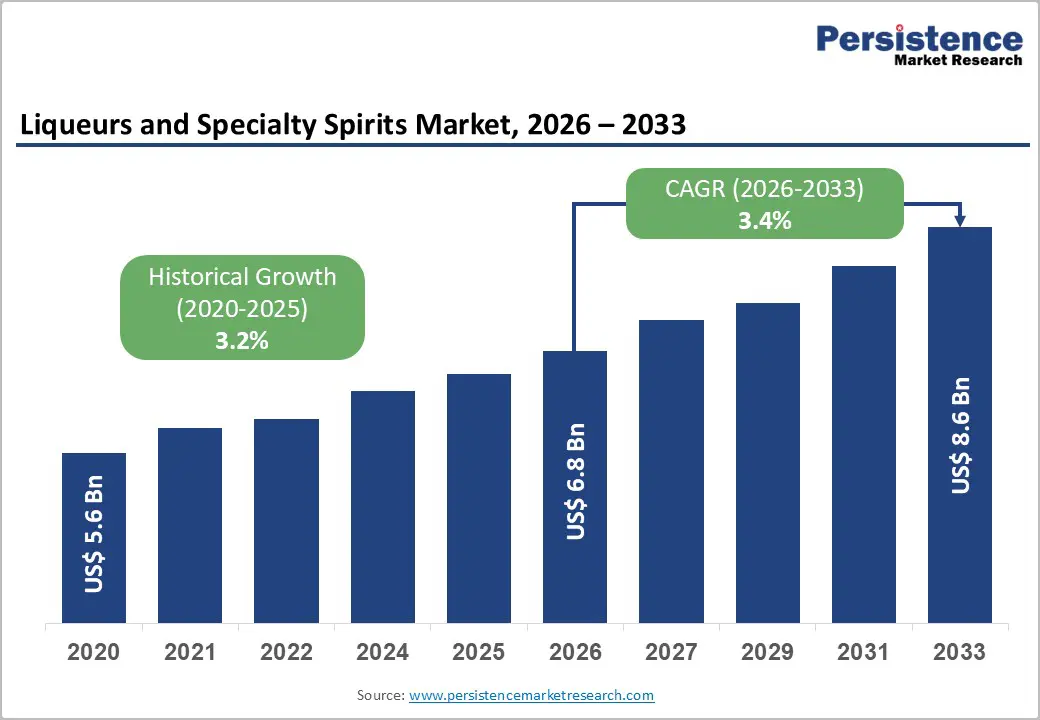
The global liqueurs and specialty spirits market size is likely to be valued at US$6.8 billion in 2026 and is expected to reach US$8.6 billion by 2033, growing at a CAGR of 3.4% during the forecast period from 2026 to 2033, driven by evolving consumer preferences within the broader alcoholic beverages landscape.
This expansion reflects consistent demand for flavored, versatile, and experience-driven spirit products that cater to both traditional consumption and modern lifestyle trends. Increasing interest in cocktail culture and at-home mixology has significantly increased the use of liqueurs as essential ingredients, while specialty spirits are gaining traction for their artisanal appeal and unique flavor profiles.
Consumers are increasingly drawn toward premium and craft offerings that emphasize authenticity, quality ingredients, and distinctive taste experiences. Liqueurs continue to serve dual roles as both cocktail enhancers and standalone indulgent beverages, appealing to a wide range of consumer segments. The market is adapting to shifting health preferences, with growing demand for low-alcohol, low-sugar, and naturally infused variants that align with moderation trends.
Key Industry Highlights:
- Leading Region: North America is expected to be the leading region, accounting for a 40% market share in 2026, driven by strong U.S. leadership, premiumization trends, and a well-established innovation ecosystem.
- Fastest-growing Region: Asia Pacific is likely to be the fastest-growing region, supported by rapid urbanization, rising middle-class income, and growing adoption of Western drinking trends.
- Leading Product Type: Herbal liqueurs are projected to lead in 2026, accounting for 35% of revenue share, driven by their versatility in cocktails and the growing demand for botanical flavor profiles.
- Leading Alcohol Content: Standard alcohol (15% to 30%) is anticipated to be the leading base ingredient, accounting for over 45% of the revenue share in 2026, supported by its balanced strength, versatility in cocktails, and widespread consumer preference.
| Key Insights | Details |
|---|---|
| Liqueurs and Specialty Spirits Market Size (2026E) | US$6.8 Bn |
| Market Value Forecast (2033F) | US$8.6 Bn |
| Projected Growth (CAGR 2026 to 2033) | 3.4% |
| Historical Market Growth (CAGR 2020 to 2025) | 3.2% |
DRO Analysis
Driver - Rising Cocktail Culture and At-Home Mixology
The growing popularity of cocktail culture has significantly influenced demand for liqueurs and specialty spirits, as consumers increasingly experiment with diverse drink recipes both in social settings and at home. The expansion of mixology through digital platforms, bartender-led tutorials, and social media trends has elevated awareness of premium ingredients, encouraging consumers to explore unique flavor combinations. Liqueurs play a crucial role as essential cocktail modifiers, enhancing taste, aroma, and visual appeal.
At home mixology has accelerated market growth, especially as consumers seek personalized drinking experiences and convenience. The increasing availability of ready-to-use cocktail kits, online ingredient delivery services, and premium small-batch products has simplified the process of recreating bar-quality beverages at home. This trend also encourages experimentation with seasonal flavors and innovative ingredients, thereby boosting demand for a diverse range of liqueurs.
Premiumization and Flavor Innovation
The shift toward premiumization is a defining trend in the liqueurs and specialty spirits market, as consumers increasingly prioritize quality over quantity. Demand for high-end products with distinctive flavors, artisanal craftsmanship, and authentic brand stories continues to rise. This has encouraged manufacturers to focus on small-batch production, sourcing unique ingredients, and refined distillation techniques. Premium offerings provide higher margins for producers and attract consumers looking for more refined and high-quality drinking experiences, thereby strengthening brand loyalty and differentiation in a competitive landscape.
Flavor innovation plays a complementary role in sustaining consumer interest and expanding product portfolios. Producers are continuously introducing exotic, botanical, and fusion-based flavors to cater to evolving preferences. The integration of natural ingredients, reduced sugar formulations, and region-specific profiles enhances product appeal. Limited-edition releases and collaborations contribute to exclusivity and experimentation. This combination of premium positioning and innovative flavors enables brands to capture diverse consumer segments while maintaining relevance in a dynamic and trend-driven market environment.
Restraint - Health and Moderation Trends
Increasing awareness of health and wellness is reshaping consumption patterns within the alcoholic beverage sector, including liqueurs and specialty spirits. Consumers are becoming more conscious of alcohol intake, calorie content, and sugar levels, leading to a gradual shift toward moderation. This trend has influenced purchasing behavior, with individuals opting for lower-alcohol or occasional consumption rather than frequent indulgence.
In response, manufacturers are adapting their product offerings to align with these preferences by introducing low alcohol, low-sugar, and clean-label variants. The focus on transparency in ingredients and nutritional information is becoming increasingly important. While moderation trends may limit traditional consumption levels, they also encourage innovation and diversification within the market. Brands that successfully balance indulgence with health-conscious attributes are better positioned to maintain consumer engagement and navigate the evolving regulatory and social landscape.
Supply Chain Constraints and Ingredient Sourcing
The liqueurs and specialty spirits market relies heavily on a diverse range of raw materials, including fruits, herbs, spices, nuts, and dairy components, making supply chain stability a critical factor. Fluctuations in agricultural output due to climate variability, seasonal changes, and geopolitical disruptions can impact ingredient availability and cost. These challenges can lead to production delays, increased operational expenses, and potential inconsistencies in product quality, affecting overall market performance.
Sourcing high-quality and sustainable ingredients adds complexity, especially for premium and artisanal products that depend on specific origins and authenticity. Companies need to invest in resilient supply chains, build strategic partnerships, and strengthen local sourcing initiatives to effectively mitigate risks. Transportation and logistics challenges can impact distribution efficiency, particularly in emerging markets. Overcoming these constraints requires ongoing adaptation, the integration of advanced technologies, and proactive risk management to ensure consistent production and protect brand reputation.
Opportunity - Technological Convergence and Innovation in Low/No-Alcohol Variants
Technological advancements are playing a transformative role in the development of low and no alcohol liqueurs, enabling producers to retain flavor complexity while reducing alcohol content. Innovations in distillation techniques, flavor extraction, and formulation processes allow manufacturers to create products that closely mimic traditional profiles without compromising taste. This convergence of technology and product development supports the growing demand for healthier alternatives and expands the consumer base to include non-alcohol drinkers.
The rise of functional and plant-based ingredients enhances innovation in this segment, as brands explore botanical infusions and natural sweeteners. These advancements meet health-conscious preferences while also helping brands stand out and position their products as premium. As consumer acceptance of low and no-alcohol options continues to grow, technological capabilities will remain a key driver in shaping product evolution and unlocking new market segments within the broader spirits industry.
RTD and Mixology Innovation
The rapid expansion of ready to drink (RTD) beverages is creating new opportunities for liqueurs and specialty spirits, as convenience-driven consumers seek high-quality, pre-mixed options. RTDs combine ease of consumption with consistent flavor profiles, making them popular across diverse demographics. The inclusion of liqueurs in these formulations enhances taste complexity and allows brands to showcase signature flavors in accessible formats. This trend is particularly strong among younger consumers and urban populations seeking on-the-go solutions.
Innovation in mixology continues to drive product development, with brands introducing cocktail-inspired blends and hybrid beverages. Collaborations with bartenders and mixologists contribute to creative formulations and premium positioning. Packaging innovations, such as sleek cans and eco-friendly materials, enhance product appeal. RTD growth and mixology advancements are reshaping consumption patterns, enabling brands to reach new audiences while reinforcing the versatility and relevance of liqueurs in modern drinking culture.
Category-wise Analysis
Product Type Insights
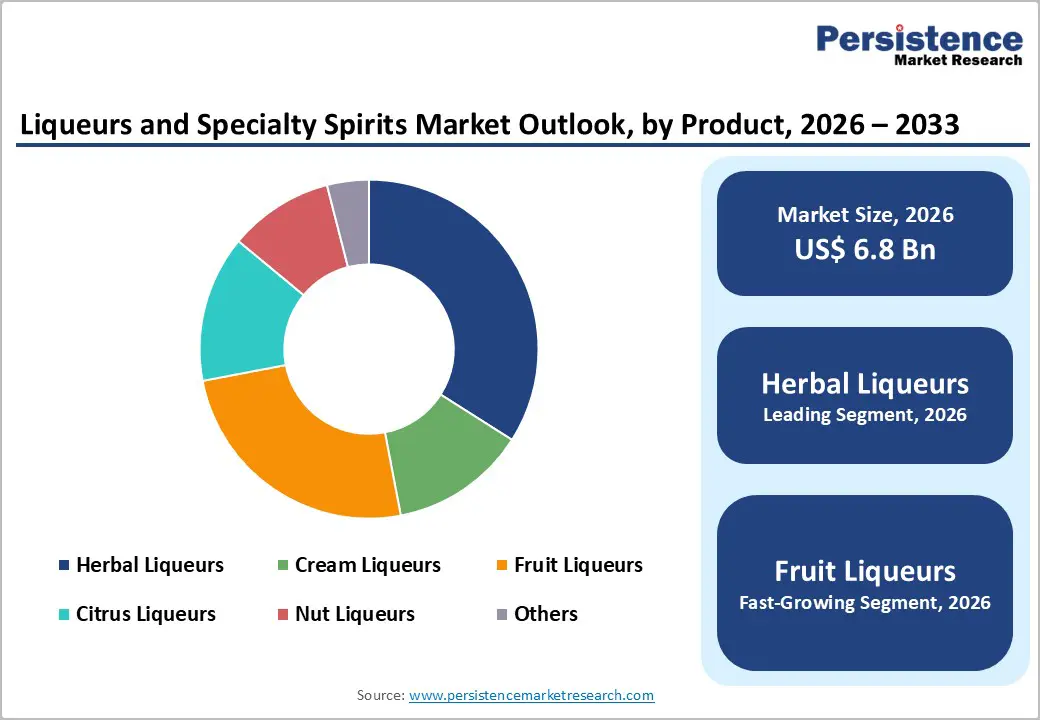
Herbal is expected to lead the liqueurs and specialty spirits market, accounting for approximately 35% of revenue in 2026, driven by their strong versatility and widespread use in classic and contemporary cocktails. Their dominance is supported by their ability to act as both flavor enhancers and balancing agents in mixology, making them essential across bars and home consumption. The segment also benefits from premium positioning and strong brand heritage, which reinforces consumer trust and repeat purchases. For example, products such as herbal aperitifs used in classic cocktails such as Negroni highlight their consistent demand and functional importance.
Fruit liqueurs are likely to represent the fastest-growing segment, supported by their refreshing taste profiles and broad consumer appeal. Growth is driven by increasing demand for lighter, sweeter, and more approachable flavors, particularly among younger consumers and new entrants to the spirits category. These liqueurs are widely used in seasonal cocktails, ready-to-drink beverages, and experimental mixology, enhancing their relevance in evolving consumption trends. For example, fruit-forward liqueurs used in summer cocktails such as sangria-inspired mixes demonstrate strong seasonal appeal.
Alcohol Content Insights
Standard alcohol content liqueurs are projected to lead the market, capturing around 45% of the revenue share in 2026, supported by their balanced strength and broad applicability across consumption occasions. These products offer an optimal mix of flavor intensity and alcohol level, making them highly suitable for both cocktails and standalone consumption. Their versatility allows bartenders and consumers to create a wide range of drinks without overpowering other ingredients, which reinforces their consistent demand in both on-trade and off-trade channels. For example, orange-flavored liqueurs commonly used in classic cocktails such as margaritas highlight their widespread use and reliability.
Low alcohol liqueurs are likely to be the fastest-growing segment, driven by consumer preferences shifting toward moderation and wellness-oriented lifestyles. Increasing awareness of health, calorie intake, and responsible drinking habits has encouraged demand for lighter alternatives that still deliver flavor and experience. These products are particularly appealing to younger consumers and those seeking social drinking options without high alcohol intensity. For example, low-alcohol aperitif-style liqueurs used in light spritz cocktails demonstrate strong growth and rising popularity.
Regional Insights
North America Liqueurs and Specialty Spirits Market Trends
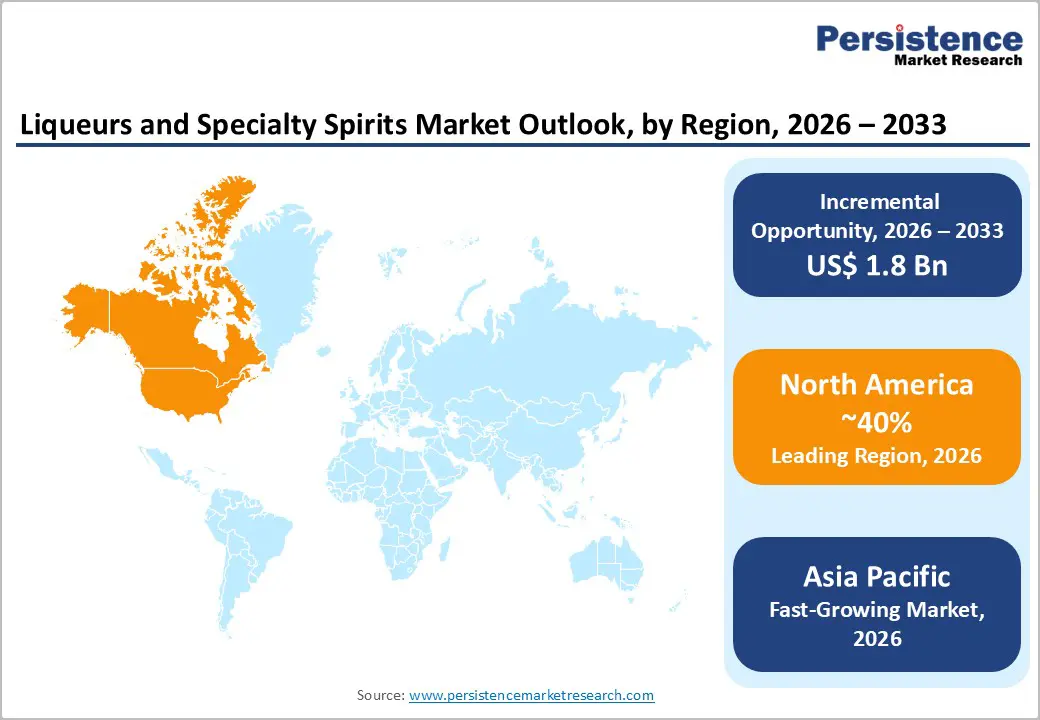
North America is expected to be the leading region, accounting for a 40% market share in 2026, driven by strong consumer demand for premium and craft beverages. The region benefits from a well-established cocktail culture, where liqueurs play a key role in both classic and experimental mixology. Increasing preference for high-quality ingredients, low-sugar formulations, and unique flavor profiles continues to shape product development. The growth of e-commerce and direct-to-consumer channels has enhanced accessibility, allowing brands to reach a wider audience.
Innovation and product diversification continue to define the competitive landscape, with companies focusing on ready-to-drink formats and premium offerings. For example, Bacardi Limited has expanded its portfolio through flavored liqueurs and RTD cocktails, aligning with evolving consumer preferences for convenience and quality. The presence of both established brands and craft distillers fosters a dynamic ecosystem, encouraging experimentation and continuous product innovation.
Europe Liqueurs and Specialty Spirits Market Trends
Europe is likely to be a significant market for liqueurs and specialty spirits, due to a strong heritage in liqueur production and consumption. The region is known for its established distilling practices and emphasis on authenticity, quality, and geographical origin. Consumers show a strong inclination toward premium and artisanal products, particularly those with botanical and herbal infusions. Classic cocktails continue to influence demand, while the resurgence of aperitif culture supports growth in bitters and low-alcohol variants.
Market players in Europe are increasingly investing in innovation while preserving traditional methods to maintain brand identity. For example, Davide Campari-Milano continues to leverage its heritage brands while introducing new flavors and formats to attract modern consumers. The region’s strong hospitality sector and tourism industry contribute to demand, particularly in premium segments.
Asia Pacific Liqueurs and Specialty Spirits Market Trends
The Asia Pacific region is likely to be the fastest-growing region, driven by rapid urbanization, rising disposable incomes, and increasing exposure to drinking cultures. Consumers in countries such as China and India are gradually shifting toward premium and flavored alcoholic beverages, influenced by Western lifestyle trends and expanding hospitality sectors. The region also benefits from a growing young population that is open to experimentation and new taste experiences, supporting demand for innovative and diverse product offerings.
Local and international companies are actively expanding their presence through product localization and strategic investments. For example, Pernod Ricard has strengthened its footprint in Asia Pacific by introducing region-specific flavors and expanding distribution networks. E-commerce growth and digital marketing enhance consumer engagement and accessibility. The region’s manufacturing advantages and cost efficiencies support large-scale production and competitive pricing.
Competitive Landscape
The global liqueurs and specialty spirits market exhibits a moderately fragmented structure, driven by the presence of both large multinational corporations and a growing number of regional and craft distillers. Major players such as Pernod Ricard, Bacardi Limited, and Brown-Forman dominate through strong brand portfolios, distribution networks, and extensive marketing capabilities.
With key leaders including Davide Campari-Milano, Rémy Cointreau, and Suntory Holdings, the market remains highly competitive and innovation-focused. These players compete through product innovation, premiumization, strategic acquisitions, and expansion into emerging markets. Continuous investment in flavored variants, low-alcohol options, and ready-to-drink formats helps strengthen market positioning.
Key Industry Developments:
- In March 2026, Brown-Forman, the maker of Jack Daniel’s, announced plans to expand its premium spirits portfolio in India by launching multiple new brands over the next few years to capitalize on the country’s growing demand for high-end alcoholic beverages, driven by rising incomes and evolving consumer preferences toward premiumization.
- In October 2025, Puranique Spirits announced its entry into the Indian market with the launch of its flagship portfolio, including premium vodka and VSOP cognac, aiming to tap into the country’s rapidly growing demand for high-quality and premium alcoholic beverages.
- In September 2025, Zamora Company partnered with Monika Alcobev to launch its flagship Licor 43 liqueur in India, expanding its presence in the premium spirits segment and leveraging the country’s growing demand for imported and mixology-driven beverages.
- In May 2025, Radico Khaitan strengthened its premium spirits portfolio by launching two new whisky offerings, targeting the growing demand for high-end alcoholic beverages in India and reinforcing its strategy toward premiumization in the evolving spirits market.
Companies Covered in Liqueurs and Specialty Spirits Market
- Suntory Holdings
- Halewood International
- The Brown-Forman
- Bacardi Limited
- Pernod Ricard
- Rémy Cointreau
- ILLVA Saronno
- The Drambuie Liqueur Company
- Davide Campari-Milano
- Branca International
- Mast-Jagermeister
Frequently Asked Questions
The global liqueurs and specialty spirits market is projected to reach US$6.8 billion in 2026.
The liqueurs and specialty spirits market is driven by rising cocktail culture, premiumization trends, and increasing demand for innovative flavored alcoholic beverages.
The liqueurs and specialty spirits market is expected to grow at a CAGR of 3.4% from 2026 to 2033.
Key market opportunities include growth in low/no-alcohol variants, expansion of ready to drink (RTD) products, and increasing demand for premium and innovative flavor offerings.
Suntory Holdings, Halewood International, The Brown-Forman, Bacardi Limited, and Pernod Ricard are the leading players.


