




- Pharmaceuticals
- Dermatophytic Onychomycosis Therapeutics Market
Dermatophytic Onychomycosis Therapeutics Market Size, Share, and Growth Forecast 2026 - 2033
Dermatophytic Onychomycosis Therapeutics Market by Treatment Type (Drug-Based Treatment, Laser Therapy, Photodynamic Therapy, Combination Therapy), Indication, End-user (Institutional Sales, Retail Sales), by Regional Analysis, 2026 - 2033

Dermatophytic Onychomycosis Therapeutics Market Size and Trend Analysis
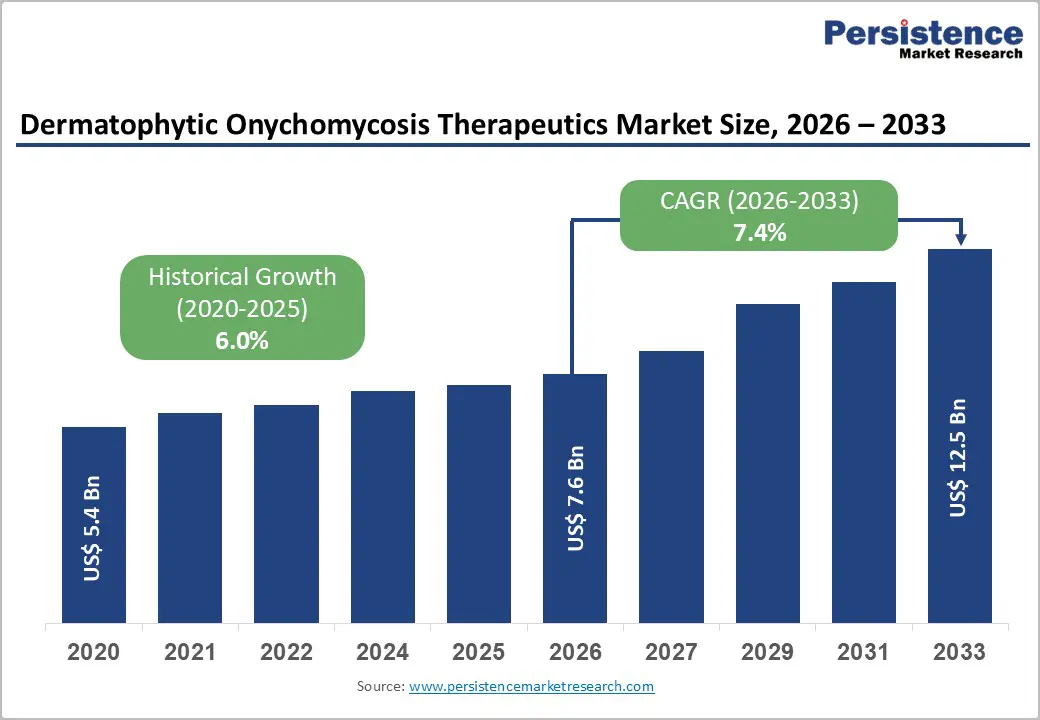
The global dermatophytic onychomycosis therapeutics market size is expected to be valued at US$ 7.6 billion in 2026 and projected to reach US$ 12.5 billion by 2033, growing at a CAGR of 7.4% between 2026 and 2033.
The global market is experiencing steady growth, driven by the rising prevalence of fungal nail infections and increased awareness about personal hygiene. Dermatophytic onychomycosis, primarily caused by dermatophytes, affects toenails and fingernails, leading to discoloration, thickening, and brittleness. The demand for effective treatment options, including oral antifungals, topical therapies, and combination treatments, is fueling innovation in the market.
Key Industry Highlights:
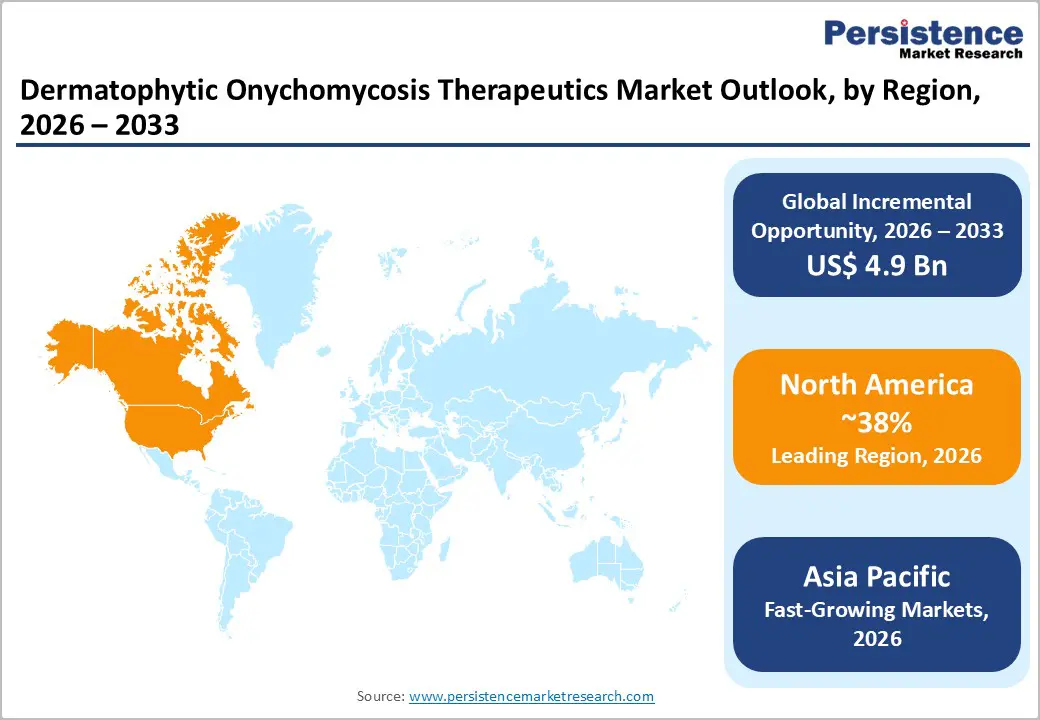
- Leading Region - North America is likely to register ~38% of the global market in 2026, anchored by advanced healthcare infrastructure, high insurance penetration, FDA-approved antifungal pipelines, and the largest diagnosed patient population globally.
- Fast-Growing Market - Asia Pacific is the fast-growing regional market. The growth is propelled by massive, underdiagnosed patient populations in China, India, and Southeast Asia, rapid healthcare infrastructure development, and expanding generic antifungal therapy access at affordable price points.
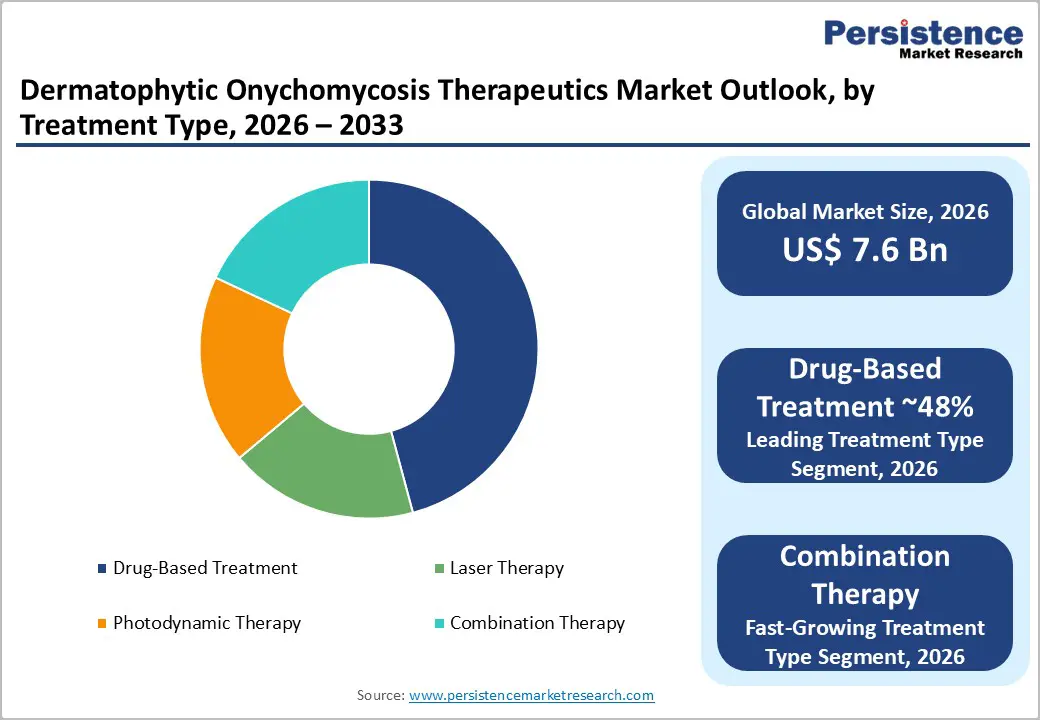
- Dominant Segment - Drug-based treatment is likely to lead with ~48% share in 2026 driven by universal clinical guideline endorsement of oral and topical antifungals, established efficacy data, and broad reimbursement frameworks across key markets.
- Fast-Growing Treatment Type - Laser therapy, photodynamic therapy, and natural antifungals are gaining popularity as complementary or alternative treatments, especially for patients with drug intolerance.
- Key Opportunity: The rise of online pharmacy platforms and virtual dermatology consultations is making it easier for patients to access treatment, especially in remote or underserved areas.
Market Dynamics
Drivers - Growing Diabetic Population, Increasing Demand for Onychomycosis Antifungal Treatments
The global increase in the diabetic population is a major factor driving the growth of the antifungal treatment market. According to the International Diabetes Federation (IDF), 589 million adults, or nearly 1 in 9 people globally, were living with diabetes in 2024-2025, and this number is projected to reach 853 million by 2050, reflecting a 46% increase. Diabetes weakens the immune system and impairs peripheral circulation, creating an ideal environment for fungal infections, particularly toenail infections such as onychomycosis.
According to the American Diabetes Association (ADA), fungal nail infections are often underdiagnosed in individuals with diabetes. However, if left untreated, they can lead to serious foot complications such as ulcers and even amputations. Research indicates that onychomycosis affects 22-35% of people with diabetes, making them two to three times more likely to develop the condition compared to non-diabetics.
With a growing emphasis on preventing complications in diabetic patients, there has been increased innovation in antifungal treatments. Pharmaceutical companies are developing more effective and safer antifungal medications, including topical creams and oral pills, specifically designed to meet the needs of diabetic individuals. These treatments are easy to use, widely accessible, and tailored to address the unique challenges faced by patients. The rise in diabetes rates and the increased risk of fungal nail infections is prompting healthcare systems to strengthen their strategies for managing onychomycosis, thereby driving demand for improved treatment solutions.
Restraints - Prolonged Treatment Duration and High Recurrence Rates Limiting Patient Adherence
Dermatophytic onychomycosis is a slow-progressing and deeply embedded nail infection that is difficult to completely cure. Even with prolonged antifungal therapy spanning several months, many patients experience only partial clearance of the infection. This is primarily due to poor drug penetration through the nail plate, suboptimal patient adherence, and the ability of dermatophytes to persist in the nail bed or surrounding skin unnoticed.
Relapses are common with recurrence rates ranging between 10% and 53% within a year post-treatment, depending on the drug used and the patient’s overall health. The high relapse rate not only frustrates patients but also diminishes trust in available therapeutics, leading to lower re-treatment rates and poor compliance with follow-up regimens. Additionally, repeated cycles of infection can result in more resistant fungal strains, further complicating treatment efforts.
Opportunities - Diabetic-Specific Antifungal Treatments
The demand for antifungal treatments tailored to the unique needs of diabetic patients presents a high-potential market opportunity. Individuals with diabetes often experience impaired blood circulation, weakened immune responses, and delayed wound healing, making them significantly more vulnerable to chronic and recurring fungal infections such as dermatophytic onychomycosis. Traditional antifungal medications may not be optimal for this group, as they can carry systemic toxicity risks or lack efficacy due to reduced absorption in compromised tissues.
Category-wise Analysis
Treatment Type Insights
Drug-based treatment is dominant likely to command ~48% share in 2026 due to its proven efficacy, broad clinical acceptance, and accessibility. Oral and topical antifungal medications, such as terbinafine and efinaconazole, remain the first-line choice for most healthcare providers, owing to decades of research, regulatory approvals, and real-world effectiveness.
Laser therapy ranks next as an emerging, non-invasive alternative that appeals to patients seeking quicker, localized results without systemic side effects. While Photodynamic therapy (PDT) is a promising innovation, its adoption is constrained by complex treatment protocols and limited practitioner expertise. Combination therapy, which merges pharmacological and device-based approaches, is gaining traction, especially for recurrent or resistant infections.
Indication Insights
Distal subungual onychomycosis (DSO) stands as the leading indication segment in the market owing to its overwhelming prevalence and clinical complexity. Representing approximately 85-90% of all dermatophyte-related nail infections, DSO primarily affects the toenails and originates at the nail bed near the tip of the nail. White superficial onychomycosis (WSO) and proximal subungual onychomycosis (PSO) are emerging segments, though less prevalent. WSO is more superficial and easier to treat, but accounts for a smaller patient population. PSO, while rare, is clinically significant as it may signal underlying immune suppression, such as in HIV-positive patients.
Candidal onychomycosis is more common in fingernails and is associated with chronic exposure to moisture, particularly in individuals with frequent handwashing or certain occupations. Total dystrophic onychomycosis is often the final stage of untreated cases and represents a niche, but complex segment that requires advanced therapy.
End-user Insights
Institutional sales encompass hospitals and dermatology clinics, which represent the leading end-user segment likely to account for ~52% of market share in 2026. This segment's dominance is attributable to the essential role of clinical professionals in diagnosing onychomycosis and initiating prescription-based antifungal therapy.
Dermatology clinics drive high volumes of both oral and topical antifungal prescriptions, especially for moderate-to-severe cases requiring physician intervention. According to the International Society of Dermatology, the number of practicing dermatologists globally exceeded 50,000 in 2023, and clinic infrastructure expansions, especially in North America and Europe, continue to funnel institutional prescription volumes upward. Patient trust in specialist consultations and better clinical outcomes further reinforce this segment's dominant positioning.
Regional Insights
North America Dermatophytic Onychomycosis Therapeutics Market Trends and Insights
The demand for advanced, fast-acting and minimally invasive treatment options such as topical agents, oral antifungals, and laser therapies, continues to drive innovation and growth. Moreover, strong pharmaceutical R&D, regulatory support for new drug approvals, and the presence of major market players contribute to the region’s dominance. Also, in the U.S., the dermatophytic onychomycosis therapeutics market is fueled by the rising cases of fungal nail infections, consumer preference for aesthetic nail health, and growing awareness around early diagnosis.
The country also benefits from a highly commercialized healthcare system and the rapid adoption of new therapeutic technologies, making it the primary revenue contributor in the region.
U.S. Dermatophytic Onychomycosis Therapeutics Market Size
The United States dominates the North American market, accounting for roughly 85% of regional revenue. The U.S. market is supported by strong dermatologist density, active FDA approvals of novel antifungal agents, and expanding mail-order pharmacy and online dispensing channels. With over 35 million Americans estimated to be affected by onychomycosis (per CDC-cited data), the U.S. remains the single largest national market globally.
Europe Dermatophytic Onychomycosis Therapeutics Market Trends and Insights
European consumers often prefer natural or non-invasive treatments, contributing to the popularity of herbal and alternative antifungal options. Additionally, public healthcare systems across Europe tend to emphasize cost-effective therapies, influencing prescription patterns toward generics and long-established medications. There is also a growing interest in pediatric care and preventive strategies across countries such as Germany and the U.K., reflecting a proactive stance on foot health.
Germany Dermatophytic Onychomycosis Therapeutics Market Size
Germany is likely to lead the regional market, contributing ~22% of regional revenue in 2026. Germany's robust statutory health insurance system (GKV) ensures broad reimbursement coverage for antifungal therapies, and the country's dense network of dermatology specialists drives consistent prescription volumes. Rising elderly population demographics further support continued demand growth.
UK Dermatophytic Onychomycosis Therapeutics Market Size
The UK accounts for ~18% of European market revenue. The NHS's structured formulary for antifungal treatments and growing adoption of teledermatology services, particularly post-pandemic, underpin the UK's stable market position. Increasing awareness campaigns by NHS England for fungal nail infection management continue to improve patient diagnosis rates.
France Dermatophytic Onychomycosis Therapeutics Market Size
France holds ~15% of the regional market share in 2026. The French healthcare system (Assurance Maladie) provides reimbursement for key antifungal agents, and French dermatology associations actively publish updated treatment guidelines that align with EADV recommendations, supporting systematic prescription patterns and market stability.
Asia Pacific Dermatophytic Onychomycosis Therapeutics Market Trends and Insights
The increasing use of traditional medicine systems such as Ayurveda and Traditional Chinese Medicine is integrated with modern therapeutics. The rapid digitalization in healthcare enables tele-dermatology services, improving diagnosis rates in remote areas. The youthful population is becoming more image-conscious, boosting demand for aesthetic nail treatments and external appearance.
India Dermatophytic Onychomycosis Therapeutics Market Size
India contributes ~15% of the Asia Pacific share, driven by high onychomycosis prevalence in tropical and subtropical climates, growing awareness of dermatological health, and an expanding network of private dermatology clinics. The Indian Council of Medical Research (ICMR) has highlighted dermatophytosis as a significant public health concern, bolstering institutional treatment uptake.
Japan Dermatophytic Onychomycosis Therapeutics Market Size
Japan is poised for an estimated 18% share in 2026, underpinned by the country's universal health insurance system (Kokumin Kenko Hoken), an aging population with high onychomycosis prevalence in elderly cohorts, and stringent Pharmaceuticals and Medical Devices Agency (PMDA) approval standards that ensure high-quality antifungal product availability.
Competitive Landscape
The global dermatophytic onychomycosis therapeutics market is fragmented, marked by a mix of global pharmaceutical giants and emerging biotech firms. Competition is fueled by the demand for faster, more effective, and side-effect-free treatments. Strategic collaborations, product launches, and patent developments are common, while increasing interest in combination therapies and non-invasive treatments is shaping future competitive strategies.
Key Developments:
- In February 2025, Moberg Pharma AB and Allderma announced the ongoing launch of Terclara® (MOB-015) in Norway. This launch represented an important milestone in both companies’ commercial strategy and strengthened their market expansion efforts following the successful launch in Sweden, where Terclara® had already become the market leader.
- In January 2024, Vanda Pharmaceuticals Inc. (Vanda) announced that the U.S. Food and Drug Administration (FDA) had approved its Investigational New Drug (IND) application to evaluate VTR-297 for the treatment of onychomycosis.
- In December 2022, Bausch Health Companies Inc. announced that it had filed a patent for a method aimed at treating onychomycosis. This patent filing strengthened the company's position in the global market.
Companies Covered in Dermatophytic Onychomycosis Therapeutics Market
- Bausch Health
- Galderma S.A.
- Novartis AG
- Pfizer, Inc.
- Moberg Pharma AB
- Bayer AG
- Dr. Reddy’s Laboratories Ltd.
- Cipla Ltd.
- Medimetriks Pharmaceuticals, Inc.
- Sanofi S.A.
- GlaxoSmithKline Plc.
- Teva Pharmaceutical Industries Ltd.
- Cardinal Health Inc.
- Viatris Inc.
- Others
Frequently Asked Questions
The global dermatophytic onychomycosis therapeutics market is expected to be valued at US$ 7.6 billion in 2026.
Increasing cases of onychomycosis, especially among the elderly and diabetic populations, are driving demand for effective treatments.
North America is the leading regional market, accounting for~38% of the global market share in 2026.
Tele-dermatology and mobile health platforms present new avenues for diagnosis, prescription, and patient monitoring.
Some leading players in the dermatophytic onychomycosis therapeutics market include Bausch Health, Galderma S.A., Novartis AG, Pfizer, Inc., Moberg Pharma AB, and others.


