




- Beauty & Personal Care
- Cruelty-Free Cosmetics Market
Cruelty-Free Cosmetics Market Size, Share, and Growth Forecast 2026 - 2033
Cruelty-Free Cosmetics Market by Product Type (Skincare, Haircare, Makeup, Fragrances, Others), Pot Type (Plastic Pots, Ceramic Pots, Decorative Pots), Application (Residential, Commercial), Distribution Channel (Nurseries, Online Retail, Supermarkets/Hypermarkets, Home Improvement Stores), and Regional Analysis, 2026 - 2033

Cruelty-Free Cosmetics Market Size and Trend Analysis
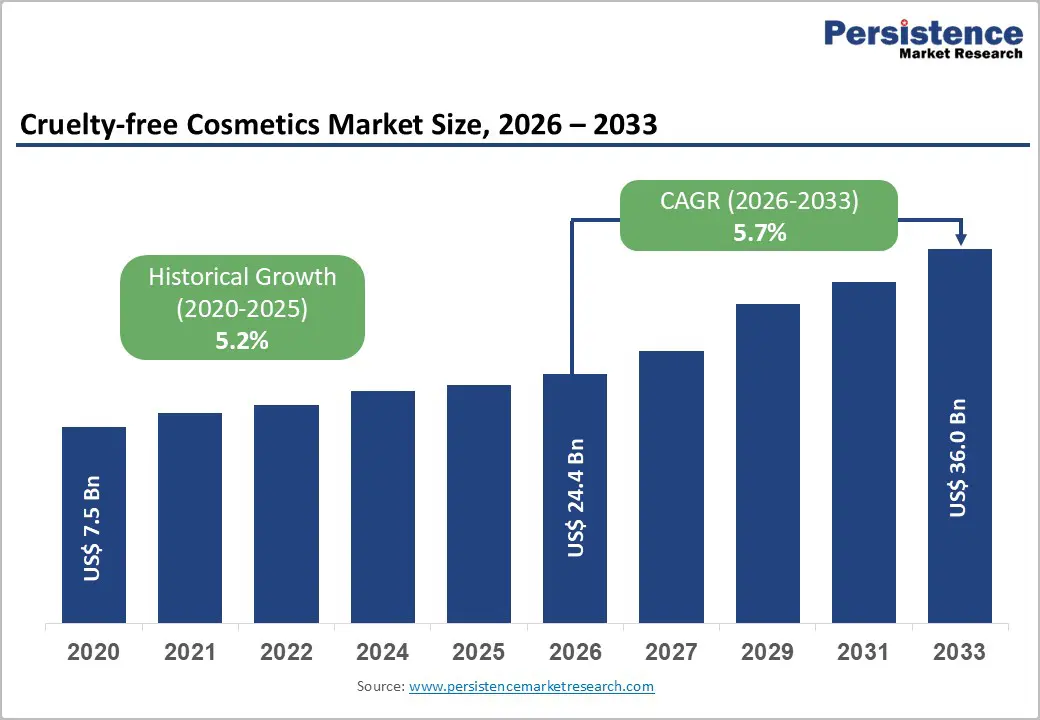
The global cruelty-free cosmetics market size is expected to be valued at US$ 24.4 billion in 2026 and projected to reach US$ 36.0 billion by 2033, growing at a CAGR of 5.7% during the forecast period. Market growth is primarily driven by rising consumer preference for ethical, sustainable, and animal-friendly beauty products.
Increasing awareness regarding animal welfare, combined with the growing popularity of clean-label and vegan cosmetics, continues to accelerate product adoption globally. Millennials and Gen Z consumers are significantly influencing purchasing trends by prioritizing certified cruelty-free brands. Additionally, regulatory restrictions on animal testing across regions such as Europe and evolving reforms in Asian markets are encouraging manufacturers to expand cruelty-free product portfolios and strengthen brand transparency.
Key Market Highlights
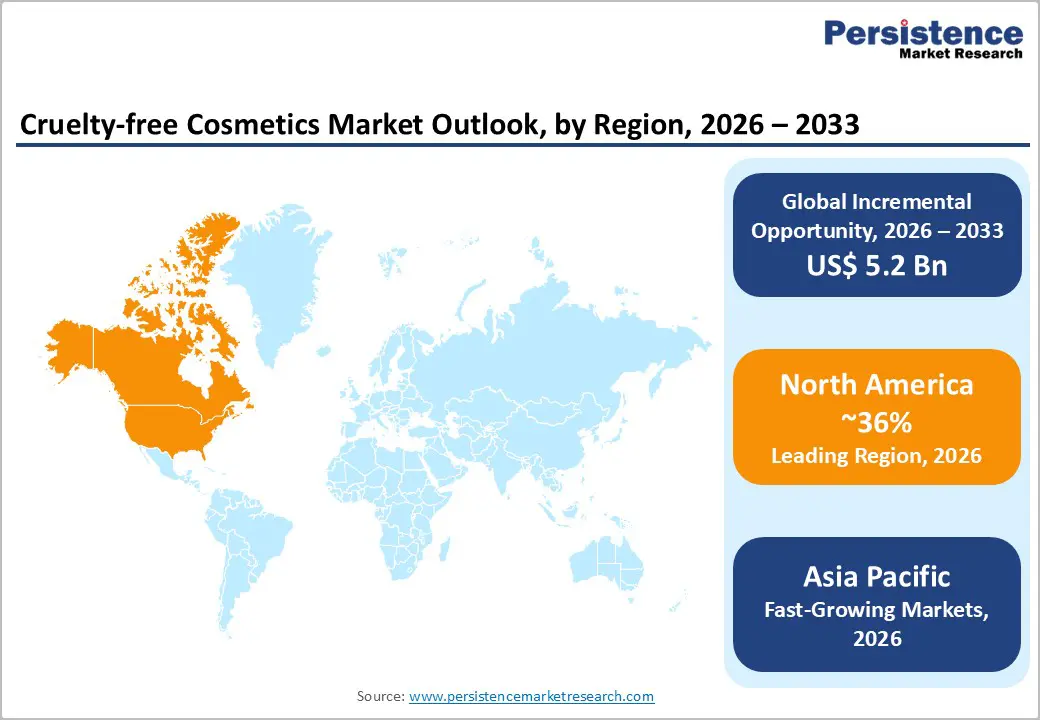
- Leading Region: North America leads the cruelty-free cosmetics market with 35% share, supported by strong ethical consumer awareness and strict anti-animal-testing regulations.
- Fastest Growing Region: Asia Pacific is the fastest-growing regional market, driven by rapid urbanization, rising beauty awareness, and evolving cosmetic policy reforms.
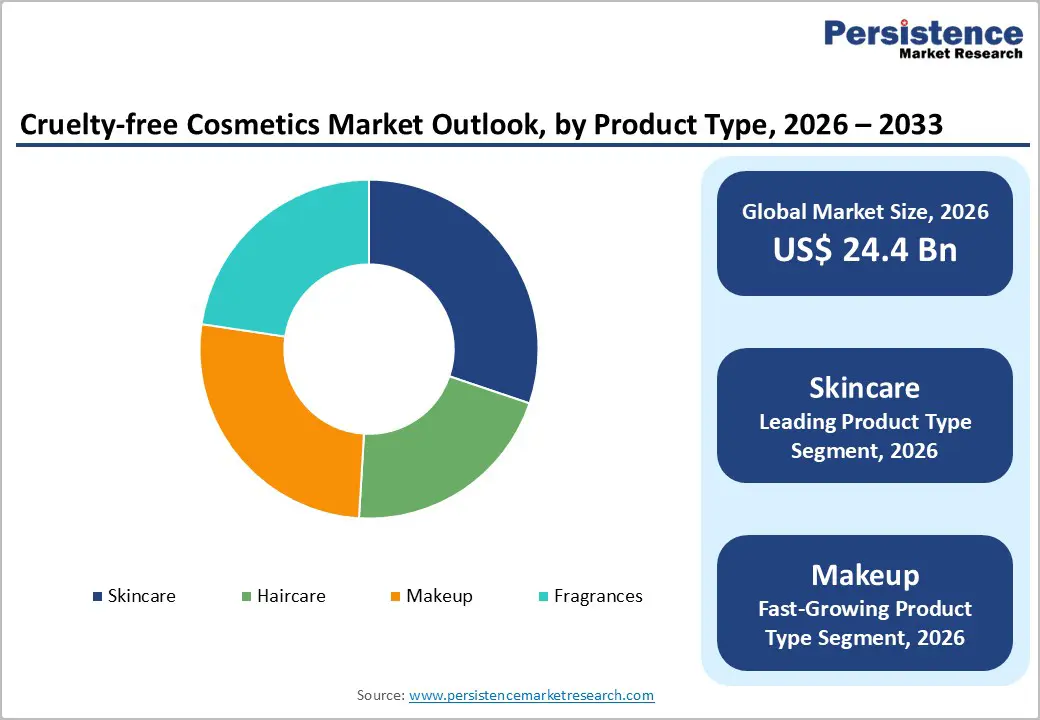
- Leading Product Category: Skincare dominates the market with 45% share due to strong daily-use demand and increasing preference for gentle, ethical beauty products.
- Fast-Growing Distribution Channel: Online retail is the fastest-growing channel, fueled by expanding e-commerce platforms, influencer marketing, and easy access to certified cruelty-free products.
- Key Opportunity: Emerging markets present strong growth opportunities through rising demand for vegan and cruelty-free beauty products among younger consumers.
Market Dynamics
Drivers - Growing Ethical Beauty Awareness Influencing Consumer Purchasing Decisions
Consumers are increasingly shifting toward cruelty-free cosmetics due to rising awareness regarding animal welfare, sustainability, and clean beauty practices. Social media campaigns, celebrity endorsements, and influencer-driven marketing have significantly improved visibility for cruelty-free brands worldwide. Younger consumers, particularly Millennials and Gen Z, actively prefer products carrying certifications such as Leaping Bunny and PETA-approved labels, strengthening demand for transparent and ethically manufactured beauty products.
The growing alignment between ethical values and purchasing behavior is encouraging brands to expand cruelty-free product portfolios across skincare, makeup, and haircare categories. Premium consumers are also willing to pay higher prices for products perceived as sustainable and socially responsible. Increasing digital engagement, online beauty communities, and educational campaigns continue accelerating global awareness, helping cruelty-free cosmetics gain stronger penetration in both developed and emerging consumer markets.
Regulatory Restrictions Supporting Expansion of Cruelty-Free Cosmetic Products
Government regulations banning or limiting cosmetic animal testing are significantly driving growth within the cruelty-free cosmetics market. The European Union continues enforcing strict anti-animal-testing regulations under cosmetic safety legislation, while countries such as India, South Korea, and Australia have implemented similar frameworks. China’s easing of testing requirements for selected imported cosmetics has also created new opportunities for international cruelty-free brands seeking regional expansion.
These evolving regulations encourage manufacturers to adopt alternative testing technologies, improve product transparency, and strengthen ethical branding strategies. Reduced dependence on conventional animal testing methods lowers long-term compliance risks while supporting innovation in ingredient validation and product safety assessment. As more countries align with global ethical standards, multinational beauty companies are accelerating cruelty-free certifications and expanding investment in non-animal testing technologies to improve global market competitiveness.
Restraints - Premium Product Costs Limiting Wider Consumer Market Accessibility
Cruelty-free cosmetic formulations often involve higher manufacturing and compliance costs due to alternative testing procedures, certified ingredients, and sustainable sourcing requirements. These additional expenses increase overall product pricing compared to conventional cosmetics, limiting affordability among price-sensitive consumers. Emerging markets, where purchasing decisions are heavily influenced by cost, continue facing slower adoption rates despite growing awareness regarding ethical beauty products and sustainability trends.
Smaller and independent cruelty-free brands also encounter operational challenges related to production scalability, packaging costs, and certification expenses. Maintaining ethical sourcing standards while competing with large multinational cosmetic companies places financial pressure on newer market entrants. Limited mass-market affordability restricts product accessibility across lower-income consumer groups, slowing broader industry penetration and reducing adoption potential in developing economies with highly competitive beauty and personal care markets.
Supply Chain Challenges Restrict Certified Ingredient Availability Globally
The availability of certified cruelty-free ingredients remains limited due to fragmented supply chains and inconsistent supplier compliance standards across regions. Many raw material suppliers still lack internationally recognized cruelty-free certifications, creating sourcing difficulties for cosmetic manufacturers. Regulatory verification procedures and ingredient approval timelines further delay product development cycles, increasing operational complexity for companies seeking rapid product launches in competitive beauty markets.
These supply chain limitations particularly affect smaller cosmetic brands with limited procurement networks and lower bargaining power. Delays in ingredient sourcing and certification approvals can extend production timelines, impacting inventory management and product availability. In addition, maintaining transparency and traceability throughout global supply chains requires significant investment in auditing and compliance systems. Such challenges continue restricting efficient scalability for cruelty-free cosmetic brands entering new international markets.
Opportunities - Emerging Vegan Beauty Trends Creating Strong Regional Growth Opportunities
Emerging economies, particularly across the Asia Pacific and Latin America, are creating substantial growth opportunities for cruelty-free cosmetic brands. Rising urbanization, increasing disposable incomes, and expanding middle-class populations are strengthening demand for ethical and vegan beauty products. Consumers in countries such as India, Indonesia, Brazil, and Thailand are increasingly influenced by sustainability-focused lifestyles and digital beauty trends promoting cruelty-free and plant-based cosmetic formulations.
The growing overlap between vegan cosmetics and cruelty-free beauty trends offers manufacturers opportunities to develop localized, culturally relevant product lines. Expanding e-commerce penetration and social commerce platforms further improve accessibility to international ethical beauty brands. Supportive regulatory frameworks and regional cosmetic harmonization initiatives are also simplifying market entry processes. These favorable conditions are encouraging companies to strengthen regional investments and broaden product distribution across fast-growing emerging consumer markets.
Advanced Testing Technologies Enhancing Sustainable Cosmetic Product Innovation
Technological advancements in alternative cosmetic testing methods are creating significant opportunities for cruelty-free beauty manufacturers. Artificial intelligence-based safety assessment tools, biotechnology-driven ingredient validation, and organ-on-chip testing systems are reducing dependence on traditional animal testing procedures. These innovations improve efficiency, which accelerates product development timelines, and help companies’ lower long-term operational costs while maintaining regulatory compliance and product safety standards.
Consumers, especially Gen Z buyers, increasingly prefer scientifically validated and sustainability-focused beauty products supported by transparent ethical claims. Companies investing in advanced testing technologies and environmentally friendly packaging solutions are gaining stronger brand credibility and premium positioning within competitive beauty markets. Innovations in biodegradable packaging, plant-derived ingredients, and digital traceability systems are also strengthening consumer trust, enabling cruelty-free cosmetic brands to expand into high-value premium and clean beauty market segments.
Category-wise Analysis
Product Type Insights
Skincare dominates the cruelty-free cosmetics market with approximately 45% share in 2025, supported by strong consumer demand for daily-use ethical beauty products. Consumers increasingly prefer cruelty-free skincare due to concerns regarding sensitive skin, ingredient transparency, and long-term wellness benefits. Rising adoption of anti-aging creams, moisturizers, serums, and plant-based skincare products further strengthens segment leadership. Growing awareness regarding harmful chemicals and sustainable beauty practices also continues supporting global skincare product demand.
Makeup is emerging as the fastest-growing product category due to rising demand for vegan foundations, cruelty-free lipsticks, and clean-label cosmetic products. Beauty influencers, social media tutorials, and celebrity-backed ethical makeup brands are accelerating product visibility among younger consumers. Innovation in long-lasting formulations, inclusive shade ranges, and sustainable packaging is also encouraging adoption.
Pot Type Insights
Plastic pots account for nearly 52% share of the cruelty-free cosmetics packaging market in 2025, primarily due to their affordability, lightweight structure, and high-volume manufacturing efficiency. Cosmetic manufacturers widely prefer recycled and reusable plastic packaging to reduce transportation costs and improve e-commerce logistics. Increasing adoption of sustainable plastic materials and biodegradable alternatives further supports segment dominance. Their durability and convenience also make plastic pots highly suitable for skincare creams, masks, and personal care products.
Decorative pots are witnessing the fastest growth as premium beauty brands increasingly focus on luxury presentation and sustainable aesthetics. Consumers are showing stronger preference for visually appealing and reusable cosmetic containers that enhance product value and gifting appeal. Glass-inspired finishes, eco-friendly decorative materials, and customized packaging designs are becoming important brand differentiation strategies.
Application Insights
Residential applications lead the cruelty-free cosmetics market with around 70% share in 2025, driven by strong consumer focus on personal grooming, skincare routines, and home-based beauty care. Rising awareness regarding ethical beauty products and family-safe formulations has significantly increased household adoption of cruelty-free skincare, makeup, and haircare products. Daily-use demand, supported by expanding digital beauty content and self-care trends, continues strengthening residential consumption across both developed and emerging consumer markets globally.
Commercial applications are emerging as the fastest-growing segment due to increasing adoption of cruelty-free products across salons, spas, beauty clinics, and wellness centers. Businesses are increasingly integrating ethical beauty products into professional services to align with changing consumer expectations and sustainability goals. Premium hospitality brands and wellness facilities are also introducing cruelty-free cosmetic amenities to improve brand image and customer satisfaction.
Distribution Channel Insights
Online retail dominates the cruelty-free cosmetics market with approximately 38% share in 2025, supported by growing e-commerce penetration and rising consumer preference for convenient digital shopping platforms. Online channels allow consumers to compare certifications, ingredient transparency, and product reviews before purchasing cruelty-free beauty products. The availability of global ethical beauty brands through online marketplaces has significantly improved accessibility. Social media marketing, influencer collaborations, and targeted digital campaigns further continue strengthening online sales performance globally.
Supermarkets and hypermarkets are emerging as the fastest-growing distribution channels due to expanding shelf presence of cruelty-free cosmetic products in mainstream retail stores. Large retailers are increasingly introducing dedicated sections for vegan, sustainable, and ethical beauty products to meet changing consumer preferences. Improved in-store product visibility, promotional campaigns, and partnerships with cruelty-free brands are encouraging broader customer adoption.
Regional Insights
North America Cruelty-Free Cosmetics Market Trends and Insights
North America leads the global cruelty-free cosmetics market with approximately 35% share in 2025, supported by strong ethical consumerism, advanced retail infrastructure, and rising demand for certified clean beauty products. Consumers increasingly prioritize transparent labeling and vegan formulations. E-commerce expansion, influencer marketing, and strict regulatory initiatives across the U.S. and Canada continue strengthening regional market leadership and premium cruelty-free product adoption.
- U.S. Cruelty-Free Cosmetics Market Size
The U.S. accounts for nearly 80% of the North American cruelty-free cosmetics market, reaching around US$ 6.8 billion in 2026. Market growth is supported by strong consumer awareness, FDA cosmetic safety guidelines, and state-level restrictions on animal testing, including California regulations. Rising vegan beauty trends, premium skincare demand, and increasing availability of certified cruelty-free products across online and retail channels continue driving industry expansion nationwide.
Europe Cruelty-Free Cosmetics Market Trends and Insights
Europe remains a major cruelty-free cosmetics market due to stringent regulations banning cosmetic animal testing and strong consumer preference for sustainable beauty products. The region is witnessing rising demand for organic skincare, vegan formulations, and premium natural cosmetics. Retail expansion, eco-friendly packaging innovations, and growing investment in clean-label beauty products continue supporting market growth across Germany, France, the U.K., Italy, and other European countries.
- Germany Cruelty-Free Cosmetics Market Size
Germany holds nearly 25% share of the European cruelty-free cosmetics market, valued at around US$ 2.1 billion. Strong environmental awareness, high organic product consumption, and strict cosmetic safety enforcement support market expansion. Consumers increasingly prefer natural skincare and vegan beauty products with transparent ingredient sourcing. Growth in sustainable retail chains, ethical beauty startups, and eco-conscious packaging solutions continues to strengthen Germany’s cruelty-free cosmetics industry.
- U.K. Cruelty-Free Cosmetics Market Size
The U.K. accounts for approximately 20% share of the European cruelty-free cosmetics market, reaching nearly US$ 1.7 billion. Market growth is supported by rising awareness campaigns from animal welfare organizations and increasing consumer preference for ethical beauty brands. Strong online beauty retail penetration, premium skincare demand, and post-Brexit cosmetic regulatory standards continue encouraging the adoption of cruelty-free and vegan cosmetic products throughout the country.
- France Cruelty-Free Cosmetics Market Size
France represents around 18% share of the European cruelty-free cosmetics market, valued at nearly US$ 1.5 billion. The country benefits from its strong luxury beauty industry, rising clean-label product demand, and expanding exports of premium skincare and fragrance products. Consumers increasingly favor sustainable cosmetics with natural ingredients and ethical certifications. Luxury beauty innovation and eco-conscious packaging trends continue supporting the cruelty-free cosmetics market growth across France.
Asia Pacific Cruelty-Free Cosmetics Market Trends and Insights
Asia Pacific is the fastest-growing regional market for cruelty-free cosmetics, driven by rapid urbanization, rising disposable incomes, and an expanding beauty-conscious population. Regulatory reforms in China regarding animal-testing requirements have created new growth opportunities for international ethical beauty brands. The increasing popularity of K-beauty trends, social media-driven product awareness, and growing demand for vegan skincare and makeup products continue to accelerate regional market expansion significantly.
- India Cruelty-Free Cosmetics Market Size
India accounts for nearly 15% share of the Asia Pacific cruelty-free cosmetics market, reaching around US$ 1.2 billion. Strong growth is driven by young consumers, rising disposable incomes, and increasing awareness regarding ethical and Ayurvedic beauty products. Government support for herbal formulations through AYUSH initiatives, combined with expanding e-commerce beauty platforms and influencer marketing, continues to encourage demand for cruelty-free skincare, makeup, and personal care products.
- Japan Cruelty-Free Cosmetics Market Size
Japan holds approximately 12% share of the Asia Pacific cruelty-free cosmetics market, valued at nearly US$ 1.0 billion. The market benefits from advanced cosmetic research, strong product innovation, and increasing investment in alternative testing technologies. Consumers increasingly prefer premium skincare products with clean ingredients and sustainable packaging. Growing adoption of biotech-based safety testing and ethical beauty standards continues to strengthen Japan’s cruelty-free cosmetics industry.
- Southeast Asia Cruelty-Free Cosmetics Market Size
Southeast Asia represents around 10% share of the Asia Pacific cruelty-free cosmetics market, reaching approximately US$ 0.8 billion. Rising middle-class populations, increasing urbanization, and expanding beauty awareness are supporting strong regional demand for ethical cosmetics. Countries such as Indonesia, Thailand, Vietnam, and Malaysia are witnessing rapid e-commerce growth and the rising popularity of vegan skincare and halal-certified cruelty-free beauty products among younger consumers.
Competitive Landscape
The global cruelty-free cosmetics market is moderately consolidated, characterized by strong competition among established beauty manufacturers and emerging ethical brands. Companies are increasingly focusing on sustainable product development, cruelty-free certifications, and transparent ingredient sourcing to strengthen consumer trust and brand positioning. Investments in biotechnology-based testing alternatives, clean-label formulations, and eco-friendly packaging are becoming major competitive strategies across skincare, makeup, and personal care categories.
Market participants are also expanding digital marketing efforts and strengthening partnerships with e-commerce platforms to improve product accessibility and customer engagement. Direct-to-consumer business models, subscription services, and mobile shopping applications are gaining popularity among younger consumers.
Key Developments
- In March 2025, L'Oréal launched a fully cruelty-free skincare product line certified by Leaping Bunny, strengthening its ethical beauty portfolio. The launch focused on plant-based ingredients, sustainable packaging, and transparency initiatives aimed at environmentally conscious and younger global consumers.
- In July 2024, The Body Shop expanded recyclable packaging solutions for its cruelty-free product range across Asia Pacific markets. The initiative supported the company’s sustainability objectives while addressing growing regional demand for environmentally responsible and ethically manufactured beauty and personal care products.
- In January 2024, Estée Lauder invested US$50 million in advanced artificial intelligence-based cosmetic testing technologies. The investment aimed to accelerate alternative non-animal testing methods, improve product safety validation processes, and strengthen innovation capabilities within the cruelty-free cosmetics segment globally.
Cruelty-Free Cosmetics Market - Key Insights & Details
| Key Insights | Details |
|---|---|
| Historical Market Value (2020) | US$ 19.0 billion |
| Current Market Value (2026) | US$ 24.4 billion |
| Projected Market Value (2033) | US$ 36.0 billion |
| CAGR (2026 - 2033) | 5.7% |
| Leading Region | North America, 35% |
| Dominant Product Type | Skincare, 45% |
| Top-ranking Pot Type | Plastic Pots, 52% |
| Incremental Opportunity | US$ 11.6 billion |
Companies Covered in Cruelty-Free Cosmetics Market
- e.l.f. Beauty
- The Body Shop
- Lush Cosmetics
- Pacifica Beauty
- Urban Decay
- Too Faced
- Hourglass Cosmetics
- Tarte Cosmetics
- Milk Makeup
- Cover FX
- Bite Beauty
- Aveda
- Inika Organic
- RMS Beauty
- BareMinerals
Frequently Asked Questions
The global cruelty-free cosmetics market is likely to reach approximately US$ 24.4 billion in 2026 worldwide.
Rising ethical awareness among Gen Z consumers and strict anti-animal-testing regulations are major market demand drivers.
North America leads the cruelty-free cosmetics market with approximately 35% share, supported by strong ethical consumerism.
Expanding vegan and cruelty-free beauty demand across Asia Pacific presents significant long-term revenue growth opportunities globally.
Key market participants include e.l.f. Beauty, The Body Shop, Lush Cosmetics, and Pacifica Beauty.


