




- Pharmaceuticals
- Bromelain Market
Bromelain Market Size, Share, and Growth Forecast 2026 - 2033
Bromelain Market by Source (Stem Bromelain, Fruit Bromelain), Form (Powder, Liquid, Capsule/Tablets), Application (Food & Beverages, Pharmaceuticals, Dietary Supplements, Cosmetics & Personal Care, Animal Feed, Others), Distribution Channel (Direct Sales, Online Retail, Supermarkets/Hypermarkets, Specialty Stores, Pharmacies/Drug Stores), and Regional Analysis, 2026 - 2033

Bromelain Market Share and Trends Analysis
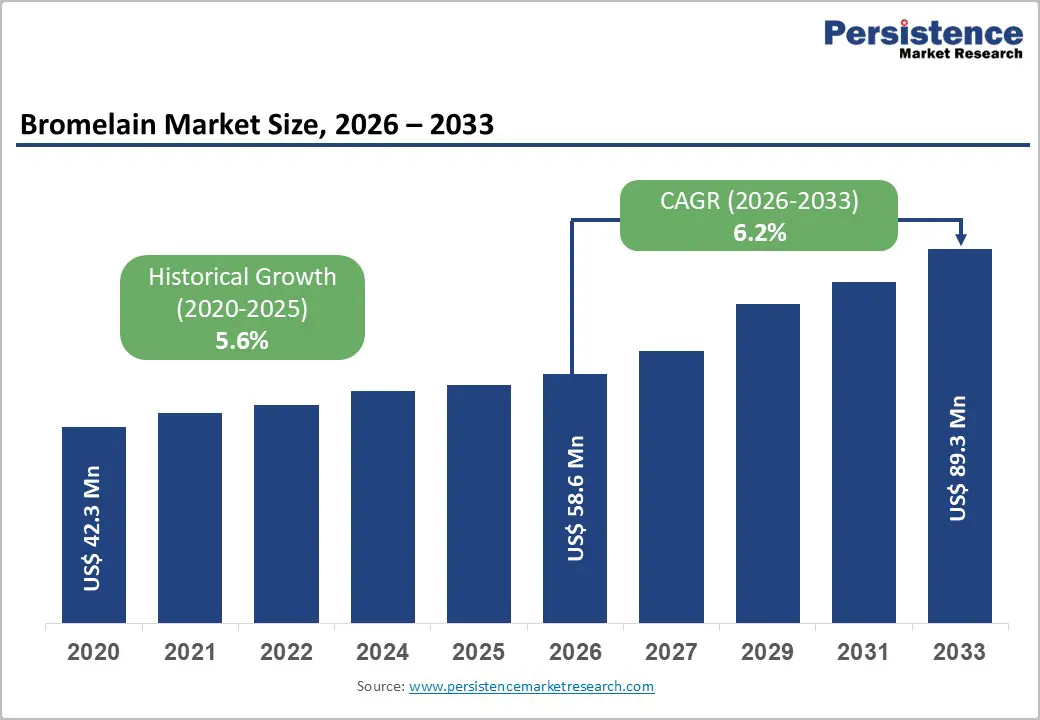
The global Bromelain market size is expected to be valued at US$ 58.6 million in 2026 and projected to reach US$ 89.3 million by 2033, growing at a CAGR of 6.2% between 2026 and 2033. It is experiencing steady growth due to rising demand for natural enzymes across food processing, pharmaceuticals, dietary supplements, and personal care industries.
Bromelain, a proteolytic enzyme extracted mainly from pineapple stems and fruits, is widely used for meat tenderization, digestive health supplements, anti-inflammatory treatments, and cosmetic formulations. Increasing consumer preference for plant-based ingredients and clean-label products is significantly supporting market expansion. The pharmaceutical sector also benefits from bromelain’s wound healing and anti-swelling properties.
Key Industry Highlights:
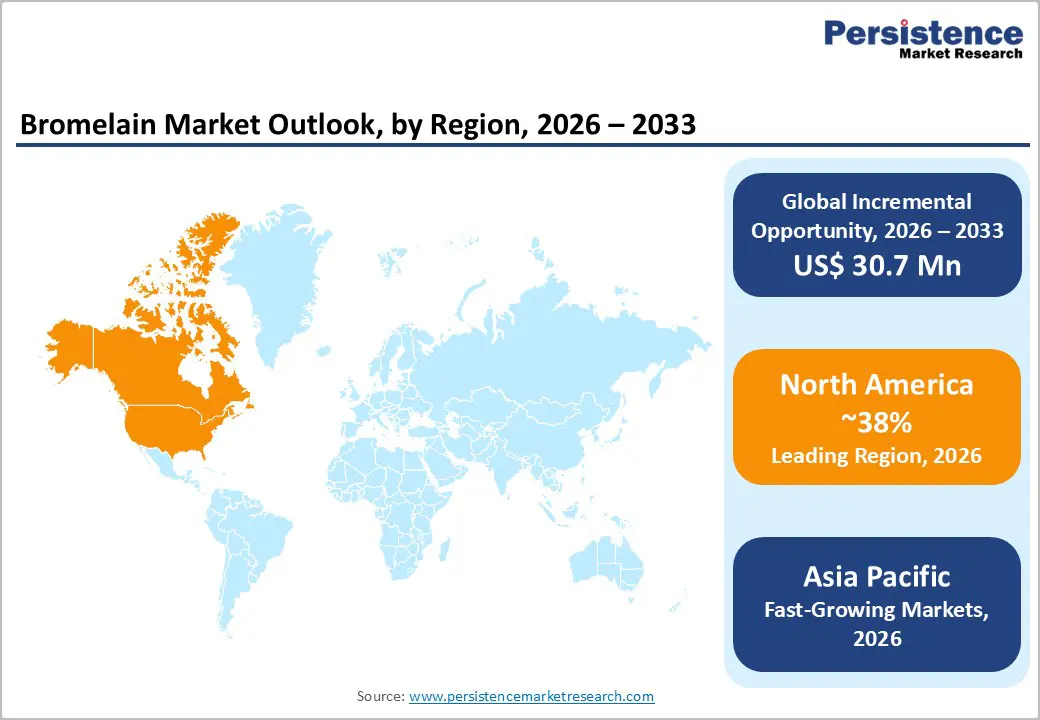
- Regional Leadership: North America holds 38% of the global bromelain market share in 2026, driven by high supplement consumption, FDA GRAS status, pharmaceutical applications including NexoBrid, and well-developed nutraceutical retail channels.
- Fast-Growing Region: Asia Pacific is forecast to register the highest CAGR in the forecast period, powered by abundant pineapple cultivation, expanding enzyme manufacturing capacity in India and China, and rapidly growing middle-class health supplement demand.
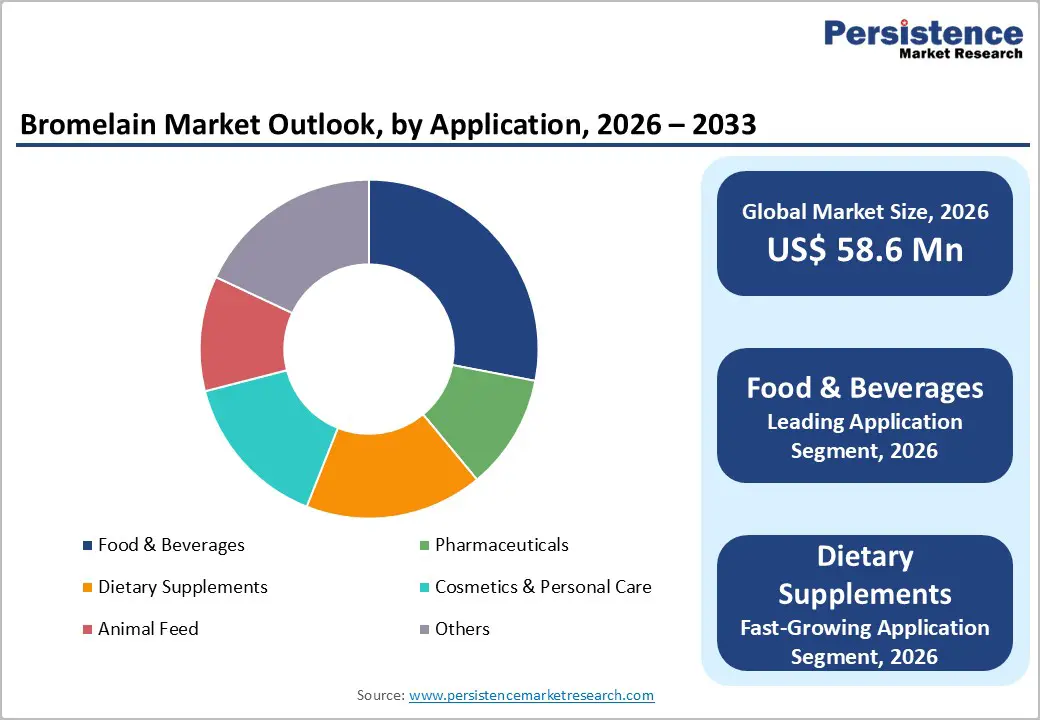
- Dominant Applications: Food & Beverages holds 28% application segment share in 2026, driven by bromelain's established USDA GRAS-recognized role in meat tenderization, beer clarification, and functional food processing globally.
- Fast-Growing Applications: Dietary Supplements is forecast to grow at the highest CAGR, fueled by rising global wellness spending, consumer demand for natural digestive and anti-inflammatory enzyme supplements, and expanding e-commerce retail channels.
- Key Growth Opportunity: Bromelain's keratolytic and skin-conditioning properties are driving adoption in clean beauty enzymatic exfoliants and anti-aging serums, offering manufacturers a high-margin application diversification opportunity through the forecast period.
Market Dynamics
Drivers - Growing Consumer Preference for Natural Anti-inflammatory and Digestive Health Ingredients
The accelerating global shift toward natural, plant-derived functional ingredients is a defining growth driver for the bromelain market. Bromelain has been extensively studied for its proteolytic, anti-inflammatory, and fibrinolytic properties, with peer-reviewed research published in journals such as Biotechnology Research International and Evidence-Based Complementary and Alternative Medicine validating its clinical utility.
The U.S. National Institutes of Health (NIH) National Center for Complementary and Integrative Health recognizes bromelain as one of the most widely consumed plant enzymes globally. Rising incidence of digestive disorders—with the American Gastroenterological Association (AGA) reporting that over 60–70 million Americans are affected by gastrointestinal disease is amplifying demand for enzyme-based digestive supplements that include bromelain as a primary active ingredient.
Expanding Pharmaceutical Applications Including Debridement and Anti-edema Therapeutics
Bromelain's established pharmaceutical applications are creating durable demand streams beyond the nutraceutical segment. Notably, NexoBrid a concentrated bromelain-based enzymatic debridement agent developed by MediWound Ltd., received U.S. FDA approval in 2022 and had earlier received European Medicines Agency (EMA) approval for the removal of eschar in adults with deep partial and full-thickness thermal burns.
This regulatory milestone has significantly elevated bromelain's pharmaceutical profile and opened new clinical procurement channels. Additionally, bromelain's validated anti-edema properties have driven its adoption as an adjunct therapy in post-surgical and dental care protocols across European and North American healthcare settings, expanding B2B pharmaceutical sales volumes.
Restraints - Allergenicity and Cross-reactivity Concerns Limiting Broad Consumer Adoption
Bromelain's potential to trigger allergic reactions particularly in individuals sensitive to pineapple, papain, latex, or other proteolytic enzymes, represents a consumer safety concern. The European Food Safety Authority (EFSA) and FDA require allergen disclosures for bromelain-containing products, adding compliance complexity for manufacturers.
Occupational asthma and dermatitis have been documented in workers handling bromelain powder in industrial settings, necessitating protective handling protocols that elevate operational costs. These safety considerations restrict adoption among a subset of health-conscious consumers and complicate product positioning in mainstream food and beverage applications.
Supply Chain Vulnerability Due to Geographic Concentration of Pineapple Cultivation
Bromelain's raw material base is geographically concentrated in tropical pineapple-producing regions, making the supply chain inherently vulnerable to climate variability, agricultural disruptions, and export policy changes. The Food and Agriculture Organization of the United Nations (FAO) reports that Costa Rica, Philippines, Brazil, Thailand, and Indonesia collectively account for the majority of global pineapple production.
Weather events such as El Niño–driven droughts or flooding in key producing zones can significantly disrupt bromelain raw material availability and pricing, creating procurement risk for manufacturers and contributing to margin volatility that constrains long-term market expansion.
Opportunities - Cosmetics & Personal Care Sector Unlocking New Revenue Streams for Bromelain
The cosmetics and personal care sector presents an increasingly significant growth opportunity for bromelain, driven by the clean beauty movement and demand for natural enzymatic exfoliants that replace synthetic abrasives and chemical peels. Bromelain's keratolytic properties, its ability to gently dissolve surface proteins, make it well-suited for inclusion in enzymatic facial masks, exfoliating cleansers, and anti-aging serums.
The Personal Care Products Council (PCPC) recognizes bromelain as a skin-conditioning enzyme ingredient with a favorable safety profile. The global natural cosmetics market, growing at a substantial pace per Statista consumer data, is providing fertile ground for bromelain-enriched products. Manufacturers diversifying into cosmetic-grade bromelain formulations with standardized enzymatic activity are well-positioned to capture incremental value from this high-margin application segment.
Category-wise Analysis
Source Insights
Stem bromelain is the dominant source segment, accounting for approximately 78% of the global bromelain market in 2026. This overwhelming share reflects the significantly higher proteolytic activity and enzymatic yield obtainable from pineapple stems relative to the fruit. Stem bromelain typically exhibits 3–10 times higher enzymatic activity than fruit bromelain, making it the preferred raw material for pharmaceutical-grade and high-potency nutraceutical formulations.
Commercially, pineapple stems are a low-cost agricultural byproduct recovered during fruit processing, making stem extraction economically efficient for manufacturers. Leading producers in India, China, and Taiwan primarily process stem bromelain, and global pharmaceutical applications, including NexoBrid are standardized to stem bromelain's activity profile.
Application Insights
Food & beverages is the leading application segment, commanding approximately 28% market share in 2025. Bromelain's well-established role as a meat tenderizer catalyzing the hydrolysis of fibrous muscle proteins such as collagen and myosin has sustained its widespread use in the meat processing industry for decades.
The U.S. Department of Agriculture (USDA) classifies bromelain as GRAS (Generally Recognized as Safe) for food applications, facilitating unrestricted use by food manufacturers. Beyond meat tenderization, bromelain is used in beer clarification (chillproofing), dough conditioning, and dairy processing. Growing consumption of processed and convenience meat products globally—driven by urbanization and changing dietary habits in Asia Pacific and Latin America—is sustaining consistent volume demand within this dominant segment.
Distribution Channel Insights
Direct Sales is the leading distribution channel, accounting for approximately 45% of the bromelain market revenue in 2025. This channel dominance reflects the predominantly B2B nature of the bromelain market, where bulk enzyme supply to pharmaceutical companies, nutraceutical manufacturers, food processors, and CROs constitutes the primary commercial activity.
Direct procurement relationships enable volume pricing, quality customization (activity standardization, particle size, purity grade), and supply security factors that are critical for manufacturing clients with GMP compliance requirements. Leading Indian manufacturers such as Advanced Enzyme Technologies and Mitushi Biopharma, and Chinese producers including Dayang Chem (Hangzhou) Co. Ltd., primarily operate through direct sales and export channels to global buyers.
Regional Insights
North America Bromelain Market Trends and Insights
North America leads the global bromelain market with approximately 38% market share in 2025, supported by high per-capita dietary supplement consumption, established pharmaceutical procurement channels, and FDA GRAS status, facilitating food and nutraceutical applications. Strong consumer awareness of digestive health, sports nutrition trends, and growing use of natural anti-inflammatory ingredients are sustaining the region's market leadership.
U.S. Bromelain Market Size
The United States accounts for approximately 88% of the North American bromelain market in 2025. High dietary supplement usage with the Council for Responsible Nutrition (CRN) reporting over 75% adult supplement consumption, combined with clinical adoption of bromelain in post-surgical care and FDA-approved pharmaceutical applications, drives consistent multi-channel demand across U.S. bromelain end-use sectors.
Europe Bromelain Market Trends and Insights
Europe represents the second-largest bromelain market, characterized by strong pharmaceutical demand, clean-label food ingredient trends, and the clinical adoption of bromelain-based therapeutics including NexoBrid (EMA-approved) in burn management. Regulatory harmonization under EFSA and growing consumer preference for natural enzyme supplements in Germany, France, and the U.K. are key regional demand drivers.
Germany Bromelain Market Size
Germany accounts for approximately 24% of the European bromelain market in 2025. Germany's strong herbal medicine tradition (phytotherapy), large pharmaceutical manufacturing sector, and high consumer adoption of enzyme-based digestive and anti-inflammatory supplements position it as Europe's largest individual bromelain consumer market, with particular strength in pharmaceutical-grade procurement.
U.K. Bromelain Market Size
The United Kingdom holds approximately 18% of the European bromelain market in 2025. Rising consumer spending on sports nutrition and digestive health supplements, combined with increasing adoption of natural cosmetic ingredients by U.K. personal care brands, is driving steady bromelain demand across pharmaceutical, nutraceutical, and cosmetic distribution channels.
Asia Pacific Bromelain Market Trends and Insights
Asia Pacific is the fastest-growing regional market and the primary global production hub for bromelain, benefiting from abundant pineapple cultivation across the Philippines, Thailand, Indonesia, India, and China. China is both a major manufacturer and a rapidly growing consumer market, with domestic nutraceutical and traditional medicine sectors increasingly incorporating bromelain into enzyme health formulations. Rising middle-class health spending across the region is accelerating retail supplement adoption.
India Bromelain Market Size
India holds approximately 20% of the Asia Pacific bromelain market in 2025 and is a significant global exporter. Companies such as Advanced Enzyme Technologies and Mitushi Biopharma are among India's leading bromelain producers. Domestic demand is growing through Ayurvedic supplement integration, pharmaceutical enzyme supply, and meat processing industry expansion in urban centers.
Competitive Landscape
The bromelain market is moderately fragmented, with competition driven by product purity, enzyme activity standardization, regulatory compliance, and global distribution strength. Manufacturers compete by improving extraction efficiency, adopting enzyme-assisted and membrane-based purification technologies, and expanding pharmaceutical-grade and food-grade bromelain portfolios. Companies are increasingly focusing on R&D for new applications in dietary supplements, wound care, cosmetics, and functional foods to strengthen market positioning. Strategic partnerships, mergers, and capacity expansions are common to improve raw material sourcing and regional market access, especially across Asia-Pacific and Latin America.
Key Developments
- In June 2025, Dr. Squatch re-launched its SpongeBob SquarePants soap collection and expanded the partnership with a new Patrick Star-inspired soap called Sea Star Shenanigans. The limited-edition summer range also brought back the Nautical Nonsense bar from the earlier 2023 launch.
- In January 2023, Sun Pharmaceutical Industries Limited announced that it has acquired three brands viz. Disperzyme® (Trypsin BP 96 mg, Bromelain 180 mg & Rutoside Trihydrate 200 mg), Disperzyme-CD® (Trypsin BP 48 mg, Bromelain 90 mg & Rutoside Trihydrate 100 mg) and Phlogam® (Trypsin BP 48 mg, Bromelain 90 mg & Rutoside Trihydrate 100 mg) from Aksigen Hospital Care (“Aksigen”).
Global Bromelain Market - Key Insights & Details
| Key Insights | Details |
|---|---|
|
Historical Market Value (2020) |
US$ 42.3 Million |
|
Current Market Value (2026) |
US$ 58.6 Million |
|
Projected Market Value (2033) |
US$ 89.3 Million |
|
CAGR (2026–2033) |
6.2% |
|
Leading Region |
North America, 38% market share in 2025 |
|
Dominant Source Segment |
Stem Bromelain, ~78% market share in 2025 |
|
Top-Ranking Application Segment |
Food & Beverages, ~28% market share in 2025 |
|
Incremental Opportunity (2026–2033) |
US$ 30.7 Million |
Companies Covered in Bromelain Market
- Advanced Enzyme Technologies
- Antozyme Biotech Pvt Ltd.
- Biolaxi Corporation
- Botanic Healthcare
- Creative Enzymes
- Dayang Chem (Hangzhou) Co. Ltd
- ENZYBEL GROUP
- Enzyme Technology (PTY) Ltd.
- Guangxi Nanning Javely Biological Products Co.
- Hong Mao Biochemicals Co., Ltd.
- Mitushi Biopharma
- Undersun Biomedtech Co.,Ltd
- Great Food (Biochem) Co., Ltd.
- Silverline Chemicals
Frequently Asked Questions
The global Bromelain market is expected to be valued at US$ 58.6 million in 2026.
Primary demand drivers include the growing global consumer preference for natural, plant-derived anti-inflammatory and digestive health ingredients, the expanding pharmaceutical use of bromelain exemplified by FDA- and EMA-approved NexoBrid for burn debridement and the sustained use of bromelain as a USDA GRAS-recognized meat tenderization and food processing enzyme.
North America is the leading region, holding approximately 38% of the global bromelain market share in 2025.
Key growth opportunities include the accelerating expansion of the Dietary Supplements segment, driven by rising global wellness spending and demand for natural digestive and anti-inflammatory enzymes, and the growing adoption of bromelain in Cosmetics & Personal Care applications as a natural enzymatic exfoliant, offering manufacturers high-margin diversification into the clean beauty sector.
Leading companies operating in the global bromelain market include Advanced Enzyme Technologies, ENZYBEL GROUP, Hong Mao Biochemicals Co., Ltd., Mitushi Biopharma, Creative Enzymes, Undersun Biomedtech Co., Ltd., Dayang Chem (Hangzhou) Co., Ltd., and Biolaxi Corporation.


