




- Clothing, Footwear, & Accessories
- Toddler Wear Market
Toddler Wear Market Size, Share, and Growth Forecast 2026 - 2033
Toddler Wear Market by Product Type (Tops & T-shirts, Bottom Wear, Outerwear, Sleepwear, Innerwear, Occasion Wear), Material (Cotton, Synthetic, Blended), Gender (Boys, Girls), Distribution Channel (Supermarkets/Hypermarkets, Specialty Stores, Online Retail, Brand Stores), by Regional Analysis, 2026 - 2033

Toddler Wear Market Size and Trend Analysis
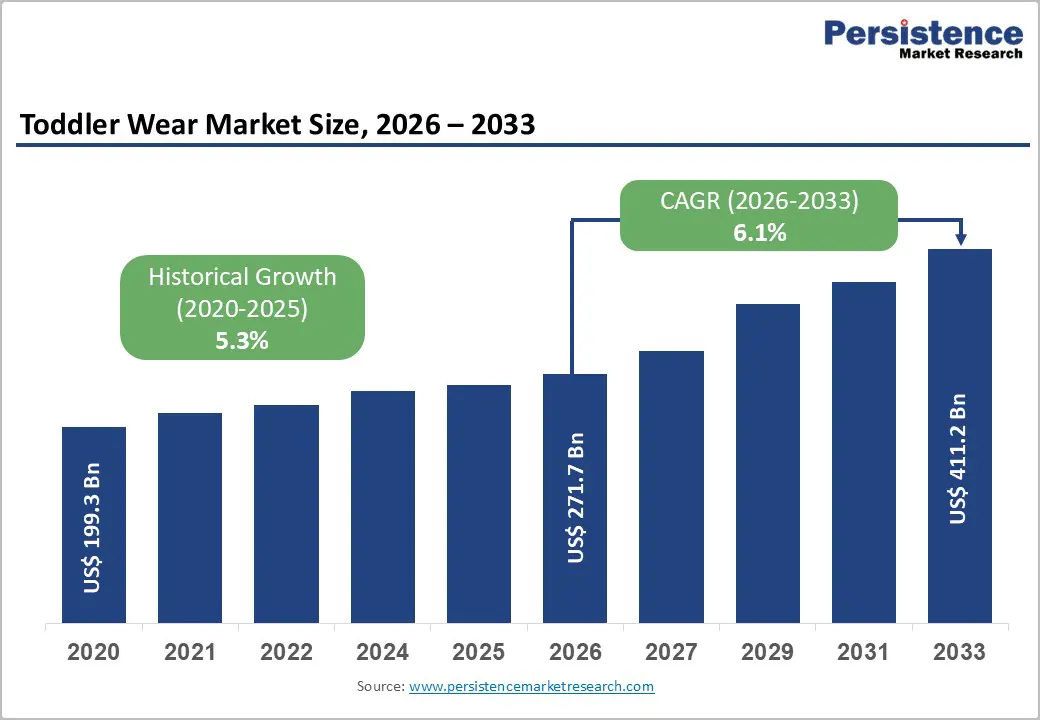
The global toddler wear market size is expected to be valued at US$ 271.7 billion in 2026 and is projected to reach US$ 411.2 billion by 2033, expanding at a CAGR of 6.1% during the forecast period. Market growth is primarily driven by the rise in parental spending on premium, comfortable, and skin-friendly clothing for toddlers. Increasing awareness regarding child skin sensitivity and the need for frequent wardrobe replacement due to rapid toddler growth are supporting consistent demand.
Additionally, urbanization, higher disposable incomes, and expanding e-commerce platforms are improving access to branded and fashionable toddler apparel. Growing preference for organic fabrics and sustainable clothing solutions is further contributing to long-term market expansion globally.
Key Industry Highlights:
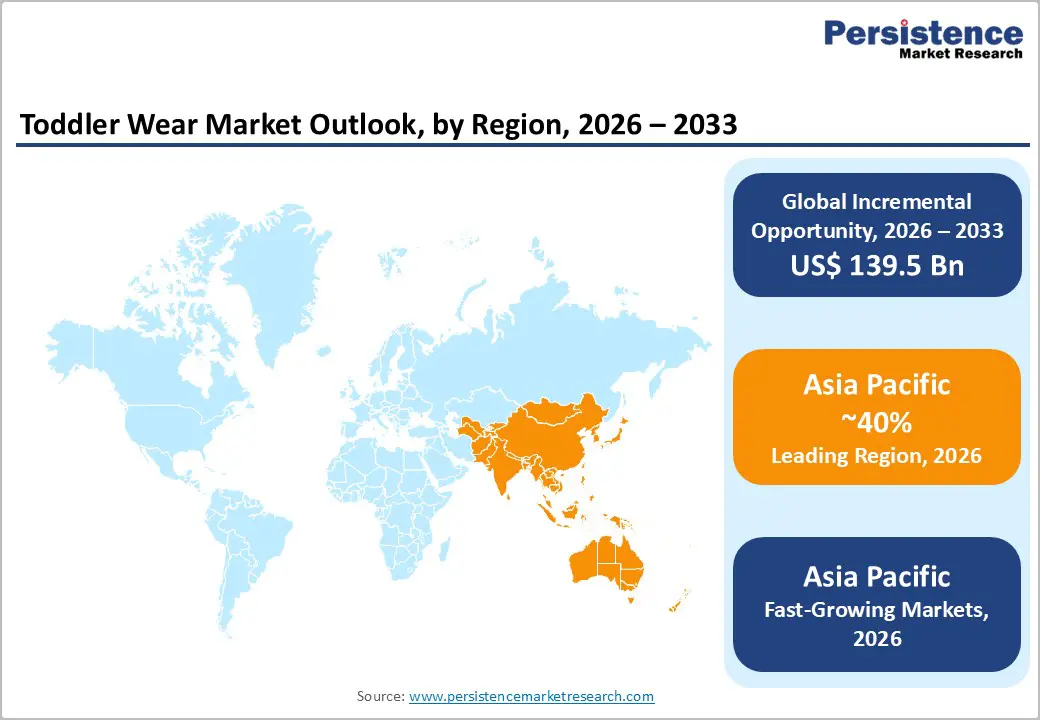
- Leading Region: Asia Pacific dominated the toddler wear market with approximately 40% share in 2025, supported by large population bases, urbanization, and rising disposable incomes.
- Fastest Growing Region: Asia Pacific is projected to remain the fastest-growing regional market through 2032 due to expanding e-commerce penetration and increasing middle-class spending on branded toddler apparel.
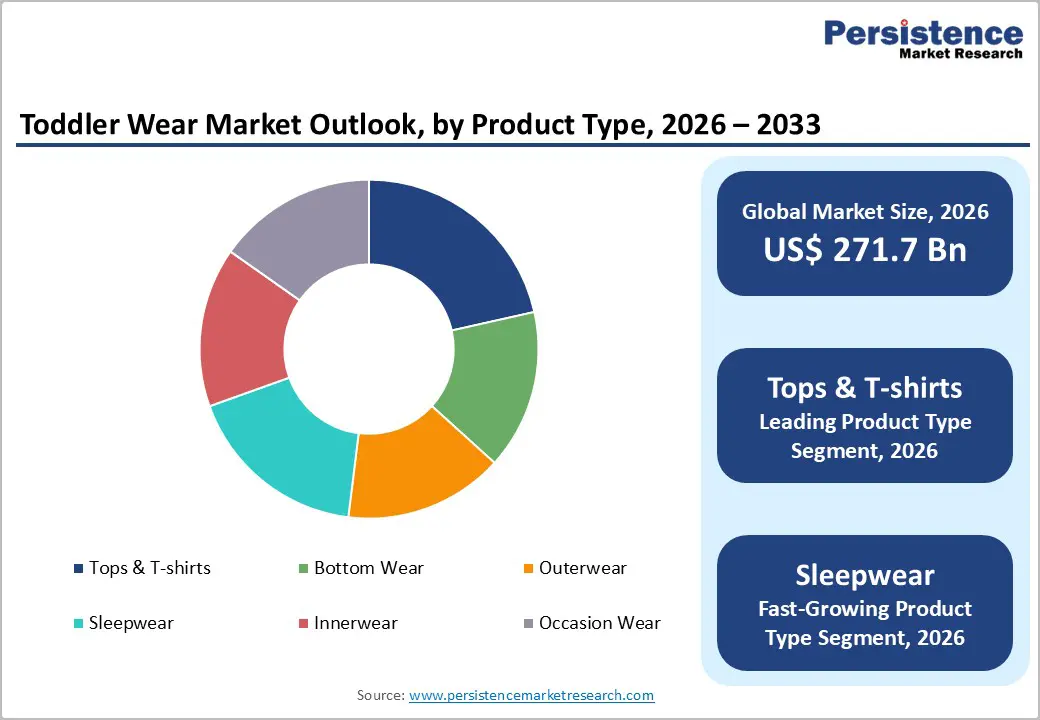
- Leading Product Category: Tops & T-shirts led the product type segment with around 30% market share in 2025, driven by strong demand for versatile and comfortable daily wear.
- Fastest Growing Category: Sleepwear emerged as the fastest-growing toddler wear category due to rising parental preference for breathable, soft, and skin-friendly nighttime clothing.
- Key Market Opportunity: Growing demand for sustainable and organic cotton toddler wear is creating major opportunities for manufacturers targeting environmentally conscious parents.
Market Dynamics
Driver - Rising Urbanization and Higher Household Spending Supporting Demand
Increasing disposable incomes and rapid urbanization across emerging economies are significantly driving growth in the toddler wear market. Expanding middle-class populations in countries such as India, China, Indonesia, and Brazil are encouraging greater spending on premium, fashionable, and comfortable toddler apparel. Urban families are increasingly prioritizing quality fabrics, branded products, and seasonal collections designed for child comfort and durability.
The rise of dual-income households is also contributing to higher purchasing frequency, as parents seek convenient shopping experiences and modern clothing styles. Frequent wardrobe replacement due to rapid toddler growth further supports recurring demand. Additionally, improving retail infrastructure, shopping malls, and organized fashion outlets in urban areas are increasing accessibility to affordable and premium toddler wear, strengthening long-term market expansion globally.
Expanding E-Commerce Platforms Increasing Toddler Wear Product Accessibility
The rapid growth of e-commerce platforms has become a major driver for the toddler wear market by improving product accessibility and offering a wider variety. Parents increasingly prefer online shopping due to convenience, home delivery, competitive pricing, and access to global apparel brands. Digital platforms also provide detailed size guides, customer reviews, and easy return policies, reducing purchase hesitation among consumers.
Online retailers continuously introduce seasonal collections, promotional discounts, and personalized recommendations that encourage repeat purchases. Growing smartphone penetration and digital payment adoption in emerging economies are further accelerating online apparel sales. Social media marketing, influencer promotions, and targeted advertising are also increasing awareness regarding trendy and functional toddler clothing. As online channels continue expanding across urban and semi-urban regions, toddler wear manufacturers are gaining stronger opportunities to reach broader consumer bases efficiently.
Restraints - Price Sensitivity, Limiting Premium Toddler Wear Product Adoption
High price sensitivity remains a significant restraint for the toddler wear market, particularly in developing and low-income regions. Many households prioritize essential spending over premium children’s apparel, limiting demand for high-cost branded products. Since toddlers outgrow clothing rapidly, consumers often prefer economical and mass-market options instead of investing in expensive fashion collections or specialized materials.
Economic uncertainty and inflationary pressures further affect purchasing decisions among price-conscious consumers. Families in emerging markets frequently purchase clothing in bulk from local retailers or unorganized sectors offering lower prices. This creates challenges for premium brands attempting to expand their customer base in cost-sensitive regions. Additionally, frequent replacement requirements due to toddler growth reduce long-term value perception, discouraging higher spending on premium toddler wear despite increasing awareness regarding comfort and fabric quality.
Raw Material Volatility and Supply Chain Challenges Impacting Market
Fluctuating raw material prices and ongoing supply chain disruptions are creating operational challenges for toddler wear manufacturers worldwide. Prices of key textile materials such as cotton, polyester, and blended fabrics continue to fluctuate due to weather conditions, transportation costs, and geopolitical instability. These factors increase manufacturing expenses and place pressure on profit margins for apparel companies.
Global supply chain disruptions have also caused delays in sourcing raw materials and product deliveries, affecting inventory management across retail and online channels. Rising logistics costs and shipping delays contribute to higher final product prices, reducing affordability for consumers in price-sensitive markets. Additionally, dependence on imported fabrics and outsourced production exposes manufacturers to currency fluctuations and trade uncertainties. These operational difficulties may slow market expansion and limit product availability in several regions.
Opportunities - Growing Consumer Preference for Sustainable Toddler Clothing Solutions
Increasing awareness regarding environmental sustainability and child skin safety is creating strong growth opportunities in the toddler wear market. Parents are increasingly seeking organic cotton, bamboo fabrics, and chemical-free materials that are gentle on sensitive toddler skin. This shift toward eco-friendly clothing is encouraging manufacturers to launch sustainable collections featuring biodegradable fabrics and ethical production practices.
Growing concerns regarding allergies, skin irritation, and environmental impact are also driving demand for breathable and non-toxic sleepwear products. Sustainable toddler apparel brands are gaining popularity among urban consumers willing to pay premium prices for certified organic clothing. In addition, government support for sustainable textile production and rising awareness regarding ethical fashion are encouraging innovation in eco-friendly toddler wear. These trends are expected to create long-term opportunities for manufacturers focused on sustainable product development.
Rapid Online Retail Expansion Creating Emerging Market Opportunities
The continued expansion of online retail platforms presents major opportunities for toddler wear manufacturers, particularly across emerging economies in the Asia Pacific, Latin America, and the Middle East. Increasing internet penetration, smartphone usage, and digital payment adoption are encouraging parents to purchase toddler clothing through online channels. Fast delivery services and convenient shopping experiences are further strengthening consumer preference for e-commerce platforms.
Rising middle-class populations and improving living standards in countries such as India, Vietnam, and Indonesia are supporting higher spending on branded toddler apparel. Online retailers are also leveraging social media campaigns, influencer partnerships, and personalized recommendations to attract young parents. Additionally, government initiatives supporting domestic textile manufacturing and digital commerce are creating favorable business conditions for apparel companies. These factors are expected to significantly expand market reach and sales opportunities during the forecast period.
Category-wise Analysis
Product Type Insights
Tops & T-shirts accounted for approximately 30% of the global toddler wear market share in 2025, making them the leading product type segment. Their dominance is supported by strong demand for comfortable, versatile, and easy-to-style daily wear for toddlers. Parents prefer multiple tops and T-shirts due to frequent clothing changes required throughout the day. Cotton-blended fabrics remain highly preferred because of their softness, breathability, and skin-friendly properties.
Sleepwear is emerging as the fastest-growing product category in the toddler wear market due to rising parental focus on comfort, safety, and fabric quality during sleep. Increasing awareness regarding toddler skin sensitivity and allergies is encouraging demand for breathable, hypoallergenic, and organic sleepwear products. Manufacturers are also introducing seasonal and themed sleepwear collections with improved fabric technologies, supporting growing consumer interest in premium toddler nightwear solutions globally.
Material Insights
Cotton dominated the toddler wear market with more than 50% share in 2025, supported by its softness, breathability, and hypoallergenic characteristics suitable for sensitive toddler skin. Parents strongly prefer cotton apparel because it offers superior comfort, moisture absorption, and durability for daily use. The material is widely used across tops, sleepwear, and innerwear categories, making it the most trusted fabric choice among consumers globally.
Blended fabrics are witnessing the fastest growth in the toddler wear market as manufacturers focus on combining comfort, stretchability, and durability in children’s apparel. These materials offer better wrinkle resistance, flexibility, and long-lasting performance compared to conventional fabrics. Growing demand for affordable yet functional clothing is also encouraging adoption of blended textile materials. Additionally, innovations in sustainable fabric blending are supporting product development across modern toddler fashion collections.
Gender Insights
The boys segment held approximately 40% share of the toddler wear market in 2025, driven by strong demand for durable casualwear, activewear, and outdoor clothing. Parents increasingly prefer rugged and comfortable apparel suitable for active play and everyday activities. Functional clothing such as joggers, T-shirts, shorts, and sports-inspired outfits remain highly popular within the boys category, contributing significantly to overall market revenue.
The girls segment is expected to witness the fastest growth due to increasing demand for fashionable, colorful, and occasion-based toddler clothing. Parents are showing greater interest in premium dresses, coordinated sets, and designer apparel collections for girls. Social media influence, celebrity-inspired fashion trends, and rising availability of stylish toddler wear through online platforms are further encouraging purchases. Brands are also expanding seasonal and festive collections tailored specifically for toddler girls globally.
Distribution Channel Insights
Supermarkets, hypermarkets, and other offline retail channels accounted for nearly 53% of the toddler wear market share in 2025, maintaining leadership due to consumer preference for physical product evaluation before purchase. Parents prefer offline shopping to check fabric softness, fitting, durability, and overall product quality directly. One-stop shopping convenience, immediate product availability, and promotional discounts also contribute to strong sales through organized retail stores globally.
Online retail is emerging as the fastest-growing distribution channel in the toddler wear market due to increasing smartphone usage and expanding digital commerce platforms. Parents are increasingly attracted to convenient shopping experiences, broader product variety, and doorstep delivery services. E-commerce platforms also provide personalized recommendations, customer reviews, and easy return policies that improve consumer confidence. Growing social media marketing and influencer promotions are further accelerating online toddler apparel purchases worldwide.
Regional Insights
North America Toddler Wear Market Trends and Insights
North America accounted for a significant share of the toddler wear market in 2025, supported by high consumer spending and strong demand for premium children’s apparel. Parents increasingly prefer organic fabrics, sustainable clothing, and branded collections designed for comfort and durability. Expanding e-commerce penetration and strong brand loyalty are further strengthening regional growth. Rising awareness regarding skin-friendly materials continues to encourage purchases of premium toddler wear products.
- U.S. Toddler Wear Market Size
The U.S. toddler wear market remained a major contributor to North America, with the broader children’s apparel sector valued at approximately USD 42 billion in 2025. Growth is driven by rising online shopping activity, increasing preference for eco-friendly fabrics, and strong spending on premium toddler fashion. Demand for comfortable, stylish, and durable apparel remains high among urban households. Expanding digital retail platforms are also improving product accessibility nationwide.
Europe Toddler Wear Market Trends and Insights
Europe continues to witness stable growth in the toddler wear market due to strong consumer preference for high-quality and sustainable apparel. Countries such as Germany, France, and Italy emphasize organic fabrics, ethical sourcing, and hypoallergenic materials in toddler clothing production. Growing environmental awareness among parents is encouraging demand for eco-certified garments. The region also benefits from established textile manufacturing capabilities and strong retail distribution networks supporting premium apparel sales.
- Germany Toddler Wear Market Size
Germany represented one of Europe’s leading toddler wear markets, with the children’s apparel industry approaching USD 18 billion in 2024. Strong domestic manufacturing capabilities, premium product demand, and sustainability-focused consumer behavior continue supporting market expansion. Parents increasingly prefer durable, organic, and high-quality toddler clothing products. In addition, Germany’s advanced retail infrastructure and growing online apparel sales are contributing to higher accessibility for branded toddler wear collections across the country.
- U.K. Toddler Wear Market Size
The U.K. toddler wear market continues to expand steadily due to rising e-commerce adoption and increasing interest in ethical fashion. Parents are actively seeking sustainable and comfortable toddler clothing made from skin-friendly fabrics. Online retailers and fashion brands are introducing wider product ranges, improving accessibility for domestic consumers. Growing demand for premium occasion wear, seasonal collections, and organic cotton apparel also supports continued market growth across the country.
- France Toddler Wear Market Size
France remains a significant market for toddler wear in Europe, supported by strong fashion influence and premium apparel demand. Consumers increasingly prefer stylish, high-quality, and sustainable clothing products for toddlers, encouraging brands to introduce eco-friendly collections. The country also benefits from a strong export-oriented fashion industry and established luxury apparel presence. Rising awareness regarding ethical sourcing and organic fabrics continues to strengthen premium toddler wear sales in France.
Asia Pacific Toddler Wear Market Trends and Insights
Asia Pacific dominated the global toddler wear market with approximately 40% share in 2025, driven by large population bases, rapid urbanization, and rising middle-class incomes. Expanding e-commerce platforms and increasing demand for affordable fashionable apparel are accelerating regional growth. China remains the largest regional contributor, while India and Southeast Asia are witnessing strong consumer spending growth. Parents increasingly prefer trendy, comfortable, and branded toddler wear products across urban markets.
- India Toddler Wear Market Size
India is emerging as one of the fastest-growing toddler wear markets due to rising disposable incomes and expanding urban middle-class populations. Increasing awareness regarding branded apparel, skin-friendly fabrics, and premium children’s fashion is supporting demand growth. Online retail platforms are also improving accessibility to diverse toddler wear collections across metropolitan and tier-two cities. Growing birth rates and rapid digital commerce adoption continue creating significant opportunities for apparel manufacturers in India.
- Japan Toddler Wear Market Size
Japan’s toddler wear market is characterized by strong demand for premium-quality apparel and technologically advanced fabrics. Parents prioritize comfort, durability, and functionality while purchasing toddler clothing, encouraging brands to develop innovative textile solutions. The market also benefits from high consumer spending on premium children’s fashion products. Growing preference for soft, breathable, and lightweight materials alongside minimalist fashion trends continues supporting stable market demand across Japan.
- Southeast Asia Toddler Wear Market Size
Southeast Asia is witnessing rapid growth in the toddler wear market due to rising disposable incomes, urbanization, and expanding online retail penetration. Consumers increasingly prefer affordable branded clothing and fashionable toddler apparel collections. E-commerce platforms are playing a major role in improving accessibility across countries such as Indonesia, Thailand, and Vietnam. Growing awareness regarding sustainable fabrics and comfortable clothing materials is also supporting demand for premium toddler wear products in the region.
Competitive Landscape
The toddler wear market remains highly fragmented, with a large number of international, regional, and local manufacturers competing across price ranges and product categories. Companies are increasingly focusing on product differentiation through sustainable fabrics, premium designs, organic materials, and improved comfort features tailored for toddlers. Expanding digital commerce platforms and strengthening omnichannel retail presence have become major competitive priorities among market participants.
Manufacturers are also investing in direct-to-consumer business models, mobile shopping applications, and personalized online experiences to strengthen customer engagement. Frequent product launches, seasonal collections, and collaborations with fashion influencers are helping brands attract young parents. Additionally, growing emphasis on eco-friendly manufacturing, ethical sourcing, and innovative fabric technologies continues to shape competition within the global toddler wear industry.
Key Developments:
- In March 2025, Jacadi Paris launched its first India store in Mumbai, expanding its premium children’s apparel presence in the country. The company emphasized sustainable fashion, timeless European designs, and plans for further retail expansion targeting affluent urban consumers.
- In September 2024, PILOLO introduced its sustainable kidswear collection in India during Junior’s Fashion Week in Mumbai. The brand focused on organic fabrics, eco-friendly production, and creative children’s fashion designed for comfort, safety, and environmentally conscious parenting trends.
- In March 2025, Chicco launched its Spring-Summer 2025 toddler and kidswear collection featuring organic cotton, breathable fabrics, and lightweight apparel. The collection targeted comfort-focused fashion demand and expanded availability through exclusive stores, baby care retailers, and online platforms across India.
- In June 2025, the 81st National Garment Fair in Mumbai highlighted growing demand for sustainable and premium kidswear collections. The event featured hundreds of apparel brands showcasing eco-friendly toddler fashion, digital retail strategies, and new seasonal product launches for emerging urban consumers.
Toddler Wear Market - Key Insights & Details
| Key Insights | Details |
|---|---|
| Historical Market Value (2020) | US$ 199.3 billion |
| Current Market Value (2026) | US$ 271.7 billion |
| Projected Market Value (2033) | US$ 411.2 billion |
| CAGR (2026 - 2033) | 6.1% |
| Leading Region | Asia Pacific, 40% |
| Dominant Product Type | Tops & T-shirts, 30% |
| Top-ranking Material | Cotton, 50% |
| Incremental Opportunity | US$ 139.5 Bn |
Companies Covered in Toddler Wear Market
- Carter’s
- The Children’s Place
- H&M
- Zara (Inditex)
- Gap Inc.
- Nike
- Adidas
- Mothercare
- FirstCry
- Benetton
- OshKosh B’gosh
- Gymboree
- Primark
- Next Plc
- Uniqlo
Frequently Asked Questions
The global Toddler Wear Market size is projected to reach US$ 271.7 billion in 2026.
Rising disposable incomes, e-commerce growth, and demand for sustainable fabrics are driving toddler wear market expansion.
Asia Pacific leads the toddler wear market with approximately 40% share, driven by urbanization and population growth.
Increasing demand for organic fabrics and premium sleepwear creates significant growth opportunities in toddler apparel markets.
Leading companies include Carter's, The Children’s Place, H&M, Zara, Gap Inc.


