




- Clothing, Footwear, & Accessories
- Fishing Apparel and Equipment Market
Fishing Apparel and Equipment Market Size, Share, and Growth Forecast 2026 - 2033
Fishing Apparel and Equipment Market by Product Type (Fishing Rods, Reels, Fishing Apparel, Accessories, Others), Distribution Channel (Specialty Stores, Supermarkets/Hypermarkets, Online Retail, Others), and Regional Analysis, 2026 - 2033

Fishing Apparel and Equipment Market Size and Trend Analysis
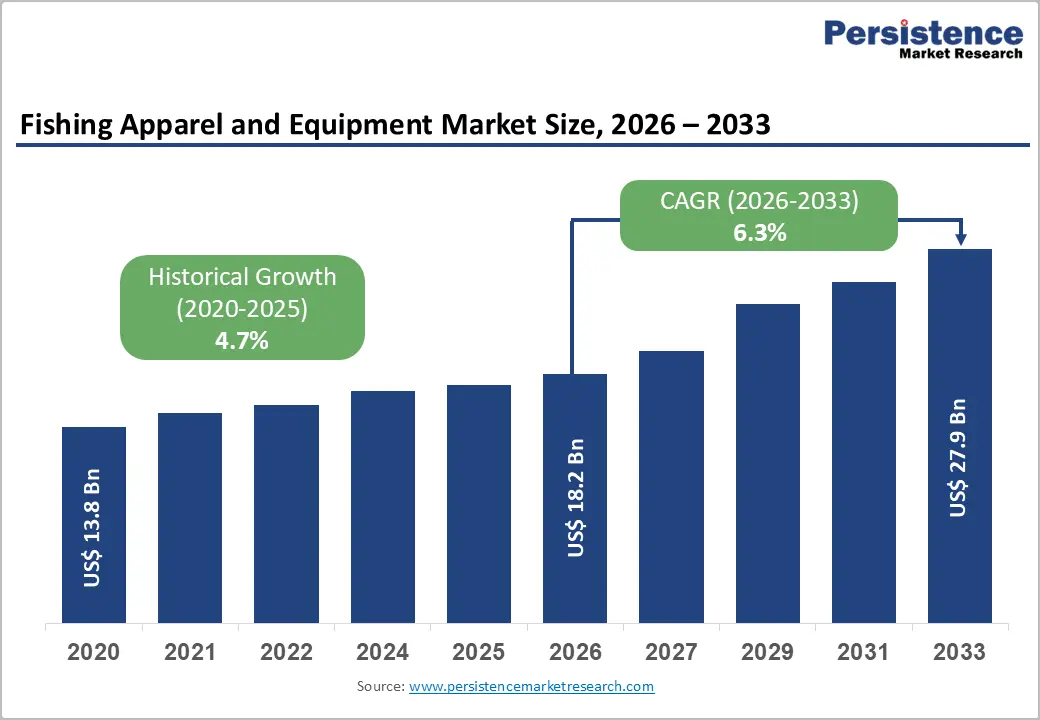
The global fishing apparel and equipment market is projected to reach US$ 18.2 billion in 2026 and expand to US$ 27.9 billion by 2033, registering a CAGR of 6.3%. Growth is driven by a strong resurgence in recreational fishing, widening angler demographics, and continuous innovation in high-performance gear.
Participation trends remain robust, particularly in North America, while emerging Asian markets benefit from rising disposable incomes. Technological advancements, including lightweight composite materials and functional apparel featuring UV protection and moisture-wicking properties, are enhancing product appeal. As both leisure and sport fishing gain popularity, the market continues to witness steady and sustainable global expansion.
Key Industry Highlights:
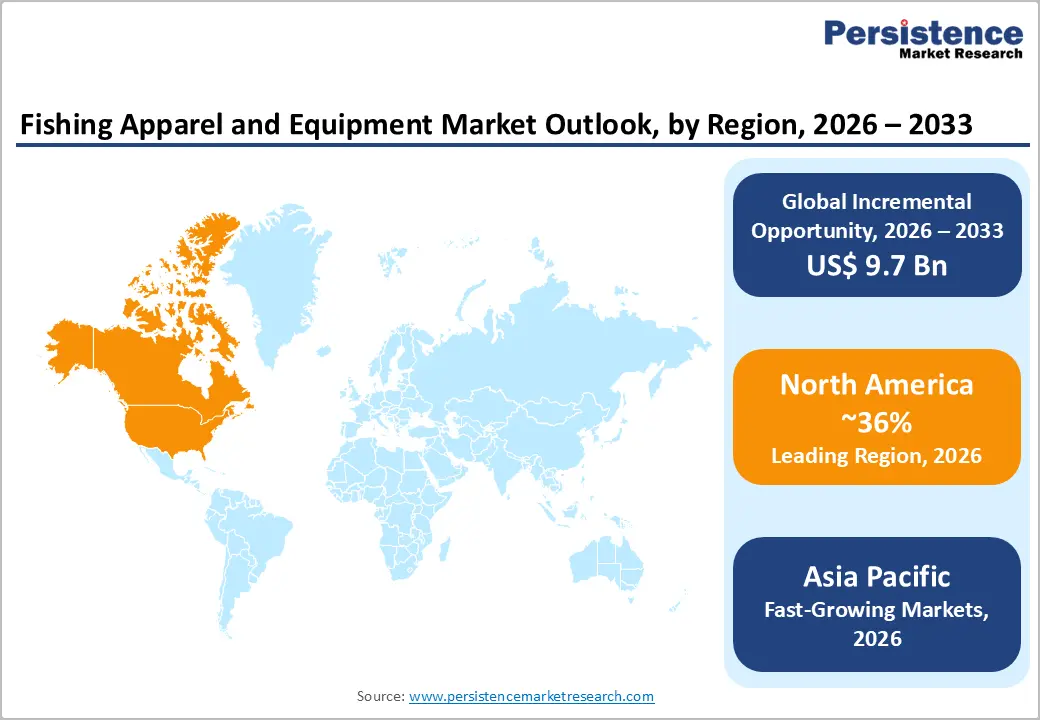
- Leading Region: North America dominates with approximately 36% market share in 2025, driven by 57.7 million anglers, robust tournament culture, and federal conservation funding from the Sport Fish Restoration Program.
- Fast-Growing Region: Asia Pacific is the fastest-growing region, expanding at a CAGR of 7.8% through 2032, fueled by China's 140 million anglers, e-commerce penetration, and rising disposable incomes.
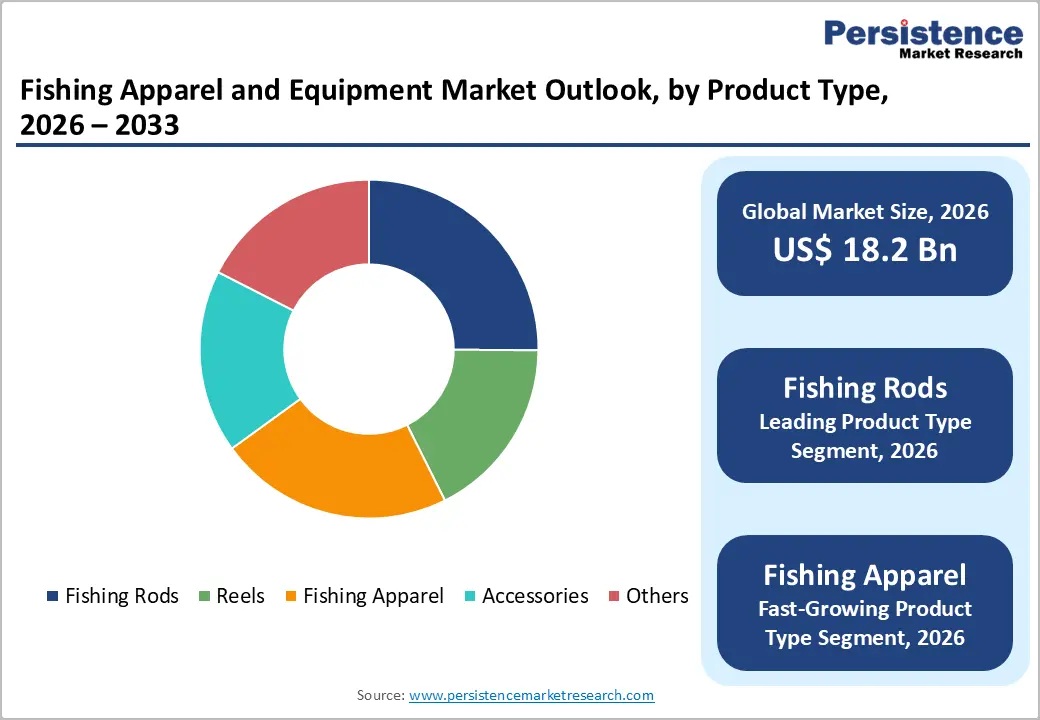
- Dominant Product Segment: Fishing rods lead the product category with 32% share in 2025, supported by recurring replacement cycles, material innovation, and species-specific tournament-grade product launches globally.
- Fast-Growing Distribution Channel: Online retail is the fastest-growing distribution channel at over 8.5% CAGR, propelled by digital platforms, subscription tackle services, and AI-driven personalized recommendations.
- Key Opportunity: Expanding women, youth, and adaptive angler segments offer significant growth, with 45% of new U.S. anglers being women, encouraging gender-inclusive apparel and entry-level gear innovation.
Market Dynamics
Drivers - Growing Outdoor Recreation Trends Driving Fishing Market Expansion
A strong resurgence in outdoor recreation is a major driver of growth in the fishing apparel and equipment market. Recreational fishing participation has increased significantly, supported by lifestyle shifts toward nature-based leisure activities. In the United States alone, participation has reached record levels, with a notable rise in female anglers and first-time participants. Similar participation trends are evident across Europe and other developed regions.
This expanding angler base is directly boosting demand for fishing rods, reels, technical apparel, and accessories. Brands are actively diversifying product portfolios to target beginners, women, and youth segments. The growing appeal of fishing as both a recreational and social activity continues to strengthen consumer engagement and long-term market demand globally.
Advanced Materials and Smart Technologies Enhancing Fishing Equipment
Technological advancements are reshaping the fishing equipment landscape, driving premiumization and product innovation. Manufacturers are increasingly using high-performance materials such as carbon fiber composites, graphene, and advanced microfibers to improve durability and efficiency. Apparel innovations, including UV protection, moisture-wicking, and anti-microbial features, are enhancing comfort and functionality for anglers across diverse environments.
In addition, the integration of smart technologies is transforming traditional fishing gear. Innovations such as Bluetooth-enabled reels, digital drag systems, and connected fishing tools are gaining traction among enthusiasts. Continuous investment in research and development, along with a focus on performance and sustainability, is accelerating product differentiation and supporting long-term growth within the market.
Restraints - Environmental Regulations Creating Challenges for Fishing Manufacturers
Increasing environmental regulations are posing challenges for manufacturers operating in the fishing apparel and equipment market. Restrictions on materials such as lead-based sinkers and plastic lures are being implemented across several regions to reduce ecological impact. Compliance with evolving environmental standards requires companies to adopt alternative materials, often at higher production costs.
The shift toward sustainable products, including biodegradable polymers and non-toxic metals, is further increasing cost pressures. Smaller manufacturers, in particular, may face difficulties in absorbing these expenses while maintaining competitive pricing. As sustainability expectations continue to rise, balancing regulatory compliance with profitability remains a key restraint for industry participants.
Climate Variability Impacting Seasonal Fishing Demand Patterns Globally
Fishing equipment sales are highly dependent on seasonal patterns and environmental conditions, creating demand volatility. Changes in climate, including rising temperatures and shifting fish migration routes, are disrupting traditional fishing seasons across key regions. This unpredictability affects participation rates and reduces consistency in consumer purchasing behavior.
Extreme weather events such as storms, floods, and droughts further limit fishing opportunities, especially in inland and coastal areas. Alterations in freshwater ecosystems and marine biodiversity are also impacting long-term fishing prospects. These environmental uncertainties present ongoing challenges for retailers and manufacturers relying on stable seasonal demand cycles.
Opportunities - E-Commerce Expansion: Transforming Fishing Gear Retail Landscape
The rapid growth of digital retail channels is creating new opportunities for fishing gear manufacturers. Online platforms are enabling brands to reach wider audiences while offering convenience and personalized shopping experiences. Growth in sporting goods e-commerce has outpaced traditional retail, reflecting changing consumer purchasing behavior.
Companies are enhancing their digital presence through advanced features such as virtual try-ons, subscription-based tackle services, and AI-driven recommendations. Direct-to-consumer strategies are allowing brands to build stronger customer relationships and improve margins. This digital transformation is also empowering smaller and niche players to compete effectively in the global market.
Rising Participation Among Women Youth and Inclusive Anglers
Demographic diversification is opening new growth avenues within the fishing market. Increasing participation among women and younger age groups is reshaping product demand and marketing strategies. Entry-level equipment and user-friendly gear are gaining traction as more first-time anglers explore recreational fishing.
Manufacturers are responding by introducing gender-specific apparel, inclusive sizing, and ergonomically designed equipment. Additionally, adaptive fishing gear for differently-abled individuals is gaining attention, supported by inclusive initiatives and community programs. This broader participation base is strengthening market expansion while aligning with evolving outdoor lifestyle and wellness trends.
Category-wise Analysis
Product Type Insights
Fishing rods dominate the product type segment, accounting for nearly 32% of the global market share in 2025. Their leadership stems from being an essential tool across all angler categories, with consistent replacement demand driven by innovation. Advancements in graphite, carbon-fiber composites, and modular rod designs have enhanced durability and portability, encouraging frequent upgrades.
Fishing apparel is emerging as the fastest-growing category, supported by rising demand for functional and lifestyle-oriented products. Performance-driven features such as UV protection, moisture management, and lightweight fabrics are attracting both professional and recreational users. The crossover between outdoor utility and casual wear is further expanding its consumer base globally.
Distribution Channel Insights
Specialty stores hold the leading position in distribution channels, capturing around 38% of the market share in 2025. Their strength lies in offering curated assortments, expert assistance, and interactive in-store experiences that build customer trust. These outlets provide hands-on product trials and personalized recommendations, making them a preferred choice for serious anglers and enthusiasts.
Online retail is the fastest-growing channel, driven by increasing digital adoption and evolving consumer preferences. Convenience, wider product availability, and competitive pricing are key factors boosting online sales. Additionally, improved logistics, digital marketing strategies, and growing internet penetration are enabling brands to reach untapped and remote customer segments effectively.
Regional Insights
North America Fishing Apparel and Equipment Market Trends and Insights
North America dominates the global market with an estimated 36% revenue share in 2025, supported by a deeply rooted angling culture, abundant freshwater and saltwater resources, and extensive retail infrastructure. The region benefits from active conservation funding through the Sport Fish Restoration and Boating Trust Fund, which channels excise taxes back into fisheries management. Trends include premiumization, sustainable tackle, and rapid adoption of bass and kayak fishing tournaments.
- U.S. Fishing Apparel and Equipment Market Size
The United States accounts for nearly 85% of North America's fishing gear revenue, with the market valued at approximately US$ 5.9 billion in 2026. Growth is driven by 57.7 million active anglers, robust tournament circuits such as Bassmaster Elite Series and Major League Fishing, and federal investments exceeding US$ 1.1 billion annually in fisheries restoration under the Dingell-Johnson Act, supporting consistent participation and gear demand.
Europe Fishing Apparel and Equipment Market Trends and Insights
Europe held approximately 24% of the global market in 2025, characterized by strong carp fishing traditions, fly-fishing heritage, and rising sea-angling tourism. The region is led by Germany, the United Kingdom, and France, with growing interest in catch-and-release practices. Sustainability mandates from the European Union are accelerating eco-friendly tackle adoption, while urban anglers fuel demand for compact, travel-friendly rods and technical apparel.
- Germany Fishing Apparel and Equipment Market Size
Germany represents around 22% of Europe's market share, valued at approximately US$ 950 million in 2026. The country hosts over 1.6 million licensed anglers per the German Anglers Association (DAFV). Strong demand for premium carp tackle, ice-fishing gear, and certified sustainable apparel, combined with stringent water quality standards under EU Water Framework Directive, drives consistent gear upgrades.
- U.K. Fishing Apparel and Equipment Market Size
The United Kingdom holds nearly 18% of Europe's fishing equipment market, with a value close to US$ 780 million in 2026. According to the Environment Agency, over 1 million rod licenses are issued annually. Growth is supported by sea angling tourism along Cornwall and Scotland, expanding female participation, and rising spend on technical waterproof outerwear from brands like Hardy and Greys.
- France Fishing Apparel and Equipment Market Size
France captures approximately 14% of Europe's market with an estimated value of US$ 610 million in 2026. The Fédération Nationale de la Pêche en France (FNPF) reports more than 1.4 million federation members. Demand is buoyed by carp fishing heritage, growing fly-fishing tourism in the Alps, and government-supported youth angling programs that boost entry-level rod and reel sales.
Asia Pacific Fishing Apparel and Equipment Market Trends and Insights
Asia Pacific is the fastest-growing region, projected at a CAGR of 7.8% through 2032, led by China, Japan, and emerging Southeast Asian markets. China alone has more than 140 million recreational anglers per the China Sport Fishing Association, fueled by rising disposable incomes, urban escape culture, and rapid e-commerce penetration. Trends include lure fishing popularity, livestream commerce, and domestic brand expansion.
- India Fishing Apparel and Equipment Market Size
India's fishing equipment market is valued at approximately US$ 280 million in 2026, contributing nearly 6% of regional revenue. Growth is propelled by expanding sport fishing destinations in Karnataka, Goa, and the Andaman Islands, supported by initiatives under the Pradhan Mantri Matsya Sampada Yojana (PMMSY) with allocations exceeding US$ 2.6 billion, fostering recreational and commercial angling infrastructure.
- Japan Fishing Apparel and Equipment Market Size
Japan accounts for around 18% of the Asia Pacific's market share, valued at US$1.1 billion in 2026. Home to legacy brands such as Shimano and Daiwa, the country boasts over 6 million recreational anglers per the Japan Sportfishing Association. Demand is driven by saltwater jigging, ayu fishing tradition, and continuous innovation in ultralight reels and technical wading apparel.
- Southeast Asia Fishing Apparel and Equipment Market Size
Southeast Asia contributes nearly 9% of regional market revenue, valued at approximately US$ 540 million in 2026. Thailand, Indonesia, and the Philippines are emerging hotspots, with the ASEAN Fisheries Consultative Forum highlighting growing recreational tourism. Affordable tackle imports, expanding middle-class participation, and government-promoted sport fishing tourism along coastal regions drive double-digit growth in entry-level segments.
Competitive Landscape
The global fishing apparel and equipment market is moderately fragmented, characterized by the presence of both established players and numerous regional and niche brands. Leading participants focus heavily on research and development, particularly in advanced materials, smart fishing technologies, and sustainable product innovation. Product differentiation is driven by specialized gear, performance-focused designs, and strong branding supported by professional endorsements and community engagement.
Emerging players are leveraging digital-first strategies to gain traction. Direct-to-consumer models, subscription-based offerings, and influencer-led marketing are reshaping competitive dynamics. Companies are also expanding into adjacent outdoor categories while adopting data-driven personalization and omnichannel retail strategies to strengthen customer retention and remain competitive in an evolving marketplace.
Key Market Developments
- In March 2025, Shimano Inc. launched its next-generation Stella SW spinning reel series with enhanced Infinity Drive technology, targeting saltwater anglers with improved gear durability and waterproofing for offshore tournament fishing.
- In October 2024, Pure Fishing, Inc. acquired the premium fly-fishing brand PLUEGER assets and expanded its Abu Garcia product line, reinforcing its leadership in mid-premium freshwater segments across North America and Europe.
- In July 2024, Columbia Sportswear introduced its PFG Terminal Tackle apparel collection featuring Omni-Shade Sun Deflector technology, expanding its women's and youth fishing apparel offerings across U.S. specialty retailers.
Companies Covered in Fishing Apparel and Equipment Market
- Shimano Inc.
- Daiwa Corporation (Globeride, Inc.)
- Pure Fishing, Inc.
- Rapala VMC Corporation
- Columbia Sportswear Company
- AFTCO Mfg. Co., Inc.
- HUK Performance Fishing
- Bass Pro Shops, LLC
- Cabela's Inc.
- St. Croix Rod
- G. Loomis (Shimano)
- Eagle Claw Fishing Tackle
- Newell Brands Inc.
- Okuma Fishing Tackle Co., Ltd.
- Hardy & Greys Ltd.
- Simms Fishing Products
- Patagonia, Inc.
- Orvis Company, Inc.
Frequently Asked Questions
The global Fishing Apparel and Equipment Market is valued at US$ 18.2 billion in 2026 and is projected to reach US$ 27.9 billion by 2033, expanding at a CAGR of 6.3% during the forecast period.
Rising recreational fishing participation, with 57.7 million U.S. anglers reported by the U.S. Fish and Wildlife Service, alongside technological innovation in lightweight composites and UV-protective performance apparel, is driving sustained global market demand.
North America leads the market with approximately 36% revenue share in 2025, supported by a deep angling culture, abundant water resources, conservation funding, and a robust ecosystem of specialty retailers and tournament circuits.
Expanding women, youth, and adaptive angler segments offer significant opportunity, as 45% of new U.S. anglers are female, encouraging brands to launch gender-inclusive apparel, smaller rods, and adaptive equipment.
Leading players include Shimano Inc., Daiwa Corporation, Pure Fishing Inc., Rapala VMC Corporation, and Columbia Sportswear.


