




- Nutraceuticals & Functional Foods
- Soy Isoflavones Market
Soy Isoflavones Market Size, Share, Trends, Growth, Regional Forecasts, 2026 to 2033
Soy Isoflavones Market by Application (Nutraceuticals & Supplements, Pharmaceuticals, Others), Form & Delivery, (Powder, Liquid, Others), Functionality (Hormonal Balance, Bone Health, Cardiovascular Health, Anti-aging, Antioxidant), and Regional Analysis for 2026 - 2033

Soy Isoflavones Market Size and Trends Analysis
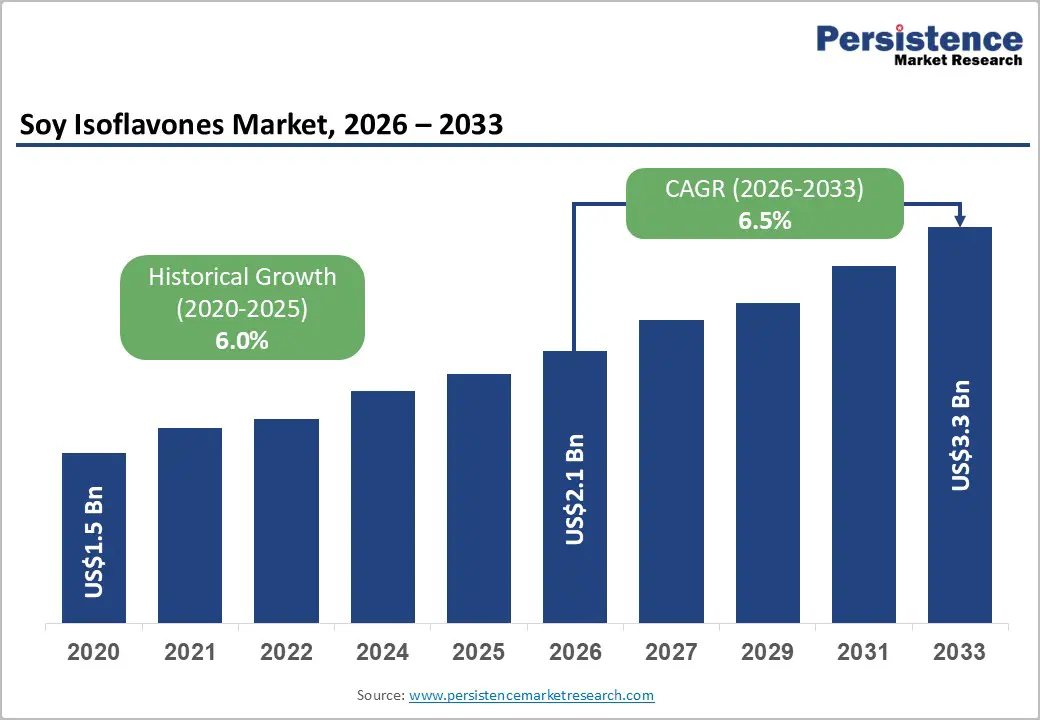
The global soy isoflavones market size is likely to be valued at US$2.1 billion in 2026 and is projected to reach US$3.3 billion by 2033, growing at a CAGR of 6.5% during the forecast period from 2026 to 2033, driven by rising demand for plant-based bioactive compounds as consumers shift toward natural, clean-label health solutions.
Growing awareness of women’s health, particularly menopause management and hormonal balance, is increasing the use of soy isoflavones in supplements and functional foods. The expanding functional food and nutraceutical industries further support demand globally. Regulatory support for plant-derived ingredients and increasing clinical evidence highlighting benefits in cardiovascular health and bone strength enhance adoption. Additionally, aging populations, higher incidence of lifestyle-related diseases, and a strong shift toward preventive healthcare are accelerating consumption across both developed and emerging markets worldwide.
Key Industry Highlights:
- Dominant Applications: Nutraceuticals & supplements are expected to command around 40% of the market share in 2026, while functional food & beverages are projected to be the fastest-growing segment at 7.5% CAGR through 2033, driven by rising demand for fortified and plant-based nutrition products.
- Leading Form & Delivery Types: Powder form is anticipated to lead with approximately 30% share in 2026, owing to its versatility and cost-effectiveness, whereas liposomal and advanced delivery formats are likely to grow the fastest at 8% CAGR during 2026–2033, supported by improved bioavailability.
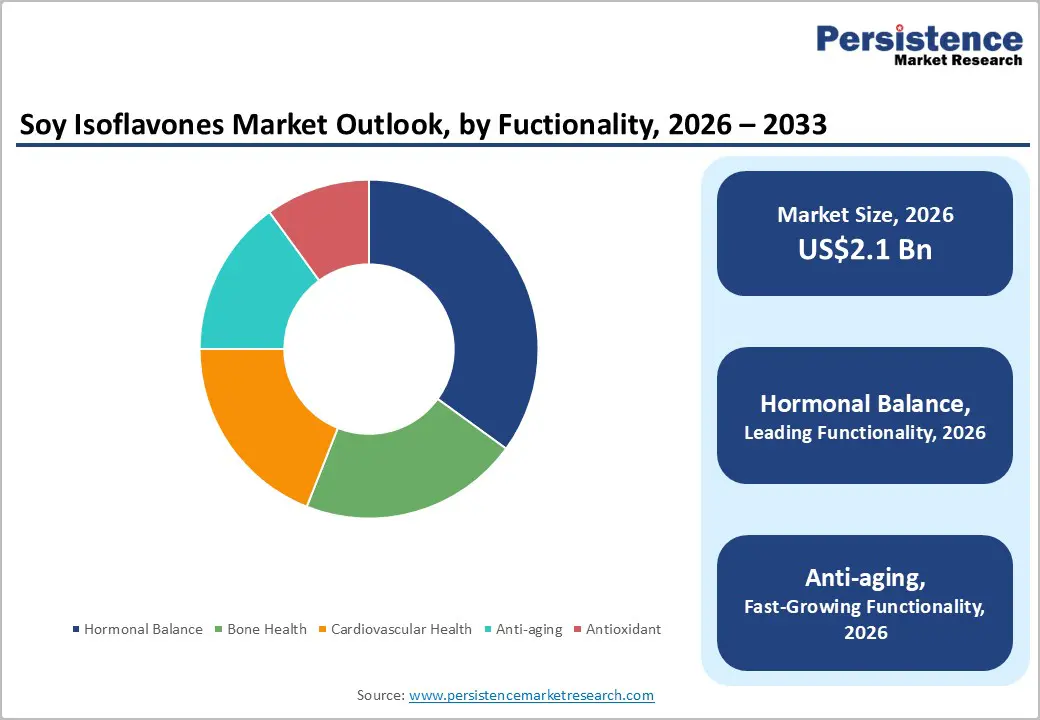
- Dominant Functionality Segment: Hormonal balance is anticipated to dominate with about a 35% share in 2026, while anti-aging and skin health applications are likely to be the fastest-growing at 7.4% CAGR during 2026–2033, driven by rising demand for natural and ingestible beauty solutions.
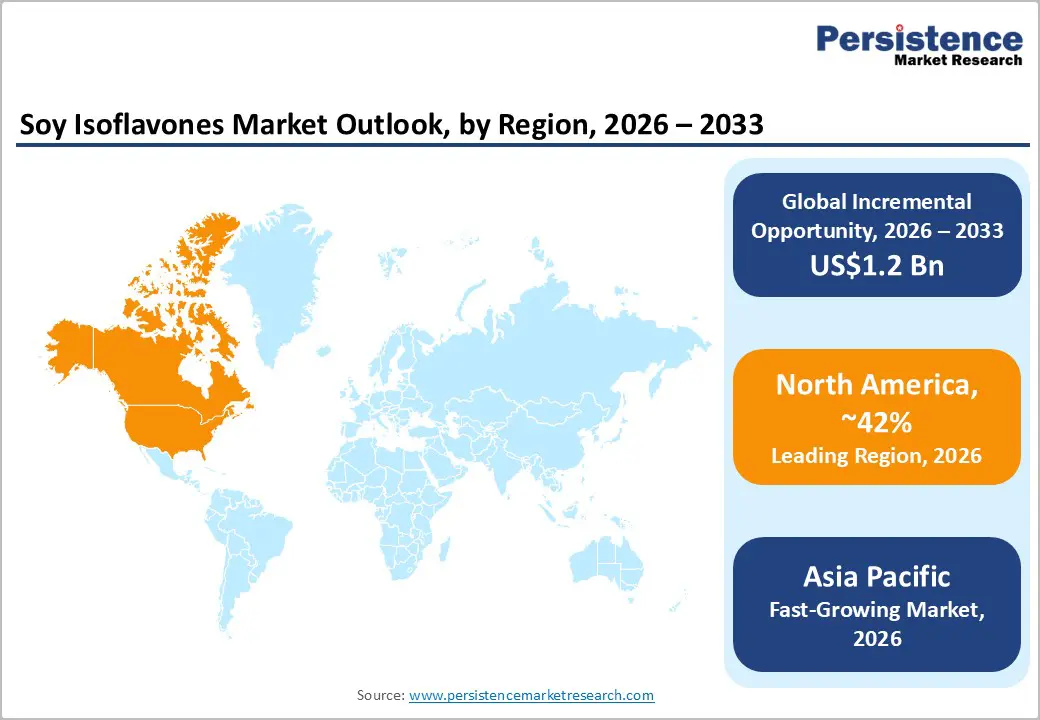
- Regional Leadership: North America is expected to lead the soy isoflavones market with an estimated 42% share in 2026, while Asia Pacific is expected to grow the fastest at 7.5% CAGR during 2026–2033, driven by strong demand for supplements and preventive healthcare.
- Technological Advancements: Market growth is increasingly supported by innovations in microencapsulation and liposomal delivery systems, enabling premium product development with enhanced absorption and targeted health benefits.
- Competitive Environment: Competitive dynamics are characterized by vertical integration, clinical validation of health claims, and expansion into emerging markets, with companies focusing on strengthening supply chains and capturing high-growth regions such as Asia Pacific and Latin America.
DRO Analysis
Driver - Rising Demand for Plant-Based Health Solutions and Healthy Aging Products
The growing preference for plant-based nutrition and the expanding aging population are major drivers of the soy isoflavones market. According to the United Nations, the global population aged 60 and above is projected to exceed 1.4 billion by 2030, increasing demand for products that support hormonal balance, bone health, and cardiovascular wellness.
The Food and Agriculture Organization (FAO) and the World Health Organization (WHO) have also linked plant-based diets with a lower risk of chronic diseases, while the 2025–2030 Dietary Guidelines for Americans encourage higher consumption of plant-based proteins, including soy. As a result, soy isoflavones are gaining traction in dietary supplements, functional foods, fortified products, and dairy alternatives due to their phytoestrogen properties and benefits in managing menopause-related symptoms. Growing scientific support for soy’s safety and health benefits is further strengthening consumer confidence and driving adoption across nutraceutical, pharmaceutical, and functional food applications worldwide.
Restraint - Regulatory Variability and Health Claim Restrictions
The soy isoflavones market faces challenges from inconsistent regulations and dependence on soybean production. Regulatory requirements for isoflavone dosage levels, labeling, and phytoestrogen-related health claims vary widely across regions. The European Food Safety Authority (EFSA) maintains strict rules on health claims, and in 2025 several supplement products required reformulation or relabeling to meet compliance standards. These differences increase compliance costs, delay product launches, and complicate global product positioning.
Soy isoflavones are also primarily sourced from soybeans, making the market vulnerable to weather-related crop disruptions, trade policies, and export restrictions. In 2025, U.S. soybean exports fell by nearly 40% year-over-year amid trade tensions, while shifting export dynamics and increased competition from Brazil contributed to supply and pricing uncertainty. Such volatility can raise raw material costs and pressure profit margins, particularly for smaller manufacturers.
Opportunity: Expansion in Emerging Markets and Advanced Functional Applications
Emerging markets present a strong growth opportunity for soy isoflavones, driven by rising health awareness, urbanization, and increasing spending on preventive healthcare. In 2025, U.S. agricultural data reported a more than 12% increase in soybean export volumes, reflecting stronger demand from Southeast Asia and other developing economies, while Indonesia expanded its soybean import commitments. Asia Pacific is projected to contribute over 35–40% of incremental market growth by 2033.
Innovation is creating additional opportunities through improved isoflavone delivery systems. In 2025, several biotech companies introduced microencapsulation and liposomal technologies that enhanced isoflavone absorption and stability. Government data also indicated record soybean processing volumes during 2025–2026, supporting the availability of high-quality soy derivatives for advanced nutraceutical, functional food, and personal care formulations.
Category-wise Analysis
Application Segment Insights
The nutraceuticals & supplements segment is expected to lead the market, accounting for approximately 40% share, driven by its strong positioning in preventive healthcare and targeted nutrition. Soy isoflavones are widely used for menopause management, bone density support, and cardiovascular health, making them highly relevant for aging populations. Increasing clinical validation and growing consumer awareness around plant-based alternatives continue to strengthen demand. In 2026, the U.S. Food and Drug Administration (FDA) continued to support the use of soy protein in heart health claims, indirectly reinforcing demand for soy-derived bioactives such as isoflavones. This segment also benefits from higher consumer trust in standardized, dosage-controlled formats.
The functional food & beverages segment is projected to be the fastest-growing, registering a CAGR of 7.5% during 2026–2033, supported by rising demand for fortified and plant-based nutrition. Food manufacturers are increasingly incorporating isoflavones into soy milk, protein bars, and dairy alternatives to enhance product value. Clean-label trends and regulatory support for functional ingredients are further accelerating adoption. In 2025, China’s National Health Commission (NHC) expanded its list of approved functional food ingredients, supporting innovation in soy-based fortified products. Expanding product innovation and increasing availability across retail channels are expected to sustain long-term expansion in this category.
Functionality Segment Insights
The hormonal balance segment is poised to dominate the market, holding around a 35% share in 2026, as soy isoflavones are primarily consumed for their estrogen-like effects. They are widely recognized for managing menopausal symptoms, reducing hot flashes, and supporting hormonal stability. Clinical studies and increasing awareness among healthcare professionals continue to reinforce their effectiveness. In 2026, updated clinical observations published through public health research bodies in Europe continued to highlight the role of phytoestrogens in supporting women’s health, further strengthening adoption. This segment remains particularly strong among middle-aged and aging female populations seeking natural alternatives.
The anti-aging segment is anticipated to be the fastest-growing, with an estimated CAGR of 7.4% during 2026–2033, driven by rising interest in beauty-from-within solutions. Isoflavones’ antioxidant properties help improve skin elasticity, reduce oxidative stress, and support collagen production. This has led to increased use of both ingestible supplements and topical skincare formulations. In 2025, Japan’s consumer affairs regulatory framework supported expanded labeling for functional beauty foods, encouraging innovation in ingestible skincare products. The convergence of nutraceuticals and cosmetics is creating new growth avenues, positioning this segment as a key driver of future market expansion.
Regional Analysis
North America Soy Isoflavones Market Trends
North America is estimated to account for 42% of the global soy isoflavones market in 2026, driven by strong demand for menopause-support supplements, heart health products, and plant-based functional foods. The region benefits from one of the world's highest dietary supplement adoption rates, while growing adherence to plant-based diets continues to expand the consumer base for soy-derived ingredients. During 2025–2026, the U.S. Soybean Export Council's Soy Connext program increased industry collaboration around soy-based nutrition and functional ingredients, strengthening commercial opportunities for soy isoflavones.
U.S. Soy Isoflavones Market Trends
The U.S. is estimated to represent 82% of the North America market in 2026, supported by a large population of menopausal women and increasing demand for non-hormonal wellness solutions. The 2025–2030 Dietary Guidelines for Americans continued to emphasize plant-based protein consumption, including soy, reinforcing demand for soy-based supplements and fortified foods. Strong retail penetration of nutraceutical products and growing consumer preference for clean-label formulations further support market leadership.
Canada Soy Isoflavones Market Trends
Canada is estimated to account for 18% of the regional market in 2026, driven by rising demand for plant-based nutrition and functional foods. Increased consumer focus on cardiovascular health, healthy aging, and sustainable food choices has encouraged the adoption of soy-derived ingredients. The country's expanding natural health products sector and growing availability of fortified food products continue to support market growth.
Europe Soy Isoflavones Market Trends
Europe is estimated to hold 24% of the global market share in 2026, supported by increasing demand for scientifically validated, plant-based health ingredients. The region's consumers are showing strong interest in natural alternatives for menopause management and preventive healthcare. Sustainability-focused food policies and rising plant-protein consumption are encouraging broader use of soy-derived ingredients across supplements and functional foods.
Germany Soy Isoflavones Market Trends
Germany is estimated to account for 24% of the Europe market in 2026, making it the region's largest country market. Demand is supported by high supplement consumption and a rapidly aging population seeking bone health and hormonal wellness products. In 2025, continued clinical research and safety assessments of soy bioactives across European institutions strengthened confidence in controlled dietary applications of soy isoflavones, supporting product adoption in Germany's nutraceutical sector.
U.K. Soy Isoflavones Market Trends
The U.K. is estimated to represent 19% of the regional market in 2026, driven by growing consumption of fortified foods and plant-based nutrition products. Demand has been supported by increasing awareness of healthy aging and preventive healthcare, particularly among women seeking natural alternatives for menopause symptom management. Expansion of clean-label functional food offerings is further supporting soy isoflavone utilization across the market.
Asia Pacific Soy Isoflavones Market Trends
Asia Pacific is estimated to remain the fastest-growing regional market due to its established soy consumption culture and expanding nutraceutical industry. Rising disposable incomes, increasing health awareness, and growing demand for functional foods are accelerating adoption. The region is expected to contribute more than 35–40% of incremental global market growth by 2033, supported by investments in soy processing and value-added soy ingredients.
China Soy Isoflavones Market Trends
China is estimated to hold 42% of the Asia Pacific market, supported by its position as the region's largest producer and processor of soy-based ingredients. Demand is being driven by growing consumption of health foods, dietary supplements, and traditional soy-based products. In 2025, regulatory modernization measures streamlined health food approval procedures, improving commercialization opportunities for functional ingredients such as soy isoflavones and encouraging new product launches.
India Soy Isoflavones Market Trends
India is estimated to account for 14% of the regional market and is emerging as one of the fastest-growing countries for soy isoflavone consumption. Rising prevalence of lifestyle-related disorders, growing awareness of preventive nutrition, and rapid expansion of the nutraceutical industry are driving demand. In 2025, investments in nutraceutical manufacturing and distribution infrastructure improved product availability, while growth in e-commerce channels increased access to soy-based supplements and functional nutrition products across urban markets.
Competitive Landscape
The global soy isoflavones market is moderately fragmented, led by major ingredient and nutraceutical companies such as ADM, Cargill, Kerry Group, and IFF Health. These players dominate through integrated soy sourcing, large-scale extraction capabilities, and strong global supply networks to food, beverage, and supplement manufacturers. Their focus is on standardized formulations, clean-label positioning, and expansion of plant-based ingredient portfolios, supported by continuous R&D in functional nutrition.
Specialized and regional players, including Fuji Oil Group and Asia-based botanical extract manufacturers, compete through high-purity isoflavone products, cost efficiency, and strong presence in local markets. Recent 2025–2026 developments include capacity expansions in Asia, strategic partnerships with nutraceutical brands, and increasing M&A activity aimed at strengthening botanical portfolios. While barriers remain due to regulatory compliance and quality requirements, rising demand for plant-based nutraceuticals is enabling niche entrants and gradually driving market consolidation.
Key Industry Developments:
- In January 2026, Cargill expanded soybean processing and export integration in Brazil and Argentina to strengthen control over sourcing and refining operations. The company is investing in local assets and improving traceability systems to meet rising demand and sustainability requirements. This enhances supply chain efficiency and export reliability for soy-based ingredients.
- In September 2025, LDC acquired BASF’s Food and Health Performance Ingredients business, expanding its plant-based and nutraceutical ingredient portfolio. The deal includes production facilities, labs, and specialty ingredients such as plant sterols and omega-3 oils. This strengthens LDC’s position in high-value functional nutrition markets.
Companies Covered in Soy Isoflavones Market
- Archer Daniels Midland Company
- Cargill, Incorporated
- DuPont
- Fujicco Co., Ltd.
- Frutarom Industries
- BASF SE
- DSM Nutritional Products
- Aushadhi Herbal
- Nutra Green Biotechnology Co., Ltd.
- Shaanxi Pioneer Biotech Co., Ltd.
- Xi’an Lyphar Biotech Co., Ltd.
- Herbal Extract Company
- Bio-Gen Extracts Pvt. Ltd.
Frequently Asked Questions
The global soy isoflavones market is projected to reach approximately US$2.1 billion in 2026.
Rising demand for plant-based nutraceuticals, increasing menopause-related health awareness, and growth in functional foods are driving the market.
The market is expected to grow at a CAGR of around 6.6% from 2026 to 2033.
Expansion of clean-label functional foods, rising adoption in cosmetics, and growth in preventive healthcare are key opportunities.
Major players include ADM, Cargill, Kerry Group, IFF Health, and Fuji Oil Group.


