




- Nutraceuticals & Functional Foods
- Global Functional Food Ingredients Market
Global Functional Food Ingredients Market Size, Share, Growth, and Regional Forecast, 2026 to 2033
Functional Food Ingredients Market by Ingredient Type (Probiotics, Prebiotics & Dietary Fibers, Vitamins & Minerals, Protein & Amino Acids, Omega-3 Fatty Acids, Phytochemicals & Plant Extracts), by Nature (Natural, Synthetic), by Application (Food & Beverages, Nutraceuticals & Dietary Supplements, Sports Nutrition, Infant Formula & Baby Food, Animal Nutrition), and Regional Analysis, 20262033

Functional Food Ingredients Market Share and Trends Analysis
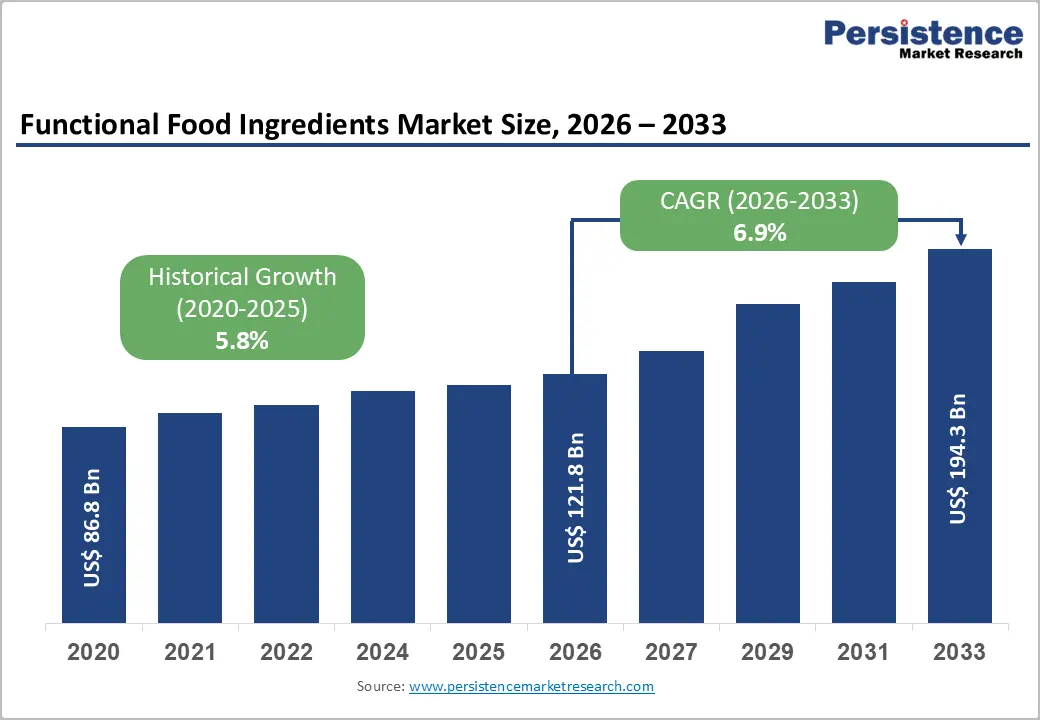
The global functional food ingredients market is estimated to grow from US$ 121.8 billion in 2026 to US$ 194.3 billion by 2033. The market is projected to record a CAGR of 6.9% during the forecast period from 2026 to 2033. Growing consumer preference for preventive healthcare, immunity-focused nutrition, and clean-label food products is reshaping the global functional food ingredients market. Food and beverage manufacturers are increasingly incorporating probiotics, proteins, fibers, botanical extracts, and fortified nutrients into daily nutrition products to meet evolving wellness expectations.
Innovation in personalized nutrition, plant-based formulations, and scientifically backed ingredients is accelerating product differentiation across global markets. Rising investments in advanced processing technologies, sustainable sourcing, and functional beverage innovation are further strengthening industry expansion. Expanding retail accessibility, digital health awareness, and active lifestyle trends continue to create long-term growth opportunities for ingredient manufacturers worldwide.
Key Industry Highlights:
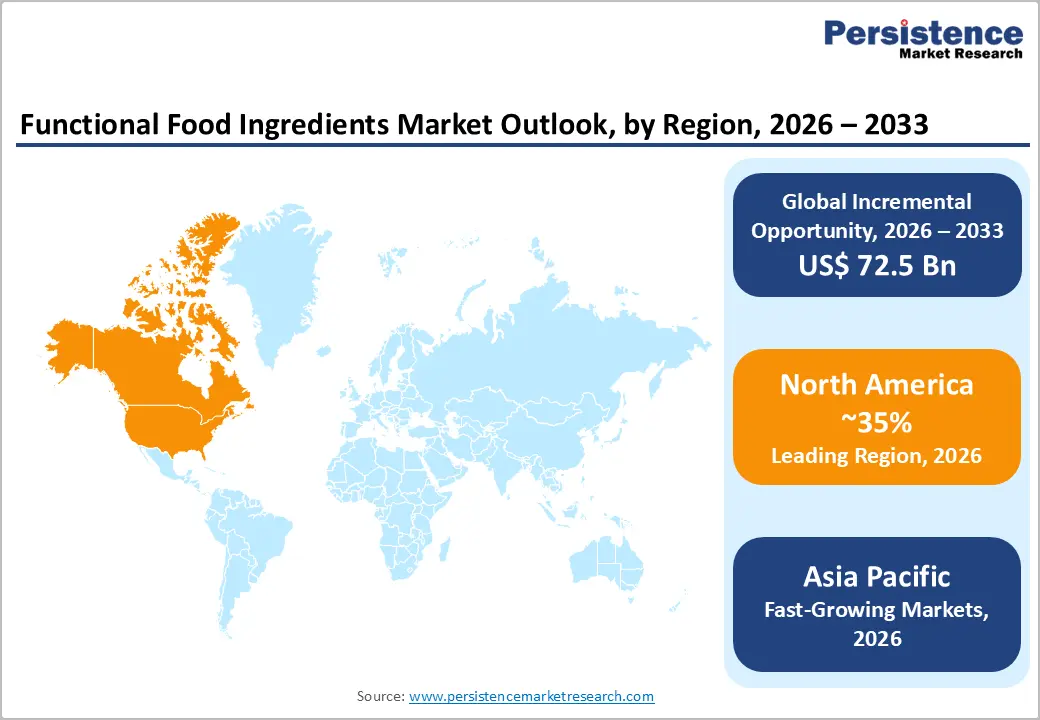
- Leading Region: North America, holding approximately 35% share, driven by strong demand for fortified foods, preventive healthcare awareness, clean-label nutrition, and advanced functional ingredient innovation across food and beverage applications.
- Fastest-Growing Region: Asia Pacific, fueled by urbanization, rising disposable incomes, expanding health awareness, and increasing adoption of protein-enriched, probiotic, and fortified food products.
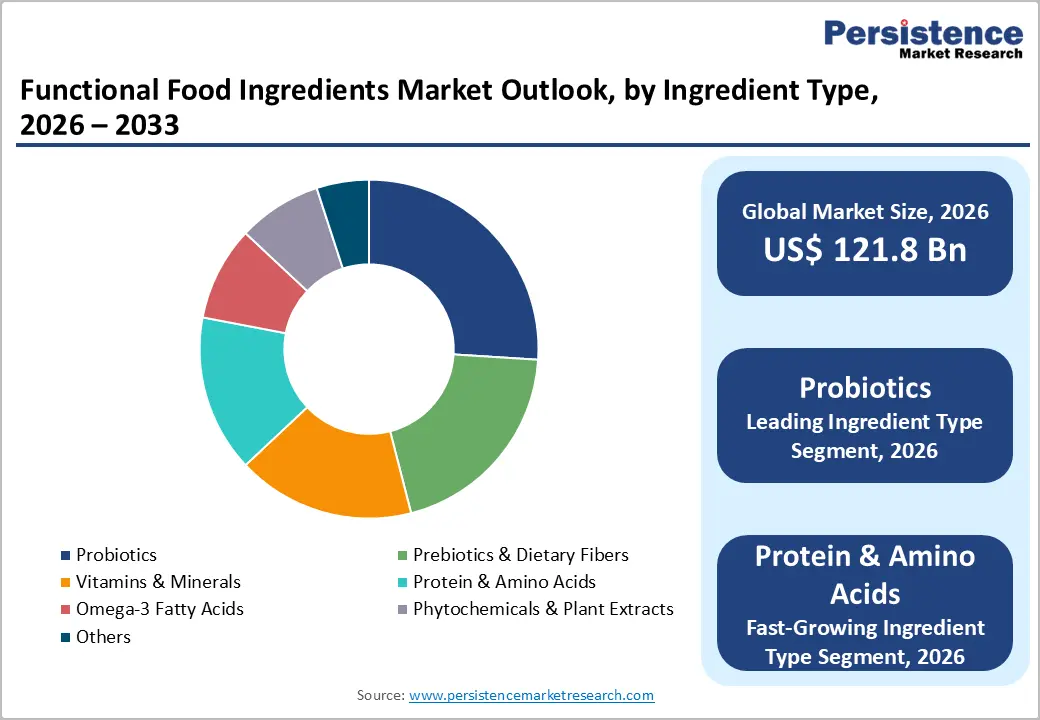
- Leading Ingredient Type Segment: Probiotics, accounting for 25% market share in 2025, supported by rising consumer focus on gut health, digestive wellness, immunity support, and functional beverage consumption.
- Fastest-Growing Nature Segment: Synthetic ingredients, driven by advancements in food technology, formulation precision, ingredient stability, and increasing demand for cost-efficient functional nutrition solutions.
- Growth Indicators: Rising health consciousness and aging populations are accelerating demand for probiotics, proteins, fortified nutrients, and preventive wellness-oriented food ingredients globally.
- Consumer Trends: Consumers increasingly prefer personalized nutrition, plant-based proteins, clean-label formulations, and scientifically supported functional ingredients tailored toward immunity, digestive health, and active lifestyles.
- Opportunities: Growing demand for plant-based and personalized nutrition is creating strong opportunities for innovative functional ingredients targeting specific wellness and dietary requirements.
Market Dynamics
Driver: Rising Health Consciousness and Aging Population
The growing emphasis on health and wellness is significantly driving the functional food ingredients market. Consumers are increasingly seeking foods that offer benefits beyond basic nutrition, such as enhanced immunity, improved digestive health, and improved cognitive function. This shift is evident in the rising demand for ingredients such as probiotics, prebiotics, and fortified vitamins. For instance, the Indian Ministry of Food Processing Industries (MoFPI) reports that fortified foods, including functional staples such as vitamin-fortified milk and cereals, have witnessed substantial adoption, reflecting the country’s move toward health-conscious consumption.
The aging population is creating increased demand for functional ingredients specifically designed for older adults. With a significant portion of the population over 60, there is growing interest in products that support bone, heart, and cognitive health. Government initiatives promoting nutrition for senior citizens, such as fortified meal programs under public health schemes, demonstrate how demographic trends are encouraging innovation in functional foods and expanding market opportunities.
Restraint: High Production Costs and Regulatory Challenges
The functional food ingredients market faces significant restraints due to high production costs. Developing and processing specialized ingredients such as probiotics, prebiotics, and fortified nutrients requires advanced technology, quality control measures, and stringent testing. These factors increase the overall manufacturing expenses, making it challenging for smaller players to compete and limiting rapid market expansion.
Regulatory challenges further constrain market growth. Functional foods and their ingredients are subject to strict government guidelines regarding safety, labeling, and health claims. Compliance with varying regulations across regions can be time-consuming and costly, slowing down product launches and innovation. These combined financial and regulatory hurdles continue to impact the speed and scale of market development.
Opportunity: Growing Demand for Plant-Based and Personalized Nutrition
The rising awareness of health, sustainability, and ethical consumption is driving strong demand for plant-based functional food ingredients. Consumers are increasingly seeking alternatives to animal-derived products, leading to growth in ingredients such as plant proteins, fiber, and naturally derived bioactive compounds. This shift is supported by the broader trend of plant-based diets, which not only promote wellness but also align with environmental and ethical considerations, creating substantial opportunities for innovation in functional food formulations.
Simultaneously, personalized nutrition is gaining momentum as consumers seek products tailored to their individual health needs, lifestyles, and genetic profiles. Functional food ingredients that address specific conditions, such as digestive health, immunity, or cognitive support, are seeing increased adoption. Advances in nutrigenomics and data-driven dietary recommendations further enable the development of customized formulations, allowing manufacturers to cater to diverse consumer requirements and expand their market presence.
Category-wise Analysis
By Ingredient Type, Probiotics dominated the global functional food ingredients market
Probiotics remain the largest segment in the functional food ingredients market, capturing 25% market share in 2026. Their popularity is fueled by increased consumer focus on gut health, immunity, and overall well-being. Functional foods and beverages enriched with probiotics, such as yogurts and supplements, continue to see strong demand across various age groups, solidifying the segment’s leading position.
Protein and amino acids are emerging as the fastest-growing segment. The surge in demand for high-protein diets, sports nutrition, and muscle recovery products is driving this growth. Both plant-based proteins and specialized amino acids are gaining popularity, addressing the needs of health-conscious and vegan consumers, and positioning the segment for robust expansion in the coming years.
By Nature, natural ingredients hold a prominent share in the global functional food ingredients market
Natural functional food ingredients are expected to continue dominating, accounting for a 68% share in 2026. Their popularity is driven by growing consumer preference for clean-label, minimally processed, and naturally sourced products. Ingredients such as plant extracts, vitamins, and naturally derived bioactives are increasingly incorporated into functional foods and beverages, reflecting the demand for healthier and more transparent food options.
Synthetic ingredients are emerging as the fastest-growing segment. Advances in food technology and the need for consistent quality, stability, and cost-effectiveness are driving the adoption of synthetic vitamins, amino acids, and other functional compounds. The ability to precisely formulate products for targeted health benefits positions synthetic ingredients for accelerated growth in the functional food ingredients market over the coming years
Regional Insights
North America Functional Food Ingredients Market Trends
North America holds approximately 35% market share in the global functional food ingredients market, supported by strong consumer demand for wellness-oriented foods, fortified beverages, and scientifically supported nutritional ingredients. Rising awareness regarding preventive healthcare, immunity support, digestive wellness, and active nutrition is accelerating the use of probiotics, fibers, proteins, omega-3 ingredients, and botanical extracts across food and beverage applications. Expanding clean-label preferences and demand for high-protein functional products are further strengthening regional market growth.
U.S. Functional Food Ingredients Market Trends
The U.S. functional food ingredients market is witnessing strong innovation in probiotics, plant proteins, nutraceutical blends, and personalized nutrition formulations targeting fitness-focused and health-conscious consumers. Growing demand for fortified snacks, functional beverages, and gut-health products is encouraging manufacturers to expand ingredient innovation and premium wellness-focused product portfolios.
Canada Functional Food Ingredients Market Trends
Canada functional food ingredients market is benefiting from increasing consumer preference for natural ingredients, sustainable nutrition products, and organic functional foods. Rising interest in immunity-supporting formulations, clean-label dietary products, and plant-based nutrition is supporting broader adoption of advanced functional ingredients across food manufacturing industries.
Asia Pacific Functional Food Ingredients Market Trends
Asia Pacific Functional Food Ingredients Market is expected to grow at a CAGR of 7.9%, driven by evolving dietary preferences, expanding urban populations, and rising demand for nutrition-focused food products. Consumers across the region are increasingly adopting fortified foods, protein-enriched beverages, probiotics, and plant-based ingredients to support immunity, digestive wellness, and active lifestyles. Growth in organized retail, digital grocery platforms, and health-focused product innovation is further accelerating functional ingredient adoption across regional food industries.
China Functional Food Ingredients Market Trends
China functional food ingredients market is witnessing strong demand for probiotic ingredients, collagen-based nutrition, plant proteins, and fortified beverages among wellness-conscious urban consumers. Expanding functional beverage innovation, premium nutrition trends, and increasing focus on preventive healthcare are strengthening ingredient demand across food manufacturing sectors.
India Functional Food Ingredients Market Trends
India functional food ingredients market is benefiting from rising health awareness, growing sports nutrition consumption, and increasing demand for affordable fortified foods. Expanding interest in immunity-supporting products, protein-rich nutrition, and herbal functional ingredients is supporting broader market growth across packaged food and beverage applications.
Competitive Landscape
The global functional food ingredients market is moderately consolidated, with multinational ingredient manufacturers, biotechnology companies, and nutrition-focused firms competing through innovation, scientific research, and premium product development. Companies are expanding portfolios with probiotics, plant proteins, fibers, omega-3 ingredients, botanical extracts, and fortified nutritional solutions to address growing demand for preventive wellness products. Clean-label formulations, sustainable sourcing, and personalized nutrition are becoming major competitive priorities across the industry.
Manufacturers are increasingly investing in advanced extraction technologies, fermentation processes, and clinical validation to improve ingredient functionality and consumer trust. Strategic collaborations, mergers, and regional expansion initiatives are strengthening global distribution capabilities and accelerating innovation in functional beverages, dietary supplements, sports nutrition, and fortified foods. Rising demand for plant-based and health-focused ingredients continues to intensify competition across global markets.
Key Industry Developments:
- In April 2026, IFF introduced PureStrong™, a probiotic developed specifically for canine digestive health applications.
- In April 2026, dsm-firmenich unveiled the first microalgal oil delivering a natural 3:2 EPA: DHA omega-3 ratio comparable to premium fish oil at the Petfood Forum 2026.
- In February 2026, Roquette expanded its NUTRALYS® portfolio with the launch of NUTRALYS® Pea 850F, a pea protein isolate designed to improve sensory performance in plant-based formulations.
- In November 2025, Probi expanded its portfolio with two new categories: “Sports & Active Nutrition by Probi” and “Pets by Probi.”
Global Functional Food Ingredients Market – Key Insights and Details
| Key Insights | Details |
|---|---|
|
Historical Market Value (2020) |
US$ 86.8 Bn |
|
Projected Market Value (2026) |
US$ 121.8 Bn |
|
Projected Market Value (2033) |
US$ 194.8 Bn |
|
CAGR (2026-2033) |
6.9% |
|
Leading Region |
North America, 35% share |
|
Dominant Ingredient Type |
Probiotics, 25% share |
|
Top-ranking Nature |
Natural, 68% share |
|
Incremental Opportunity |
US$ 72.5 Bn |
Companies Covered in Global Functional Food Ingredients Market
- DSM-Firmenich AG
- ADM
- Cargill, Incorporated
- BASF SE
- Kerry Group
- Tate & Lyle PLC
- Ingredion Incorporated
- Tereos S.A
- Glanbia plc
- Roquette Frères S.A.
- Novonesis
- Ajinomoto Co., Inc.
- Givaudan SA
- Sensient Technologies Corp.
- Others
Frequently Asked Questions
The global functional food ingredients market is projected to be valued at US$ 121.8 Bn in 2026
Rising health consciousness and an aging population are driving the global functional food ingredients market
The global Functional Food Ingredients market is poised to witness a CAGR of 6.9% between 2026 and 2033.
Rising consumer preference for plant-based and personalized nutrition solutions is creating significant growth opportunities in the global functional food ingredients market.
dsm-firmenich AG, ADM, Cargill, Incorporated, BASF SE, Kerry Group, Tate & Lyle PLC, and Ingredion Incorporated.


