




- Beverages
- Fruit Flavored Alcoholic Beverages Market
Fruit Flavored Alcoholic Beverages Market Size, Share, and Growth Forecast, 2026 – 2033
Fruit Flavored Alcoholic Beverages Market by Product (Fruit-flavored Beer, Fruit-Flavored Wine, Fruit-Flavored Spirits, Fruit-Flavored Cocktails), Flavor (Citrus, Berry, Stone Fruit, Tropical, Melon), Packaging (Bottles, Cans, Others), and Regional Analysis for 2026 – 2033

Fruit Flavored Alcoholic Beverages Market Size and Trends Analysis
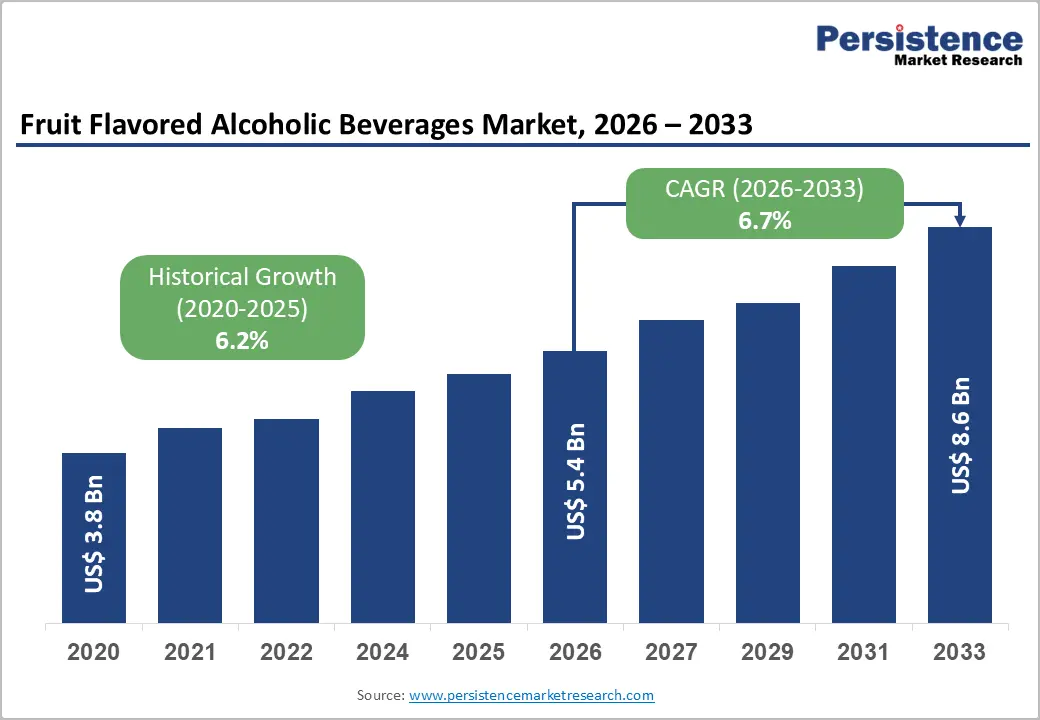
The global fruit flavored alcoholic beverages market size is likely to be valued at US$5.4 billion in 2026 and is expected to reach US$8.6 billion by 2033, growing at a CAGR of 6.7% during the forecast period from 2026 to 2033, driven by rising demand for flavored ready-to-drink (RTD) cocktails, fruit-infused spirits, and low-bitterness alcoholic drinks among Gen Z and millennial consumers.
According to the World Health Organization, global alcohol consumption patterns continue shifting toward lighter and flavored beverage formats, particularly in urban markets. The WHO’s 2024 alcohol status report highlighted increasing preference for convenient and moderated drinking options. IWSR data published in 2024 showed RTDs as the only major alcohol category recording volume growth globally, supported by premiumization and innovative fruit flavors. Flavored RTDs accounted for over 70% of the RTD alcoholic beverage segment in 2024, reflecting strong consumer preference for fruit-based alcoholic beverages worldwide.
Key Industry Highlights:
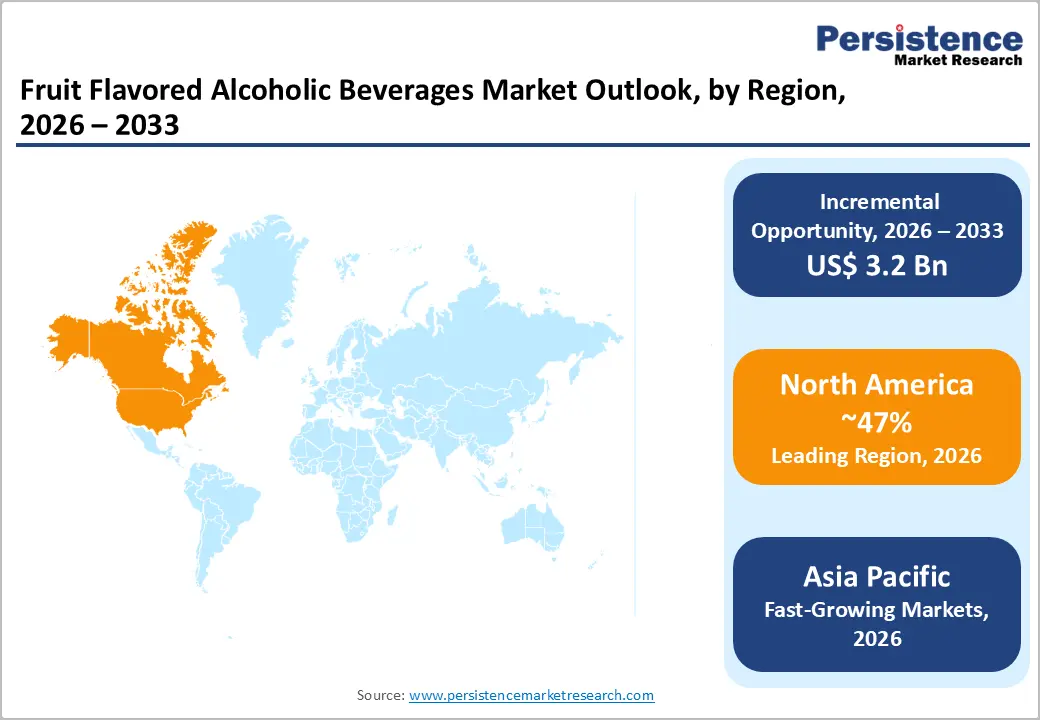
- Leading Region: North America is anticipated to be the leading region, accounting for a market share of 47% in 2026, driven by urbanization and strong consumer demand in the U.S.
- Fastest-growing Region: Asia Pacific is likely to be the fastest-growing region, supported by rapid urbanization, young consumers, and rising demand for flavored RTD beverages.
- Leading Product: Fruit-flavored beer is projected to represent the leading product in 2026, accounting for 35% of the revenue share, due to strong consumer acceptance and extensive retail availability.
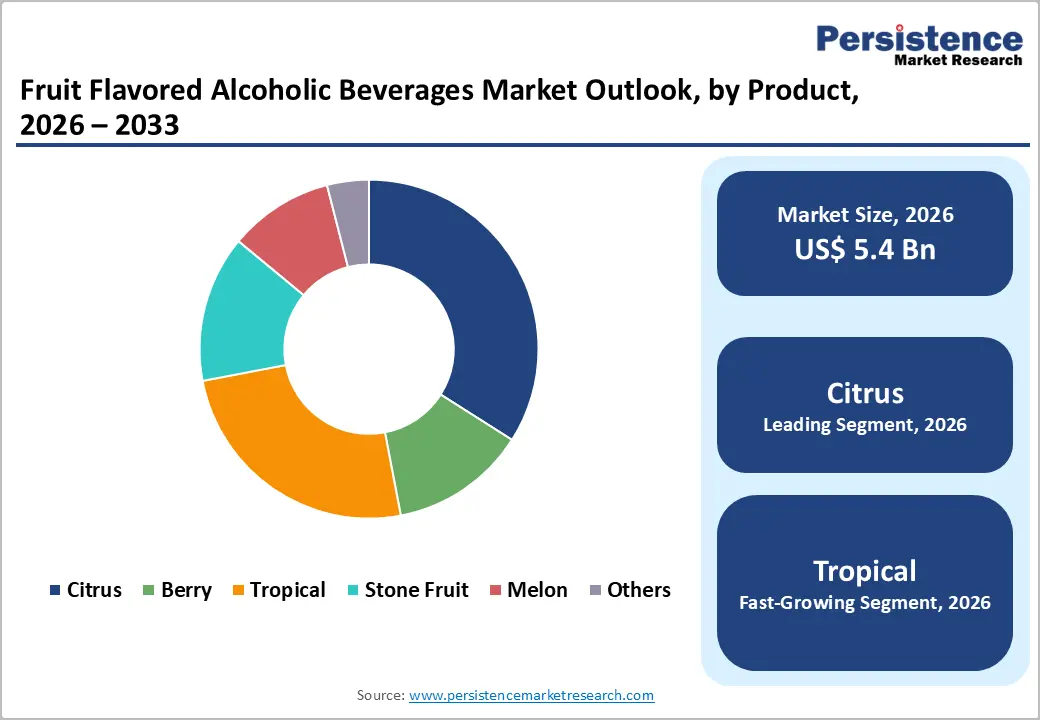
- Leading Flavor Type: Citrus is anticipated to be the leading flavor type, accounting for over 60% of the revenue share in 2026, supported by its refreshing taste profiles and broad popularity across RTD and beer categories.
- Key Opportunity: The strongest opportunity in the fruit flavored alcoholic beverages market lies in premium fruit-infused RTD cocktails and low-alcohol beverages, where exotic flavors, wellness-focused formulations, and sustainable portable packaging are reshaping consumer drinking preferences.
DRO Analysis
Driver - Rising Consumer Demand for Flavor Innovation and Experiential Drinking
Consumers increasingly seek unique taste experiences and innovative beverage combinations. Younger demographics, particularly Millennials and Gen Z, prefer fruit-infused alcoholic drinks that deliver refreshing flavors, lower bitterness, and visually appealing presentation. Beverage companies are responding with tropical, citrus, berry, and fusion-inspired variants across beers, cocktails, spirits, and ready-to-drink products.
Social media influence, experiential nightlife culture, and demand for premium drinking occasions are strengthening market growth. Seasonal launches, limited-edition products, and craft beverage experimentation continue attracting consumers seeking differentiated alcoholic beverages with modern flavor profiles and convenient packaging suited for social consumption trends.
Rising urbanization and changing lifestyles are also encouraging consumers to adopt portable and convenient alcoholic beverages suitable for gatherings, travel, and outdoor events. Fruit-flavored RTDs have become particularly popular because they combine convenience with premium flavor experiences, appealing strongly to younger professionals. Beverage manufacturers are investing heavily in flavor extraction technologies, natural fruit ingredients, and clean-label formulations to improve authenticity and product appeal.
Restraint - Health Perception Concerns and Moderation Trends
Many consumers are actively reducing alcohol intake due to concerns associated with obesity, sugar consumption, liver health, and long-term wellness. Fruit-flavored alcoholic drinks are sometimes perceived as containing higher sugar levels and artificial ingredients, discouraging health-conscious consumers from frequent consumption.
Regulatory pressures related to labeling transparency, sugar disclosure, and alcohol taxation are adding operational challenges for beverage manufacturers. Several countries are implementing tighter regulations concerning flavored alcoholic beverages due to concerns about underage appeal and excessive consumption among young adults. The rising popularity of healthier alternatives such as kombucha, sparkling water, and non-alcoholic cocktails is intensifying competition within the beverage sector.
Opportunity - Technological Convergence in Low/No-Alcohol and Functional Beverages
Manufacturers are increasingly developing low-alcohol and alcohol-free fruit beverages that maintain authentic taste, aroma, and sensory appeal through advanced fermentation and flavor preservation technologies. Consumers seeking balanced lifestyles are showing strong interest in beverages containing natural ingredients, botanical extracts, vitamins, adaptogens, and functional additives.
This trend is encouraging innovation across flavored cocktails, fruit beers, and sparkling alcoholic beverages with reduced calorie and sugar content. Expanding demand for mindful drinking experiences is opening new growth avenues for companies capable of combining flavor innovation with health-oriented beverage formulations successfully.
Technological advancements in flavor extraction, microencapsulation, and natural ingredient stabilization are enabling beverage companies to improve product quality and shelf life while maintaining fresh fruit characteristics. Companies are investing in sustainable packaging solutions and smart manufacturing systems to support eco-friendly production and operational efficiency. Partnerships between alcohol producers and wellness-focused ingredient suppliers are driving innovation in functional alcoholic beverages targeting relaxation, energy support, and hydration trends.
Category-wise Analysis
Product Type Insights
Fruit-flavored beer is expected to lead the market, accounting for 35% of revenue in 2026, driven by strong craft brewing culture, extensive retail availability, and widespread consumer familiarity. The segment continues to appeal to consumers seeking refreshing flavor profiles with lower bitterness than traditional beer varieties. Manufacturers are increasingly emphasizing natural ingredients, clean-label formulations, and visually appealing packaging to strengthen product attractiveness. For instance, Heineken continues to expand its flavored beer portfolio to address growing demand for fruit-infused alcoholic beverages among younger consumers.
Fruit-flavored cocktails are likely to represent the fastest-growing segment, supported by rising consumer preference for convenience, portability, and ready-to-drink experiences. Increasing demand for canned cocktails, pre-mixed beverages, and low-preparation alcoholic drinks is accelerating category growth. Social media trends, home entertainment culture, and outdoor lifestyle activities are driving product popularity among Millennials and Gen Z consumers. A notable example includes Bacardi, which has expanded its fruit-flavored RTD cocktail portfolio.
Flavor Type Insights
Citrus flavor is projected to lead the market, capturing around 60% of the revenue share in 2026, supported by its refreshing taste profile, versatility, and widespread consumer acceptance across multiple beverage categories. Lemon, lime, orange, and grapefruit flavors remain highly popular in beers, cocktails, spirits, and ready-to-drink beverages because they provide crisp and light flavor experiences. For example, Diageo continues developing citrus-inspired flavored alcoholic beverages within its premium ready-to-drink and spirits portfolio.
The tropical segment is likely to be the fastest-growing flavor type due to rising consumer interest in exotic and experiential beverage options. Mango, pineapple, and coconut flavors are increasingly gaining popularity among younger consumers seeking vibrant and distinctive alcoholic beverages. Beverage manufacturers are introducing tropical-inspired RTDs, cocktails, and flavored beers to capitalize on evolving taste preferences and premiumization trends. For instance, Pernod Ricard has expanded tropical-flavored cocktail and spirit offerings to meet demand for fruit-forward alcoholic beverages with exotic flavor profiles.
Packaging Type Insights
Bottles are expected to lead the packaging type in the fruit-flavored alcoholic beverages market, accounting for 65% share in 2026. Consumers often associate bottled alcoholic beverages with quality, authenticity, and enhanced drinking experiences, making this packaging format highly preferred in premium and retail segments. Glass bottles also help preserve flavor stability and carbonation, which is important for fruit-flavored beers, wines, and cocktails. A notable example includes Campari Group, which extensively utilizes premium bottled packaging across its flavored alcoholic beverage portfolio.
Cans are likely to represent the fastest-growing segment, supported by increasing consumer demand for portability, convenience, and sustainable packaging solutions. Ready-to-drink cocktails, flavored beers, and sparkling alcoholic beverages are increasingly adopting canned formats because they are lightweight, easy to transport, and suitable for outdoor consumption occasions. For instance, Molson Coors Beverage Company continues expanding canned fruit-flavored RTD beverages.
Regional Insights
North America Fruit Flavored Alcoholic Beverages Market Trends
North America is anticipated to be the leading region, accounting for a market share of 47% in 2026. The region benefits from advanced retail infrastructure, rapid product innovation, and expanding e-commerce alcohol distribution channels. Beverage manufacturers are increasingly focusing on low-sugar, low-calorie, and naturally flavored products to align with wellness-oriented consumer preferences. Flavor experimentation involving tropical fruits, citrus blends, and botanical infusions continues to strengthen market competitiveness. A notable example includes Constellation Brands, which continues expanding its fruit-flavored RTD and flavored malt beverage portfolios.
U.S. Fruit Flavored Alcoholic Beverages Market Trends
The U.S. dominates the regional market, driven by strong RTD culture and premium alcohol consumption trends. Consumers increasingly prefer canned cocktails, flavored seltzers, and fruit-infused spirits for convenience and portability. Growing demand for low-alcohol and low-calorie beverages is influencing product reformulation strategies among major beverage companies. Innovation in natural flavor extraction and clean-label ingredients is supporting premium product launches throughout the country.
Canada Fruit Flavored Alcoholic Beverages Market Trends
Canada is experiencing rising demand for fruit-flavored RTDs and premium canned alcoholic beverages, particularly among younger urban consumers. Convenience-focused consumption habits and the increasing popularity of social drinking occasions are supporting market growth across the country. Consumers are showing a stronger preference for beverages with natural fruit ingredients and reduced sugar content. Health-conscious trends are additionally encouraging the development of low alcohol by volume (low-ABV) fruit-flavored beverages.
Europe Fruit Flavored Alcoholic Beverages Market Trends
Europe is likely to be a significant market for fruit-flavored alcoholic beverages in 2026, due to strong demand for premium cocktails, fruit beers, flavored ciders, and botanical-infused spirits. Consumers across the region increasingly favor sophisticated flavor combinations and premium drinking experiences. Beverage companies are focusing on natural ingredients, organic fruit extracts, and clean-label alcoholic beverages to address evolving consumer preferences. For example, Asahi Group Holdings continues to strengthen its flavored alcoholic beverage presence across Europe through premium beer and RTD product innovation strategies.
U.K. Fruit Flavored Alcoholic Beverages Market Trends
The U.K. is a significant market for fruit-flavored alcoholic beverages. It is witnessing strong demand for canned cocktails, flavored gin beverages, and premium fruit-based RTDs among younger consumers. Cocktail culture, nightlife trends, and convenience-driven consumption habits continue accelerating product innovation within the market. Consumers are increasingly favoring tropical and berry-inspired alcoholic beverages with lower sugar and calorie content. Retail chains and online alcohol delivery platforms are improving accessibility for premium fruit-flavored alcoholic beverages.
Germany Fruit Flavored Alcoholic Beverages Market Trends
Germany remains one of Europe’s most influential markets for fruit-flavored beer and flavored malt beverages due to its strong brewing heritage and growing craft beer culture. Premiumization trends are encouraging breweries to launch innovative seasonal flavors using natural ingredients and botanical infusions. Rising interest in alcohol moderation is also supporting the development of low-alcohol flavored beers and sparkling beverages. Craft brewing innovation and premium beverage tourism are enhancing product visibility.
Asia Pacific Fruit Flavored Alcoholic Beverages Market Trends
The Asia Pacific region is likely to be the fastest-growing region in the fruit-flavored alcoholic beverages in 2026. Younger consumers are increasingly attracted to tropical-flavored cocktails, fruit beers, and convenient RTD alcoholic beverages. The region benefits from strong innovation in exotic fruit flavors such as lychee, mango, yuzu, guava, and passionfruit. For example, Pernod Ricard has expanded fruit-flavored RTD and premium cocktail offerings across Asia Pacific.
China Fruit Flavored Alcoholic Beverages Market Trends
China dominates the regional market. Younger demographics increasingly prefer lighter alcoholic beverages with fruity taste profiles and convenient packaging formats. Beverage innovation involving functional ingredients and botanical infusions is becoming increasingly popular. Expansion of e-commerce platforms and quick-commerce beverage delivery services is improving accessibility across major cities. Rising social drinking culture and digital marketing campaigns continue supporting strong market expansion throughout China.
India Fruit Flavored Alcoholic Beverages Market Trends
India is a significant market for fruit flavored alcoholic beverages. Increasing nightlife activities, music festivals, and social gatherings are accelerating demand for portable alcoholic beverage formats. Expansion of organized retail channels and alcohol delivery platforms in major cities is improving consumer access. Health-conscious urban consumers are also driving interest in low-calorie and lower-alcohol fruit beverages.
Competitive Landscape
The global fruit-flavored alcoholic beverages market exhibits a moderately fragmented structure, driven by rapid innovation in ready-to-drink cocktails, flavored beers, fruit-infused spirits, and premium low-alcohol beverages. The competitive environment is shaped by evolving consumer preferences toward convenience, premiumization, and exotic flavor experimentation.
With key leaders including Diageo, Pernod Ricard, Heineken, Bacardi, and Constellation Brands, the market continues witnessing strong investments in flavor innovation, premium RTDs, and digital marketing expansion. These players compete through strategic product launches, celebrity partnerships, localized flavor development, sustainable packaging initiatives, and expansion of e-commerce alcohol distribution channels.
Key Industry Developments:
- In March 2026, Molson Coors Beverage Company expanded its flavored alcoholic beverage portfolio with the launch of “Simply Spiked Bolder” Strawberry Lemonade, featuring a fruit-flavored RTD in portable mini cans to meet rising consumer demand for bold and convenient alcoholic beverages.
- In April 2026, Chandon launched its ready-to-serve Spritz Collection featuring Orange Peel & Spices, Berries & Hibiscus, and Lemon & Verbena variants, strengthening its presence in the premium fruit-flavored RTD cocktail segment with low-ABV and botanical-infused sparkling beverages.
- In May 2026, Diageo launched 100 ml Cocktail Collection Mini Cans in the U.S., featuring fruit-flavored and premium ready-to-drink cocktails such as Ketel One Cosmopolitan and Crown Royal Black Cherry Whisky Sour to strengthen its presence in the growing portable RTD alcoholic beverages segment.
Companies Covered in Fruit Flavored Alcoholic Beverages Market
- Diageo
- Pernod Ricard
- Constellation Brands
- Brown-Forman
- Bacardi
- Heineken
- Molson Coors Beverage Company
- Campari Group
- Asahi Group Holdings
Frequently Asked Questions
The global fruit flavored alcoholic beverages market is projected to reach US$5.4 billion in 2026.
The fruit flavored alcoholic beverages market is driven by rising consumer demand for convenient, flavorful, and premium ready-to-drink alcoholic beverages among millennials and gen z consumers.
The fruit flavored alcoholic beverages market is expected to grow at a CAGR of 6.7% from 2026 to 2033.
Key market opportunities in the fruit flavored alcoholic beverages market include expanding demand for low-alcohol and functional RTD beverages, premium tropical flavor innovations, and sustainable portable packaging solutions.
Diageo, Pernod Ricard, Constellation Brands, Brown-Forman, and Bacardi are the leading players.


