




- Beverages
- Turmeric Coffee Market
Turmeric Coffee Market Size, Share, and Growth Forecast 2026 - 2033
Turmeric Coffee Market by Product Type (Instant Turmeric Coffee, Ground Turmeric Coffee, Ready-to-Drink (RTD), Others), Form (Powder, Liquid), Distribution Channel (Supermarkets/Hypermarkets, Online Retail, Specialty Stores, Cafés & Restaurants), and Regional Analysis, 2026 - 2033

Turmeric Coffee Market Share and Trends Analysis
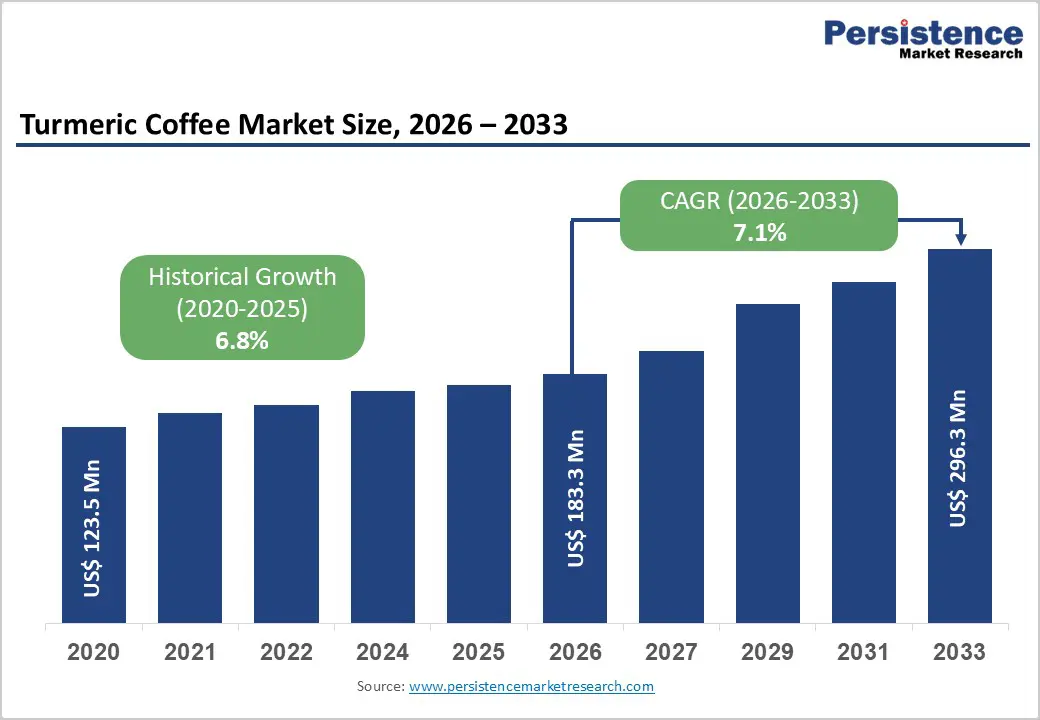
The global Turmeric Coffee Market market size is expected to be valued at US$ 183.3 million in 2026 and projected to reach US$ 296.3 million by 2033, growing at a CAGR of 7.1% between 2026 and 2033.
Rising consumer interest in functional beverages that combine familiar formats such as coffee with science-backed botanicals like turmeric is propelling this market from an emerging niche into a mainstream premium category.
Key Industry Highlights
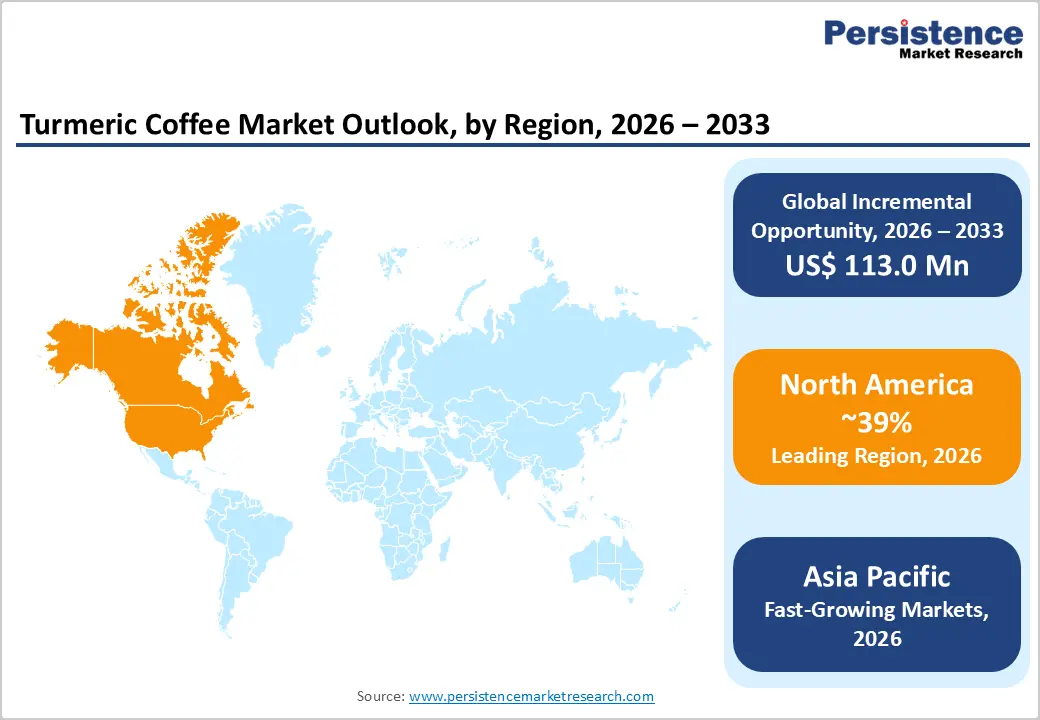
- Regional Leadership: North America is expected to remain the leading regional market for turmeric coffee, capturing about 39% of global value in 2025, thanks to high coffee consumption, strong specialty café cultures, and rapid adoption of functional coffee and golden latte offerings in retail and foodservice channels.
- Fast-growing Market: Asia Pacific is projected to be the fastest-growing region through 2033, driven by rising coffee consumption, modernization of traditional turmeric beverages such as haldi doodh into golden lattes, and expanding modern retail and e-commerce networks in China, India, Japan, and ASEAN markets.
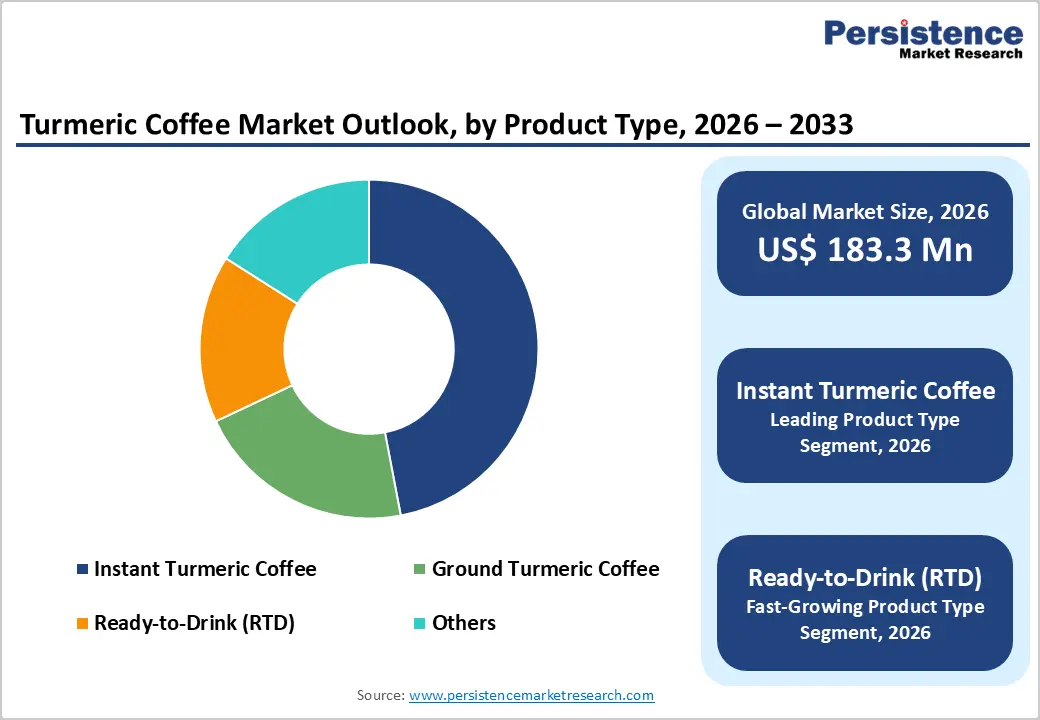
- Leading Product: By product type, Instant Turmeric Coffee is anticipated to remain the dominant segment, accounting for around 47% of global market share in 2025, reflecting a preference for convenient, easy-to-prepare functional beverages that fit seamlessly into busy daily routines.
- Fast-growing Product: Powder form is expected to command the largest share of the Turmeric Coffee Market by form, while Liquid formats, particularly RTD and cold brew variants, represent the fastest-growing segment as brands innovate with canned golden lattes and turmeric cold brews.
- Opportunity: A key market opportunity lies in premium RTD turmeric coffee and fortified instant blends that combine turmeric with complementary functional ingredients such as MCT oil, mushrooms, and vitamins meeting consumer demand for evidence-informed, convenient beverages that support energy, immunity, and overall wellness.
| Key Insights | Details |
|---|---|
|
Turmeric Coffee Market Size (2026E) |
US$ 183.3 million |
|
Market Value Forecast (2033F) |
US$ 296.3 million |
|
Projected Growth CAGR (2026–2033) |
7.1% |
|
Historical Market Growth (2020–2025) |
6.8% |

Market Dynamics
Drivers - Functional health positioning of turmeric and curcumin
A key growth driver for the Turmeric Coffee Market is the strong functional health positioning associated with turmeric and its principal bioactive compound, curcumin. Numerous preclinical and clinical studies, including GRADE-assessed systematic reviews and randomized controlled trials, indicate that turmeric or curcumin supplementation can significantly reduce inflammatory markers such as C-reactive protein (CRP), TNF-α, and IL6, while improving antioxidant status. These findings support traditional Ayurvedic uses of turmeric in managing inflammatory conditions and have been amplified in consumer media through narratives around joint health, immunity, and overall wellness. As health-conscious consumers increasingly seek beverages that do more than deliver caffeine, turmeric coffee blends and golden lattes promise an appealing fusion of familiar coffee rituals with evidence-backed functional benefits, encouraging trial and repeat purchase across instant, ground, and RTD formats.
Fusion of traditional golden milk with modern coffee culture
Another important growth driver is the fusion of traditional golden milk (haldi doodh) with modern coffeehouse culture and specialty café menus. Market and trend analyses highlight how “golden milk” or turmeric latte has evolved from a traditional Indian home remedy into a globally recognized functional drink, with cafés across cities from London to Berlin and beyond offering bright yellow, turmeric-based lattes as indulgent yet wellness-oriented options. In India and among the global diaspora, traditional haldi doodh has been modernized with plant-based milks, café-style frothing, and layered flavor experiences, supporting its rebranding from a convalescence drink to an everyday lifestyle beverage. As coffee chains and specialty cafés introduce turmeric-infused coffee beverages and golden cold brews—such as seasonal golden latte collections featuring turmeric and ginger—consumers become more familiar with the taste and story of turmeric, directly boosting demand for at-home turmeric coffee pods, ground coffee blends, and RTD variants that replicate café experiences.
Restraints - Taste adaptation, formulation challenges, and bioavailability concerns
Despite strong momentum, the Turmeric Coffee Market faces restraints linked to taste adaptation, formulation complexity, and curcumin bioavailability. Turmeric has a distinct earthy, slightly bitter and spicy flavor that can be polarizing, especially for consumers accustomed to conventional coffee profiles; this makes careful balancing with milk, spices, and sweeteners critical to acceptance. Moreover, scientific literature underscores that curcumin has inherently low oral bioavailability due to rapid metabolism and limited absorption, prompting interest in formulations that combine turmeric with fats or piperine (black pepper extract) to enhance uptake. These technical requirements can increase formulation and production costs, particularly for RTD products where stability and sensory quality must be preserved over shelf life, potentially constraining price-sensitive adoption and limiting the ability of smaller brands to scale.
Regulatory scrutiny and competition from broader functional beverage category
A second restraint stems from regulatory oversight of health claims and intense competition from adjacent functional beverages. Authorities in many markets require that structure–function or disease-related claims on food and beverage labels be substantiated by high-quality evidence, and reviews of curcumin research emphasize that benefits can be dose- and duration-dependent, with heterogeneous results across conditions. This means turmeric coffee brands must communicate benefits responsibly and often in a more general wellness language, which can dilute differentiation versus other functional coffee or tea products that highlight clearer, regulatory-approved claims. Simultaneously, the functional coffee segment already includes mushroom coffees, adaptogen-infused blends, and fortified RTD cold brews, all vying for the same health-conscious consumer, making it more challenging for turmeric-focused products to stand out purely on functional positioning without additional flavor, sustainability, or lifestyle differentiators.
Opportunities - Expansion of ready-to-drink turmeric coffee and cold brew formats
One of the most compelling opportunities lies in the expansion of ready-to-drink turmeric coffee formats, including cold brew and nitro-style beverages tailored to on-the-go lifestyles. Coffee industry data indicate that cold coffee beverages have become mainstream, with around one in three Americans drinking a cold brew, frozen, or nitro coffee within the last week, and more than one in five choosing cold brew specifically.
Market studies further suggest that the global cold brew category has surpassed US$ 3 billion in value in the recent past and is projected to grow at high double-digit CAGRs, while RTD coffee overall is outpacing many other beverage segments. Integrating turmeric into these fast-growing formats, such as cold brew coffee with turmeric and spices or lightly sweetened RTD golden lattes, allows brands to leverage both the convenience of RTD coffee and the wellness halo of turmeric, while creating visually distinctive products that stand out on shelves and in social media feeds.
Premium instant, pod-based, and fortified turmeric coffee blends
Another major opportunity is the development of premium instant, pod-based, and fortified turmeric coffee blends that align with broader trends in at-home specialty coffee and “healthy convenience.” Brands such as VitaCup offer organic ground and pod coffees infused with turmeric, MCT oil, cinnamon, and B vitamins, explicitly marketed for sustained energy, immune support, and cognitive focus. Functional coffee innovators such as Four Sigmatic have built global recognition for mushroom and adaptogen coffee lines and now extend their portfolios with golden latte mixes that pair turmeric, black pepper, and medicinal mushrooms such as Turkey Tail, catering to consumers seeking gut health and stress support in indulgent latte formats.
By combining turmeric with other evidence-backed functional ingredients and convenient formats single-serve pods, instant sachets, and multi-serve ground coffee brands can tap into daily wellness rituals at home and at work, expand basket sizes, and build defensible niches in the broader functional coffee ecosystem.
Category-wise Analysis
Product Type Insights
Within product types, instant turmeric coffee is expected to remain the leading segment, accounting for roughly 47% in 2025. Instant formats offer a compelling combination of convenience, shelf stability, and ease of preparation, making them especially attractive to time-pressed consumers who want functional benefits without elaborate brewing routines. Industry commentary and product portfolios show that many of the most visible turmeric coffee offerings are instant mixes or single-serve sachets that combine coffee, turmeric, and complementary spices, with some also incorporating functional add-ons such as collagen, mushrooms, or MCT oil. This reflects a broader shift toward “all-in-one” functional beverage solutions that can be prepared quickly at home or in the office, reinforcing the dominance of instant turmeric coffee even as RTD and ground formats continue to grow from smaller bases.
Form Insights
By form, powder is the dominant format in the turmeric coffee market, accounting for an estimated majority of global sales as of 2025. Powder formats, including loose ground coffee blends, instant drink mixes, and latte powders, are favored for their versatility and suitability across multiple channels, from retail packs for home use to foodservice applications in cafés and restaurants. They also align naturally with traditional golden milk preparations, where turmeric, spices, and milk powders are combined into mixes that can be reconstituted with hot water or milk, making it straightforward for manufacturers to adapt these formulations into coffee-bearing products.
Liquid formats, including RTD bottled coffees and concentrates, are growing rapidly but typically involve higher production and logistics complexity, including cold-chain distribution in some cases; as a result, Powder is expected to remain the primary form in the near term, while Liquid emerges as the fastest-growing segment on the back of RTD innovation and cold brew trends.
Distribution Channel Insights
Across distribution channels, Supermarkets/Hypermarkets constitute the leading route to market for turmeric coffee, given their central role in weekly grocery shopping and their expanding dedicated space for functional and premium coffee products. Large-format retailers typically allocate prominent shelf real estate to emerging health-focused categories, including turmeric lattes, golden milk mixes, and specialty instant coffees, often supported by in-store sampling and promotional end-caps that encourage trial.
Online retail is fast-growing, fueled by the DTC strategies of functional beverage brands and the long shelf life of dry turmeric coffee mixes. E-commerce platforms enable detailed storytelling around ingredient sourcing, scientific evidence, and customer reviews, which are particularly important when marketing health-oriented products. Specialty Stores and Cafés & Restaurants add an experiential dimension, serving as discovery points where consumers first taste turmeric-infused coffees or golden lattes before seeking out retail packs for home consumption.
Regional Insights
North America Turmeric Coffee Market Trends and Insights
North America is expected to remain the leading regional market, accounting for approximately 39% of global Turmeric Coffee Market value in 2025, underpinned by high coffee consumption, a sophisticated specialty café culture, and strong consumer interest in functional health products. The region has seen rapid mainstreaming of golden milk and turmeric lattes, with wellness-oriented cafés and major coffee chains offering seasonal or permanent turmeric beverages that blend espresso or cold brew with turmeric, ginger, and honey or plant-based milks. Surveys and commentary on healthy coffee trends also highlight rising demand for products fortified with vitamins, MCT oil, mushrooms, and botanicals, creating a receptive landscape for turmeric coffee blends that promise both energy and wellness benefits.
From a regulatory and innovation perspective, North American brands operate in an environment of increasing consumer scrutiny of ingredient lists and health claims, encouraging transparent labeling and evidence-informed marketing around curcumin’s anti-inflammatory potential. Functional coffee innovators such as VitaCup, Four Sigmatic, and others use e-commerce, subscription models, and influencer-driven campaigns to build loyal communities around daily wellness rituals, while cold brew and RTD trends provide additional runway for turmeric-infused offerings in cans and bottles. Collectively, these dynamics reinforce North America’s position as both the largest and one of the most innovative regional hubs for turmeric coffee development.
Asia Pacific Turmeric Coffee Market Trends and Insights
Asia Pacific is anticipated to be the fastest-growing region for the Turmeric Coffee Market, as it combines deep cultural familiarity with turmeric with rapidly evolving coffee consumption patterns. In India, haldi doodh remains a deeply rooted household remedy, but recent years have seen its modernization into golden milk lattes that use plant-based milks and café-style presentation, often marketed as daily wellness beverages rather than emergency remedies.
Simultaneously, coffee consumption is climbing across markets such as China, Japan, India, and ASEAN, with younger consumers embracing specialty cafés, cold brew, and RTD coffees as lifestyle markers. This creates fertile ground for turmeric coffee products that blend local tradition with global coffee culture, including instant mixes, ground coffees with turmeric, and RTD golden coffee lattes.
Manufacturing advantages and a strong regional supply of turmeric and spices further support Asia Pacific growth, enabling competitive production costs and localized flavor innovation. Brands draw on regional spice palettes ginger, cardamom, cinnamon, and black pepper to craft distinctive turmeric coffee blends tailored to local tastes while leveraging the global wellness narrative around curcumin. As modern retail and e-commerce penetration deepen across markets like India and Southeast Asia, consumers gain broader access to both domestic and imported turmeric coffee brands, positioning the Asia Pacific as a key demand engine and innovation lab over the 2026–2033 forecast period.
Competitive Landscape
The global turmeric coffee market is moderately fragmented, with a mix of established beverage brands and emerging wellness-focused startups competing on product innovation, quality, and branding. Companies are emphasizing functional benefits by combining turmeric with adaptogens, spices, and plant-based ingredients to attract health-conscious consumers. Product differentiation is driven by clean-label claims, organic certifications, and convenient formats such as instant mixes and ready-to-drink options. Pricing varies across premium and mass segments, intensifying competition. Additionally, strong growth in e-commerce and direct-to-consumer channels has lowered entry barriers, enabling niche brands to gain visibility and compete effectively with larger players.
Key Developments:
- In December 2025, the Koraput district in Odisha expanded its agricultural focus beyond its successful coffee cultivation by introducing black turmeric as a high-value crop under a pilot project. Supported by the Odisha University of Agriculture and Technology, the crop was cultivated organically and showed promising early growth, with expectations of strong yields.
- In January 2025, the Government of India launched the National Turmeric Board in January 2025 to strengthen the country’s turmeric sector and support farmers. The board, headquartered in Nizamabad, Telangana, was established to enhance production, promote research and development, and improve value addition for global markets.
Companies Covered in Turmeric Coffee Market
- Gaia Herbs
- Ramini Bionutrition Pvt Ltd
- Auric
- Continental
- VEDA5
- EVORA GREENS
- Starbucks
- VitaCup
- Vahdam
- Quik Café
- Four Sigmatic
- Super Organics
- Pride Of India
- Golde
- Spice Drop
Frequently Asked Questions
The Turmeric Coffee Market is expected to reach approximately US$ 183.3 million in 2026, supported by rapid consumer adoption of functional coffee beverages that blend familiar coffee formats with turmeric’s perceived anti-inflammatory and antioxidant benefits.
Demand is driven by growing awareness of turmeric and curcumin’s potential health benefits, the modernization of traditional golden milk into café-style lattes, and rising interest in convenient functional beverages such as instant turmeric coffees, pods, and RTD golden coffee lattes.
North America currently leads the global Turmeric Coffee Market, accounting for an estimated 39% share in 2025, driven by high coffee consumption, strong specialty café cultures, and rapid uptake of functional coffee products and golden latte-style beverages across retail and foodservice channels.
A key opportunity lies in developing premium RTD turmeric coffees and fortified instant blends that combine turmeric with complementary functional ingredients such as MCT oil, mushrooms, and vitamins, addressing consumer demand for convenient beverages that support energy, immunity, and holistic wellness.
Leading players include VitaCup, Four Sigmatic, Navitas Organics, Hemani, Continental Coffee, Coffeeza, QuikTea Inc., Ramini Bio Nutrition, Natures Harvest, Grateful Earth, Bevzilla, Organic India, Terrasoul Superfoods, and BetterBody Foods, alongside emerging regional and specialty brands.


