ID: PMRREP11539| 196 Pages | 17 Nov 2025 | Format: PDF, Excel, PPT* | Consumer Goods
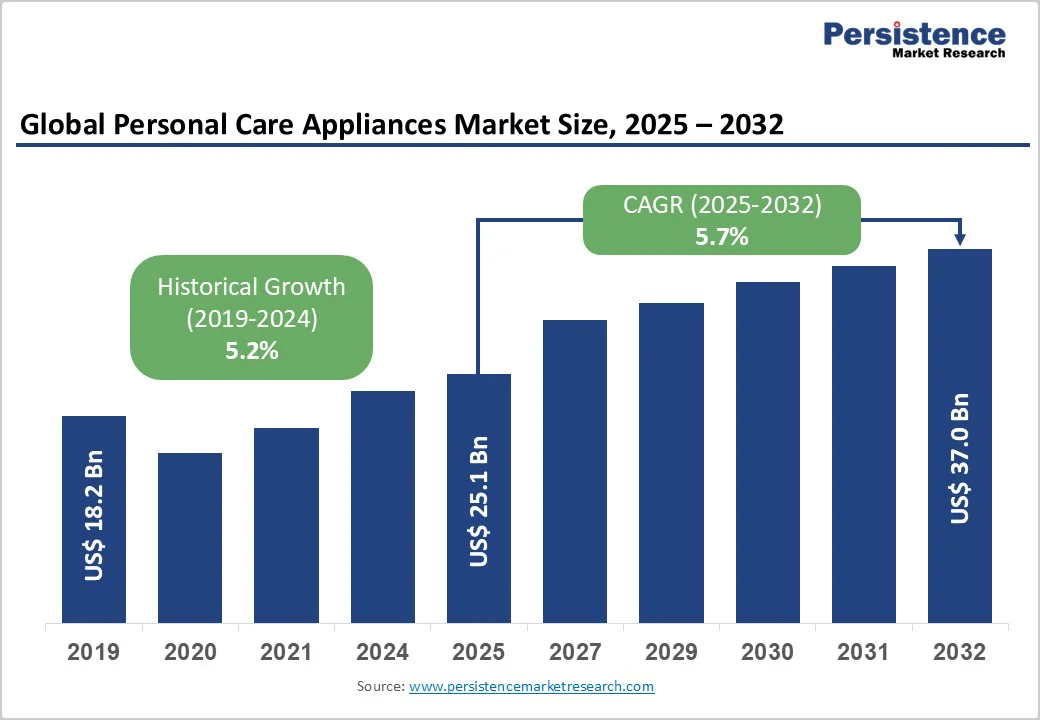
The global personal care appliances market size is likely to be valued at US$25.1 billion in 2025, forecasted to reach US$37.0 billion by 2032, growing at a CAGR of 5.7% during the forecast period from 2025 to 2032, driven by rising consumer focus on personal grooming, increasing adoption of smart and connected devices, and growing demand for at-home wellness solutions.
The shift toward premium, multifunctional appliances has significantly boosted the adoption of personal care appliances across residential and commercial settings, particularly among urban, tech-savvy consumers. The rise of e-commerce platforms and social media influence has accelerated product visibility and consumer engagement, with 40% of sales now occurring online. Additionally, the growing awareness of oral health, skincare, and stress relief has expanded the scope of application for these appliances beyond traditional grooming.
| Key Insights | Details |
|---|---|
|
Personal Care Appliances Market Size (2025E) |
US$25.1 Bn |
|
Market Value Forecast (2032F) |
US$37.0 Bn |
|
Projected Growth (CAGR 2025 to 2032) |
5.7% |
|
Historical Market Growth (CAGR 2019 to 2024) |
5.2% |
The increasing consumer emphasis on self-care, hygiene, and grooming, coupled with rapid technological advancements, is a primary driver of the personal care appliances market. Growing awareness of personal wellness and appearance has fueled demand for high-performance grooming tools and skincare devices. Innovations such as AI-powered hair stylers and sonic facial cleansers offer improved efficiency and convenience over manual methods, enhancing overall user satisfaction. For instance, electric toothbrushes and advanced skincare tools from leading brands such as Philips have gained strong support from professionals due to their proven effectiveness and ease of use.
Rising disposable incomes, especially in the Asia Pacific, are enabling consumers to opt for premium personal care appliances. The shift toward cordless, waterproof, and portable designs aligns with busy, on-the-go lifestyles. Supportive regulations promoting energy-efficient appliances are encouraging innovation across the industry. The growing emphasis on inclusivity, with expanding unisex and men’s grooming product lines, is further propelling market growth.
High initial costs and the proliferation of counterfeit products pose significant restraints on the Personal Care Appliances Market. Premium appliances are priced higher than manual alternatives, discouraging price-sensitive consumers, particularly in emerging markets. Affordability concerns and supply chain disruptions, especially for key components such as semiconductors, have further increased production costs, leading to price hikes and product launch delays.
Counterfeit appliances continue to undermine brand trust and consumer safety, resulting in reputational damage and increased product returns. Lengthy regulatory compliance processes, including safety certifications, lengthen production timelines and increase costs, creating additional barriers for smaller brands competing with established players. Environmental concerns over battery disposal and plastic waste are pressuring manufacturers to adopt sustainable materials and designs to meet growing consumer expectations.
Advancements in smart, IoT-enabled, and sustainable personal care appliances present significant growth opportunities. Smart appliances with app integration enhance user engagement and align with the expanding smart home ecosystem. For instance, connected oral care devices track brushing in real-time, improving dental hygiene. Sustainable models using recycled plastics appeal to eco-conscious consumers by reducing environmental impact.
Men’s grooming offers untapped potential, with beard trimmers and skincare devices gaining popularity. Subscription models for replacement heads generate recurring revenue, while partnerships with dermatologists and salons enhance brand credibility. As global e-commerce rises, digital marketing and AR try-ons are boosting consumer engagement and conversions, driving expansion in high-growth regions such as the Asia Pacific and North America.
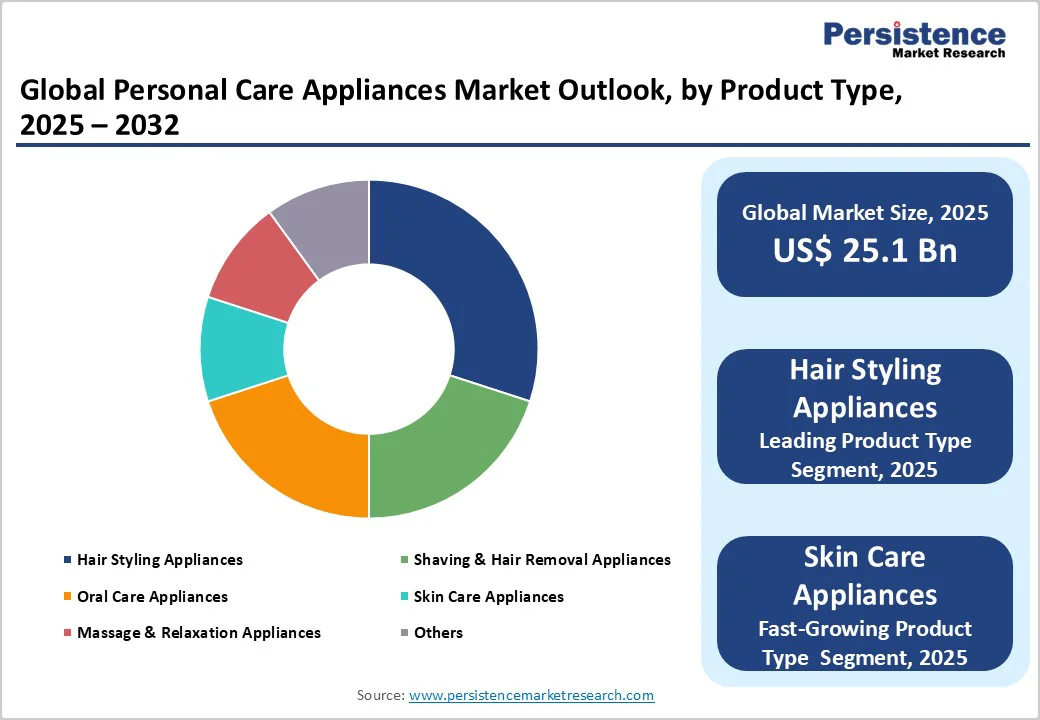
Hair Styling Appliances dominate the market, accounting for 30% of the share in 2025, driven by their everyday use and continuous innovation. Cordless, travel-friendly designs and AI-enabled heat control enhance user convenience while preventing hair damage. Rising fashion consciousness and the popularity of at-home styling tools further reinforce their strong market presence and consumer preference.
Skin Care Appliances are the fastest-growing segment, driven by the growing influence of K-beauty product trends and the increasing demand for facial cleansing and rejuvenation devices. Consumers seek salon results at home, driving innovation in LED therapy, microcurrent, and ultrasonic tools. Enhanced affordability and online availability further accelerate market adoption among beauty-conscious users.
Women lead with an over 60% share, driven by a strong focus on skincare and hair-styling routines. Growing beauty awareness, social media influence, and product innovations such as multifunctional styling tools and skincare devices boost adoption. Premiumization and personalized beauty solutions further strengthen women’s dominance in the grooming appliance segment.
Men are the fastest-growing demographic, driven by the normalization of grooming and self-care practices. Increasing social acceptance, influencer marketing, and product lines tailored for men, such as beard trimmers and skincare tools, are fueling adoption. Urbanization and rising disposable incomes further support demand for advanced, tech-driven grooming devices and appliances.
Residential holds nearly 70% of the market share, driven by the growing popularity of at-home grooming and self-care routines. Consumers increasingly prefer convenient, affordable, and user-friendly devices for daily beauty and hygiene needs. The rise of e-commerce and social media tutorials further fuels product adoption across diverse age and income groups.
Commercial is the fastest-growing, driven by rising investments in salon and spa upgrades. Professional salons are increasingly adopting advanced, energy-efficient, and smart grooming tools to enhance service quality and efficiency. This shift toward premium, high-performance equipment supports strong growth across commercial beauty and grooming establishments.
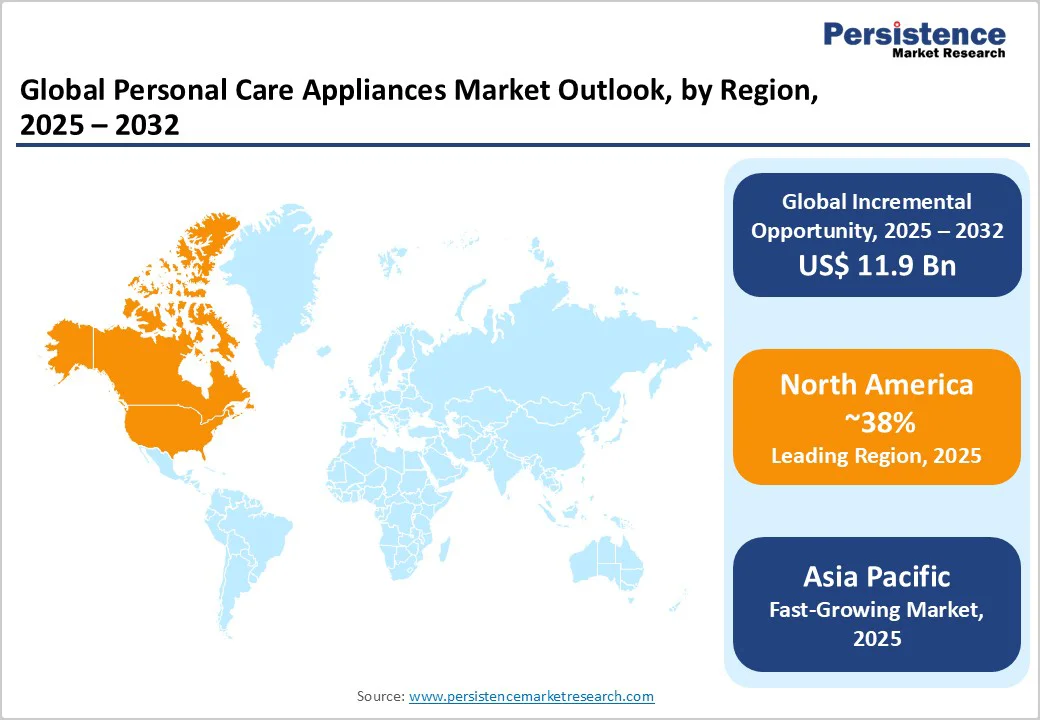
North America accounts for 38% in 2025, with the United States dominating regional demand due to high beauty and grooming expenditure and the strong presence of global brands. The region’s growth is largely driven by its advanced digital ecosystem and the widespread adoption of e-commerce platforms such as Amazon, which account for nearly 40% of sales. Consumers are increasingly shifting toward smart, app-connected personal care appliances that offer features such as personalized styling settings, real-time performance tracking, and AI-based recommendations.
The influence of social media and beauty influencers also plays a critical role in shaping purchase decisions, particularly among younger demographics. Consumers’ focus on convenience, hygiene, and self-care has boosted demand for electric toothbrushes, hair dryers, and grooming kits. Innovation, product customization, and strong after-sales service remain key differentiators in the competitive landscape.
Europe holds about 25% market share, led by Germany and France due to their strong beauty culture, advanced consumer awareness, and emphasis on quality and innovation. The region’s market growth is also reinforced by the European Union’s stringent sustainability regulations, which encourage the development of eco-friendly and energy-efficient appliances. Consumers in Europe are highly conscious of environmental impact and prefer durable, recyclable, and low-emission grooming products. This has pushed leading brands to adopt sustainable materials, reduce packaging waste, and introduce rechargeable or energy-saving devices.
Germany’s technological expertise and France’s strong beauty and fashion heritage have together created a robust demand for premium hair styling tools, shavers, and skincare devices. The rise of smart personal care solutions and increased spending on self-care products are shaping market dynamics. Online retail and social media marketing are further enhancing brand reach across the region.
Asia Pacific commands around 20% share and is the fastest-growing region, driven by rapid urbanization, improving living standards, and a growing middle-class population. China leads the regional market with its large-scale manufacturing capabilities, strong domestic demand, and expanding e-commerce ecosystem that makes grooming and beauty appliances more accessible. India is witnessing a surge in demand, driven by rising disposable incomes, greater awareness of personal grooming, and the influence of digital media on lifestyle trends.
The proliferation of affordable products from both international and local brands has further accelerated adoption across urban and semi-urban areas. The growing participation of women in the workforce and increasing focus on self-care among younger consumers are supporting long-term market expansion. Technological innovations, such as smart and portable grooming devices, are also resonating well with the tech-savvy population.
The global personal care appliances market is moderately consolidated, with major players such as Philips, Panasonic, Braun, and Conair dominating through strong brand recognition and diversified product portfolios. These companies are heavily investing in innovation to cater to evolving consumer preferences for convenient, effective, and eco-friendly grooming solutions. The focus has shifted toward sustainability, with many brands launching energy-efficient, recyclable, and low-plastic appliances to align with environmental goals.
Smart technologies such as AI-driven styling tools, app-connected shavers, and temperature-control hair dryers are gaining traction, enhancing user experience and personalization. Digital marketing has become a crucial growth strategy, enabling brands to engage consumers directly through social media, influencer collaborations, and e-commerce platforms. Rising disposable incomes, increasing grooming awareness among men and women, and the expansion of online retail channels are further fueling market growth.
The global personal care appliances market is projected to reach US$25.1 Billion in 2025, driven by self-care and grooming trends.
The market is driven by beauty spending to US$800 Billion by 2030 and smart appliance innovations, boosting personal care appliances.
The market is poised to witness a CAGR of 5.7% from 2025 to 2032, supported by IoT and cordless technologies.
Expansion in men's grooming and sustainable personal care appliances offers key opportunities for growth.
Philips, Dyson, Procter & Gamble, Colgate-Palmolive, and Groupe SEB lead through innovative personal care appliances.
| Report Attribute | Details |
|---|---|
|
Historical Data/Actuals |
2019 - 2024 |
|
Forecast Period |
2025 - 2032 |
|
Market Analysis |
Value: US$ Bn |
|
Geographical Coverage |
|
|
Segmental Coverage |
|
|
Competitive Analysis |
|
|
Report Highlights |
|
By Product Type
By Consumer Group
By End-use
By Region
Delivery Timelines
For more information on this report and its delivery timelines please get in touch with our sales team.
About Author