




- Marine
- Hydrobikes Market
Hydrobikes Market Size, Share, and Growth Forecast, 2026 - 2033
Hydrobikes Market by Product Type (Solo Type, Two Seater Type), Application (Recreational, Fitness, Tourism, Fishing, Racing), Material (Aluminum, Stainless steel, Carbon fiber, Plastic), and Regional Analysis for 2026 - 2033

Hydrobikes Market Size and Trends Analysis
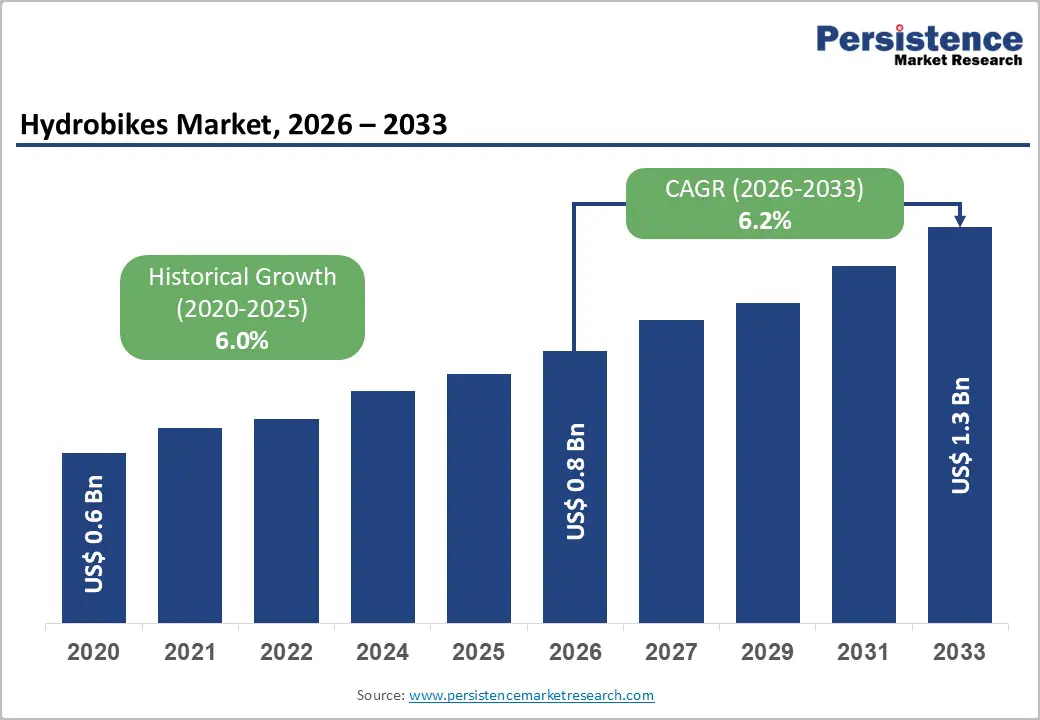
The global hydrobikes market size is likely to be valued at US$0.8 billion in 2026 and is expected to reach US$1.3 billion by 2033, growing at a CAGR of 6.2% during the forecast period from 2026 to 2033, driven by increasing consumer interest in innovative water-based recreational activities.
Hydrobikes, also referred to as water bikes or pedal-powered watercraft, merge cycling mechanics with buoyant hulls, allowing users to navigate lakes, rivers, and coastal waters with ease. This growth is fueled by rising demand for low-impact outdoor exercise, eco-friendly tourism, and alternative fitness options that complement traditional gym routines. Advancements in lightweight and durable materials, such as carbon fiber and aluminum, have enhanced stability, portability, and overall user experience, making hydrobikes accessible to a wider audience.
The market also benefits from expanding waterfront infrastructure, including resorts, parks, and adventure tourism hubs, which encourage both recreational and professional use. Increased awareness of sustainable leisure activities and wellness-oriented lifestyles supports adoption, positioning hydrobikes as an appealing combination of fitness, fun, and environmental consciousness.
Key Industry Highlights:
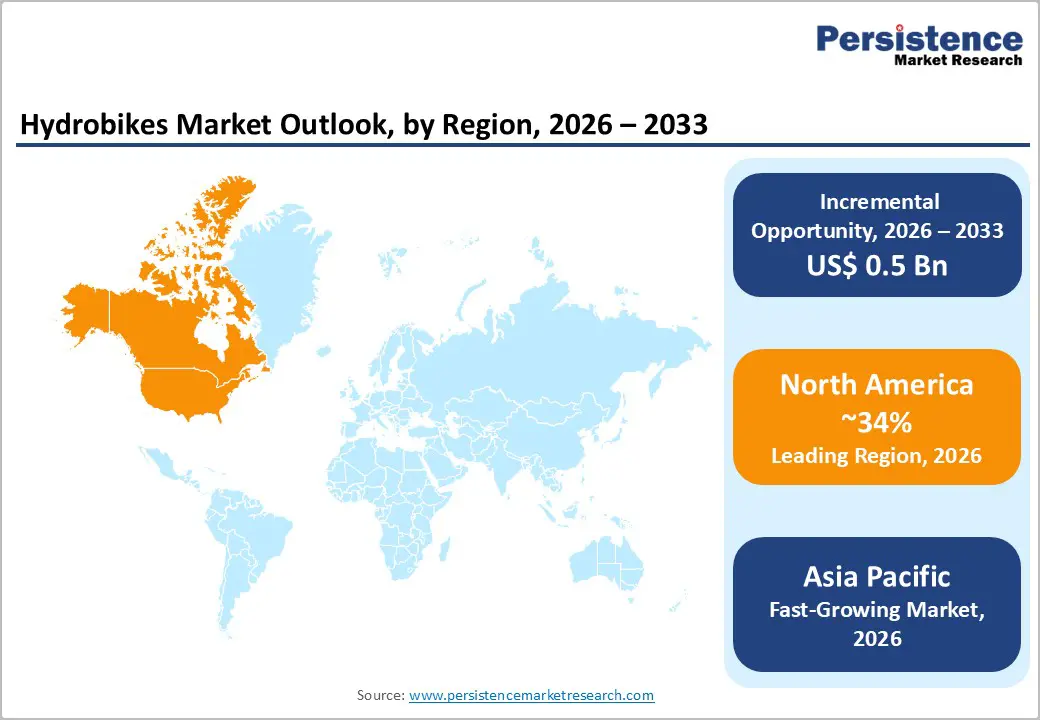
- Leading Region: North America is anticipated to be the leading region, accounting for a market share of 34% in 2026, driven by a strong outdoor recreation culture, high consumer spending on leisure, and growing demand for eco-friendly and wellness-oriented water activities.
- Fastest-growing Region: Asia Pacific is likely to be the fastest-growing region, supported by rising tourism, urbanization, and growing disposable incomes.
- Leading Product Type: Solo type is projected to represent the leading product type in 2026, accounting for 68% of the revenue share, driven by its compact design, ease of operation, and popularity for individual recreational and fitness use.
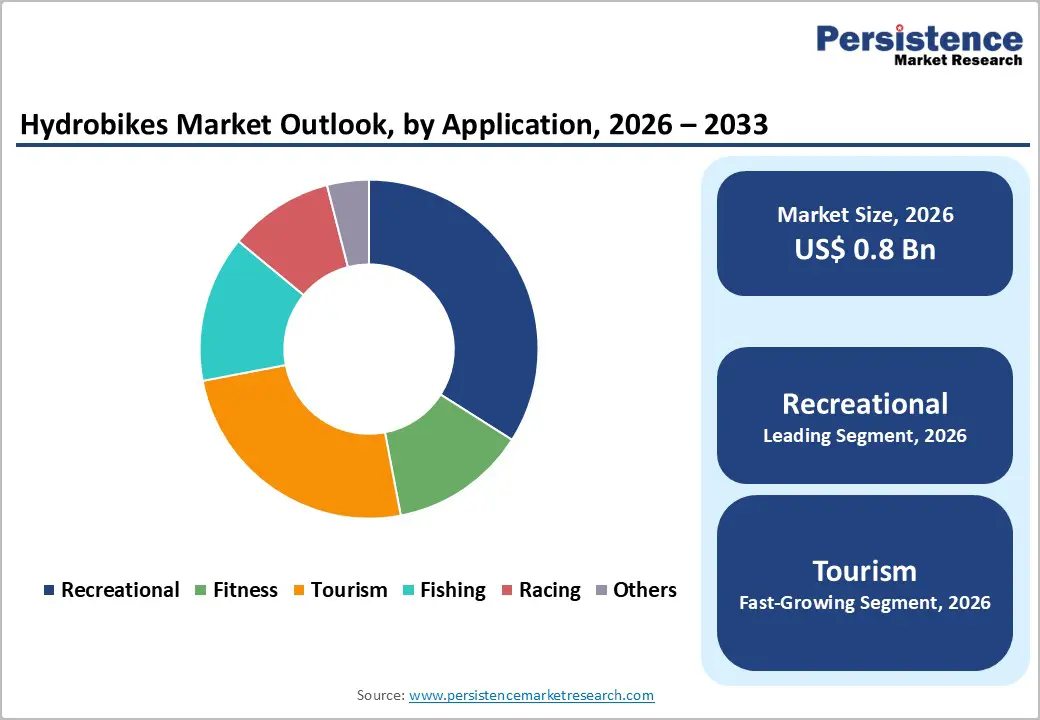
- Leading Application: The recreational segment is anticipated to be the leading application, accounting for over 50% of the revenue share in 2026, supported by its broad appeal, user-friendly designs, and versatility across various water bodies for casual enjoyment.
| Key Insights | Details |
|---|---|
| Hydrobikes Market Size (2026E) | US$0.8 Bn |
| Market Value Forecast (2033F) | US$1.3 Bn |
| Projected Growth (CAGR 2026 to 2033) | 6.2% |
| Historical Market Growth (CAGR 2020 to 2025) | 6.0% |
DRO Analysis
Driver - Rising Demand for Low-Impact Aquatic Fitness
Hydrobikes are increasingly recognized as effective tools for low-impact cardiovascular exercise, attracting health-conscious consumers seeking alternatives to traditional gym workouts. Their design allows users to pedal on water without placing stress on joints, making them ideal for rehabilitation, elderly populations, and fitness enthusiasts alike. The combination of balance, endurance, and core engagement provides full-body conditioning while enjoying outdoor leisure. Aquatic fitness trends are expanding in resorts, parks, and private waterfronts, encouraging individual and group sessions.
The appeal of hydrobikes for fitness extends to structured wellness initiatives and rehabilitation centers. Water resistance provides a safe, low-risk environment for recovering patients, offering both strength training and aerobic benefits. Fitness enthusiasts value hydrobikes for combining recreation with exercise, as sessions are enjoyable yet physically effective. Social media promotion of aquatic workouts and influencer-led campaigns enhances visibility, encouraging trial adoption. Gyms and aquatic centers are increasingly incorporating hydrobikes into their programs, stimulating demand for personal and rental units.
Expansion of Eco-Tourism and Waterfront Recreation Infrastructure
Investment in eco-tourism and waterfront infrastructure is propelling the adoption of hydrobikes across leisure destinations. Resorts, lakeside parks, and coastal recreational hubs are introducing hydrobike rentals to enhance visitor experiences and offer sustainable, low-emission activities. Such initiatives appeal to environmentally conscious travelers who prefer recreational options that minimize ecological impact. Expansion of marinas, docking facilities, and rental services creates accessibility, while curated guided tours and adventure packages attract tourists seeking unique experiences.
Tourism-driven growth is amplified by marketing campaigns emphasizing green and health-oriented activities. Waterside resorts and national parks are adopting hydrobikes as a way to differentiate their offerings, combining wellness, recreation, and sightseeing. Government and private sector support for sustainable tourism initiatives encourages investment in safe docking, trails, and maintenance programs. The rising popularity of outdoor and nature-based experiences aligns with the adoption of hydrobikes, creating a virtuous cycle where improved infrastructure leads to greater user participation, visibility, and repeat usage.
Restraint - Seasonality and Climate-Dependent Utilization
Hydrobike usage is highly seasonal, limiting market growth in regions with colder climates or monsoon-affected periods. Consumer participation typically peaks during warm-weather months, reducing operational income for rental services and affecting manufacturers’ sales cycles. Outdoor recreation is also vulnerable to unpredictable weather, including storms, high winds, or sudden temperature drops, which can discourage usage. Seasonal demand fluctuations challenge inventory management and resource allocation for businesses investing in hydrobike fleets.
Climate sensitivity also impacts long-term adoption and planning for both consumers and tourism operators. Water levels, rainfall patterns, and temperature variations influence the usability of lakes, rivers, and coastal areas. Regions dependent on hydrobike tourism may experience uneven occupancy and seasonal revenue swings, complicating investment decisions. Manufacturers and rental operators must consider climate-resilient designs and marketing strategies to mitigate the effects of seasonal usage.
Regulatory and Safety Hurdles in Open Water Usage
Hydrobike operations are subject to regulations addressing safety, environmental protection, and waterway usage, which can limit market flexibility. Licensing requirements, usage permits, and local waterway restrictions vary by country and region, adding complexity for operators. Safety concerns, including collisions, capsizing risks, and inadequate emergency response measures, necessitate adherence to stringent guidelines and consumer education. Compliance requirements can increase operational costs for rental services and discourage new entrants.
Insurance and liability considerations reinforce regulatory constraints, as operators are accountable for accidents and damage. Municipal or environmental authorities may restrict hydrobike usage in ecologically sensitive areas or heavily trafficked waterways, limiting available deployment zones. Standardized safety certifications and routine maintenance protocols are essential for legal operation, but introduce additional costs. While these regulations aim to protect consumers and ecosystems, they can inadvertently constrain market growth, particularly in regions lacking streamlined regulatory frameworks.
Opportunity - Expansion in Tourism and Resort-Based Rental Ecosystems
The integration of hydrobikes into tourism and resort ecosystems presents significant growth opportunities. Resorts, lakeside parks, and waterfront attractions are increasingly offering hydrobike rentals as part of experiential travel packages, appealing to families, couples, and wellness tourists. By providing guided tours, group activities, and eco-friendly experiences, operators can enhance guest satisfaction and extend visitor engagement. Partnerships between manufacturers and tourism operators facilitate fleet expansion, customization, and maintenance support.
Expansion of tourism-based ecosystems also encourages international adoption, particularly in emerging markets with growing travel infrastructure. Watersports festivals, corporate events, and seasonal rental programs help promote hydrobike experiences while generating additional income streams. Investments in marketing, safety protocols, and equipment quality enhance user confidence. Opportunities exist to link hydrobikes with other recreational offerings, such as kayaking, paddle boarding, and sightseeing, creating integrated water-based leisure hubs.
Fitness and Rehabilitation-Centric Applications
Hydrobikes are increasingly used in fitness programs, aquatic exercise classes, and rehabilitation therapy due to their low impact and full-body workout potential. Physical therapists incorporate hydrobikes for patients recovering from joint injuries, muscle strains, or cardiovascular concerns, taking advantage of water resistance to enhance strength and mobility safely. Fitness centers and wellness resorts adopt hydrobike sessions to diversify offerings, appealing to health-conscious individuals seeking enjoyable exercise options.
Rehabilitation and wellness applications also create synergies with broader health and fitness trends. Hospitals, rehabilitation clinics, and senior care facilities are exploring hydrobike integration as part of therapy programs. Corporate wellness initiatives and community aquatic programs expand the user base. Manufacturers can target these segments with durable, ergonomically designed models suitable for repeated professional use. By emphasizing functional benefits alongside recreational enjoyment, hydrobikes can capture a growing market in therapeutic and fitness contexts, creating a differentiated niche with high adoption potential in both commercial and personal settings.
Category-wise Analysis
Product Type Insights
Solo type is expected to lead the hydrobikes market, accounting for approximately 68% of revenue in 2026, driven by its compact design, ease of operation, and suitability for individual recreational or fitness use. Consumers prefer solo hydrobikes for personal ownership or calm-water rentals, as they offer portability, lower cost, and simplicity compared to larger models. Manufacturers focus on stability features, lightweight frames, and ergonomics to increase accessibility for beginners and casual users. For example, Manta5’s Hydrofoil Bike, designed for single riders, allows easy navigation on lakes and rivers while providing an effective low-impact workout.
The two-seater type is likely to represent the fastest-growing segment, supported by demand from families, couples, lakefront vacationers, and recreational rental operators who seek engaging water sports that can be enjoyed together. For example, the Litmus Water Bicycle 2 Person offers a stable, dual-seat design that caters to tandem riding on lakes and calm coastal waters, making it popular in leisure parks and resort fleets. As tourism recovers and outdoor activities grow, two-person hydrobikes provide a social, interactive alternative to solo models, driving adoption through enhanced comfort, balanced performance, and rental appeal.
Application Insights
The recreational segment is projected to lead the market, capturing around 50% of the revenue share in 2026, supported by its broad appeal for casual enjoyment on lakes, rivers, and coastal waters. User-friendly designs requiring minimal skill make recreational hydrobikes dominant in both personal and rental markets. Versatility across different water bodies allows users of all ages to participate in leisure activities, combining fun with light physical activity. For example, resorts in Florida integrate recreational hydrobike rentals on calm lake surfaces, attracting families and tourists seeking low-impact outdoor exercise. These units offer accessibility, stability, and convenience, contributing to widespread adoption.
Tourism is likely to be the fastest-growing application, driven by experiential travel, waterfront leisure expansion, and interest in unique eco-friendly activities. Many lakes and coastal destinations now offer hydrobike rentals or guided rides, giving visitors an immersive way to explore scenic water bodies. For example, at Lake Plastira in Greece, guided hydrobike tours allow tourists to pedal through tranquil waters and take in panoramic mountain and forest views, enhancing their outdoor adventure experience.
Regional Insights
North America Hydrobikes Market Trends
North America is anticipated to be the leading region, accounting for a market share of 34% in 2026, driven by a strong outdoor recreation culture, high consumer spending on leisure, and widespread adoption of hydrobikes in resort and rental operations. The integration of hydrobikes into resort and campground rental fleets adds value to leisure travel and wellness tourism. For example, Schiller Bikes, a U.S. company known for its pedal-powered water bikes, has seen growing adoption at rental operations across waterfront destinations, appealing to fitness enthusiasts and leisure users seeking low-impact aquatic activity.
Retailers and rental operators are leveraging digital booking platforms to increase offseason reservations and cross-promote related watersports equipment. Partnerships between hydrobike suppliers and tourism boards are helping promote experiential travel packages centered around unique water activities. Returning interest in eco-friendly recreation supports demand for pedal-powered and electric-assist models that produce zero emissions. The competitive landscape features established brands and growing local manufacturers, prompting product innovation that emphasizes durability, stability, and hybrid fitness-recreation capabilities.
Europe Hydrobikes Market Trends
Europe is likely to be a significant market for hydrobikes, due to well-developed tourism infrastructure and widespread waterway access. European users often view hydrobikes as a family-friendly way to engage with nature, benefiting from safety regulations and environmental protections that ensure waterway preservation. For example, Hobie Cat Europe, a division of the recognized Hobie Cat Company, has seen demand for its Mirage Drive-equipped water bikes in resort and rental markets throughout Mediterranean coastal destinations.
Tourism-driven demand is accelerating in Southern and Eastern Europe, where resort operators are incorporating hydrobike rentals, guided tours, and waterfront entertainment packages. The trend toward experiential travel is influencing how hydrobikes are marketed, with emphasis on scenic exploration, group activities, and social engagement. Electric-assist hydrobike models are gaining attention within urban waterfront developments and popular tourist lakes, where leisure users seek effortless rides that showcase local landscapes.
Asia Pacific Hydrobikes Market Trends
The Asia Pacific region is likely to be the fastest-growing region, driven by rapid emergence and dynamic growth as consumer interest in outdoor recreation, wellness activities, and tourism experiences increases across the region. Countries such as China, India, and those in ASEAN have witnessed expanding adoption of hydrobikes, supported by extensive water resources, growing middle-class spending power, and expanding leisure infrastructure. Coastal cities and inland lake destinations are investing in water sports amenities, while lifestyle shifts toward active and wellness-oriented outdoor pursuits are driving consumer engagement.
In tourism hubs throughout Southeast Asia and Australia, operators are integrating hydrobike experiences into broader waterfront activity offerings to appeal to both domestic travelers and international visitors. For example, Austin Water Bikes, a brand that supplies robust two-person and solo hydrobikes to rental providers across beach resorts and lakefront parks in the region. Its products are chosen for their durability and ease of use, making them suitable for varied water conditions common in Asia Pacific destinations.
Competitive Landscape
The global hydrobikes market exhibits a moderately fragmented structure, driven by a blend of established manufacturers and innovative niche players competing across recreational, fitness, and leisure segments. Key factors shaping the competitive landscape include product quality, technological advancement, distribution reach, and strategic partnerships with tourism and rental operators.
With key leaders including Hobie Cat Company, Schiller Bikes, Manta5, Pelican Sport, and Hydrobikes Inc., the market reflects a mix of premium, mass-market, and tech-oriented approaches. Hobie Cat Company leverages its heritage in pedal-powered watercraft with MirageDrive technology to appeal to premium recreational users, while Schiller Bikes emphasizes high-performance engineering and broad dealer networks.
Key Industry Developments:
- In September 2025, Bass Pro Shops and White River Marine Group announced the acquisition of the legendary water sports brand Hobie, a significant development in the outdoor watercraft industry. The deal brings Hobie, known worldwide for its innovative watercraft, including pedal-powered and recreational boats, under the Bass Pro Shops and White River Marine Group umbrella and includes plans to shift manufacturing back to the U.S. by expanding the White River Marine facility in Lebanon, Missouri.
- In September 2025, Swiss startup Otter Bike AG expanded its hydrobike footprint by launching its electric-assisted water bike, the Otter Explorer, in the United States through a strategic partnership with Florida-based Nautical Ventures. The Otter Explorer blends pedal power with an electric drivetrain to offer smooth, quiet, and user-friendly aquatic mobility for riders, and can reach speeds of up to 12 km/h with a long-range battery for leisure cruising.
Companies Covered in Hydrobikes Market
- Aurea Bike
- Austin Water Bikes
- Crystal Kayak Company
- Hobie Cat Company
- Hydrobikes
- Manta5
- Pelican Sport
- Schiller Bikes
- Seacycle
- Waterbike Italia
Frequently Asked Questions
The global hydrobikes market is projected to reach US$0.8 billion in 2026.
The hydrobikes market is driven by rising demand for eco-friendly, low-impact water recreation and fitness activities.
The hydrobikes market is expected to grow at a CAGR of 6.2% from 2026 to 2033.
Key market opportunities lie in expanding tourism and resort-based rentals, along with growing demand for fitness and rehabilitation-focused hydrobike applications.
Aurea Bike, Austin Water Bikes, Crystal Kayak Company, Hobie Cat Company, Hydrobikes, and Manta5 are the leading players.


