




- Nutraceuticals & Functional Foods
- Gamma Vitamin E Supplement Market
Gamma Vitamin E Supplement Market Size, Share, Growth, and Regional Forecast, 2026 to 2033
Gamma Vitamin E Supplement Market by Product Type (Tablets, Capsules, Softgels, Powder, and Others), by Application (Dietary Supplements, Pharmaceuticals, Cosmetics & Personal Care, and Animal Nutrition (Feed)) by Distribution Channel (Supermarkets/Hypermarkets, Retail Pharmacies, Hospital Pharmacies, Specialty Stores, and Online Retail), and Regional Analysis from 2026 to 2033

Gamma Vitamin E Supplement Market Share and Trend Analysis
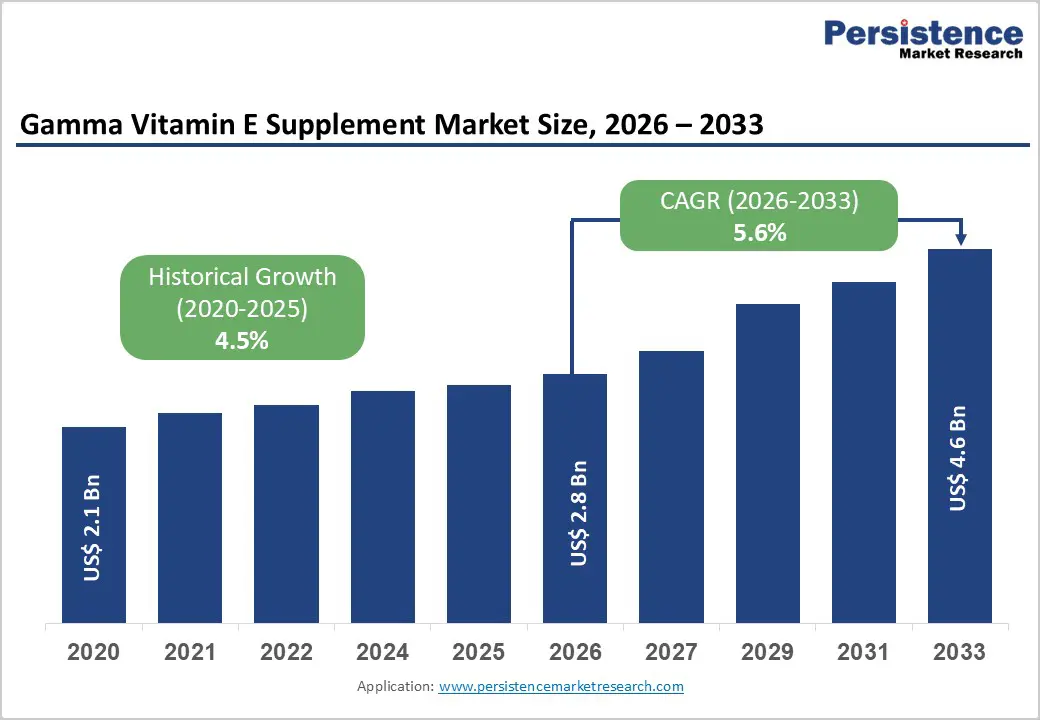
The global gamma vitamin E supplement market size is estimated to grow from US$ 2.8 Bn in 2026 to US$ 4.6 Bn by 2033. The market is projected to record a CAGR of 5.6% during the forecast period from 2026 to 2033.
Growing preference for antioxidant-rich, plant-derived wellness solutions is significantly driving momentum in the gamma vitamin E supplement market. Consumers are increasingly recognizing the role of gamma tocopherol in managing oxidative stress, supporting cardiovascular health, and enhancing immune function. The rising incidence of lifestyle disorders, coupled with aging populations, is accelerating the adoption of preventive nutrition strategies. Additionally, increasing inclination toward clean-label, non-GMO, and naturally sourced supplements is encouraging the use of plant-based tocopherol formulations.
Expanding penetration of e-commerce platforms and specialty nutrition channels is improving product accessibility and consumer awareness. Continuous advancements in extraction technologies and formulation science are enabling the development of high-purity, bioavailable gamma vitamin E products. Furthermore, integration into combination supplements and functional nutrition blends is enhancing product positioning, supporting sustained growth across both developed and emerging markets.
Key Industry Highlights:
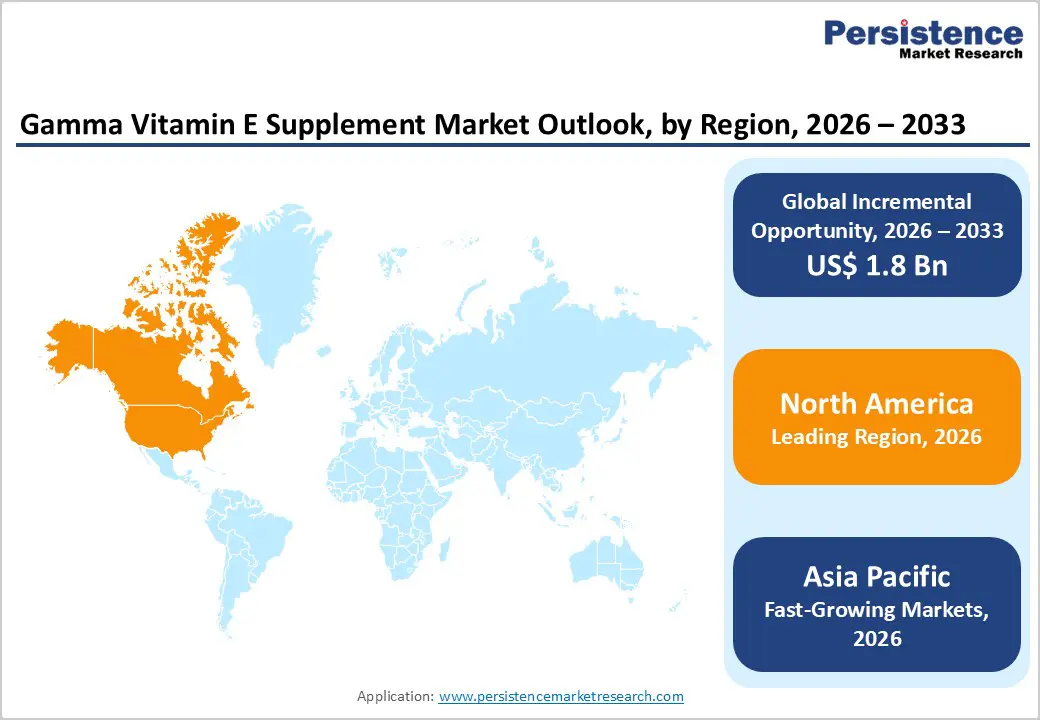
- Leading Region: North America dominates with 46.7%, supported by advanced nutraceutical infrastructure, strong preventive healthcare adoption, and high demand for premium antioxidant supplements targeting heart health and immunity.
- Fastest-Growing Region: Asia Pacific is witnessing the highest growth, driven by rising disposable incomes, increasing health awareness, expanding supplement consumption, and strong availability of plant-derived raw materials.
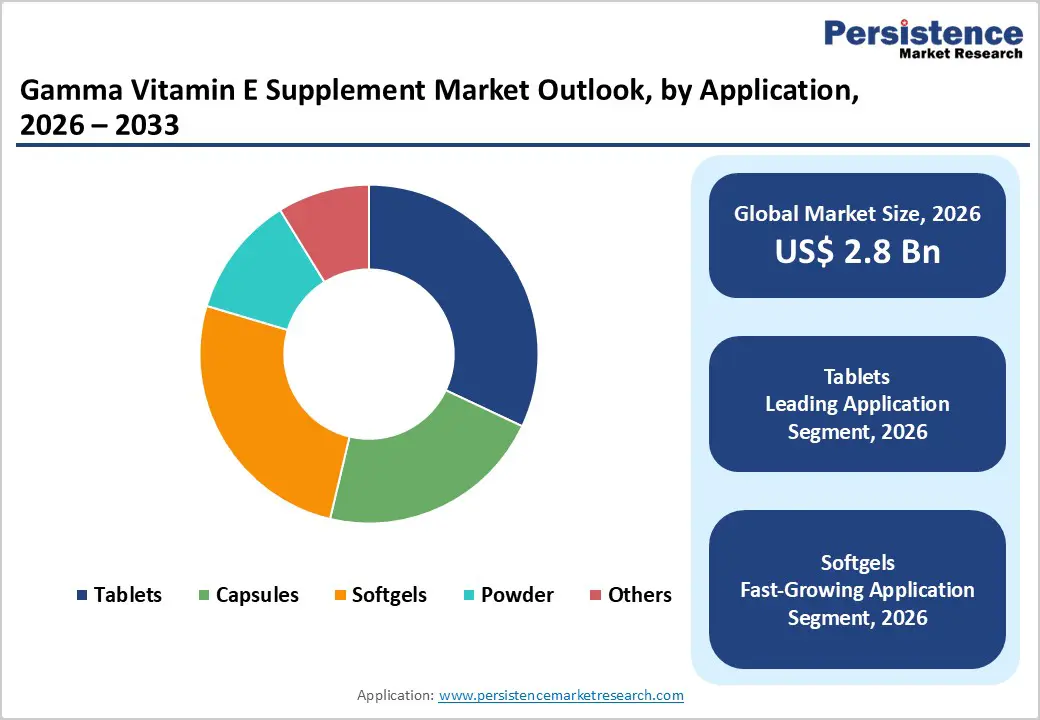
- Leading Product Type Segment: Tablets account for 32.0%, benefiting from cost-effectiveness, stability, accurate dosing, and widespread consumer acceptance in daily supplementation.
- Leading Distribution Channel Segment: Online retail captures 54.1%, fueled convenience, broader product access, personalized recommendations, and the rapid expansion of digital health and direct-to-consumer platforms.

Market Dynamics
Drivers - Increasing Focus on Antioxidant-Based Preventive Healthcare, Accelerating Demand
Rising awareness of oxidative stress and its association with cardiovascular disorders, inflammation, and immune dysfunction is significantly boosting demand for gamma-tocopherol supplements. Consumers are increasingly prioritizing preventive healthcare, incorporating antioxidant-rich nutrients into daily regimens to support long-term wellness. Gamma tocopherol is gaining attention for its unique ability to neutralize reactive nitrogen species, differentiating it from conventional vitamin E forms. Growing aging populations and increasing prevalence of lifestyle-related conditions such as obesity and metabolic disorders are further strengthening adoption across adult and geriatric segments.
Additionally, expanding recommendations from healthcare professionals and nutrition experts are enhancing credibility and driving usage in targeted health applications. Increased availability across e-commerce platforms, retail pharmacies, and specialty nutrition stores is improving accessibility and repeat purchases. Continuous product innovation, including high-potency blends, plant-based formulations, and advanced delivery formats such as softgels is further supporting consumer interest. Rising disposable incomes and a growing preference for premium, clean-label supplements are reinforcing demand, while strong digital marketing and subscription-based health models continue to accelerate global market penetration.
Restraints - Regulatory Disparities and Quality Standardization Challenges Limiting Market Expansion
Inconsistent regulatory frameworks across regions remain a key barrier, creating complexities in product approval, labeling compliance, and health claim validation. Manufacturers often face extended timelines and higher operational costs due to the lack of harmonized global standards. Limited large-scale clinical evidence specific to gamma tocopherol also restricts its acceptance in mainstream medical practice, reducing institutional endorsement and slowing integration into clinical nutrition protocols.
Additionally, variability in raw material sourcing and extraction processes leads to inconsistencies in tocopherol concentration and product performance, impacting consumer trust. The presence of low-quality or mislabeled supplements, particularly in less regulated online markets, further weakens brand credibility. Premium pricing of high-purity, natural formulations limits affordability in cost-sensitive regions. Supply chain disruptions and dependency on plant-derived inputs also create production uncertainties, collectively constraining scalability and broader market adoption.
Market Opportunities
Growth in Functional Nutrition, Clean-Label Products, and Personalized Supplementation Creating New Avenues
Increasing consumer preference for multifunctional supplements is creating strong opportunities for gamma vitamin E in areas such as cardiovascular health, skin protection, and immune support. Demand for clean-label, non-GMO, and plant-derived products is encouraging manufacturers to adopt transparent sourcing and natural extraction processes. The trend toward combination formulations with complementary ingredients such as omega fatty acids and other antioxidants is further expanding product differentiation and consumer appeal.
Moreover, the rise of digital health platforms and personalized nutrition is enabling companies to deliver tailored supplement solutions, improving engagement and long-term retention. Emerging markets offer significant untapped potential due to rising disposable incomes, urbanization, and growing awareness of preventive healthcare. Advancements in formulation technologies are enhancing bioavailability and stability, supporting premium positioning. Expanding applications across functional foods, beverages, and dermatological products are also opening new revenue streams, strengthening long-term growth prospects.
Category-wise Analysis
By Product Type, Tablets Lead the Market Owing to Cost Efficiency, Stability, and Wide Consumer Acceptance
Tablets are expected to dominate the global gamma vitamin E supplement market in 2026, capturing 32.0% of total revenue. Their leadership is supported by manufacturing scalability, longer shelf life, and precise dosage delivery, making them highly suitable for standardized tocopherol formulations. Compared to liquid or powder forms, tablets offer superior stability against oxidation, which is critical for maintaining gamma tocopherol potency. Consumers also favor tablets due to affordability and ease of storage, particularly in daily supplementation routines.
In addition, pharmaceutical-grade production compatibility enhances trust among health-conscious buyers. Expanding distribution through pharmacies and online platforms continues to improve accessibility across both developed and emerging markets. While softgels are gaining traction for enhanced bioavailability, tablets remain the preferred format for mass-market consumption, ensuring sustained dominance due to their balance of cost, convenience, and formulation reliability.
By Application, Dietary Supplements are Dominant, Driven by Preventive Healthcare and Functional Nutrition Trends
Dietary supplements are projected to account for 41.3% of the global gamma vitamin E supplement market in 2026, reflecting strong consumer inclination toward preventive healthcare solutions. Gamma vitamin E is widely utilized in formulations targeting cardiovascular health, inflammation management, and immune support, reinforcing its position within daily nutrition regimens. The segment benefits from increasing awareness around oxidative stress and its link to chronic diseases, encouraging long-term supplement usage.
Broad acceptance across adult and aging populations further strengthens demand, particularly in developed markets. Easy availability through e-commerce, pharmacies, and specialty nutrition stores enhances product reach and repeat purchases. Manufacturers are focusing on high-purity, plant-derived tocopherol formulations to align with clean-label expectations and regulatory standards. The combination of functional health benefits, accessibility, and evolving wellness trends firmly positions dietary supplements as the core application segment globally.
By Distribution Channel, Online Retail Emerges as the Leading Channel Supported by Convenience and Expanding Digital Health Ecosystems
Online retail is anticipated to hold the largest share of 54.1% in 2026, driven by rapid digitalization and shifting consumer purchasing behavior toward e-commerce platforms. The channel offers extensive product variety, easy price comparisons, and direct access to global nutraceutical brands, enhancing consumer convenience. Subscription-based models and personalized supplement recommendations are further strengthening engagement and repeat purchases.
Growing trust in digital health platforms, coupled with detailed product information and customer reviews, supports informed decision-making. Additionally, manufacturers are prioritizing direct-to-consumer strategies to improve margins and brand visibility. Growth in mobile commerce and expanding logistics networks across emerging economies is also accelerating penetration. While offline channels such as pharmacies continue to play a role in credibility-driven purchases, online retail’s scalability, accessibility, and evolving digital infrastructure position it as the dominant distribution channel in the global market.
Regional Insights
North America Gamma Vitamin E Supplement Market Trends
North America accounts for 46.7% of the global gamma vitamin E supplement market in 2026, driven by strong nutraceutical consumption, high preventive healthcare awareness, and premium product adoption. Growth is supported by robust clinical research, regulatory clarity, and widespread availability across retail and e-commerce channels. Increasing demand for antioxidant-based formulations targeting cardiovascular health, immunity, and inflammation management is accelerating innovation. The region also benefits from high penetration of clean-label and plant-derived supplements, alongside strong brand loyalty and subscription-based supplement models.
U.S. Gamma Vitamin E Supplement Market Trends
The U.S. dominates the regional market with over 38.5% share, expanding at a CAGR of 5.8%-6.5% through 2033. Growth is driven by demand for clinically backed, condition-specific supplements focusing on heart health, inflammation, and immunity, supported by strong online retail ecosystems.
Canada Gamma Vitamin E Supplement Market Trends
Canada holds around 8.2% share of the regional market, growing at a positive CAGR. Rising demand for clean-label, plant-based supplements and increasing penetration of pharmacy-led and e-commerce distribution channels are supporting steady market expansion.
Europe Gamma Vitamin E Supplement Market Trends
Europe represents approximately 27.4% of the global market, characterized by stringent regulatory standards and strong consumer preference for high-quality, natural supplements. Demand is driven by increasing adoption of antioxidant-based products for aging, cardiovascular health, and skin wellness. The region benefits from advanced nutraceutical innovation, strong retail pharmacy networks, and rising vegan and clean-label trends. However, moderate growth is observed due to market maturity and competition from alternative antioxidants and botanical extracts.
Germany Gamma Vitamin E Supplement Market Trends
Germany is likely to lead with 7.6% global share in 2026. Demand is driven by preference for scientifically validated, high-purity supplements and strong consumer focus on preventive healthcare and product standardization.
UK Gamma Vitamin E Supplement Market Trends
The UK accounts for around 5.9% global share, expanding at a CAGR of 5.0%-5.6%. Growth is supported by increasing adoption of antioxidant supplements, strong online retail penetration, and rising demand for personalized and condition-specific nutrition products.
Asia Pacific Gamma Vitamin E Supplement Market Trends
Asia Pacific is the fastest-growing region, contributing around 18.9% of the global market, with a projected CAGR of 7.0%-8.2% through 2033. Growth is fueled by rising disposable incomes, increasing awareness of preventive healthcare, and expanding nutraceutical consumption. Strong manufacturing capabilities, availability of plant-derived raw materials, and growing e-commerce penetration are accelerating market expansion. Government support for functional foods and dietary supplements in several countries further strengthens growth prospects.
China Gamma Vitamin E Supplement Market Trends
China dominates the region with approximately 8.1% global share, growing at a CAGR of 7.5%-8.5%. Growth is driven by large-scale production, increasing premiumization, and rising demand for antioxidant-rich supplements targeting aging and cardiovascular health.
India Gamma Vitamin E Supplement Market Trends
India holds nearly 4.3% global share, expanding at a CAGR of 8.0%-9.0%. Rapid growth is supported by rising nutraceutical adoption, increasing disposable incomes, and growing preference for plant-based and preventive healthcare supplements.
Competitive Landscape
The global gamma vitamin E supplement market is highly competitive, with strong participation from Glanbia plc, Pfizer Inc., Bayer AG, Amway Corp., GlaxoSmithKline plc (GSK plc), and Good Health Products Limited. These companies leverage integrated sourcing networks, advanced tocopherol extraction technologies, and established nutraceutical branding to enhance product efficacy and consumer trust. Rising demand for antioxidant-rich supplements, cardiovascular health support, and anti-inflammatory formulations is driving product innovation and portfolio expansion. Market players are expanding online and offline distribution, strengthening global presence, forming strategic partnerships, and increasing R&D investments to develop high-purity, natural, and clean-label gamma vitamin E formulations aligned with evolving consumer health preferences.
Key Industry Developments:
- In March 2026, Betagro Ventures, the corporate venture arm of Betagro Public Company (BTG), a leading integrated food company in Thailand, announced the launch of ‘blüüm’, a new vitamin supplement brand developed by a team of food and nutrition scientists. The brand highlights its innovation through four key formulations: blüClear, blüPrime, blüFlex, and blüNight each designed to address specific health needs and support overall wellness.
- In April 2023, Divi, a leading scalp health and hair care brand, introduced Roots Hair Vitamins as the latest addition to its portfolio. Formulated with clean and innovative ingredients, these supplements are expertly developed to support hair nourishment from within, promoting overall scalp and hair health.
Gamma Vitamin E Supplement Market Report - Key Insights & Details
| Key Insights | Details |
|---|---|
| Historical Market Value (2020) | US$ 2.1 Mn |
| Current Market Value (2026) | US$ 2.8 Mn |
| Projected Market Value (2033) | US$ 4.6 Mn |
| CAGR (2026 - 2033) | 5.6% |
| Leading Region | North America, 46.7% share |
| Dominant Application | Dietary Supplements, 41.3% share |
| Top-ranking Product Type | Tablets, 32.0% |
| Incremental Opportunity | US$ 1.8 Mn |
Companies Covered in Gamma Vitamin E Supplement Market
- Glanbia plc
- Pfizer Inc.
- Bayer AG
- Amway Corp.
- GlaxoSmithKline plc (GSK plc)
- Good Health Product Limited
- The Nature's Bounty Co.
- NOW Health Group, Inc. (NOW Foods)
- Abbott
- Herbalife Nutrition Ltd.
- Carlson Laboratories, Inc.
- Life Extension Foundation Buyers Club, Inc.
- Jarrow Formulas, Inc.
- Doctor's Best, Inc.
- Davos Life Science Pte. Ltd.
- Others
Frequently Asked Questions
The global gamma vitamin E supplement market is projected to be valued at US$ 2.8 Bn in 2026.
Rising demand for antioxidant-rich supplements is driven by the increasing prevalence of chronic diseases, an aging population, and growing preventive healthcare awareness.
The global gamma vitamin E supplement market is poised to witness a CAGR of 5.6% between 2026 and 2033.
Expansion into nutricosmetics, personalized nutrition, and clean-label plant-based formulations alongside rapid growth of e-commerce distribution channels.
Glanbia plc, Pfizer Inc., Bayer AG, Amway Corp., GlaxoSmithKline plc (GSK plc), and Good Health Products Limited are some of the key players in the gamma vitamin E supplement market.


