




- Pharmaceuticals
- Eye Care Supplement Market
Eye Care Supplement Market Size, Share and Growth Forecast, 2026 - 2033
Eye Care Supplement Market by Ingredient Type (Lutein, Zeaxanthin, Omega-3, Antioxidants, AREDS2 Formulations), Indication (AMD, Dry Eye Syndrome, Others), Product Form (Capsules, Softgels, Tablets, Gummies), and Regional Analysis for 2026 - 2033

Eye Care Supplement Market Share and Trends Analysis
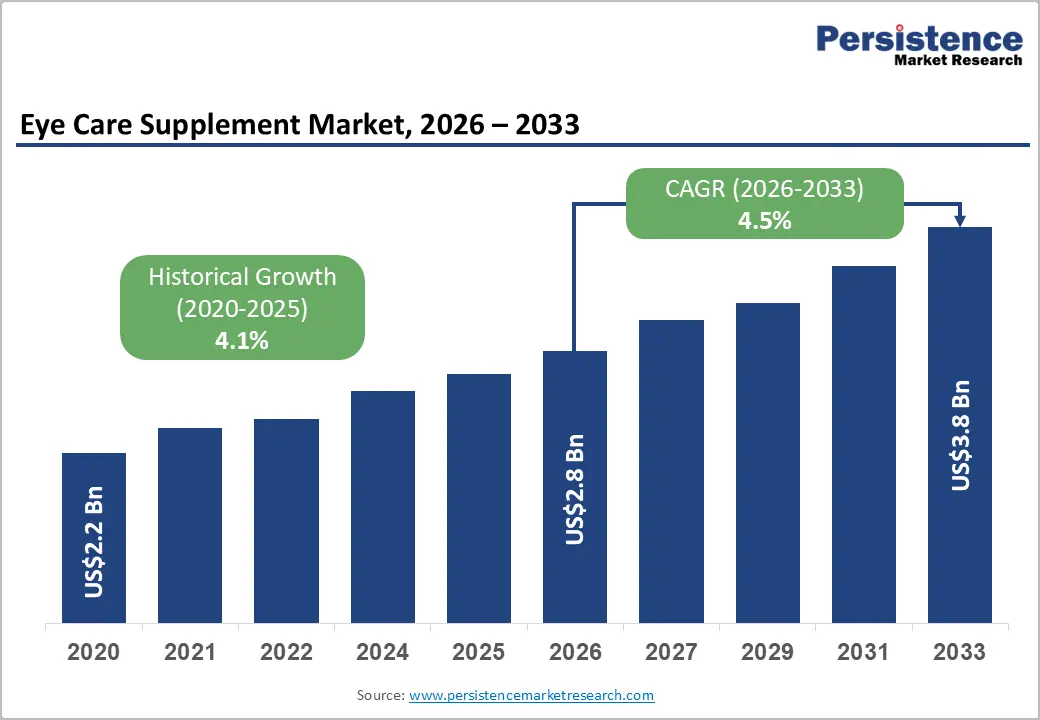
The global eye care supplement market size is likely to be valued at US$2.8 billion in 2026 and is projected to reach US$3.8 billion by 2033, growing at a CAGR of 4.5% during the forecast period from 2026 to 2033, driven by the rising aging population, increasing prevalence of age-related eye disorders, and prolonged digital screen exposure.
Growing awareness of macular degeneration supplements, blue light protection, and preventive ophthalmic nutrition is supporting global demand. In addition, regulatory support for nutritional healthcare products and investments in clinically validated formulations are improving market penetration across pharmacies and e-commerce channels.
Key Industry Highlights:
- Primary Growth Driver: Rising aging populations and prolonged digital screen exposure are expected to accelerate demand for preventive eye health supplements, supported by increasing awareness of blue light protection and vision nutrition globally.
- Ingredient Segment: Lutein is projected to lead with approximately 31% market share in 2026, while AREDS2(Age-Related Eye Disease Study 2) formulations are anticipated to be the fastest-growing segment through 2033, driven by strong clinical adoption in AMD management.
- Indication Segment: AMD is expected to dominate with nearly a 37% share in 2026, supported by high disease prevalence in elderly populations, while digital eye strain is projected to register the fastest growth due to rising screen exposure across consumers.
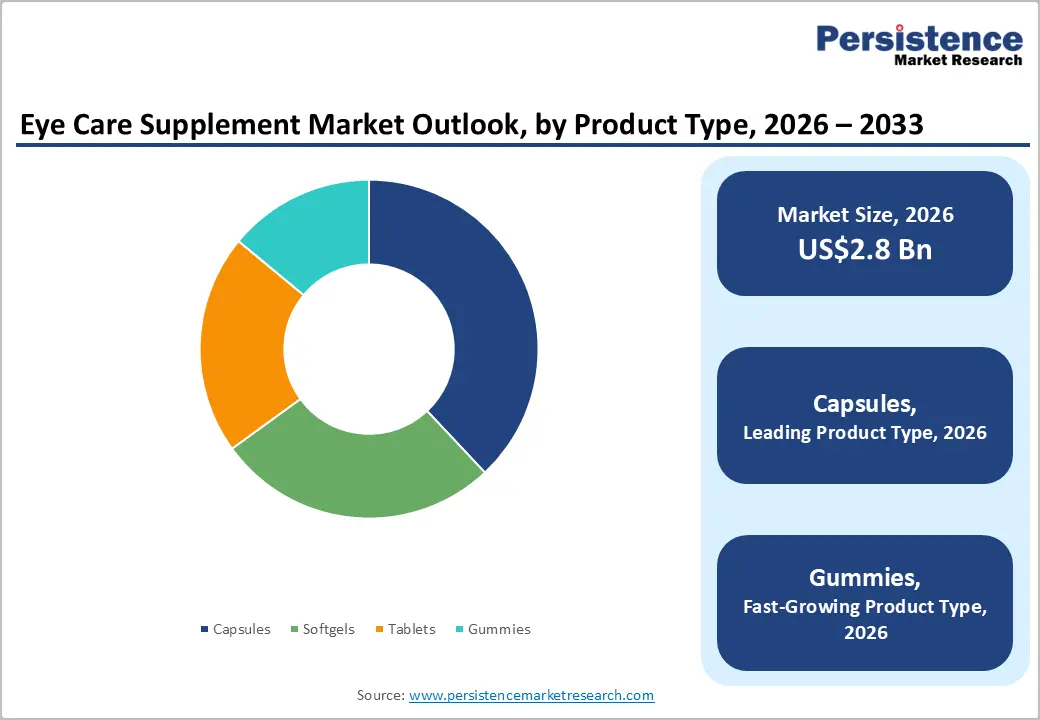
- Product Form: Capsules are projected to lead with around 39% share in 2026 due to formulation stability and dosing accuracy, while gummies are expected to be the fastest-growing segment through 2033, driven by rising preference for convenient supplement formats.
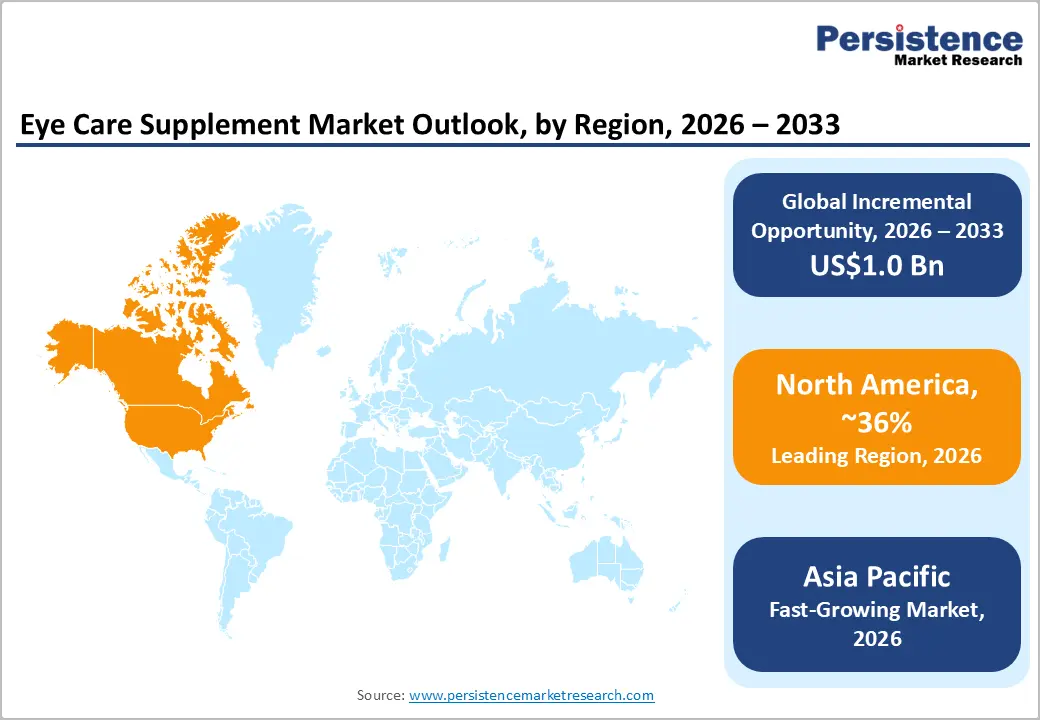
- Regional Leadership: North America is expected to dominate with approximately a 36% share in 2026, while Asia Pacific is projected to remain the fastest-growing region due to expanding urbanization, digital device usage, and preventive healthcare awareness.
- Strategic Market Trends: AREDS2 innovation, personalized eye nutrition, digital wellness integration, and ingredient capacity expansion are expected to remain key strategic focus areas through 2033.
DRO Analysis
Driver - Rising Prevalence of Age-Related Eye Disorders and Digital Vision Fatigue
The increasing incidence of visual impairment and chronic eye disorders is the primary driver of the global eye care supplement market. According to the World Health Organization (WHO), over 2.2 billion people globally live with vision impairment, while age-related macular degeneration (AMD) remains a leading cause of blindness in adults above 60. The U.S. National Eye Institute estimates AMD cases may exceed 5 million by 2050.
At the same time, the OECD highlights rising daily screen exposure across working-age and younger populations, intensifying digital eye fatigue. This combination of aging demographics and screen-related strain is driving demand for eye health supplements, including lutein, zeaxanthin, and omega-3 formulations. Consumers are increasingly shifting toward preventive nutrition, supporting sustained adoption of clinically backed eye care products targeting retinal health and blue light protection.
Restraint - Regulatory Complexity and Limited Clinical Standardization across Supplement Claims
The market faces structural constraints due to regulatory inconsistency and limited clinical standardization of eye health supplement claims. Agencies such as the U.S. FDA and EFSA restrict disease-treatment claims for dietary supplements, preventing products from directly promoting efficacy against AMD, cataracts, or dry eye disease without strong clinical evidence.
Lack of standardized formulations creates consumer confusion around dosage and ingredient effectiveness, while variability in the bioavailability of lutein, zeaxanthin, and antioxidants limits product differentiation and physician adoption. In emerging markets, counterfeit products and weak regulatory enforcement further reduce trust. Additionally, price volatility in omega-3 oils and carotenoid raw materials continues to pressure margins and slow premiumization in the eye care supplement market.
Opportunity - Expansion of Preventive Eye Nutrition in Emerging Economies and Digital Wellness Segments
Emerging economies such as India, China, Indonesia, Vietnam, and Brazil present a significant growth opportunity for eye vitamins and preventive nutrition products, driven by rising digital device penetration, urbanization, and expanding middle-class populations. According to the International Telecommunication Union (ITU), global internet users exceeded 5.5 billion in 2025, increasing screen-related visual stress and demand for blue light protection solutions.
Rising preventive healthcare awareness and disposable incomes are boosting demand for premium eye health supplements, while e-commerce and direct-to-consumer channels are improving accessibility in tier-2 and tier-3 cities. Demand is particularly strong for gummies, chewables, and personalized formulations targeting digital eye strain. Companies focusing on clinically supported products, subscription models, and ophthalmologist partnerships are well-positioned to capture long-term growth through 2033.
Category-wise Analysis
Ingredient Type Insights
Lutein is projected to lead with a 31% share in 2026, primarily due to its clinically proven role in increasing macular pigment optical density, which directly supports retinal protection. It is deeply embedded in physician-recommended eye health supplements, especially for aging and screen-exposed populations. Its dominance is reinforced by widespread inclusion in AREDS2-based formulations and strong supply integration across carotenoid ingredient manufacturers, making it the most accessible and standardized ingredient globally.
AREDS2 formulations are expected to grow the fastest through 2033 due to their evidence-backed efficacy from the U.S. National Eye Institute study, which demonstrated slowed progression of intermediate AMD. This clinical credibility significantly improves physician trust compared to standalone nutrients. Increasing preference for multi-nutrient, protocol-driven macular degeneration supplements, along with innovation in bioavailable and clean-label versions, is accelerating adoption in both developed and premium nutraceutical markets.
Indication Insights
AMD is projected to dominate with a 37% share in 2026 as it remains the leading cause of irreversible vision impairment in aging populations globally. This creates sustained demand for eye vitamins focused on oxidative stress reduction and retinal support. High diagnosis rates in North America, Europe, and Japan, combined with routine ophthalmologist-led supplementation recommendations, ensure consistent and repeat consumption of preventive formulations.
Digital eye strain is the fastest-growing segment due to structural shifts in screen behavior across work, education, and entertainment ecosystems. Prolonged exposure to digital devices increases tear film instability and visual fatigue, driving demand for preventive vision support supplements. Growth is further amplified by a consumer shift toward proactive wellness, where younger demographics use supplements for daily digital performance maintenance rather than disease treatment.
Product Form Insights
Capsules are projected to lead with a 39% share in 2026 due to superior dose precision, ingredient stability, and compatibility with multi-active formulations such as lutein, omega-3, and antioxidants. They remain the preferred format in clinical and pharmacy-driven eye care supplement distribution due to higher physician confidence and controlled-release benefits. Their manufacturing scalability and established supply chain also reinforce long-term dominance across global markets.
Gummies are expected to grow the fastest through 2033 because they significantly improve compliance, especially among younger consumers who avoid traditional capsules. Their rise is strongly linked to lifestyle-driven consumption of eye health supplements, where convenience and taste override clinical rigidity. Expansion of sugar-free, vegan, and function-specific formulations targeting digital eye fatigue, along with strong e-commerce penetration, is accelerating mainstream adoption.
Regional Analysis
North America Eye Care Supplement Market Trends
North America is expected to account for approximately 36% of the global eye care supplement market in 2026, driven by high preventive healthcare spending, strong awareness of AMD, and widespread adoption of eye health supplements. The region benefits from advanced pharmacy infrastructure, high supplement penetration, and strict FDA regulatory oversight, which collectively strengthen product quality and consumer trust. Growth is further supported by rising demand for AREDS2-based formulations and expanding digital wellness and subscription-led supplement models across the U.S. and Canada.
U.S. Eye Care Supplement Market Trends
The U.S. is projected to hold nearly 75% of the North America market share in 2026, supported by a large aging population and high prevalence of age-related vision disorders. With over 80 million adults expected to be aged above 65 by 2040, demand for macular degeneration supplements is expected to remain strong. High healthcare access, early diagnosis rates, and rising e-commerce penetration are further supporting steady growth in lutein- and omega-3-based formulations.
Canada Eye Care Supplement Market Trends
Canada is estimated to contribute around 25% of the regional market in 2026, supported by increasing awareness of preventive eye care and rising incidence of screen-related eye strain. Demand for vision support supplements is expected to grow steadily, particularly for antioxidant and omega-3-based products. Expanding pharmacy retail networks and digital health platforms are improving accessibility, while preventive healthcare initiatives are gradually strengthening long-term adoption.
Europe Eye Care Supplement Market Trends
Europe is projected to hold approximately 29% of the global eye care supplement market in 2026, supported by aging demographics, high healthcare awareness, and increasing demand for clinically validated eye vitamins. Growth is expected to be driven by strict EFSA regulations ensuring product quality and rising consumer preference for clean-label and sustainable formulations. Key markets such as Germany, the U.K., France, and Spain are anticipated to account for the majority of regional demand.
Germany Eye Care Supplement Market Trends
Germany is expected to hold around 30% of the Europe market share in 2026, driven by a large elderly population and high healthcare expenditure. Strong pharmacy-based distribution networks and physician recommendations are expected to sustain demand for AMD-focused eye care supplements, particularly lutein and antioxidant combinations. Preventive healthcare adoption among aging consumers is further supporting stable and consistent market growth.
U.K. Eye Care Supplement Market Trends
The U.K. is projected to account for nearly 20% of the regional market in 2026, supported by rising digital device usage and increasing cases of digital eye strain. Demand for blue light protection supplements is expected to expand, especially among working professionals and students. Growth is further supported by NHS-led awareness initiatives and the continued expansion of online pharmacies and direct-to-consumer supplement channels.
Asia Pacific Eye Care Supplement Market Trends
Asia Pacific is expected to account for approximately 24% of the global eye care supplement market in 2026 and is projected to remain the fastest-growing region through 2033. Growth is driven by rapid urbanization, rising disposable income, and increasing digital device penetration. Expanding awareness of preventive healthcare and strong nutraceutical manufacturing capabilities are expected to further support demand for eye health supplements across emerging economies.
China Eye Care Supplement Market Trends
China is estimated to hold nearly 40% of the Asia Pacific market in 2026, supported by a large aging population and increasing awareness of vision-related health issues. Rising screen exposure is expected to drive demand for lutein- and antioxidant-based macular degeneration supplements. Strong domestic manufacturing capacity, expanding e-commerce ecosystems, and government-backed healthy aging initiatives are further supporting sustained market expansion.
India Eye Care Supplement Market Trends
India is projected to account for around 20% of the regional market in 2026, driven by rapid smartphone penetration, urbanization, and increasing prevalence of digital eye strain among younger populations. Demand for affordable vision support supplements, particularly capsules and gummies, is expected to rise steadily. Expanding digital health platforms, rising middle-class income levels, and preventive healthcare awareness initiatives are further accelerating market adoption across tier-2 and tier-3 cities.
Competitive Landscape
The global eye care supplement market is moderately fragmented, with leading players such as Bausch + Lomb, Amway, Alcon, and Bayer collectively accounting for an estimated 40-50% of global revenue. These companies maintain leadership through strong pharmacy distribution, physician trust, and established eye health supplement portfolios. Their focus remains on clinically backed formulations such as lutein, omega-3, and AREDS2-based products, supported by continuous investment in R&D and multi-channel expansion.
Ingredient-focused and consumer wellness players, such as Kemin Industries, NOW Foods, and Nature's Bounty, are strengthening their position through innovation in carotenoids, omega-3 blends, and gummy-based vision support supplements. Competition is increasingly driven by product differentiation, bioavailability improvements, and clean-label positioning. While regulatory limits on health claims restrict entry, expanding e-commerce and direct-to-consumer channels are enabling faster brand growth, with gradual consolidation expected through partnerships and targeted acquisitions.
Key Industry Developments:
- In 2025, Alcon completed the acquisition of LumiThera to expand into photobiomodulation therapy for dry AMD. The deal strengthens Alcon’s presence beyond surgical eye care into early-stage macular degeneration treatment ecosystems, linking medical devices with preventive eye health solutions.
- In February 2023, Herbalife Nutrition India entered the eye health segment with its new product, Ocular Defense. It is a scientifically designed formula containing a combination of lutein and zeaxanthin.
Companies Covered in Eye Care Supplement Market
- Bausch + Lomb
- Alcon
- Pfizer
- Amway
- Kemin Industries
- The Nature's Bounty Co.
- Bayer
- Herbalife
- Blackmores
- Swisse
- GNC
- Vitabiotics
- NOW Foods
- Nature Made
Frequently Asked Questions
The global eye care supplement market is projected to reach US$2.8 billion in 2026.
Rising aging populations, increasing eye disorders, and growing screen exposure drive the market.
The eye care supplement market is expected to grow at a CAGR of 4.5% from 2026 to 2033.
Growth is driven by emerging economies, digital eye strain solutions, and preventive eye nutrition adoption.
Key players include Bausch + Lomb, Alcon, Amway, and Bayer.


