




- Clothing, Footwear, & Accessories
- Adaptive Clothing Market
Adaptive Clothing Market Size, Share, and Growth Forecast, 2026 - 2033
Adaptive Clothing Market by Product Type (Bottom Wear, Top Wear, Sleepwear & Loungewear, Dresses & One-piece Apparel, Innerwear, Footwear, Others), Gender (Men, Women, Kids, Unisex), Distribution Channel (Offline, Online), and Regional Analysis for 2026 - 2033

Adaptive Clothing Market Size and Trends
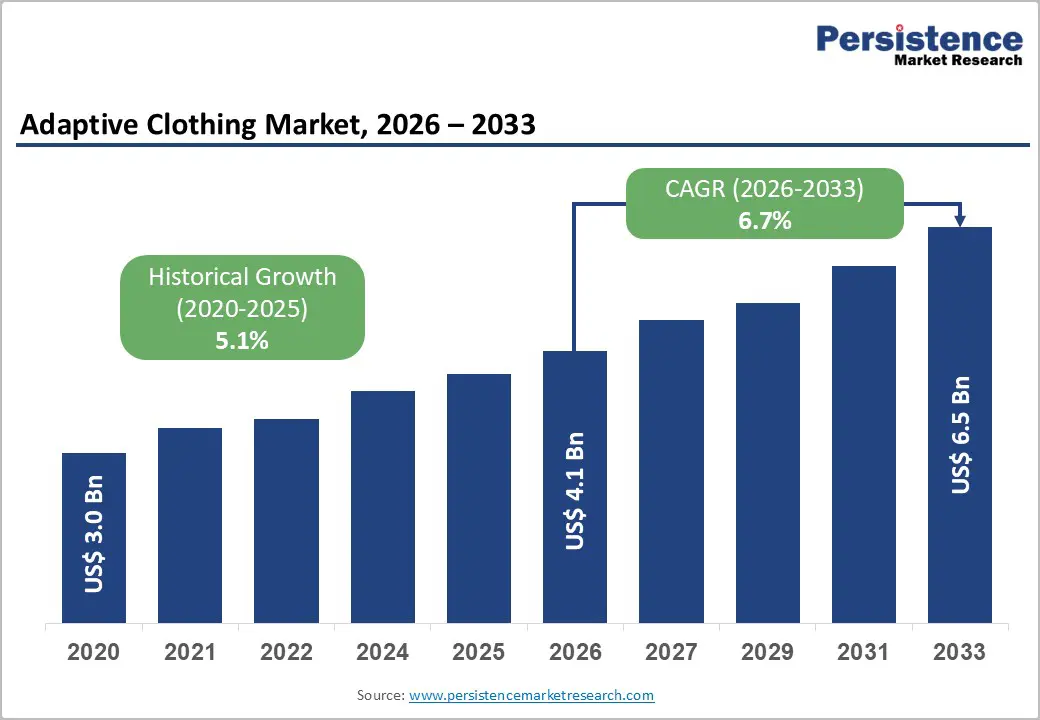
The global Adaptive Clothing Market size is projected to rise from US$4.1 billion in 2026 to US$6.5 billion by 2033. It is anticipated to witness a CAGR of 6.7% during the forecast period from 2026 to 2033, driven by the rising need for easy-to-wear, comfort-led apparel among people with limited mobility, disabilities, aging consumers, and caregiver-assisted users.
Expansion is also supported by mainstream fashion brands normalizing inclusive design, while e-commerce improves product discoverability and access across geographies. Supportive government policies and rising consumer demand for comfortable, functional, and aesthetically appealing adaptive clothing have further fueled market growth.
Key Industry Highlights:
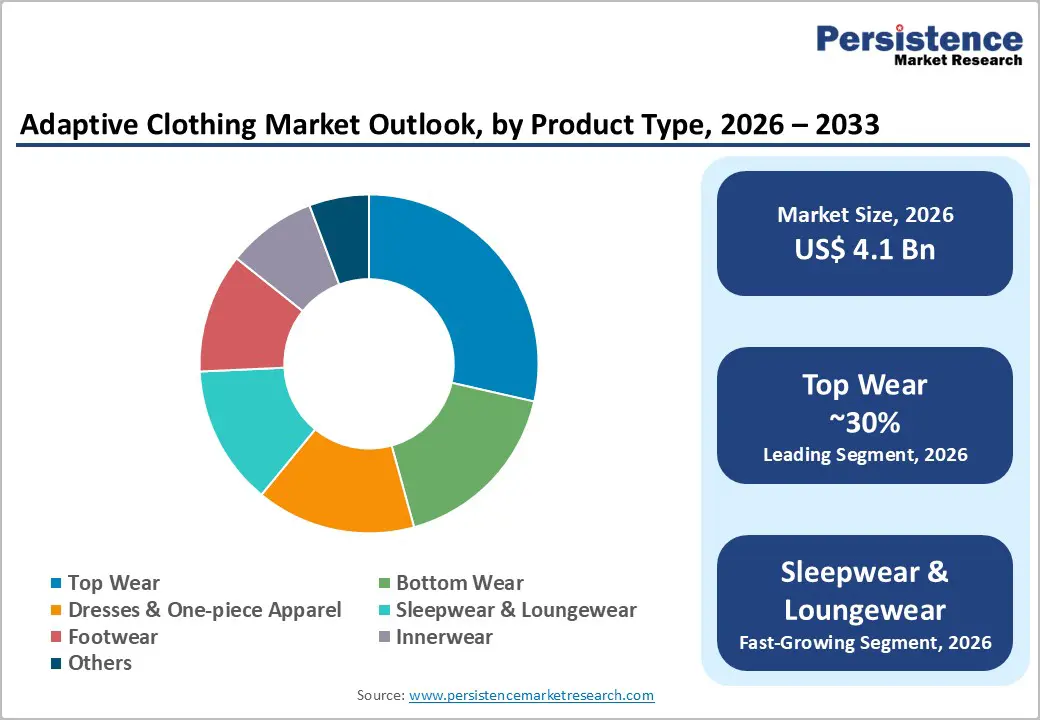
- Leading Product Type: Top Wear dominates the market with over 30% share in 2026, valued at more than US$ 1.2 Bn, driven by its essential daily usage and ease-of-wear features such as magnetic closures and Velcro fastenings. Sleepwear & Loungewear is the fastest-growing segment, supported by rising demand for comfort-focused apparel in home-care and elderly populations.
- Leading Gender Segment: Women account for over 38% share in 2026, valued at more than US$ 1.6 Bn, due to higher demand for functional yet stylish adaptive apparel addressing diverse health and lifestyle needs. Unisex clothing is the fastest-growing, driven by increasing adoption in institutional settings and the rise of gender-neutral fashion trends.
- Leading Distribution Channel: Offline channels command the largest share at over 55% in 2026, valued at more than US$ 2.3 Bn, as consumers prefer physical trials and personalized assistance for comfort and usability. Online are expanding at a CAGR of 11.4%, fueled by growing digital adoption, wider product accessibility, and convenience for mobility-restricted consumers.
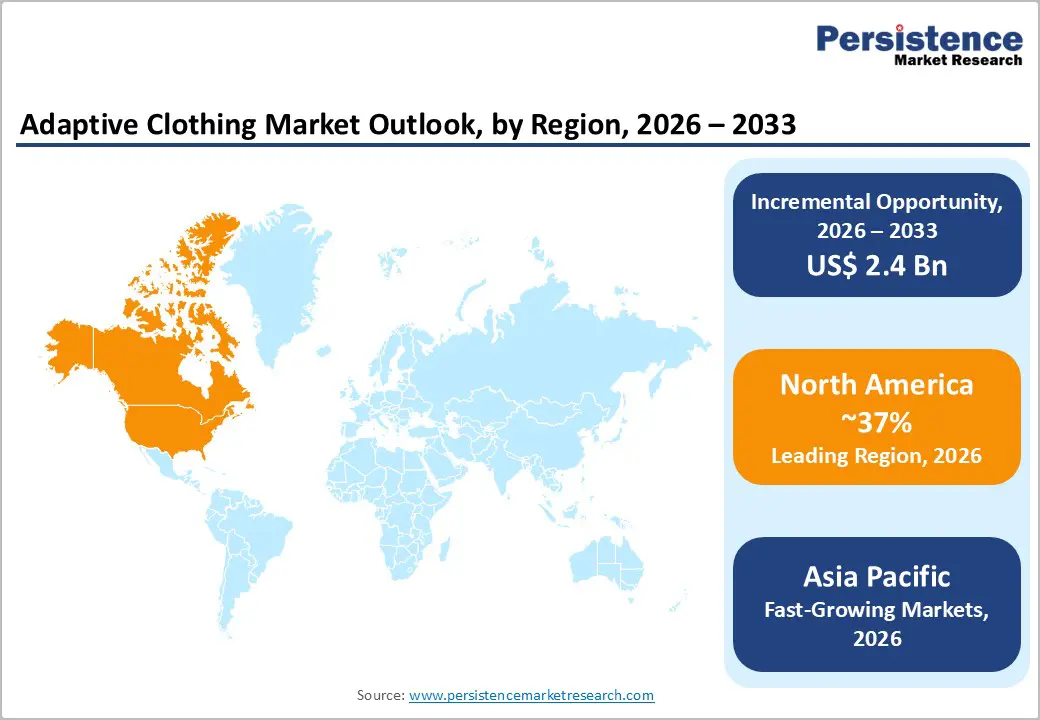
- Leading Region: North America leads the market with over 37% share in 2026, valued at around US$ 1.5 Bn, supported by high disability prevalence, strong regulatory frameworks, and advanced retail infrastructure. Asia Pacific is the fastest-growing region with a CAGR of 10.9%, driven by rapid aging populations, rising incomes, and expanding e-commerce penetration.
| Key Insights | Details |
|---|---|
|
Adaptive Clothing Market Size (2026E) |
US$4.1 Bn |
|
Market Value Forecast (2033F) |
US$6.5 Bn |
|
Projected Growth (CAGR 2026 to 2033) |
6.7% |
|
Historical Market Growth (CAGR 2020 to 2025) |
5.1% |

DRO Analysis
Driver - Rising Disability Awareness and Inclusive Fashion Movement
Growing awareness around disability rights, inclusivity, and the social value of accessible fashion is significantly expanding the addressable market for adaptive clothing. Globally, advocacy frameworks such as the United Nations Convention on the Rights of Persons with Disabilities (CRPD) are prompting policy action around access and inclusion, including access to clothing. High-profile mainstream retailer launches have further catalyzed consumer awareness. In January 2025, Primark launched a 49-piece adaptive clothing collection in collaboration with adaptive fashion designer Victoria Jenkins, available across 96 stores in 10 countries. According to a survey, 75% of respondents with disabilities find it difficult to obtain accessible clothing, and 80% feel excluded from fashionable options, a gap that underscores massive latent demand.
Rapidly Aging Global Population Fueling Demand for Functional Apparel
The adaptive clothing market is significantly driven by the rapid aging of the global population, which is reshaping apparel needs toward functionality and ease of use. According to the World Health Organization, nearly 1 in 6 people worldwide will be aged 60 or above by 2030, creating a substantial consumer base with mobility and dexterity challenges. Age-related conditions such as reduced coordination and limited flexibility make conventional clothing difficult to manage independently. This has accelerated demand for adaptive features such as magnetic closures, Velcro fastenings, elastic waistbands, and seated-wear designs. Apparel manufacturers are increasingly focusing on inclusive, user-friendly designs to cater to the evolving needs of elderly consumers.
Restraint - Limited Awareness and Availability in Emerging Markets
In many emerging and developing economies, limited consumer awareness about the availability and benefits of adaptive apparel acts as a significant barrier. Distribution infrastructure for specialty garments remains weak, and few mainstream retailers in these regions have launched dedicated adaptive lines. Cultural stigma around disability clothing and the limited presence of occupational therapists who might recommend such garments further compound this issue, restricting the market's geographic reach.
High Production Costs of Adaptive Garments
The production of adaptive clothing involves specialized materials, modified construction techniques, proprietary fastening systems such as magnetic closures or side-zip panels, and in many cases, custom tailoring, all of which significantly increase manufacturing costs relative to mainstream apparel. These higher costs are subsequently passed on to consumers, making adaptive garments considerably more expensive than conventional alternatives. This price sensitivity is a major barrier, particularly in lower-income demographics and developing markets, restricting adoption and limiting the addressable consumer base for many brands operating in this space.
Opportunity - Mainstreaming Adaptive Fashion Through Mass-Market Retail Partnerships
A significant opportunity exists for adaptive clothing brands and designers to partner with mass-market retailers to bring affordable, stylish adaptive apparel to a wider audience. The success of high-profile launches demonstrates the commercial viability of this strategy. In September 2024, Zalando launched a dedicated adaptive fashion assortment for kids. As more retailers enter the segment, economies of scale will reduce production costs, enabling brands such as Tommy Hilfiger Licensing, LLC, Silvert's Adaptive Clothing & Footwear, and MAS Holdings to target previously underserved income segments.
Technology Integration and Smart Fabric Innovation
Innovations in smart fabrics, including temperature-regulating textiles, pressure-sensing materials for wheelchair users, and AI-driven size customization tools, are creating a new frontier of premium adaptive apparel. Companies are already testing next-generation solutions: in 2024, Mode Ézé Plus began field testing temperature-regulating adaptive jackets with breathable smart fabrics among wheelchair users in Canada. The convergence of wearable technology with adaptive design opens the door to products that serve medical monitoring, rehabilitation, and everyday independence, significantly expanding the product value proposition and warranting premium pricing across the global adaptive clothing market.
Category-wise Analysis
Product Type Insights
Top Wear dominates the market, capturing more than 30% market share in 2026 with a value exceeding US$ 1.2 Bn, as it addresses essential daily dressing needs and is the most frequently changed apparel category among individuals with disabilities, elderly populations, and post-surgery patients. Features such as magnetic closures, Velcro fastenings, and easy-open necklines make dressing simpler and reduce dependency on caregivers. The rising prevalence of mobility impairments and chronic conditions further drives demand for functional upper garments.
Sleepwear & Loungewear is expected to grow rapidly due to the increasing need for comfort, dignity, and ease during extended home stays, especially among elderly and home-care patients. It often incorporates features like flat seams, back openings, and sensory-friendly fabrics to prevent irritation and improve sleep quality. The growth of home healthcare and assisted living trends is significantly boosting demand for such garments. Rising awareness of mental well-being and comfort-oriented lifestyles is pushing consumers toward specialized loungewear.
Gender Insights
Women hold over 38% market share in 2026, with a value exceeding US$ 1.6 Bn, due to higher demand for diverse apparel options that combine functionality with style. Adaptive clothing for women often includes design elements catering to specific health conditions such as arthritis, post-surgical recovery, and maternity-related needs. There is also a stronger inclination toward maintaining personal appearance and independence, driving demand for aesthetically appealing adaptive wear.
Unisex is expected to grow significantly as consumers and caregivers seek practical, versatile clothing solutions that can be used across genders. This is particularly relevant in institutional settings such as hospitals, rehabilitation centers, and elderly care facilities, where standardization is important. Unisex adaptive clothing simplifies inventory management and reduces costs for bulk buyers. The growing acceptance of gender-neutral fashion is supporting broader adoption. The focus on functionality over style in many use cases further accelerates demand for unisex designs.
Distribution Channel Insights
Offline commands the largest market share at over 55% in 2026, with a value exceeding US$ 2.3 Bn, as consumers prefer physical trials to assess comfort, fitness, and ease of use. Personalized assistance from store staff helps customers with specific medical or mobility needs make informed decisions. Specialty stores, medical supply outlets, and rehabilitation centers play a key role in product accessibility. Trust and reliability associated with physical stores further strengthen this channel. Older consumers, who form a significant portion of the target audience, are more comfortable shopping offline.
Online is expected to grow at a CAGR of 11.4% due to increasing digital adoption and the convenience of home shopping, especially for individuals with mobility limitations. E-commerce enables access to a wider variety of adaptive clothing not always available in local stores. Detailed product descriptions, reviews, and size guides help consumers make informed choices. The rise of direct-to-consumer brands and inclusive fashion platforms is also boosting online visibility. Discreet purchasing and easy home delivery make online channels particularly appealing for sensitive or specialized clothing needs.
Regional Insights
North America Adaptive Clothing Market Trends
North America is expected to hold over a 37% share in 2026, reaching a value of US$ 1.5 Bn, driven by a high disability prevalence of approximately 28% of U.S. adults, according to the Centers for Disease Control and Prevention, and a rapidly aging population, with nearly 20% expected to be 65 years or older by 2030. Strong regulatory support from the Americans with Disabilities Act has fostered inclusive product innovation and consumer awareness. The U.S. dominates regional demand, supported by brands such as Tommy Hilfiger and adaptive retail initiatives like Target Adaptive. Advanced e-commerce infrastructure and high digital adoption among seniors further accelerate market expansion.
Asia Pacific Adaptive Clothing Market Trends
Asia Pacific is expected to achieve significant CAGR of 10.9% in the forecast period, fueled by rapid aging, rising incomes, and expanding healthcare awareness across key markets like China, Japan, and India. Japan leads in demand, with over 29% of its population aged 65+, while the Asian Development Bank projects Asia’s 60+ population to reach 1.3 billion by 2050. Growing middle-class populations and e-commerce expansion in ASEAN countries are improving product accessibility. Manufacturers are leveraging cost efficiencies to develop affordable adaptive clothing, positioning the region as a key long-term growth engine.
Europe Adaptive Clothing Market Trends
Europe is expected to hold more than 25% share by 2026, supported by aging demographics and strong regulatory momentum through the European Accessibility Act, effective by June 2025. Countries such as Germany, the UK, France, and Italy drive demand due to established healthcare systems and rising awareness of inclusive fashion. Retail adoption is increasing, with Primark launching adaptive collections across multiple European markets and Zalando expanding adaptive assortments. The UK’s Purple Pound, valued at over £274 billion annually, highlights the strong untapped commercial potential.
Competitive Landscape
The global adaptive clothing market is highly fragmented, characterized by a mix of specialized independent brands, private label retailers, and diversified apparel conglomerates. Specialty players lead through deep product portfolios and direct-to-consumer digital channels. Mainstream fashion brands are gaining ground through inclusivity-driven sub-brands. Key differentiators include product range breadth, design innovation, caregiver-friendly features, and distribution reach. Emerging business models include subscription-based adaptive wardrobe services, occupational therapist partnership programs, and co-design initiatives with disability advocacy organizations, reflecting a market increasingly defined by consumer empathy and co-creation.
Key Developments:
- In March 2026, Primark launched its Spring/Summer adaptive clothing collection, featuring the high street’s first adaptive swimwear. Developed in collaboration with Victoria Jenkins, the range focuses on enhancing comfort and ease of dressing for individuals with diverse accessibility needs.
- In January 2025, Primark launched its first adaptive clothing range for men and women in collaboration with Victoria Jenkins, featuring a 49-piece collection tailored to diverse accessibility needs. The initiative highlights a major step toward inclusive, customer-centric fashion by combining functionality, style, and affordability to serve individuals with disabilities and temporary mobility challenges.
Companies Covered in Adaptive Clothing Market
- Tommy Hilfiger licensing, LLC.
- Buck & Buck, Inc.
- Silvert’s Adaptive Clothing & Footwear
- Adaptions By Adrian
- Creation Confort
- JBS Clothing
- Comfort Concepts, Inc.
- MAS Holdings
- Abilitee Adaptive Wear
- Mode Ézé
- Adaptive Clothing Australia
- Recovawear
- Others
Frequently Asked Questions
The global adaptive clothing market is projected to be valued at US$4.1 Bn in 2026.
The rising aging population and increasing prevalence of disabilities, which create a strong need for easy-to-wear, functional, and inclusive apparel, are key drivers of the market.
The market is expected to witness a CAGR of 6.7% from 2026 to 2033.
Innovation in smart textiles and customizable adaptive designs, collaborations with healthcare and assisted living providers are creating strong growth opportunities.
Tommy Hilfiger Licensing, LLC., Buck & Buck, Inc., Silvert’s Adaptive Clothing & Footwear, Adaptions By Adrian, Creation Confort, JBS Clothing, Comfort Concepts, Inc. are among the leading key players.


