




- Automotive Components & Materials
- Heater Blower Market
Heater Blower Market Size, Share, and Growth Forecast, 2026 - 2033
Heater Blower Market by Product Type (Centrifugal Blower, Axial Blower, Mixed Flow/Cross Flow Blower, Others), Application (Automotive Heating, ventilation, and air conditioning (HVAC) Systems, Residential Heating Systems, Others), and Regional Analysis for 2026 - 2033

Heater Blower Market Share and Trends Analysis
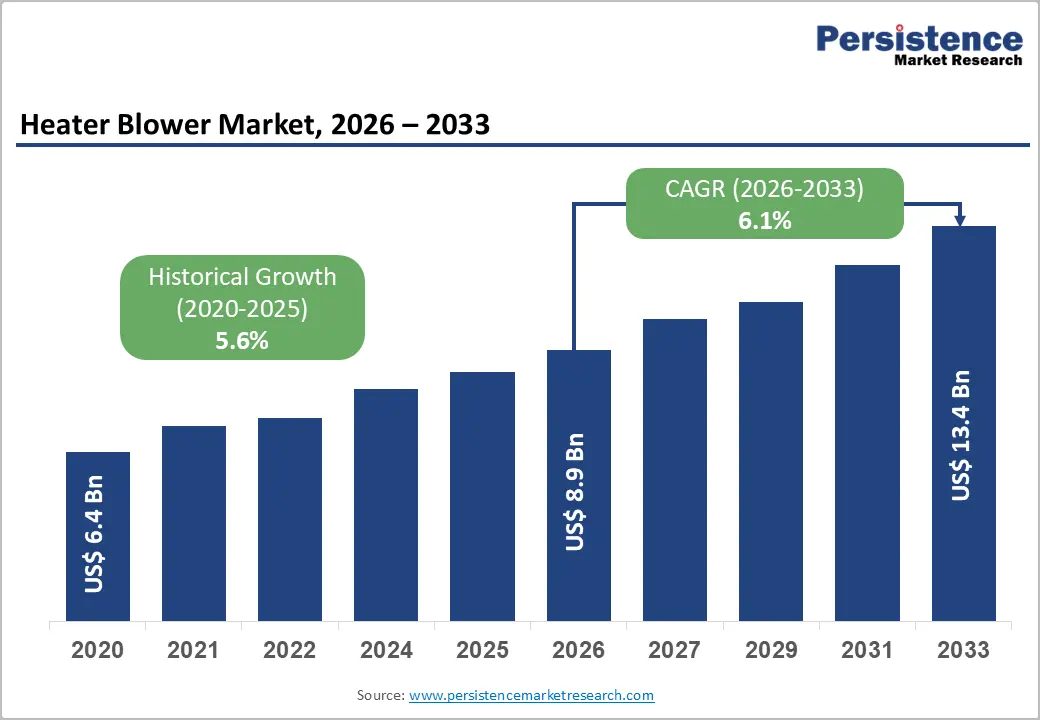
The global heater blower market size is likely to be valued at US$8.9 billion in 2026 and is estimated to reach US$13.4 billion by 2033, growing at a CAGR of 6.1% during the forecast period 2026 - 2033, driven by rising vehicle production volumes in emerging economies, which generate strong demand for advanced automotive HVAC and thermal management systems.
Demographic shifts toward urbanization increase the frequency of short-trip driving, which accelerates component wear and sustains aftermarket demand. Stringent safety mandates from international regulatory bodies compel manufacturers to integrate high-durability materials to prevent mechanical failures. Rapid technology adoption, particularly the transition to electric drivetrains, necessitates specialized component geometries to manage unique battery weight distributions.
Key Industry Highlights:
- Leading Product Type: The centrifugal blower is set to hold around 42% revenue share in 2026, driven by widespread use in ducted residential and commercial furnace systems.
- Fastest-Growing Product Type: Axial blower is projected as the fastest-growing segment, supported by the rapid expansion of the electric vehicle thermal management sector.
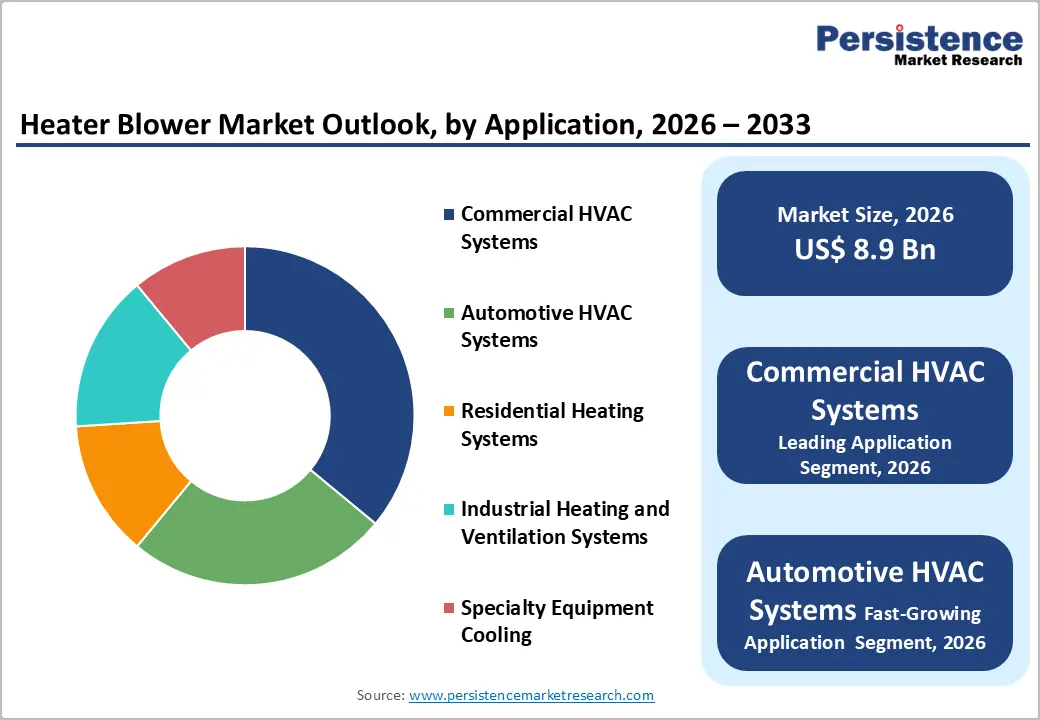
- Leading Application: Commercial HVAC systems are estimated to hold roughly 36% revenue share in 2026, due to massive investments in urban infrastructure and green building projects.
- Fastest-Growing Application: Automotive HVAC systems are forecast to record the fastest growth, driven by the global transition toward battery electric vehicles.
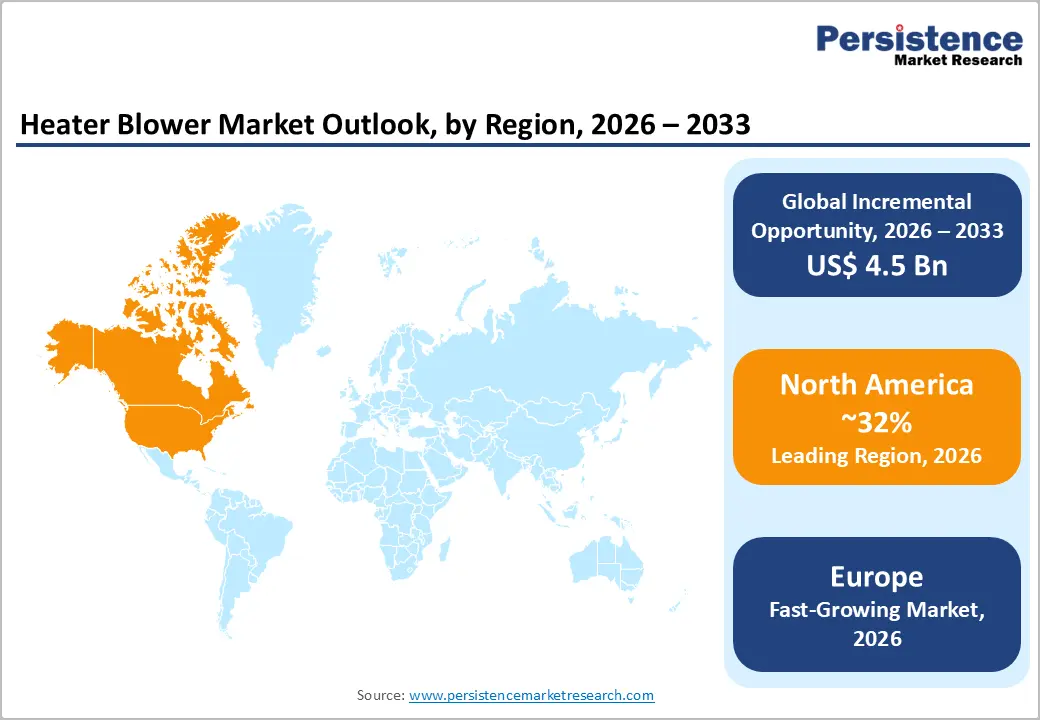
- Regional Leadership: North America is projected to capture roughly 32% of the market share by 2026, while Europe is forecast to record the fastest growth due to stringent energy efficiency mandates.
- Competitive Environment: The market reflects a moderately fragmented structure, with key players like ebm-papst and Delta Electronics leveraging advanced motor technology to maintain leadership.
- Innovation Trends: Integration of IoT-based predictive maintenance, adoption of brushless EC motors, and the development of ultra-quiet airflow designs are shaping long-term market evolution.

DRO Analysis
Driver - Escalating Demand for Energy-Efficient HVAC Systems
Global energy consumption patterns shift toward sustainable infrastructure, prompting widespread adoption of high-efficiency heating components. Regulatory frameworks such as the European Union Ecodesign Directive enforce strict minimum efficiency standards for ventilation fans and blowers. In 2025, the U.S. Department of Energy reported that residential and commercial buildings accounted for nearly 39% of total U.S. energy consumption, highlighting the critical need for efficient thermal management.
This pressure forces manufacturers to transition from traditional AC motors to electronically commutated (EC) alternatives. Improved airflow control and reduced power waste directly result from these technological shifts. The integration of variable speed drives allows systems to match output with real-time heating requirements. Operational cost savings for end-users facilitate rapid replacement cycles of legacy hardware, ensuring steady demand for modernized components.
Restraint - High Initial Capital Expenditure and Installation Complexity
Advanced blower systems utilizing magnetic bearings or electronically commutated motors require substantial upfront investment compared to conventional models. Integration into existing heating infrastructure often necessitates extensive ductwork modification and specialized technical expertise. These costs impact profit margins for small-scale developers and residential contractors who cannot easily pass costs to consumers.
Scalability in emerging markets remains limited as price-sensitive consumers prioritize lower-cost alternatives over long-term energy savings. Maintenance for high-tech components involves proprietary software and specialized parts, increasing the total cost of ownership. This financial barrier slows the adoption rate of premium solutions in regions with limited subsidies for green energy transitions.
Opportunity - Integration of Internet of Things (IoT) and Smart Control Systems
Smart building initiatives offer a significant pathway for growth through the deployment of interconnected heating solutions. IoT-enabled blowers allow for real-time monitoring of airflow performance and predictive maintenance scheduling. Integration with building management systems optimizes energy usage by adjusting blower speed based on occupancy data and external climate conditions.
Data-driven insights enable facility managers to reduce operational downtime and extend the life of heating hardware. This digital transformation appeals to commercial property owners seeking to achieve green building certifications and operational efficiency. Innovation in sensor technology facilitates the development of self-diagnosing units. Enhanced connectivity provides a competitive edge in the rapidly growing smart home ecosystem.
Category-wise Analysis
Product Type Insights
Centrifugal blowers are anticipated to secure around 42% of the heater blower market share in 2026, reflecting the high-pressure-generating capabilities required for complex ducting systems. Modern residential furnaces utilize centrifugal blowers to force heated air through extensive ventilation networks. This segment maintains dominance due to the versatile performance profile and durability of these units in heavy-duty applications. Consistent demand stems from the industrial sector for process heating and ventilation.
Axial blowers are expected to be the fastest-growing segment, propelled by the rising demand for high-volume air movement in compact spaces. Automotive HVAC systems frequently employ axial designs to provide rapid cabin heating without occupying significant engine compartment volume. The shift toward smaller, more efficient electronic components drives the adoption of axial configurations for localized cooling and heating. Simple installation and cost-effectiveness enhance growth in the specialty equipment cooling sector.
Airflow Configuration Insights
Down-blast discharge blowers are poised to dominate with a forecast market share of over 38% in 2026, powered by widespread adoption in rooftop-mounted commercial heating units. Large retail warehouses utilize down-blast configurations to efficiently push warm air toward the floor level during the winter months. This configuration protects internal components from environmental elements while maximizing floor space. Superior weather resistance ensures long-term operational reliability in diverse climates.
Up-blast discharge blowers are estimated to be the fastest-growing segment, fueled by strict indoor air quality regulations and the need for efficient exhaust management. Industrial kitchens use up-blast blowers to vent high-temperature air and grease away from the building structure. The configuration prevents residue buildup on rooftops and reduces fire hazards in commercial cooking environments. Growth is supported by the rapid expansion of the global food service and hospitality industry.
Application Insights
Commercial HVAC systems are likely to be the leading segment with a projected 36% of the heater blower market share in 2026 due to the continuous development of office buildings and retail centers. New hospital construction projects require high-capacity heater blowers to maintain precise thermal conditions in patient wards. Large-scale climate control requirements in public infrastructure sustain high-volume orders for blower manufacturers. Investment in energy-efficient retrofits for aging commercial structures further boosts demand.
Automotive HVAC systems are anticipated to be the fastest-growing segment, fueled by the rapid electrification of passenger and commercial vehicles. The 2026 Tesla Model 2 and similar entry-level electric vehicles utilize dedicated blower units to manage heat pump efficiency. Increasing consumer expectations for cabin comfort and the integration of advanced climate control zones drive technical innovation. Manufacturers focus on developing ultra-quiet blower assemblies to enhance the premium electric vehicle experience.
Regional Insights
North America Heater Blower Market Trends
North America is expected to lead with an estimated 32% of the heater blower market share in 2026, supported by the widespread adoption of advanced HVAC systems in residential and commercial sectors. The presence of established industry participants such as Carrier Global and Trane Technologies facilitates rapid technology diffusion across the regional market.
U.S. Heater Blower Market Insights
The U.S. growth is projected to be driven by federal tax incentives for energy-efficient home upgrades under the Inflation Reduction Act. The commercial construction sector is expected to see significant investment in green building retrofits. Manufacturers are likely to focus on integrating smart sensors to comply with evolving state-level energy codes. Robust automotive production further stimulates the demand for advanced cabin heating solutions.
Canada Heater Blower Market Insights
Canada's demand is forecast to be influenced by extreme seasonal temperature fluctuations requiring robust and reliable heating solutions. Adoption of high-efficiency heat pump blowers is expected to increase as the government implements stricter carbon reduction targets. Industrial ventilation projects in the mining and energy sectors are likely to sustain market growth. Increased focus on remote community infrastructure provides niche expansion opportunities.
Europe Heater Blower Market Trends
Europe is forecast to be the fastest-growing market for heater blower, stimulated by the implementation of the EU Green Deal and the REPowerEU plan. Stricter Ecodesign regulations for fans and blowers force a rapid transition toward high-efficiency EC motor technology across the continent. Regional emphasis on reducing dependence on natural gas accelerates the deployment of electric heat pump systems.
Germany Heater Blower Market Insights
Germany is likely to remain a hub for technological innovation, with companies such as ebm-papst leading the development of quiet, energy-efficient blowers. The industrial sector is projected to invest heavily in carbon-neutral heating for manufacturing facilities. Local government mandates for heat pump installations in new buildings are expected to drive volume. Strategic positioning in the center of European logistics chains supports domestic manufacturing stability.
U.K. Heater Blower Market Insights
The U.K. growth is forecast to be supported by the Future Homes Standard, which necessitates low-carbon heating systems in new residential developments. The refurbishment of aging public infrastructure, including schools and hospitals, is likely to increase demand for commercial-grade blowers. Strategic partnerships between energy providers and equipment manufacturers are expected to emerge. Increasing investments in district heating networks provide new pathways for high-capacity blower deployment.
Asia Pacific Heater Blower Market Trends
Asia Pacific is expected to capture a significant portion of the market, driven by massive urbanization in China and Japan. Rapid industrialization and the expansion of the electronics manufacturing sector create high demand for specialized heating and cooling blowers. Government subsidies for energy-efficient appliances in emerging economies facilitate the transition toward modern ventilation hardware.
China Heater Blower Market Insights
China is projected to be the largest manufacturing base for blower components, supported by state-backed industrial modernization programs. Large-scale infrastructure projects, including new airports and metro systems, are likely to require extensive HVAC installations. The domestic electric vehicle market is forecast to be a primary driver for automotive blower growth. Expansion of data center cooling requirements provides a significant secondary demand channel.
Japan Heater Blower Market Insights
Japan is expected to prioritize high-performance, compact blower designs for use in sophisticated electronics and specialty equipment. The market is likely to see increased adoption of blowers with advanced noise-reduction features for residential use. Investment in hydrogen-based heating technologies is forecast to create new opportunities for specialized blower hardware. High-density urban living conditions drive the demand for ultra-quiet and efficient ventilation solutions.
Competitive Landscape
The global heater blower market is moderately fragmented, characterized by the presence of several large multinational corporations and numerous specialized regional manufacturers. Strategic competition centers on energy efficiency ratings, noise levels, and integration capabilities with smart building ecosystems. Key industry participants include ebm-papst Group, Delta Electronics, Inc., Ziehl-Abegg SE, AMETEK Inc., and Nidec Corporation.
High barriers to entry exist due to the technical expertise required for motor design and the substantial capital needed for high-volume production facilities. Regional players often maintain a competitive edge through localized service networks and strong relationships with domestic HVAC contractors. Market consolidation is expected as larger entities acquire niche technology firms to enhance their IoT and sensor portfolios.
Key Industry Developments:
- In February 2026, LG Electronics showcased advanced high-efficiency HVAC and core component solutions at AHR Expo 2026 in Las Vegas, emphasizing next-generation blower and motor technologies designed to improve airflow efficiency, energy performance, and system integration across residential, commercial, and industrial heating and ventilation applications.
- In April 2025, ebm-papst strengthened its India expansion strategy by initiating a new production facility in Chennai, reinforcing its global blower and fan manufacturing network, and supporting higher demand for energy-efficient HVAC and heater blower systems across automotive and industrial ventilation applications.
- In February 2025, Midea Group completed the acquisition of Arbonia Climate, integrating its heating, ventilation, and air treatment portfolio into MBT Climate, strengthening its global HVAC and heater blower solutions footprint and expanding its capability in energy-efficient building climate systems across Europe and international markets.
Companies Covered in Heater Blower Market
- ebm-papst Group
- Delta Electronics, Inc.
- Ziehl-Abegg SE
- AMETEK Inc.
- Nidec Corporation
- S&P Sistemas de Ventilación S.L.U.
- Greenheck Fan Corporation
- Twin City Fan Companies, Ltd.
- Johnson Controls
- Carrier Global Corporation
- Trane Technologies
- Lennox International
- Regal Rexnord Corporation
- Systemair AB
- Howden Group
Frequently Asked Questions
The heater blower market is projected to reach US$8.9 billion in 2026.
Increasing demand for energy-efficient HVAC systems, automotive thermal management expansion, and stricter building energy regulations drive the Heater Blower market growth.
The heater blower market is poised to witness a CAGR of 6.1% from 2026 to 2033.
Growth opportunities arise from smart HVAC integration, electric vehicle thermal systems, and the expansion of energy-efficient residential and commercial infrastructure.
Some of the key market players include ebm-papst Group, Delta Electronics, Inc., Ziehl-Abegg SE, AMETEK Inc., and Nidec Corporation.


