

What has changed in recent years is the industry’s response to sleep health challenges. Sleep health has moved from the margins of clinical medicine into the mainstream, prompting sustained interest from pharmaceutical companies, device manufacturers, and investors alike. The global sleep aids market is anticipated to be valued at US$32.3 billion in 2026 and is projected to reach US$43.4 billion by 2033, expanding at a CAGR of 4.3% during the forecast period. The growth story here is not simply about selling more melatonin. But it reflects a substantive transformation in how sleep disorders are diagnosed, treated, and managed across both clinical and consumer settings.
A Growing Disorder Burden That Cannot Be Managed Away
Sleep deprivation is no longer treated as an isolated lifestyle issue. Evidence increasingly connects poor sleep quality with cardiovascular disease, diabetes, anxiety, depression, and diminished workplace productivity. This combination has elevated sleep health from a wellness topic to a genuine healthcare priority.
According to Sleep Foundation, an estimated one in two individuals with type 2 diabetes experience sleep disturbances, often linked to fluctuations in blood sugar levels and related symptoms. Episodes of high (hyperglycemia) or low (hypoglycemia) blood sugar during the night can disrupt sleep, leading to insomnia and fatigue the following day. Also, the emotional burden of managing a chronic condition, including stress and depression, can further interfere with restful sleep.
Chronic cases, defined as persistent difficulty falling or staying asleep at least three times per week for more than three months, carry documented associations with obesity, type 2 diabetes, and cardiovascular disease. Obstructive Sleep Apnea (OSA) adds another layer of urgency. As per a study published in ScienceDirect, in 2024, nearly 83.7 million or 32.4% of adults in the U.S. had OSA, of whom 34,257,378 (41%) were females and 49,459,041 (59%) males.
A substantial proportion, however, remain undiagnosed due to limited access to sleep clinic infrastructure and low public awareness. A study by Charles University in Prague found that untreated OSA significantly increases mortality risk in diabetic patients. This finding underscores why sleep apnea devices have emerged as the fastest-growing product segment in the market today.
Patient behavior is also changing. Individuals are increasingly moving beyond temporary solutions and seeking clinically validated therapies that address underlying causes rather than simply inducing sedation.
Orexin-Based Therapies Are Changing the Treatment Landscape
For many years, benzodiazepines and Z-drugs remained the primary treatment options for insomnia. While effective, these therapies have been associated with risks such as dependence, residual daytime sedation, and cognitive impairment. Regulatory organizations, including the U.S. Food and Drug Administration (FDA) and the American Geriatrics Society, have raised concerns regarding their long-term use, particularly among older adults. Researchers and manufacturers have increasingly focused on developing therapies that improve sleep quality while minimizing safety and tolerability concerns.
Orexin receptor antagonists have emerged as one of the most important recent advances in insomnia treatment. Unlike traditional therapies that broadly affect the central nervous system, these medications target orexin signaling pathways responsible for regulating wakefulness. By selectively blocking orexin receptors, they help facilitate sleep onset and maintenance through a different mechanism of action. Their introduction reflects the industry's broad shift toward therapies designed to improve sleep outcomes while addressing some of the safety and tolerability concerns associated with older treatment options.
Daridorexant, approved by the FDA in January 2022 under the brand name QUVIVIQ, was among the first in this class to reach patients. Clinical trials demonstrated reductions in both time to sleep onset and wakefulness after sleep onset, without the next-day impairment associated with prior generations. Lemborexant (DAYVIGO) followed a similar path.
In May 2025, Eisai received approval in China for DAYVIGO, marking the country's first commercialized orexin receptor antagonist for insomnia treatment. A formal launch followed in August 2025 a milestone that signals how access to this new treatment class is now expanding well beyond its initial markets.
The broad significance is not limited to individual approvals. As more regulatory bodies clear these therapies and physician familiarity grows, orexin receptor antagonists are gradually displacing older sedative-hypnotics in clinical formularies.
Smart Sleep Products are Transforming the Traditional Sleep Environment
Not every solution to poor sleep begins with a prescription. As clinical understanding of sleep disorders has deepened, there is growing recognition that consistently monitoring sleep patterns, including tracking duration, regularity, and behavioral triggers, is as important as treating symptoms once they emerge. This has created space for a parallel, technology-led development track that is reshaping the product landscape considerably.
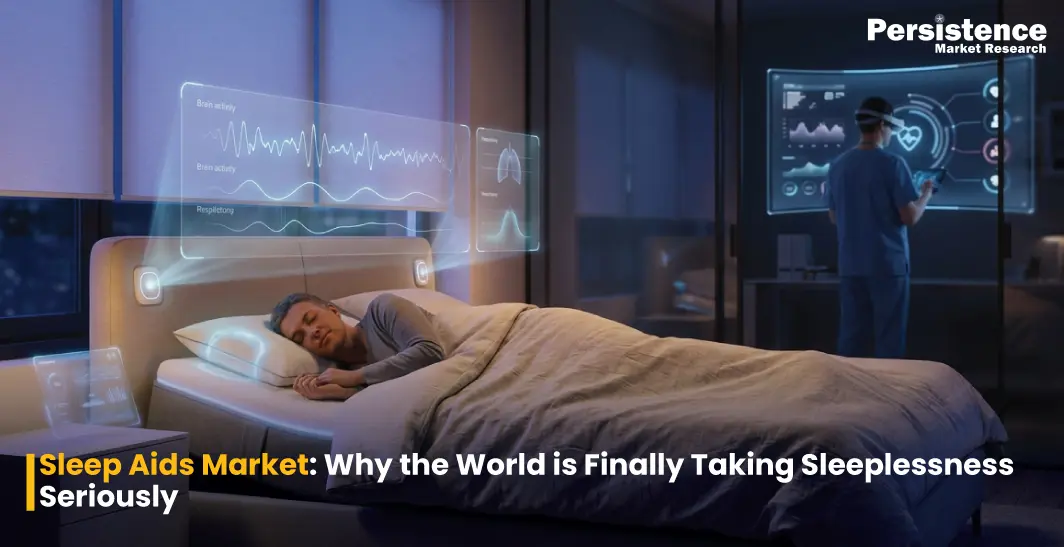
The numbers reflect this shift. As per Persistence Market Research, mattresses and pillows account for approximately 72% of total sleep aids market share in 2026 in terms of product type. This dominant position points to how foundational the physical sleep environment has always been. What is gradually changing is the intelligence embedded in these products.
In August 2025, for example, Eight Sleep secured US$100 million in funding to expand its healthcare-focused sleep technology. The company's AI-powered system automatically adjusts temperature and monitors key health metrics, including cardiovascular and respiratory patterns, without requiring wearable devices.
Surging Focus on Root Causes is Broadening Treatment Approaches
There is a quiet but consequential shift happening in how people approach sleep health. Where prescriptions once represented the default response to sleep disorders, a growing segment of the population is now approaching clinics, pharmacies, or even app stores with different expectations. They want to understand the root causes of their sleep disruptions, and not simply suppress symptoms.
This behavioral shift is translating into demand across multiple product categories at once. Many individuals are combining clinically validated options such as Cognitive Behavioral Therapy for Insomnia (CBT-I) with sleep-tracking technologies, nutritional supplements such as melatonin, and relaxation-focused digital applications.
The American Academy of Sleep Medicine recommends CBT-I as the first-line treatment for chronic insomnia in adults. It is a designation that has meaningfully elevated its profile among both clinicians and patients. Importantly, CBT-I produces durable improvements without dependency risk, and its delivery through digital platforms has significantly expanded access beyond traditional clinical settings.
Sleep Care to Enter a More Clinical and Personalized Phase in Future
The future of sleep care is likely to be defined by early intervention, accurate diagnosis, and personalized treatment pathways. Recent regulatory approvals, growing awareness of sleep-related health risks, and advances in neuroscience are collectively transforming how insomnia and other sleep disorders are managed. What was once viewed as a lifestyle inconvenience is increasingly being recognized as a measurable healthcare challenge with significant economic and clinical implications. This shift is predicted to position sleep aids as integral to modern healthcare rather than secondary wellness solutions.


