

The numbers reflect this momentum. According to Persistence Market Research, the global dental implants market is expected to reach US$ 8.3 billion in 2026 and expand to US$ 13.4 billion by 2033, driven by rising aesthetic awareness, technological advancements, and expanding access to care.
What's particularly interesting is how the industry is evolving. Digital treatment planning is making procedures more precise and cosmetic dentistry is broadening the patient base. At the same time, financing solutions are reducing affordability concerns and dental tourism is allowing patients to access treatment beyond their local markets. These trends are collectively transforming dental implants from a specialized procedure into a mainstream healthcare solution.
AI and Digital Platforms Are Transforming Implant Treatment Pathways
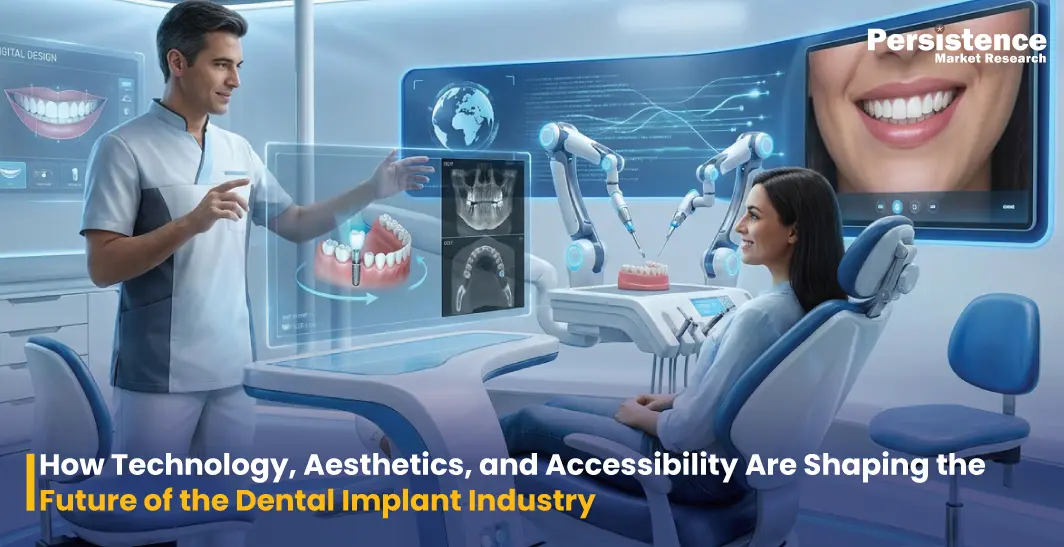
The modern implant journey often begins long before a patient enters the operating chair. Advanced technologies such as Cone-Beam Computed Tomography (CBCT) imaging, intraoral scanners, and Computer-Aided Design (CAD)/Computer-Aided Manufacturing (CAM) systems now allow clinicians to create highly detailed treatment plans, improving both precision and predictability.
At the International Dental Show (IDS) 2025 in Cologne, leading implant manufacturer Straumann Group unveiled its expanded digital dentistry portfolio, including the full rollout of its cloud-based Straumann AXS platform. It also included the global launch of the iEXCEL implant system and new integrations connecting CBCT imaging, AI-powered treatment planning, surgical navigation, and prosthetic workflows into a unified platform. The launch reflected the industry's shift toward fully digital implant treatment pathways.
Artificial intelligence is also becoming a practical clinical tool rather than a future concept. In October 2025, Carestream Dental launched an AI-supported implant planning solution capable of automatically identifying teeth, calculating crown positions, and recommending implant dimensions based on CBCT scans and digital impressions. Such innovations are helping clinicians reduce planning time while improving treatment consistency and patient communication.
For patients, these innovations mean short treatment timelines, few complications, and high confidence in outcomes. They are also helping popularize immediate-load or "same-day" implants, a concept that would have seemed ambitious only a few years ago.
Shift Toward Cosmetic Value is Pushing Implant Demand
As technology improves treatment outcomes, changing consumer attitudes are creating a new source of demand. Dental implants are increasingly viewed not just as a solution for missing teeth, but as an investment in appearance, confidence, and overall quality of life. Social media, video conferencing, and growing awareness of facial aesthetics have fueled what many clinicians describe as the "smile economy."
This shift was evident at the India Digital Summit (IDS) 2025, where companies such as Straumann, Dentsply Sirona, and Align Technology showcased digital smile design tools that allow patients to preview treatment outcomes before committing to a procedure. Greater visibility into results is helping boost treatment acceptance and interest in aesthetic dental procedures.
The demand for full-arch solutions such as All-on-4 and All-on-6 implants continues to rise. These procedures restore an entire smile with fewer implants, offering both functional and cosmetic benefits, making them increasingly popular among patients seeking long-term smile restoration.
Cross-Border Treatment Access is Expanding Through Dental Tourism
The search for affordability and value that is driving financing adoption is also fueling the rise of dental tourism. Patients are increasingly willing to travel abroad for implant procedures, particularly when they can access high-quality treatment at significantly lower costs.
Countries such as Turkey, India, Thailand, and Hungary have built strong reputations for implant dentistry by combining advanced clinical capabilities with competitive pricing. Turkey has emerged as one of the world's leading dental tourism destinations, attracting more than 700,000 international dental patients annually, as per SULE Clinic's 2025 Dental Tourism Turkey report. Its combination of internationally accredited clinics, expertise in cosmetic dentistry, and modern digital treatment workflows has made it especially popular for full-mouth restorations and implant-supported smile makeovers.
Importantly, patients are no longer traveling solely to save money. Access to advanced technologies, short waiting times, and comprehensive treatment packages are increasingly influencing decision-making. As a result, dental tourism has evolved from a cost-saving alternative into another pathway that is making dental implants more accessible to patients worldwide.
Patient-Centric Trends to Transform the Industry Worldwide in Future
The dental implant industry is no longer evolving solely because more people need tooth replacement. Its growth is increasingly being shaped by how patients want to experience care. Digital technologies are simplifying treatment, cosmetic dentistry is changing perceptions, financing options are improving affordability, and dental tourism is expanding access across borders.
These shifts are making dental implants more accessible, predictable, and patient-friendly than ever before. As innovation continues to narrow the gap between need and access, dental implants are becoming not just a restorative solution, but an integral part of modern dental care.


