


- Executive Summary
- Global Laser Therapy Caps Market Snapshot, 2026 and 2033
- Market Opportunity Assessment, 2026 - 2033, US$ Mn
- Key Market Trends
- Future Market Projections
- Premium Market Insights
- Industry Developments and Key Market Events
- PMR Analysis and Recommendations
- Market Overview
- Market Scope and Definition
- Market Dynamics
- Drivers
- Restraints
- Opportunity
- Key Trends
- Macro-economic Factors
- Global Sectoral Outlook
- Global GDP Growth Outlook
- COVID-19 Impact Analysis
- Forecast Factors - Relevance and Impact
- Value Added Insights
- Tool Adoption Analysis
- Regulatory Landscape
- Value Chain Analysis
- PESTLE Analysis
- Porter’s Five Force Analysis
- Price Analysis, 2025A
- Key Highlights
- Key Factors Impacting Deployment Costs
- Pricing Analysis, By Technology
- Global Laser Therapy Caps Market Outlook
- Key Highlights
- Market Volume (Units) Projections
- Market Size (US$ Mn) and Y-o-Y Growth
- Absolute $ Opportunity
- Market Size (US$ Mn) and Volume (Units) Analysis and Forecast
- Historical Market Size (US$ Mn) Analysis, 2020-2025
- Current Market Size (US$ Mn) Analysis and Forecast, 2026 - 2033
- Global Laser Therapy Caps Market Outlook: Technology
- Introduction / Key Findings
- Historical Market Size (US$ Mn) and Volume (Units) Analysis, By Technology, 2020 - 2025
- Current Market Size (US$ Mn) and Volume (Units) Analysis and Forecast, By Technology, 2026 - 2033
- Laser Diode
- Light-Emitting Diode (LED)
- Hybrid
- Market Attractiveness Analysis: Technology
- Global Laser Therapy Caps Market Outlook: Application
- Introduction / Key Findings
- Historical Market Size (US$ Mn) Analysis, By Application, 2020 - 2025
- Current Market Size (US$ Mn) Analysis and Forecast, By Application, 2026 - 2033
- Hair Loss Treatment
- Hair Growth Stimulation
- Scalp Therapy
- Pain Management & Wound Healing
- Market Attractiveness Analysis: Application
- Global Laser Therapy Caps Market Outlook: End-User
- Introduction / Key Findings
- Historical Market Size (US$ Mn) Analysis, By End-User, 2020 - 2025
- Current Market Size (US$ Mn) Analysis and Forecast, By End-User, 2026 - 2033
- Home Users
- Dermatology Clinics
- Hair Care Clinics
- Hospitals
- Market Attractiveness Analysis: End-User
- Key Highlights
- Global Laser Therapy Caps Market Outlook: Region
- Key Highlights
- Historical Market Size (US$ Mn) and Volume (Units) Analysis, By Region, 2020 - 2025
- Current Market Size (US$ Mn) and Volume (Units) Analysis and Forecast, By Region, 2026 - 2033
- North America
- Europe
- East Asia
- South Asia and Oceania
- Latin America
- Middle East & Africa
- Market Attractiveness Analysis: Region
- North America Laser Therapy Caps Market Outlook
- Key Highlights
- Historical Market Size (US$ Mn) Analysis, By Market, 2020 - 2025
- By Country
- By Technology
- By Application
- By End-User
- Current Market Size (US$ Mn) Analysis and Forecast, By Country, 2026 - 2033
- U.S.
- Canada
- Current Market Size (US$ Mn) and Volume (Units) Analysis and Forecast, By Technology, 2026 - 2033
- Laser Diode
- Light-Emitting Diode (LED)
- Hybrid
- Current Market Size (US$ Mn) Analysis and Forecast, By Application, 2026 - 2033
- Hair Loss Treatment
- Hair Growth Stimulation
- Scalp Therapy
- Pain Management & Wound Healing
- Current Market Size (US$ Mn) Analysis and Forecast, By End-User, 2026-2033
- Home Users
- Dermatology Clinics
- Hair Care Clinics
- Hospitals
- Market Attractiveness Analysis
- Europe Laser Therapy Caps Market Outlook
- Key Highlights
- Historical Market Size (US$ Mn) Analysis, By Market, 2020 - 2025
- By Country
- By Technology
- By Application
- By End-User
- Current Market Size (US$ Mn) Analysis and Forecast, By Country, 2026 - 2033
- Germany
- France
- U.K.
- Italy
- Spain
- Russia
- Türkiye
- Rest of Europe
- Current Market Size (US$ Mn) and Volume (Units) Analysis and Forecast, By Technology, 2026 - 2033
- Laser Diode
- Light-Emitting Diode (LED)
- Hybrid
- Current Market Size (US$ Mn) Analysis and Forecast, By Application, 2026 - 2033
- Hair Loss Treatment
- Hair Growth Stimulation
- Scalp Therapy
- Pain Management & Wound Healing
- Current Market Size (US$ Mn) Analysis and Forecast, By End-User, 2026-2033
- Home Users
- Dermatology Clinics
- Hair Care Clinics
- Hospitals
- Market Attractiveness Analysis
- East Asia Laser Therapy Caps Market Outlook
- Key Highlights
- Historical Market Size (US$ Mn) Analysis, By Market, 2020 - 2025
- By Country
- By Technology
- By Application
- By End-User
- Current Market Size (US$ Mn) Analysis and Forecast, By Country, 2026 - 2033
- China
- Japan
- South Korea
- Current Market Size (US$ Mn) and Volume (Units) Analysis and Forecast, By Technology, 2026 - 2033
- Laser Diode
- Light-Emitting Diode (LED)
- Hybrid
- Current Market Size (US$ Mn) Analysis and Forecast, By Application, 2026 - 2033
- Hair Loss Treatment
- Hair Growth Stimulation
- Scalp Therapy
- Pain Management & Wound Healing
- Current Market Size (US$ Mn) Analysis and Forecast, By End-User, 2026-2033
- Home Users
- Dermatology Clinics
- Hair Care Clinics
- Hospitals
- Market Attractiveness Analysis
- South Asia & Oceania Laser Therapy Caps Market Outlook
- Key Highlights
- Historical Market Size (US$ Mn) Analysis, By Market, 2020 - 2025
- By Country
- By Technology
- By Application
- By End-User
- Current Market Size (US$ Mn) Analysis and Forecast, By Country, 2026 - 2033
- India
- Southeast Asia
- ANZ
- Rest of South Asia & Oceania
- Current Market Size (US$ Mn) and Volume (Units) Analysis and Forecast, By Technology, 2026 - 2033
- Laser Diode
- Light-Emitting Diode (LED)
- Hybrid
- Current Market Size (US$ Mn) Analysis and Forecast, By Application, 2026 - 2033
- Hair Loss Treatment
- Hair Growth Stimulation
- Scalp Therapy
- Pain Management & Wound Healing
- Current Market Size (US$ Mn) Analysis and Forecast, By End-User, 2026-2033
- Home Users
- Dermatology Clinics
- Hair Care Clinics
- Hospitals
- Market Attractiveness Analysis
- Latin America Laser Therapy Caps Market Outlook
- Key Highlights
- Historical Market Size (US$ Mn) Analysis, By Market, 2020 - 2025
- By Country
- By Technology
- By Application
- By End-User
- Current Market Size (US$ Mn) Analysis and Forecast, By Country, 2026 - 2033
- Brazil
- Mexico
- Rest of Latin America
- Current Market Size (US$ Mn) and Volume (Units) Analysis and Forecast, By Technology, 2026 - 2033
- Laser Diode
- Light-Emitting Diode (LED)
- Hybrid
- Current Market Size (US$ Mn) Analysis and Forecast, By Application, 2026 - 2033
- Hair Loss Treatment
- Hair Growth Stimulation
- Scalp Therapy
- Pain Management & Wound Healing
- Current Market Size (US$ Mn) Analysis and Forecast, By End-User, 2026-2033
- Home Users
- Dermatology Clinics
- Hair Care Clinics
- Hospitals
- Market Attractiveness Analysis
- Middle East & Africa Laser Therapy Caps Market Outlook
- Key Highlights
- Historical Market Size (US$ Mn) Analysis, By Market, 2020 - 2025
- By Country
- By Technology
- By Application
- By End-User
- Current Market Size (US$ Mn) Analysis and Forecast, By Country, 2026 - 2033
- GCC Countries
- Egypt
- South Africa
- Northern Africa
- Rest of Middle East & Africa
- Current Market Size (US$ Mn) and Volume (Units) Analysis and Forecast, By Technology, 2026 - 2033
- Laser Diode
- Light-Emitting Diode (LED)
- Hybrid
- Current Market Size (US$ Mn) Analysis and Forecast, By Application, 2026 - 2033
- Hair Loss Treatment
- Hair Growth Stimulation
- Scalp Therapy
- Pain Management & Wound Healing
- Current Market Size (US$ Mn) Analysis and Forecast, By End-User, 2026-2033
- Home Users
- Dermatology Clinics
- Hair Care Clinics
- Hospitals
- Market Attractiveness Analysis
- Competition Landscape
- Market Share Analysis, 2025
- Market Structure
- Competition Intensity Mapping By Market
- Competition Dashboard
- Company Profiles (Details - Overview, Financials, Strategy, Recent Developments)
- Lexington International LLC
- Overview
- Segments and Deployments
- Key Financials
- Market Developments
- Market Strategy
- Apira Science Inc.
- Capillus LLC
- Theradome Inc.
- Curallux LLC
- Freedom Laser Therapy Inc.
- iRestore Hair Growth System
- Kiierr International
- Illumiflow
- WON TECH Co., Ltd.
- LUTRONIC Corporation
- Beijing ADSS Development Co., Ltd.
- Lexington International LLC
- Appendix
- Research Methodology
- Research Assumptions
- Acronyms and Abbreviations


- Medical Devices
- Laser Therapy Caps Market
Laser Therapy Caps Market Size, Share, Trends, Growth, Regional Forecasts, 2026 - 2033
Laser Therapy Caps Market by Technology (Laser Diode, LED, Hybrid), Application (Hair Loss Treatment, Hair Growth Stimulation, Scalp Therapy, Pain Management & Wound Healing), End-User (Home Users, Dermatology Clinics, Hair Care Clinics, Hospitals), and Regional Analysis for 2026 - 2033
Key Industry Highlights
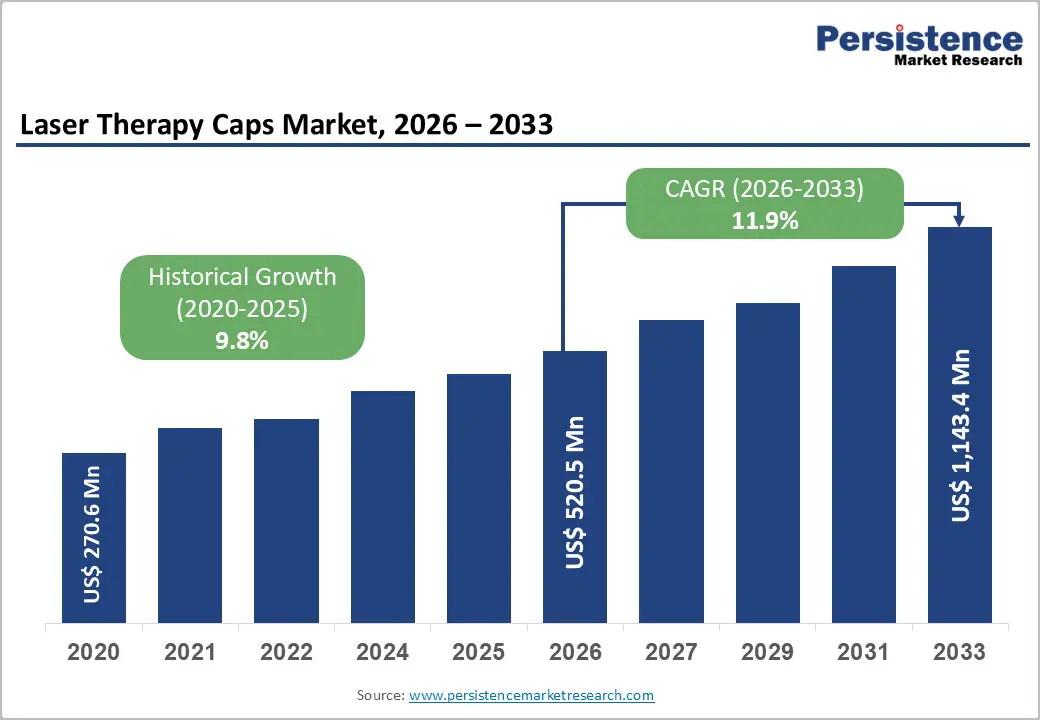
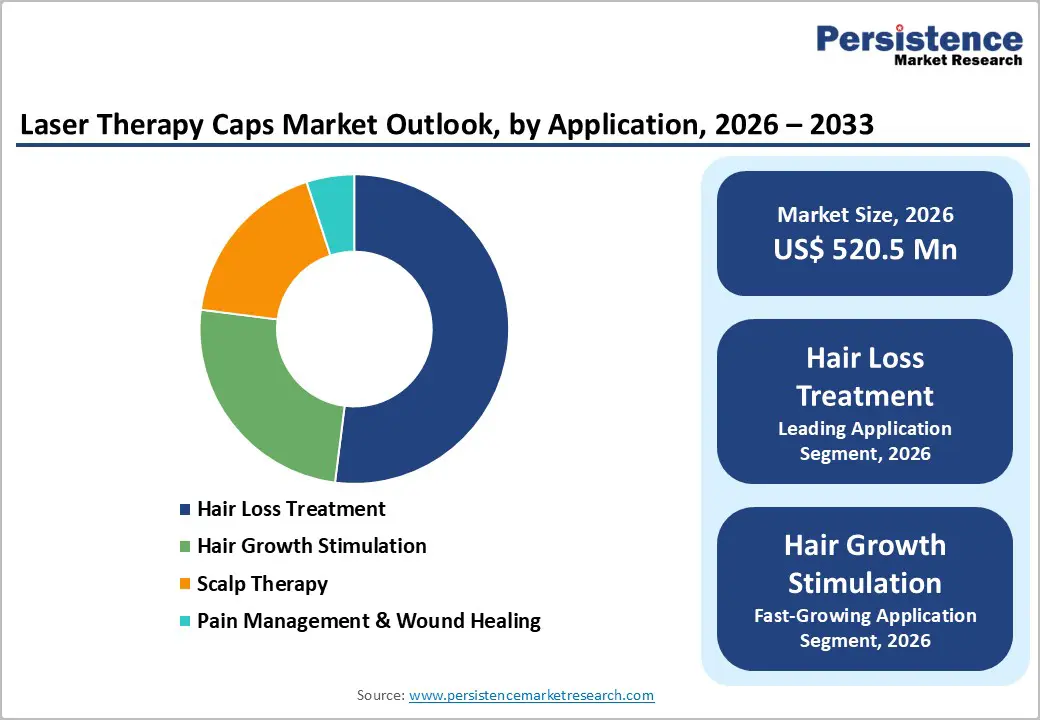
- Leading Application: Hair loss treatment extracts are expected to hold close to 52% of the market revenue share in 2026, supported by high prevalence and strong consumer demand.
- Fastest-growing Application: Hair growth stimulation is expected to be the fastest-growing segment from 2026 to 2033, owing to preventive care trends and growing consumer adoption.
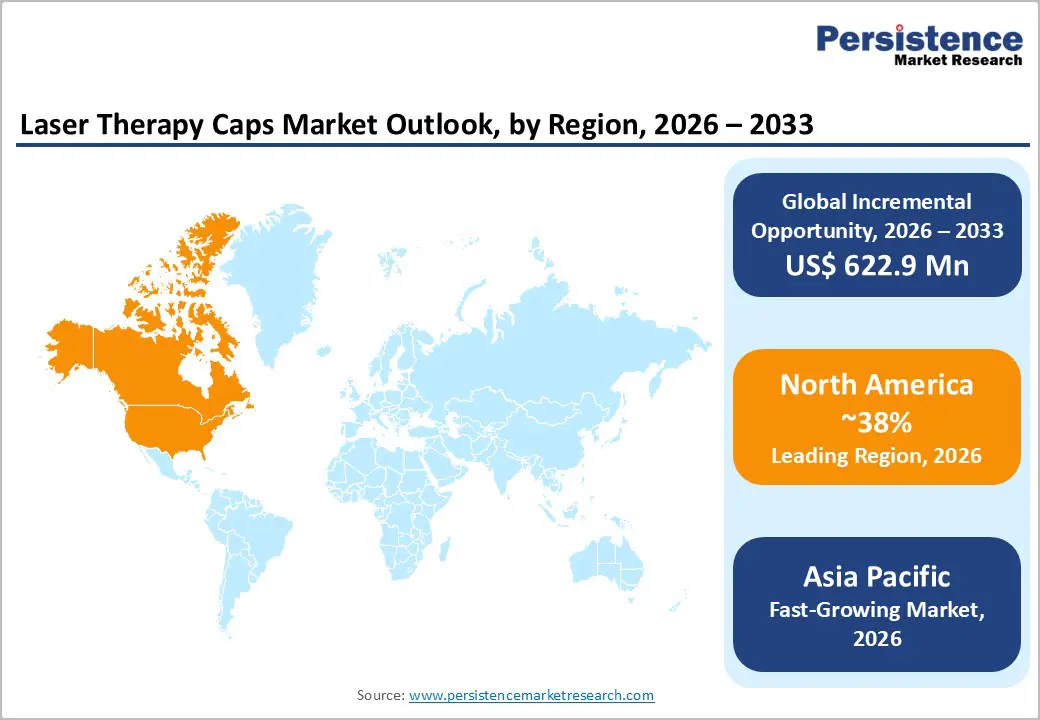
- Dominant Region: North America is expected to dominate with around 38% market share, driven by advanced healthcare and high consumer adoption.
- Fastest-growing Regional Market: Asia Pacific is expected to be the fastest-growing market between 2026 and 2033, fueled by rising income and home-use adoption.
| Key Insights | Details |
|---|---|
|
Laser Therapy Caps Market Size (2026E) |
US$ 520.5 Mn |
|
Market Value Forecast (2033F) |
US$ 1,143.4 Mn |
|
Projected Growth (CAGR 2026 to 2033) |
11.9% |
|
Historical Market Growth (CAGR 2020 to 2025) |
9.8% |
DRO Analysis
Rising Prevalence of Hair Loss Disorders and Demographic Aging Trends
Increasing incidence of hair loss disorders directly expands the eligible treatment population. Clinical data indicates that up to 50% of males and females experience androgenetic alopecia during their lifetime, according to a 2025 update from the National Institutes of Health (NIH). This high prevalence creates continuous demand for long-term management solutions rather than episodic treatment. Consumers seek convenient and non-clinical options for sustained use. Chronic progression of follicular miniaturization supports repeated usage cycles. Psychological impact associated with visible hair thinning increases willingness to adopt device-based therapies, thereby strengthening consistent utilization patterns across both early-stage and advanced conditions.
Demographic aging intensifies this demand trajectory through biological and lifestyle factors. Hair follicle regeneration slows with age, leading to gradual thinning and reduced density. Hormonal shifts, including increased sensitivity to dihydrotestosterone, accelerate follicular shrinkage in older populations. A longer life expectancy extends the duration of condition management, creating sustained treatment cycles. Aging consumers prioritize low-risk and non-pharmacological interventions aligned with wellness routines. Urban populations with higher levels of awareness show greater acceptance of home-based solutions. Preventive care orientation among middle-aged groups further supports early adoption, reinforcing steady demand across aging demographics without reliance on invasive clinical procedures.
Technological Advancement in Wearable Medical Devices and Home-Based Treatment Adoption
Technological advances in wearable medical devices improve access to and usability of treatment. Miniaturized components, lightweight designs, and wireless connectivity support seamless integration into daily routines. Devices deliver consistent low-level laser exposure without clinical supervision, aligning with consumer preference for convenience. Real-time monitoring and app-based tracking strengthen engagement and adherence. Regulatory encouragement from agencies such as the U.S. FDA supports innovation in sensor-based digital health tools, improving trust and adoption.
Home-based treatment adoption supports continuous therapy without dependency on clinical visits. Consumers prioritize privacy, flexibility, and reduced treatment costs. Wearable caps enable routine use during daily activities, improving consistency of therapy cycles. E-commerce channels and teleconsultation platforms simplify product access and guidance. Healthcare systems promote remote care to reduce infrastructure burden and improve patient flow. Integration with digital ecosystems strengthens personalized treatment pathways. Urban and semi-urban populations show higher acceptance due to lifestyle compatibility and rising health awareness. This shift reflects a transition toward decentralized care delivery, where self-administered solutions align with long-term treatment requirements.
High Product Cost and Limited Insurance Coverage
Elevated pricing for laser therapy caps reflects advanced component requirements, including precision laser diodes, embedded control systems, and durable, wearable designs. Manufacturing processes involve strict quality standards, clinical validation costs, and regulatory compliance expenses, increasing overall product valuation. Limited economies of scale during early adoption phases restrict cost optimization, maintaining premium pricing structures. Consumer perception positions these devices within discretionary wellness spending rather than essential medical treatment, reducing price flexibility. Retail distribution margins, branding investments, and technology integration further influence final pricing, creating affordability barriers across price-sensitive demographics and restricting large-scale penetration in emerging and mid-income markets.
Insurance coverage remains constrained due to the classification of laser therapy caps within cosmetic or elective treatment categories rather than medically necessary interventions. Clinical evidence, while supportive, varies in standardization across regions, limiting reimbursement approvals from public and private payers. Policy frameworks prioritize acute and life-threatening conditions, placing hair loss treatments outside the core coverage scope. Lack of uniform treatment protocols and long-term outcome data reduces payer confidence in cost-effectiveness assessments. Out-of-pocket expenditure requirements discourage consistent usage, while limited reimbursement pathways reduce physician-led adoption, impacting overall market expansion and accessibility within structured healthcare systems.
Variability in Treatment Outcomes and Clinical Skepticism
Inconsistent clinical responses across patient groups create uncertainty regarding therapeutic reliability. Hair growth outcomes depend on factors such as stage of alopecia, follicular viability, genetic predisposition, and adherence to prescribed usage duration. Divergent study designs, limited large-scale randomized trials, and variation in device specifications reduce comparability of results. Dermatology professionals often encounter mixed evidence across peer-reviewed literature, leading to cautious interpretation of efficacy claims. The absence of standardized treatment protocols further complicates clinical integration, while variability in wavelength, power density, and exposure time influences biological responses, limiting predictability and reducing confidence among prescribers and end users.
Clinical skepticism emerges from gaps in long-term efficacy data and limited consensus within dermatology associations. Physicians prioritize treatments supported by robust clinical validation, while laser therapy caps often rely on smaller studies or manufacturer-sponsored evidence. Reimbursement limitations and out-of-pocket cost structures discourage physician endorsement in formal treatment pathways. Patient expectations of rapid results contrast with gradual therapeutic timelines, influencing perceived effectiveness. Market presence of low-quality or unregulated devices further impacts credibility, creating differentiation challenges for established manufacturers. This environment constrains prescription rates, slows institutional adoption, and reinforces cautious positioning within clinical practice frameworks.
Integration with Digital Health Platforms and Personalized Treatment Ecosystems
Seamless connection with digital platforms enables continuous monitoring and structured data capture, improving treatment precision and adherence. Wearable-based therapies generate usage data that support remote evaluation and timely clinician intervention. Government-backed infrastructure strengthens this shift through initiatives such as eSanjeevani, which expands access to remote care. This environment supports integration of device-generated insights into clinical workflows. Personalized ecosystems use patient-specific data, including scalp condition and response patterns, to refine therapy protocols, improving outcomes and reducing variability in results.
Personalized treatment ecosystems enhance engagement through tailored recommendations and real-time feedback loops. Digital platforms enable algorithm-driven adjustments, aligning therapy duration and intensity with individual response trends. Integration with electronic health records improves continuity across care settings and supports evidence-based decision-making. Providers gain access to longitudinal data, enabling predictive insights and early identification of non-response patterns. Consumer interfaces improve usability through app-based tracking and reminders, strengthening compliance. Data interoperability across platforms supports coordinated care pathways, aligning home-based treatment with professional supervision, which increases acceptance among clinicians and end users.
Increasing Spending Power in Developing Economies
Emerging economies are experiencing growth in household income and consumer spending capacity as middle-income populations expand. Urbanization and larger working-age populations create demand for personal care and health devices. Rising financial stability allows consumers to invest in non-invasive, at-home therapies. Improved access to healthcare education encourages adoption of innovative solutions. Expanding digital infrastructure supports e-commerce and teleconsultation channels, increasing reach to semi-urban and urban consumers. Growing awareness of wellness and preventive care further motivates purchases.
Rising disposable income drives upgrades in lifestyle and healthcare spending. As more households reach higher income brackets, discretionary spending on health-focused products becomes feasible. Consumers prefer home-based, convenient treatments that save time and reduce clinical visits. Enhanced digital literacy allows wider engagement with online purchasing platforms and direct-to-consumer models. Growing purchasing power enables adoption of premium products at various price points. Healthcare services and professional recommendations influence consumer trust. Firms can leverage income growth to expand market penetration, tailor products to regional preferences, and strengthen brand presence across emerging regions.
Category-wise Analysis
Technology Insights
Laser diode technology is anticipated to secure around 48% of the laser therapy caps market revenue share in 2026, reflecting strong clinical validation and consistent therapeutic output. This technology delivers precise wavelengths that target hair follicles, stimulating growth and improving blood circulation. Dermatology professionals prefer laser diodes due to predictable outcomes and strong alignment with clinical studies. High energy efficiency, long lifespan, and minimal maintenance support extended use, encouraging patient adherence. Manufacturers focus on this technology for premium offerings, reinforcing market presence. Regulatory approvals often highlight laser-based systems, enhancing credibility. Advanced cooling systems and safety mechanisms further boost user confidence and acceptance across clinical and home settings.
Hybrid technology is expected to be the fastest-growing segment during the 2026-2033 forecast period, propelled by combination of laser and light-emitting diode (LED) functionalities. Hybrid systems enhance scalp coverage and optimize energy distribution, improving treatment effectiveness. Innovation in these devices balances performance with cost, increasing accessibility for a broader audience. Consumers favor multifunctional products, driving adoption. Manufacturers use hybrid technology to differentiate product lines and reach new demographics. Ongoing research and development enhance efficacy and safety. Clinical endorsement and user satisfaction contribute to rapid growth and market penetration during the forecast period.
Application Insights
Hair loss treatment extracts are poised to dominate with a forecasted market share of over 52% in 2026, powered by high prevalence of androgenetic alopecia and strong consumer demand for visible results. Awareness campaigns and clinical recommendations promote early intervention, encouraging timely adoption of treatment options. Cultural emphasis on personal grooming and appearance drives consistent usage among both male and female populations. Online and retail distribution channels improve accessibility and convenience. Preventive healthcare trends motivate routine use, enhancing effectiveness. Consumers increasingly rely on expert guidance and product reviews to select high-quality extracts, reinforcing growth and establishing a strong market presence across multiple demographics.
Hair growth stimulation is estimated to be the fastest-growing segment from 2026 to 2033, fueled by rising interest in preventive care and wellness-oriented treatments. Consumers are adopting proactive approaches to maintain hair health before significant hair loss occurs. Digital commerce platforms provide education and product discovery, enabling informed purchasing decisions. Wellness-focused marketing campaigns strengthen consumer trust and engagement. Emerging trends in self-care and lifestyle optimization further support adoption. Brand reputation, clinical endorsements, and social influence contribute to consumer confidence. Continuous innovation and availability of targeted formulations ensure sustained growth and expansion across urban and semi-urban populations.
Regional Insights
North America Laser Therapy Caps Market Trends and Insights
North America is expected to lead with an estimated 38% of the laser therapy caps market share, supported by advanced healthcare infrastructure and high consumer awareness of hair loss treatments in the United States and Canada. Established dermatology and trichology services offer professional guidance and clinical validation, promoting adoption of low-level laser therapy (LLLT) devices. High disposable income enables investment in premium, home-use solutions. Regulatory frameworks provide clear approval pathways for medical-grade devices, increasing patient confidence. Urban populations show strong engagement with wellness trends, creating consistent demand. Integration of teleconsultation platforms and e-commerce channels enhances accessibility. Research initiatives and clinical studies further reinforce credibility, supporting market penetration across both clinical and consumer segments.
Strong technology adoption drives market dominance in the United States and Canada with widespread use of laser diode-based caps offering precise wavelength delivery and consistent therapeutic output. Professional endorsement and clinical integration encourage repeat usage and treatment adherence. Investments in product innovation, safety features, and energy efficiency allow companies to maintain leadership. Digital marketing, social media influence, and targeted campaigns increase visibility and consumer trust. Retail networks, combined with direct-to-consumer sales, expand reach. High penetration of lifestyle-focused consumers seeking non-invasive hair restoration solutions sustains growth, positioning this market as the most significant contributor globally.
Europe Laser Therapy Caps Market Trends
Europe is expected to maintain a significant position in the laser therapy caps market, driven by high adoption of advanced healthcare technologies and established dermatology networks in Germany and France. Well-developed clinical infrastructure supports professional guidance for LLLT devices, promoting trust and repeat usage. Consumer preference for non-invasive treatments encourages home-use adoption. Strong regulatory oversight ensures device safety and efficacy, increasing confidence among both professionals and end-users. Urban populations demonstrate active engagement with wellness and preventive care trends. E-commerce platforms and teleconsultation services expand access, allowing consumers in Germany and France to explore products beyond traditional retail. Investments in research and clinical validation reinforce market credibility and facilitate continuous innovation.
In United Kingdom and Italy, high purchasing power and lifestyle-oriented spending drive growth in premium product segments. Awareness of hair loss management and preventive care motivates adoption of multifunctional devices combining laser and LED technologies. Marketing campaigns emphasizing wellness and personal grooming influence purchasing decisions, while social media and digital outreach increase visibility. Professional recommendations and clinical endorsements encourage treatment adherence. Development of hybrid and portable devices enhances convenience for home-based use. Urbanization and digital literacy support efficient distribution through online channels. Continuous innovation in energy efficiency, safety mechanisms, and ergonomic design positions these countries as key contributors to sustained market expansion and adoption across diverse consumer segments.
Asia Pacific Laser Therapy Caps Market Trends
Asia Pacific is forecasted to be the fastest-growing market for laser therapy caps market between 2026 and 2033, stimulated by rising disposable income and expanding middle-class populations in China and India. Urbanization and increasing awareness of preventive healthcare encourage adoption of home-use hair restoration solutions. Strong growth in digital commerce platforms enables product discovery and direct-to-consumer access. Social influence, wellness-focused marketing, and professional recommendations enhance consumer trust. Demand for multifunctional and cost-effective devices supports rapid market expansion. Infrastructure improvements in dermatology services in China and India further drive accessibility. Rising lifestyle consciousness and personal grooming priorities accelerate adoption across both male and female populations.
In Japan and South Korea, innovation-driven consumer markets contribute to fast growth. High technology adoption and preference for non-invasive, aesthetic treatments encourage uptake of laser and hybrid caps. Advanced e-commerce penetration and digital literacy facilitate awareness and sales. Marketing strategies targeting wellness and self-care amplify engagement. Strong regulatory frameworks and clinical endorsements increase credibility of devices, supporting consumer confidence. Investments in research and development enhance product efficacy and safety. Premium segment adoption grows as urban consumers prioritize preventive treatments. Professional recommendations and lifestyle trends strengthen market momentum, positioning these countries as key growth drivers.
Competitive Landscape
The global laser therapy caps market demonstrates a moderately fragmented structure with participation from both global and regional players, creating a competitive environment. Key players such as Lexington International, Apira Science, Capillus, Theradome, Curallux, and Freedom Laser Therapy leverage brand recognition and established market presence to influence consumer preference. Strategic focus on research and development enables these companies to introduce innovative laser therapy caps and wearable devices, enhancing treatment effectiveness and attracting professional endorsements.
Competitive positioning in the market emphasizes product quality, technological expertise, and wide distribution networks. Leading companies prioritize advanced features, energy efficiency, and ergonomic designs to differentiate offerings. Strong marketing campaigns, professional collaborations, and e-commerce penetration support brand visibility. Expansion of clinical partnerships and consumer education initiatives strengthens adoption rates. Firms aim to maintain leadership by balancing innovation with accessibility, while regional competitors continue to drive localized growth through targeted product solutions and affordable alternatives.
Key Industry Developments
- In January 2026, Appotronics unveiled a new range of at-home laser-based hair regrowth and skincare devices at CES 2026. The products included a regrowth cap, targeted band, and multi-function beauty device, aimed at delivering professional-grade phototherapy in convenient, user-friendly formats.
- In June 2025, KeraFactor announced the launch of its KeraFlex Duo dual-wavelength laser therapy cap for at-home hair rejuvenation, combining 650 nm and 808 nm wavelengths to enhance scalp circulation and follicle stimulation.
- In May 2025, GroWell announced widespread availability of its FDA-cleared GroWell Cap, an advanced laser therapy cap combining low-level laser and LED technology for at-home hair regrowth with stylish, comfortable design and full-scalp coverage.
Companies Covered in Laser Therapy Caps Market
- Lexington International LLC
- Apira Science Inc.
- Capillus LLC
- Theradome Inc.
- Curallux LLC
- Freedom Laser Therapy Inc.
- iRestore Hair Growth System
- Kiierr International
- Illumiflow
- WON TECH Co., Ltd.
- LUTRONIC Corporation
- Beijing ADSS Development Co., Ltd.
Frequently Asked Questions
The global laser therapy caps market is projected to reach US$ 520.5 million in 2026.
Rising prevalence of hair loss, growing demand for non-invasive treatments, and advancements in wearable laser technology are driving the market.
The market is poised to witness a CAGR of 11.9% from 2026 to 2033.
Expansion in emerging markets and rising disposable income is creating key opportunities in the market.
Some of the key market players include Lexington International, Apira Science, Capillus, Theradome, Curallux, and Freedom Laser Therapy.


