




- Biotechnology
- Genomic Medicine Market
Genomic Medicine Market Size, Share, and Growth Forecast, 2026 - 2033
Genomic Medicine Market by Application (Oncology, Cardiology, Pediatrics, Endocrinology, Respiratory Medicine), End-user (Hospitals, Clinics, Academic Institutions, Research Institutions), and Regional Analysis for 2026 - 2033

Genomic Medicine Market Size and Trends Analysis
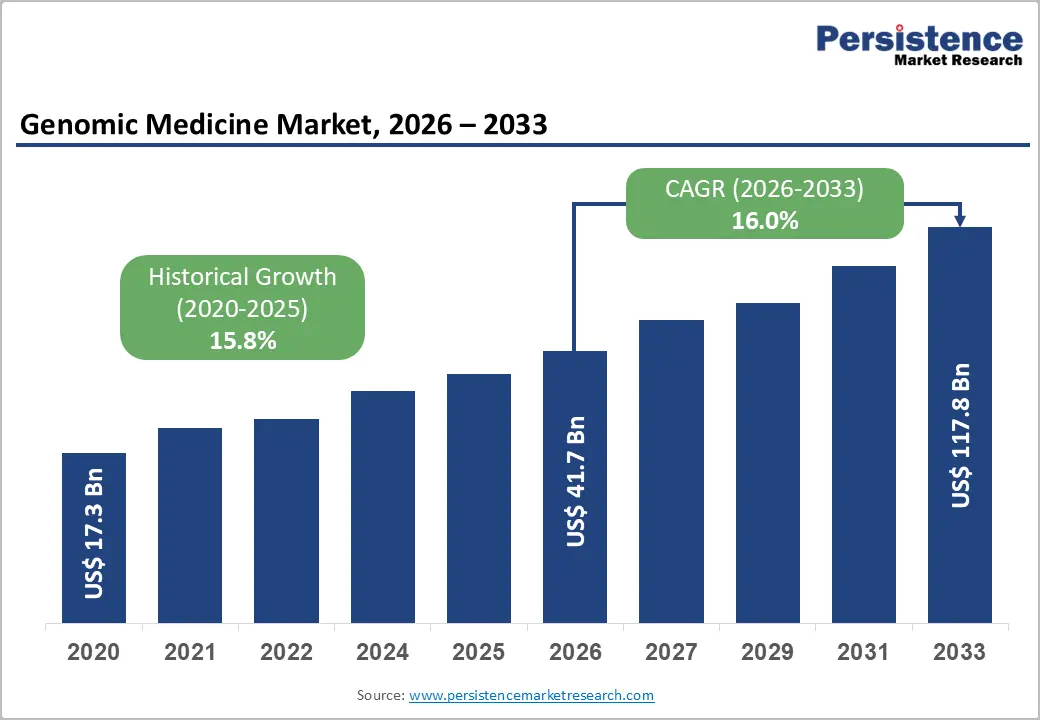
The global genomic medicine market size is likely to be valued at US$41.7 billion in 2026 and is expected to reach US$118.1 billion by 2033, growing at a CAGR of 16% during the forecast period from 2026 to 2033, driven by the growing integration of genomic data into clinical workflows and decision-making processes. Advancements in next-generation sequencing, bioinformatics, and AI are enabling faster and more accurate genetic analysis, supporting wider adoption across oncology, rare diseases, and preventive care.
According to the World Health Organization, the increasing global focus on genomics-enabled healthcare programs and population-scale genome initiatives in 2025 is accelerating the adoption of precision medicine. Enhanced accessibility to genetic testing, along with rising investments in genomic infrastructure, is positioning genomic medicine as a critical foundation for data-driven, personalized healthcare systems worldwide.
Key Industry Highlights:
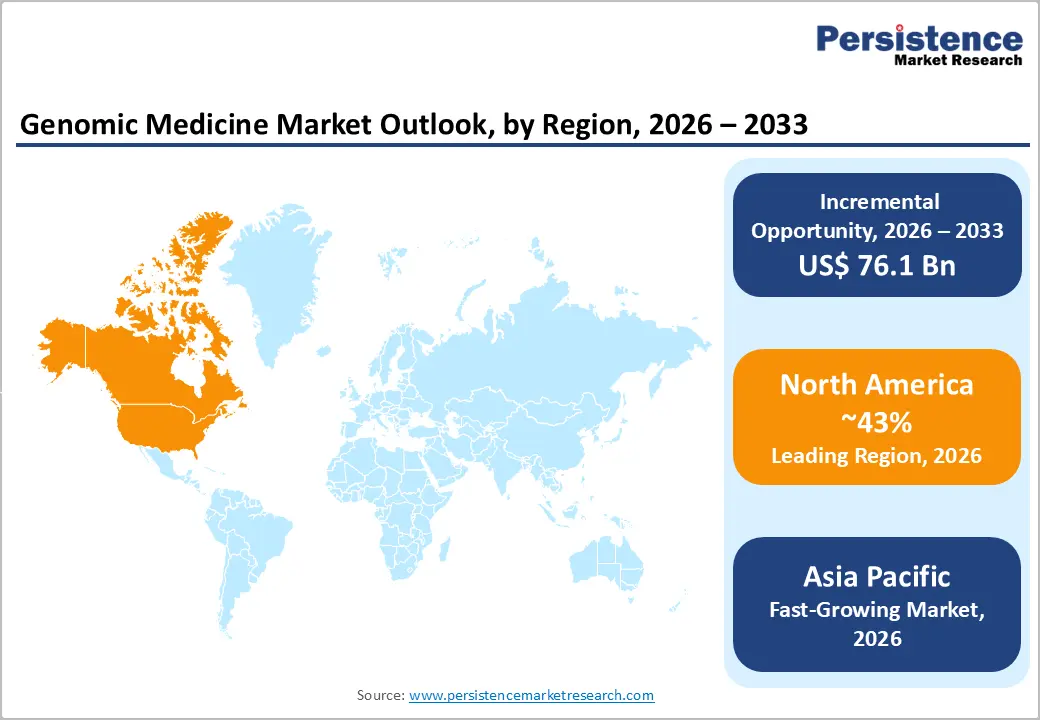
- Leading Region: North America is anticipated to be the leading region, accounting for a market share of 43% in 2026, driven by advanced precision medicine adoption, strong regulatory support, and a well-established genomic research ecosystem.
- Fastest-growing Region: Asia Pacific is likely to be the fastest-growing region, supported by its rapid expansion driven by emerging precision medicine initiatives and increasing regional adoption.
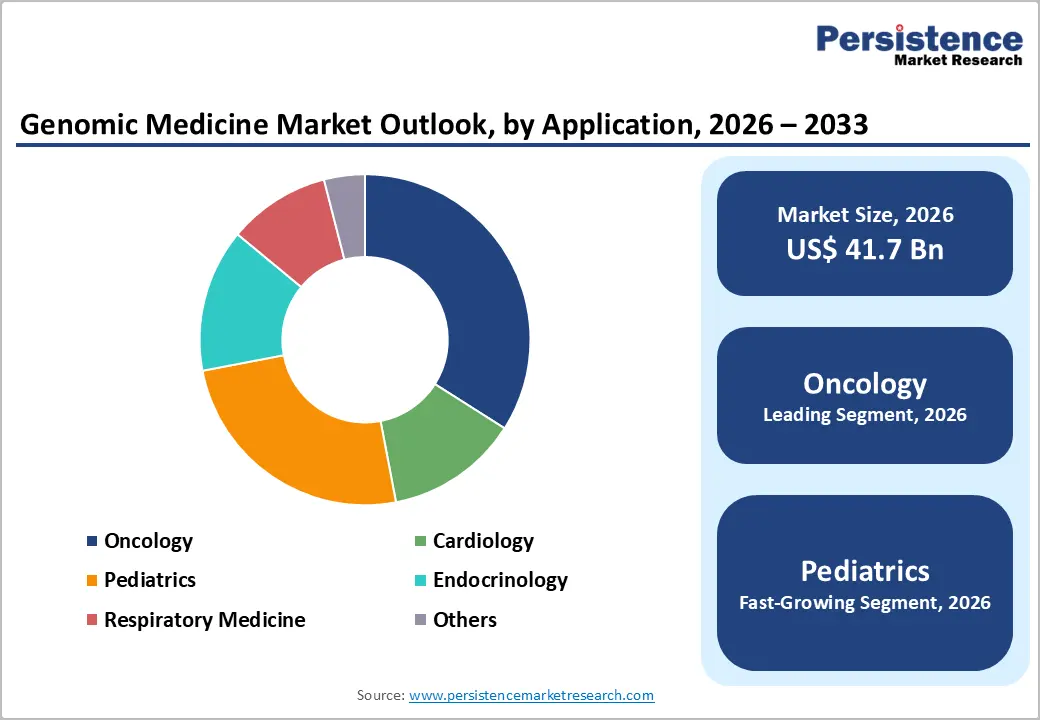
- Leading Application: Oncology is projected to lead, accounting for 45% of the revenue share, driven by strong adoption of genomic profiling and targeted therapies.
- Leading End-user: Hospitals are anticipated to be the leading end-user, accounting for over 40% of the revenue share in 2026, supported by widespread integration of genomic testing in clinical care.
- Key Opportunity: The genomic medicine market is transforming healthcare by shifting from reactive treatment to AI-powered, genome-driven precision care that enables early diagnosis, personalized therapies, and data-driven clinical decision-making at scale.

DRO Analysis
Driver - Advancements in Next-Generation Sequencing (NGS) Technologies
Continuous improvements in sequencing speed, throughput, and accuracy have significantly reduced turnaround times, making genomic testing more viable for routine clinical use. According to the National Human Genome Research Institute, the cost of sequencing a human genome has declined to below USD 1,000, significantly improving accessibility. These innovations support applications such as oncology, rare disease diagnostics, and pharmacogenomics, strengthening NGS as a core tool in precision medicine.
The integration of NGS with advanced bioinformatics platforms is enhancing the interpretation of complex genomic data, enabling more informed clinical decisions. Automated workflows and cloud-based systems are improving scalability and efficiency in genomic analysis. According to the World Health Organization, the adoption of genomic technologies in healthcare systems increased notably in 2025, driven by expanding precision medicine initiatives and digital health integration. This evolution is fostering collaborations across the healthcare and biotechnology sectors, accelerating innovation in targeted therapies.
Restraint - Shortage of Skilled Workforce and Integration Challenges
The complexity of genomic data interpretation requires specialized expertise, which remains limited across many healthcare systems. According to the World Health Organization, in 2025, many countries continue to face critical gaps in genomics-trained healthcare professionals, particularly in low- and middle-income regions, limiting the adoption of precision medicine programs. This gap restricts the effective implementation of genomic technologies, particularly in emerging regions.
Integrating genomic data into existing clinical workflows poses operational challenges, including interoperability issues with electronic health records and a lack of standardized protocols. The rapid pace of technological advancements in genomics demands continuous training and upskilling of healthcare professionals, which can be resource-intensive. Many institutions face difficulties in aligning infrastructure, data management systems, and clinical practices with evolving genomic technologies.
Opportunity - Technological Convergence with AI and Machine Learning
AI-driven platforms enable rapid analysis of complex genomic datasets, improving diagnostic accuracy and accelerating biomarker discovery. In pediatric applications, AI significantly reduces diagnostic timelines for rare genetic disorders by interpreting whole-exome and genome sequencing data. Studies indicate that whole-exome sequencing delivers diagnostic yields of nearly 30–50% in previously undiagnosed cases, highlighting its clinical value in genomics-based diagnostics. Recent 2025 studies published on ScienceDirect demonstrate that AI-enhanced genomic approaches are improving diagnostic precision and supporting earlier intervention strategies across healthcare systems.
Emerging AI-integrated genomic models are advancing multi-omics analysis and real-time clinical decision support. In 2026, advanced AI frameworks for rare disease diagnosis achieved up to 77% top-5 diagnostic accuracy, significantly improving variant prioritization and reducing diagnostic delays. These technologies enable scalable genomic solutions by integrating genomic, phenotypic, and clinical data into unified platforms. Pharmaceutical and biotechnology companies are increasingly leveraging AI to accelerate drug discovery and targeted therapy development.
Category-wise Analysis
Application Insights
Oncology is expected to lead the genomic medicine market, accounting for approximately 45% of revenue in 2026, driven by the extensive adoption of genomic profiling for biomarker identification, targeted therapies, and precision diagnostics. The increasing integration of sequencing technologies into cancer care pathways enables clinicians to select highly personalized treatments based on genetic mutations, improving clinical outcomes. A notable example includes Illumina, Inc., whose sequencing platforms are widely used in cancer genomics to support precision oncology initiatives and clinical decision-making across advanced healthcare systems.
Pediatrics is likely to represent the fastest-growing segment, supported by rising focus on rare genetic disorders and expanding neonatal and early-life genomic screening programs. Increasing adoption of whole-exome and whole-genome sequencing enables early and accurate diagnosis of previously undiagnosed conditions, supporting timely intervention and long-term disease management. For example, Genomics England, which actively supports pediatric rare disease research through large-scale genome sequencing programs, driving innovation and adoption in early diagnostic applications.
End-user Insights
Hospitals are projected to lead the market, capturing around 40% of the revenue share in 2026, supported by their direct integration of genomic testing into clinical workflows for patient diagnosis and treatment. The presence of advanced infrastructure, skilled professionals, and in-house sequencing capabilities enables hospitals to handle high volumes of genomic tests, particularly in oncology and cardiology. For instance, the Cleveland Clinic, which integrates genomic medicine into routine clinical care, supporting precision diagnostics and personalized treatment strategies across multiple specialties.
Academic institutions are likely to be the fastest-growing application, driven by increasing research funding, large-scale genomic projects, and collaborations with industry players. These institutions are at the forefront of innovation, focusing on biomarker discovery, genomic data analysis, and the development of new diagnostic approaches. For example, Broad Institute, which leads advanced genomic research and collaborates to develop cutting-edge genomic solutions, contributes significantly to the rapid growth of this segment.
Regional Insights
North America Genomic Medicine Market Trends
North America is anticipated to be the leading region, accounting for a market share of 43% in 2026, driven by the strong integration of precision medicine, advanced sequencing technologies, and robust funding ecosystems. The U.S. leads the region through large-scale initiatives such as NIH-backed genomic programs and widespread adoption of personalized medicine, enabling targeted therapies and biomarker-driven diagnostics. Companies such as Thermo Fisher Scientific which is advancing genomic sequencing solutions and clinical diagnostics platforms supporting precision medicine applications.
Canada is strengthening its position through government-supported multi-omics platforms and nationwide genomic data integration with healthcare systems, enhancing real-world evidence generation and clinical adoption. Canada is focusing on data-driven healthcare transformation through large-scale genomics infrastructure investments, while Mexico is accelerating growth through cross-border collaborations and biotechnology manufacturing expansion.
Europe Genomic Medicine Market Trends
Europe is likely to be a significant market for genomic medicine due to strong public healthcare integration, regulatory frameworks, and large-scale national genome initiatives. The U.K. leads innovation through the NHS Genomic Medicine Service and large-scale sequencing programs, having sequenced hundreds of thousands of genomes and embedding genomics into routine care pathways. Across Europe, increasing collaboration between research institutions and healthcare providers is accelerating precision medicine adoption and expanding clinical applications.
Recent developments highlight regional momentum, including new genomic testing expansions improving inclusivity and precision care in the U.K., reflecting the real-world clinical impact of genomics. France is enhancing its genomic ecosystem through secure cloud-based platforms and nationwide sequencing hubs, improving turnaround times for complex diagnoses. Germany continues to invest heavily in bioinformatics infrastructure and AI-driven genomic analysis. For example, QIAGEN N.V., headquartered in Germany, is advancing molecular diagnostics and genomic testing solutions across Europe, supporting precision medicine initiatives.
Asia Pacific Genomic Medicine Market Trends
The Asia Pacific region is likely to be the fastest-growing region, driven by large-scale population genomics programs, expanding healthcare infrastructure, and increasing integration of precision medicine into clinical practice. China leads the region through strong government-backed initiatives such as precision medicine programs and national biotechnology strategies, supported by rapid expansion in sequencing capacity and bioinformatics infrastructure. India is accelerating growth through initiatives such as the Genome India Project and increasing use of clinico-genomic data integration for personalized care.
The region is witnessing strong investment in next-generation sequencing, with expanding applications in diagnostics, drug development, and population health programs across these countries. For instance, BGI Group, which is advancing large-scale genome sequencing and precision medicine solutions, supports clinical diagnostics and research across Asia. Japan is advancing through a well-established healthcare system, a strong pharmaceutical ecosystem, and increasing adoption of genomic diagnostics in oncology and rare diseases.
Competitive Landscape
The global genomic medicine market exhibits a moderately fragmented structure, driven by rapid technological innovation, expanding applications of next-generation sequencing, and increasing entry of specialized biotechnology firms. While a few global players maintain strong influence through advanced sequencing platforms and integrated genomic solutions, a large number of regional and niche companies contribute to innovation in areas such as bioinformatics, gene editing, and precision diagnostics.
With key leaders including Illumina, Inc., Thermo Fisher Scientific, QIAGEN N.V., F. Hoffmann-La Roche Ltd., and BGI Group, the market demonstrates a strong presence of established players alongside emerging innovators. These players compete through continuous product innovation, strategic partnerships, and expansion of sequencing and diagnostic portfolios. Companies are increasingly focusing on AI integration, cloud-based genomic platforms, and multi-omics solutions to enhance data interpretation and clinical utility.
Key Industry Developments:
- In April 2026, Ultima Genomics announced breakthrough TRACERx MRD data at the AACR 2026 meeting, demonstrating its ppmSeq technology’s ultra-sensitive detection of circulating tumor DNA at low parts-per-million levels, alongside progress in scalable whole-genome sequencing workflows that support global clinical deployment of precision oncology diagnostics.
- In April 2026, Brazil advanced genomic diagnostics by launching AI-powered genetic data platforms and expanding neonatal screening capabilities to detect up to 1,000 treatable genetic conditions, significantly improving early diagnosis and access to precision healthcare services nationwide.
- In April 2026, Foundation Medicine, Inc. announced the expansion of its genomic diagnostics portfolio through the integration of SAGA Diagnostics’ tumor-informed MRD platform, leveraging whole-genome sequencing and digital PCR technologies to enable ultra-sensitive detection of cancer recurrence and support personalized treatment monitoring.
Companies Covered in Genomic Medicine Market
- Genome Medical, Inc.
- BioMed Central Ltd
- Aevi Genomic Medicine, Inc.
- Congenica Ltd.
- Deep Genomics
- Editas Medicine
- Cleveland Clinic
- Illumina, Inc.
- Thermo Fisher Scientific
- QIAGEN N.V.
- Agilent Technologies, Inc.
- Bio-Rad Laboratories, Inc.
- F. Hoffmann-La Roche Ltd.
- BGI
Frequently Asked Questions
The global genomic medicine market is projected to reach US$41.7 billion in 2026.
The genomic medicine market is driven by advancements in next-generation sequencing, rising demand for precision medicine, and increasing adoption of genomic-based diagnostics and targeted therapies.
The genomic medicine market is expected to grow at a CAGR of 16.0% from 2026 to 2033.
Key market opportunities lie in AI-driven genomic analysis, expansion of precision medicine applications, and growing adoption of genomics in early disease detection and personalized therapies.
Genome Medical, Inc., BioMed Central Ltd, Aevi Genomic Medicine, Inc., and Congenica Ltd. are the leading players.


