




- Nutraceuticals & Functional Foods
- Citrus Aurantium Extract Market
Citrus Aurantium Extract Market Size, Share, Growth, and Regional Forecast, 2026 to 2033
Citrus Aurantium Extract Market by Product Type (Crude Extract and Standardized Extract by Form (Powder, Liquid, Gel, and Concentrates & Tinctures), by Application (Dietary Supplements, Food & Beverages, Cosmetics, Pharmaceuticals, and Others) by End User (Nutraceutical Manufacturers, Food & Beverage Companies, Cosmetic & Personal Care Brands, and Pharmaceutical Companies), and Regional Analysis from 2026 to 2033

Citrus Aurantium Extract Market Share and Trend Analysis
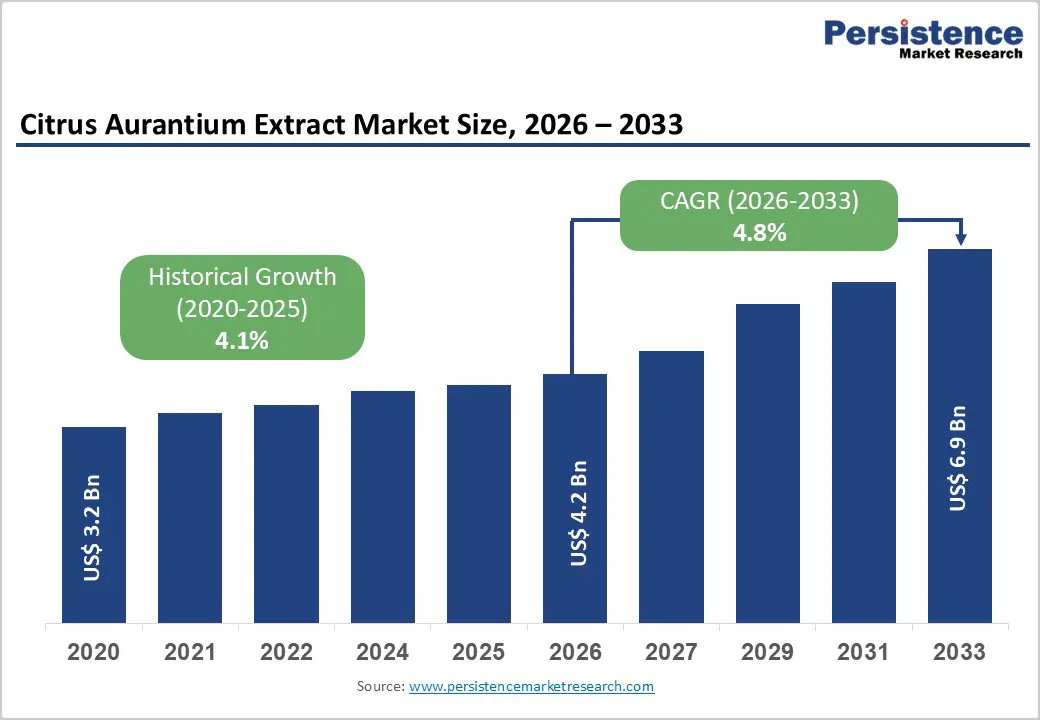
The global citrus aurantium extract market size is estimated to grow from US$ 4.2 billion in 2026 to US$ 6.9 billion by 2033. The market is projected to record a CAGR of 4.8% during the forecast period from 2026 to 2033.
Global consumption of citrus aurantium extract is expanding steadily as consumers increasingly prioritize natural ingredients that support metabolic balance, energy management, and overall wellness. The shift toward botanical supplementation and preventive healthcare is encouraging wider incorporation of plant-derived extracts into dietary supplements, functional beverages, and personal care formulations.
Rising awareness regarding herbal alternatives, combined with demand for clean-label and scientifically standardized ingredients, is strengthening adoption across developed and emerging markets. Improved availability through online supplement platforms, specialty wellness retailers, and contract manufacturing networks has enhanced accessibility for both brands and consumers. Continuous advancements in extraction technologies, purity optimization, and bioactive standardization are improving product consistency and application flexibility. Additionally, growing interest in plant-based lifestyles, performance nutrition, and holistic health solutions continues to reinforce long-term market expansion, supporting broader commercialization across nutraceutical and cosmeceutical industries.
Key Industry Highlights:
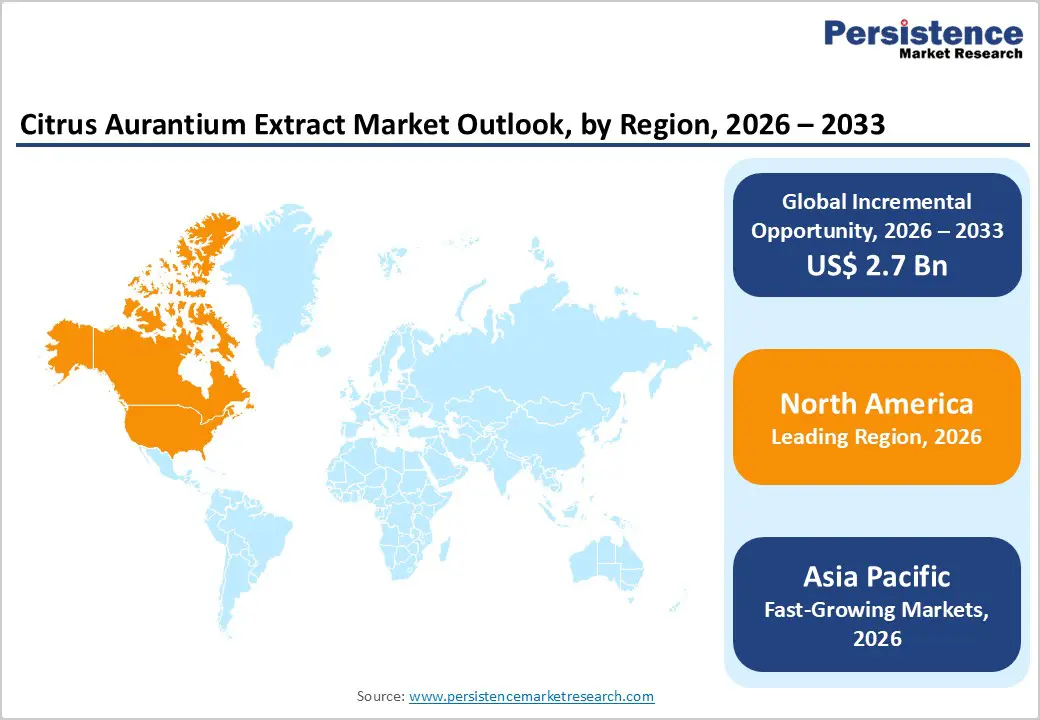
- Leading Region: North America accounts for 46.7% share, supported by a mature nutraceutical industry, high supplement consumption, strong regulatory frameworks, and widespread adoption of botanical wellness products.
- Fastest-Growing Region: Asia Pacific is advancing at a 7.9% CAGR, driven by shifts in urban lifestyles, rising disposable incomes, expanding e-commerce penetration, and greater familiarity with herbal health solutions.
- Leading Product Type Segment: Crude extract leads the market due to its cost efficiency, large-scale industrial use, and strong demand in bulk nutraceutical formulations.
- Fastest-Growing Product Type Segment: Standardized extract is gaining momentum as manufacturers prioritize dosage consistency, quality assurance, and regulatory compliance.
- Leading Form Segment: Powder remains dominant owing to longer shelf stability, ease of formulation, and compatibility with capsules, tablets, and powdered blends.
- Fastest-Growing Form Segment: Liquid extracts are expanding rapidly as brands develop ready-to-mix wellness formulations and functional beverage applications.
| Key Insights | Details |
|---|---|
| Citrus Aurantium Extract Market Size (2026E) | US$ 4.2 Bn |
| Market Value Forecast (2033F) | US$ 6.9 Bn |
| Projected Growth (CAGR 2026 to 2033) | 4.8 % |
| Historical Market Growth (CAGR 2020 to 2025) | 4.1 % |
Market Dynamics
Driver - Growing Preference for Botanical Ingredients Supporting Metabolic and Preventive Health
Increasing consumer focus on proactive wellness management is accelerating demand for plant-derived bioactive ingredients used in nutraceutical and functional formulations. Citrus aurantium extract has gained attention for its naturally occurring alkaloids and flavonoids, which support metabolism, energy balance, and digestive function. Modern consumers, particularly urban populations and fitness-oriented demographics, are shifting toward herbal alternatives that complement active lifestyles without reliance on synthetic stimulants. This transition is reinforced by the expanding popularity of clean-label supplements, transparency in ingredient sourcing, and growing trust in traditional botanical compounds backed by scientific validation.
Manufacturers are responding by developing standardized extracts with controlled synephrine concentrations, enabling consistent efficacy and regulatory acceptance across markets. Product launches increasingly target weight-management blends, sports nutrition products, and multifunctional wellness supplements designed for daily use. Expansion of online supplement retail and influencer-driven health education has further increased product awareness among younger consumers. Additionally, integration of botanical extracts into cosmetics and functional beverages is broadening commercial relevance beyond supplements. As preventive healthcare spending rises globally, demand for naturally sourced metabolic support ingredients continues to strengthen, positioning botanical extracts as key components in evolving wellness ecosystems.
Restraints - Regulatory Scrutiny, Safety Perception, and Raw Material Variability
Despite expanding adoption, several structural challenges influence commercial scalability and market penetration. Regulatory oversight of stimulant-like botanical compounds remains a primary barrier, particularly in regions where authorities closely monitor ingredients associated with cardiovascular stimulation. Variations in allowable dosage levels and labeling requirements across countries create compliance complexities for manufacturers operating internationally. Companies must invest heavily in clinical validation, standardized processing, and safety documentation to maintain market access.
Another constraint arises from fluctuations in raw material quality, which depend on citrus cultivation conditions, harvesting practices, and extraction efficiency. Inconsistent bioactive concentrations can affect product performance, requiring additional purification or standardization steps that increase production costs. Consumer perception also plays a role, as confusion between natural extracts and synthetic stimulants may limit adoption among risk-averse buyers. Furthermore, competition from alternative botanical ingredients offering similar functional benefits intensifies pricing pressure. These combined factors necessitate continuous quality assurance, transparent communication, and advanced extraction technologies to ensure consistent safety profiles while maintaining consumer confidence and regulatory compliance across global markets.
Opportunity - Expansion into Multifunctional Wellness Applications and Emerging Consumer Channels
Significant growth potential lies in diversifying applications beyond traditional supplement formulations. Manufacturers are increasingly exploring citrus aurantium extract in functional beverages, herbal energy products, and cosmetic formulations targeting skin toning and antioxidant protection. Advances in encapsulation and controlled-release technologies improve bioavailability and reduce sensory impact, opening opportunities for broader product integration. The shift toward personalized nutrition also creates space for customized formulations combining botanical extracts with vitamins, amino acids, and adaptogens tailored to specific health goals.
Emerging economies present attractive expansion avenues as rising disposable incomes and digital commerce accelerate access to global wellness products. Direct-to-consumer platforms enable brands to educate users about ingredient benefits, building trust through transparency and traceability. Partnerships between ingredient suppliers and contract manufacturers are facilitating faster product innovation cycles and localized production strategies. Sustainability initiatives, including the utilization of citrus by-products from juice processing industries, further enhance supply efficiency while appealing to environmentally conscious consumers. As demand for natural performance enhancement and holistic health solutions increases, companies that can combine scientific validation with lifestyle-oriented branding are well-positioned to unlock substantial long-term growth opportunities.
Category-wise Analysis
By Product Type, Crude Extract Dominates Product Landscape Due to Cost Efficiency and Wide Industrial Usage
The crude extract is expected to retain its leadership position in 2026, accounting for 60.4% of total revenue. Its dominance is primarily attributed to lower processing requirements, making it economically viable for large-scale nutraceutical, food, and cosmetic formulations. Manufacturers prefer crude variants because they preserve the natural phytochemical profile of Citrus aurantium, including alkaloids and flavonoids, which support applications in metabolic and digestive health. The segment benefits from strong acceptance among supplement producers seeking bulk botanical ingredients with flexible formulation capabilities. In addition, minimal refinement aligns with clean-label trends emphasizing naturally derived ingredients. Crude extracts are widely used in thermogenic supplements, herbal blends, and functional beverages, enabling manufacturers to maintain competitive pricing while ensuring product efficacy. Stable raw material availability and established extraction infrastructure further strengthen supply consistency. Continuous improvements in drying and preservation technologies help maintain bioactive stability, reinforcing the segment’s long-term leadership across both mature and emerging markets.
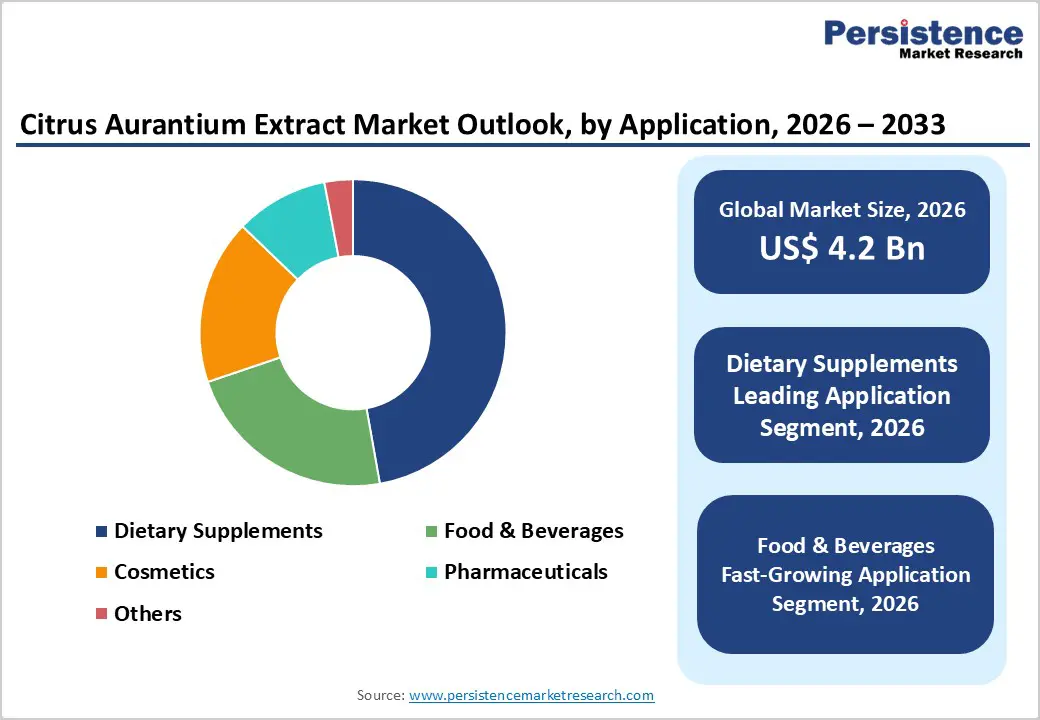
By Application, Dietary Supplements Lead Application Demand Driven by Weight Management and Metabolic Health Trends
The dietary supplements segment is projected to capture a 47.2% revenue share in 2026, positioning it as the primary application area for citrus aurantium extract. Growth is supported by increasing consumer adoption of plant-based ingredients targeting energy support, fat metabolism, and performance nutrition. Citrus aurantium, commonly standardized for synephrine content, is widely used in capsules, tablets, and powdered supplement blends formulated for active lifestyles and wellness management. Supplement manufacturers value its compatibility with multi-ingredient formulations such as caffeine-free thermogenic products and herbal metabolism boosters. Shelf stability, precise dosing, and regulatory familiarity also make supplements the preferred route for commercialization. Expanding online supplement sales and personalized nutrition trends further reinforce demand. As consumers increasingly shift toward preventive health solutions rather than reactive treatments, botanical extracts offering functional benefits continue gaining traction. Innovation in standardized formulations and transparency in ingredient sourcing sustain this segment’s leadership globally.
By End-user, Nutraceutical Manufacturers Lead End-User Consumption Through Large-Volume Procurement and Product Innovation
Nutraceutical manufacturers are anticipated to hold a 41.5% share in 2026, making them the dominant end-user group. Their leadership stems from high production volumes and continuous development of botanical-based wellness products. These companies integrate citrus aurantium extract into metabolism-support supplements, herbal formulations, and sports nutrition products, targeting diverse consumer segments. Strong R&D capabilities enable optimization of active compound concentrations, ensuring consistent performance and regulatory compliance across global markets. Nutraceutical firms also benefit from established supplier relationships and scalable procurement systems that support cost efficiency. Increasing consumer trust in plant-derived functional ingredients encourages brands to expand product portfolios using citrus extracts. Additionally, private-label manufacturing and contract formulation services are accelerating adoption across emerging brands. With growing demand for scientifically supported natural ingredients, nutraceutical producers remain central to market expansion, bridging raw extract suppliers with retail and digital distribution ecosystems.
Regional Insights
North America Citrus Aurantium Extract Market Trends
North America is expected to account for 46.7% of global market value in 2026, led primarily by the United States. The region benefits from a mature dietary supplement ecosystem and strong consumer awareness regarding metabolic wellness and plant-based health solutions. Citrus aurantium extract is widely utilized in weight management formulations, sports nutrition products, and energy-support supplements, supported by established regulatory pathways and quality assurance standards. Consumers increasingly favor naturally sourced bioactive ingredients over synthetic alternatives, encouraging manufacturers to expand botanical portfolios.
Advanced extraction technologies, stringent quality testing, and well-developed distribution networks ensure reliable product availability. The presence of leading nutraceutical brands and contract manufacturers accelerates innovation in standardized extracts, resulting in improved safety and efficacy profiles. Digital retail channels, subscription supplement models, and targeted wellness marketing further strengthen adoption. Preventive healthcare trends and growing interest in personalized nutrition continue to drive sustained regional demand, reinforcing North America’s long-term leadership position.
Europe Citrus Aurantium Extract Market Trends
Europe’s citrus aurantium extract market is projected to expand steadily in 2026, driven by strong consumer demand for natural health ingredients and scientifically validated botanical products. Countries such as Germany, the United Kingdom, France, and Italy demonstrate consistent demand for plant-derived extracts incorporated into dietary supplements and cosmetic formulations. Strict regulatory oversight of ingredient safety, labeling transparency, and health claims promotes high-quality, standardized extracts, thereby strengthening consumer confidence. Sustainability considerations also influence purchasing decisions, encouraging responsibly sourced citrus raw materials and environmentally conscious processing methods.
Herbal traditions and growing awareness of metabolic health contribute to broader adoption across wellness categories. Specialty health stores, pharmacies, and online channels provide diverse access points, while premium brands emphasize purity and traceability. Innovation focuses on controlled-dose formulations and multifunctional products combining citrus aurantium with complementary botanicals. These factors collectively support stable growth, positioning Europe as a quality-driven and regulation-focused market.
Asia Pacific Citrus Aurantium Extract Market Trends
Asia Pacific is forecast to achieve a 6.6% CAGR from 2026 to 2033, with China, India, Japan, and South Korea acting as key growth engines. Rapid urbanization, improving disposable incomes, and increasing exposure to global wellness trends are reshaping consumer behavior toward preventive healthcare solutions. Citrus aurantium extract benefits from regional familiarity with traditional herbal medicine systems, facilitating easier acceptance within modern nutraceutical formulations. The expanding middle-class population is driving demand for functional supplements targeting weight management, energy enhancement, and digestive balance. Growth of e-commerce platforms and cross-border supplement trade significantly improves product accessibility, particularly among younger consumers. Local manufacturers are investing in extraction capabilities and partnerships with international ingredient suppliers to enhance product quality. Government initiatives supporting food innovation and botanical research further encourage market development. Combined with aggressive digital marketing and rising fitness awareness, these dynamics position the Asia Pacific as the most rapidly expanding regional market.
Competitive Landscape
The global citrus aurantium extract market is highly competitive, with strong participation from Nutraceuticals Group Europe Ltd, Vita Actives Ltd., HERBAL CREATIONS, Chemcopia, KISALAYA HERBALS LTD., and deshengchemicals.com. These companies leverage diversified distribution networks, expanding e-commerce channels, and strong formulation expertise to strengthen market positioning. Continuous innovation focuses on extract standardization, synephrine optimization, purity enhancement, and stability improvement to address growing demand for botanical ingredients.
Rising consumer interest in natural weight management, metabolic health, and plant-based wellness products is accelerating product development. Manufacturers are emphasizing standardized extracts, clean-label nutraceutical formulations, cosmetic applications, and high-quality functional ingredient solutions supported by ongoing R&D investments.
Key Industry Developments:
- In July 2023, Horticultural Development Council announced that targeted investment incentives and customized long-term financing mechanisms are expected to support the establishment of approximately 8,000-10,000 hectares of citrus cultivation by 2030, strengthening future production capacity and industry expansion.
Companies Covered in Citrus Aurantium Extract Market
- Nutraceuticals Group Europe Ltd
- Vita Actives Ltd.
- HERBAL CREATIONS
- Chemcopia
- KISALAYA HERBALS LTD.
- deshengchemicals.com
- Foodchem International Corporation
- Jiangxi Greensky Food Co., Ltd.
- Nutri Avenue Inc.
- APEX INTERNATIONAL
- Prinova Group LLC.
- Shaanxi YXchuang Biotechnology Co., Ltd.
- Shaanxi Kingsci Biotechnology Co., Ltd.
- Shubham Pharmachem Pvt Ltd.
- Others
Frequently Asked Questions
The global citrus aurantium extract market is projected to be valued at US$ 4.2 Bn in 2026.
Rising consumer focus on gut health and functional beverages, coupled with clean‑label and natural ingredient demand.
The global citrus aurantium extract market is poised to witness a CAGR of 4.8%between 2026 and 2033.
Expansion in emerging markets like Asia‑Pacific and Latin America driven by increasing health awareness and disposable incomes.
Nutraceuticals Group Europe Ltd, Vita Actives Ltd., HERBAL CREATIONS, Chemcopia, KISALAYA HERBALS LTD., and deshengchemicals.com are some of the key players in the citrus aurantium extract market.


