




- Pharmaceuticals
- Biomesotherapy Market
Biomesotherapy Market Size, Share and Growth Forecast, 2026 - 2033
Biomesotherapy Market by Technology Type (Biomesotherapy Solutions, Biomesotherapy Devices), Clinical application (Musculoskeletal and Pain, Aesthetic, Wellness), End‑user (Complementary‑medicine clinics, Pain and Rehabilitation Centers, Dermatology and Aesthetic‑care Facilities, Wellness Clinics and Spas, Tele‑health‑enabled Home‑care Models), and Regional Analysis for 2026 - 2033

Biomesotherapy Market Share and Trends Analysis
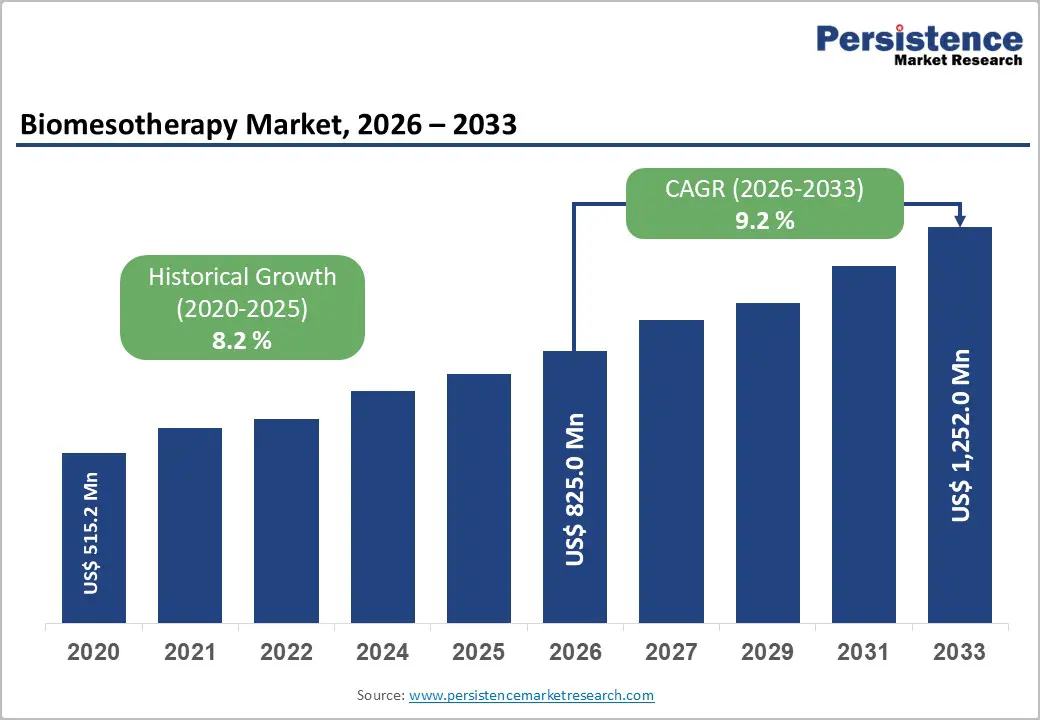
The global biomesotherapy market size is likely to be valued at US$ 825.0 million in 2026 and is projected to reach US$ 1,525.0 million by 2033, growing at a CAGR of 9.2% during the forecast period 2026 - 2033.
Rising demand for alternative therapies drives this expansion. The growing acceptance of non-invasive wellness treatments, supported by a thriving global wellness economy, is fueling the adoption of biomesotherapy. The growth of the geriatric population heightens the need for effective pain management solutions, while enhanced awareness through e-commerce and media accelerates market penetration.
Key Industry Highlights
- Dominant Technology Types: Biomesotherapy solutions are set to capture around 55% of the revenue share in 2026, while biomesotherapy devices are positioned for the fastest growth through 2033, driven by precision-delivery innovations and home-care adoption.
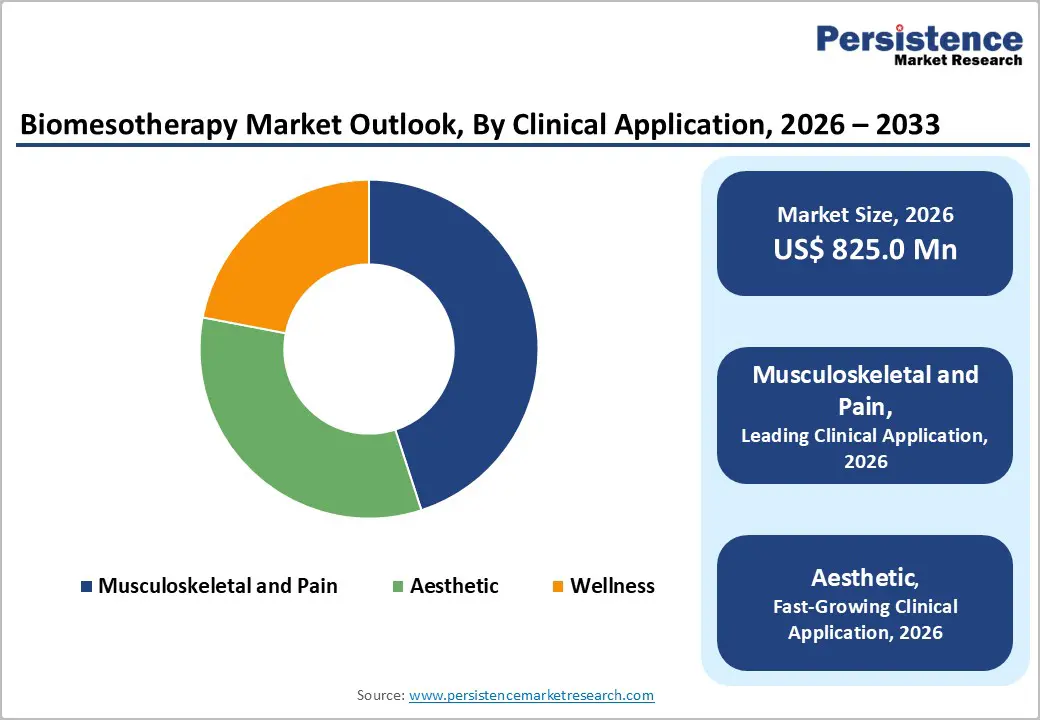
- Leading Clinical Applications: Musculoskeletal and pain treatments are expected to lead with 45% share in 2026, while aesthetic applications are slated to grow the fastest during 2026–2033, reflecting rising demand for non-invasive skin rejuvenation.
- Dominant End-user Segments: Complementary-medicine clinics are anticipated to lead with an estimated 35% share in 2026, while telehealth-enabled home care models are the fastest-growing segment from 2026 to 2033, fueled by digital wellness trends.
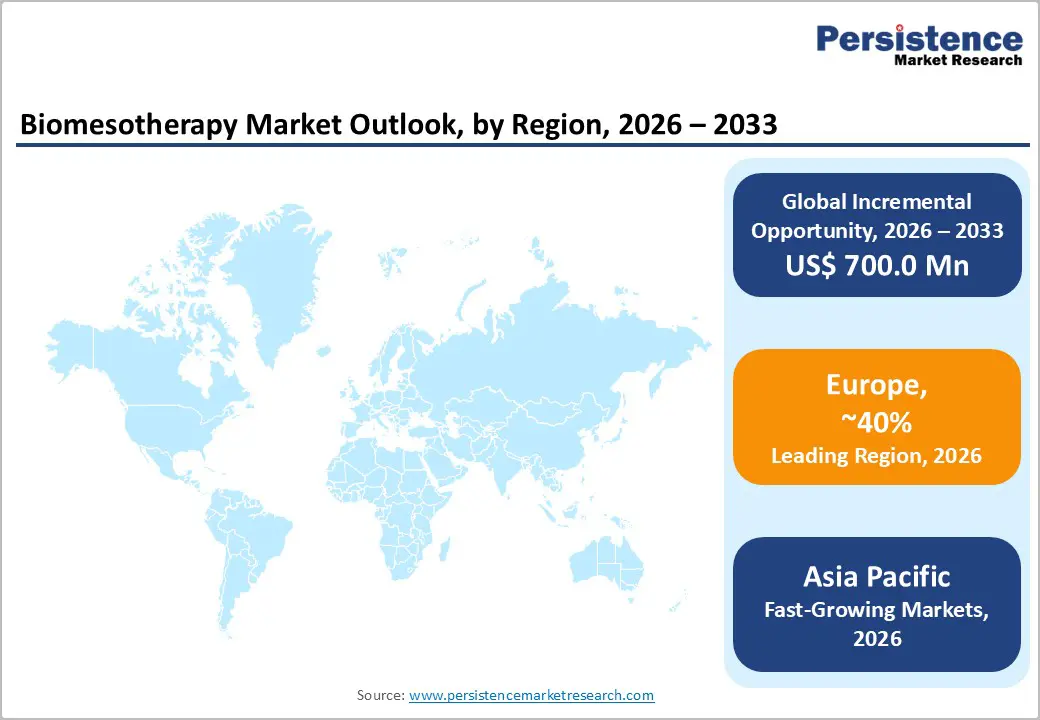
- Regional Leadership: Europe is poised to dominate with an estimated 40% share in 2026, while Asia Pacific represents the fastest-growing regional market through 2033, led by manufacturing advantages in China, India, and ASEAN.
- Competitive Environment: Competitive dynamics include new product launches in aesthetic kits, strategic M&A to expand the supply chain, technology partnerships for device integration, and geographic expansion into Asia Pacific high-growth markets.
DRO Analysis
Driver - Holistic Healing Meets Modern Demand
Biomesotherapy is surging in popularity due to its unique blend of homeopathy, mesotherapy, and acupuncture, delivering natural pain relief without the side effects of conventional drugs. Patients worldwide favor this non-invasive therapy for rapid recovery from chronic pain, sports injuries, and inflammation, as it stimulates the body's self-healing mechanisms through targeted injections.
Biomesotherapy has been practiced in Europe for almost 70 years, with an estimated 70 million treatments performed annually, and regulatory support is accelerating adoption in wellness clinics. WHO projects that the global 60+ population will double to 2 billion by 2050, heightening demand for solutions for chronic pain. Rising demand for holistic wellness aligns with a global shift toward regenerative aesthetics, where biomesotherapy nourishes the skin, boosts collagen, and enhances tissue health, with clinical studies demonstrating its effectiveness for photoaging and musculoskeletal disorders.
Restraints - Validation and Regulation Challenges Persist
Biomesotherapy faces criticism as pseudoscience due to insufficient clinical trials, relying mainly on anecdotal evidence. Regulatory bodies such as the FDA classify it as unproven, restricting disease claims and putting providers under scrutiny, as reaffirmed in the FDA's 2025 guidance agenda, prioritizing validated biologics over unproven alternatives. In 2025, a high-profile case in California saw a wellness clinic fined $250,000 by state health authorities for unverified biomesotherapy claims, leading to patient complaints of ineffective pain relief. This limits insurance coverage and caps market penetration in regulated regions. Many practitioners struggle with compliance, slowing broader adoption.
Established mainstream therapies, such as pharmaceuticals and advanced devices, dominate pain management, holding a strong market position. Supply chain issues with sterile saline-homeopathic mixes significantly drive up costs. The Guardian reported on a UK naturopath shut down after promoting biomesotherapy for chronic fatigue, exposing risks of misinformation-fueled incidents. These setbacks deter scalability and raise entry barriers for new providers.
Opportunities - Natural Healing Powers, Explosive Market Potential
People are increasingly turning to biomesotherapy for its holistic, non-invasive approach combining homeopathy, mesotherapy, and acupuncture to activate natural healing. Free from conventional drug side effects, it offers rapid recovery from chronic pain, sports injuries, inflammation, and aesthetic concerns through targeted injections that trigger self-repair, which is highly valued by patients seeking sustainable, dependency-free results across pain management and skin rejuvenation.
Key benefits such as collagen stimulation, reduced inflammation, and enhanced tissue health attract aging demographics and active lifestyles. Market opportunities abound in telehealth home-care kits and Asia Pacific expansion, bolstered by the WHO's 2025 Global Traditional Medicine Strategy, which promotes evidence-based integrative practices worldwide. Wellness clinics and e-commerce platforms can seize high-margin growth via personalized packages, while device innovations enable at-home access in booming medical tourism hubs.
Category-wise Analysis
Technology Type Insights
Biomesotherapy solutions, including homeopathic-saline formulations, herbal injectables, and oral blends, is expected to lead with 55% market share due to their simplicity for subcutaneous use, 20% lower costs versus devices, and proven reliability for chronic pain relief in wellness clinics worldwide. High-volume adoption in pain management and recovery protocols keeps this segment dominant, powering consistent revenue for providers seeking accessible natural therapies. These versatile options suit diverse patient needs from clinics to home use.
Devices featuring automated injectors, precision needles, and portable acupuncture kits are the fastest-growing segment, driven by 30% greater accuracy, home care convenience, and seamless e-commerce integration. Rising demand for self-administered wellness tools accelerates their expansion across Asia Pacific markets. User-friendly designs enhance treatment outcomes while reducing reliance on the clinic.
Clinical Application Insights
Musculoskeletal and pain is expected to lead with 45% market share, targeting chronic conditions such as arthritis, joint injuries, and sports recovery through non-invasive relief protocols. High repeat demand from aging populations and athletes drives dominance in rehabilitation centers worldwide. This segment excels at delivering sustainable mobility solutions without reliance on pharmaceuticals. Clinics prioritize it for proven outcomes in daily pain management. Broad demographic appeal ensures consistent revenue leadership.
Aesthetic applications are the fastest-growing segment, fueled by their influence on anti-aging and skin rejuvenation demands from millennials and Gen Z. Minimal-invasive collagen-boosting treatments deliver visible results without surgery downtime, appealing to beauty-conscious consumers. Social media trends amplify adoption in spas and dermatology clinics globally. Quick enhancements for face and body contours position this area for explosive market expansion.
Regional Analysis
North America Biomesotherapy Market Trends
North America dominates through U.S. leadership, capturing a major regional revenue with strong procedure growth across 5,000+ wellness clinics. The geriatric boom fuels demand as 54 million Americans aged 65+ by 2030 seek non-invasive pain solutions. Sports injuries drive adoption in rehabilitation centers, while DSHEA regulations support homeopathic claims with required disclaimers. This mature market thrives on patient trust and accessibility. NIH-funded grants accelerate alternative therapy research.
Tele-health opportunities shine amid 30% adoption rates, enabling home-care biomesotherapy kits for busy consumers. Venture capital flows into device startups, targeting precision tools for pain management. Wellness ecosystems integrate seamlessly with mainstream healthcare. Regulatory tolerance creates a welcoming environment for natural therapies. Investors eye scalable clinic chains and digital platforms. This region's blend of demographics and tech positions it for sustained leadership.
Europe Biomesotherapy Market Trends
Europe is expected to command the largest 40% global share, led by Germany, France, and Spain, where cultural acceptance drives high biomesotherapy volumes. EMA regulations streamline wellness applications across borders, while EU GDPR builds trust in personalized clinics. Top players hold 35% share with quality protocols, while Horizon R&D fuels innovations. Turkish investors entered Europe's beauty sector in 2026, acquiring cosmetic clinics with established biomesotherapy infrastructure.
Spain's aesthetic tourism surges as providers attract international clients for skin rejuvenation packages. Cross-border harmonization eases expansion, while Germany's hubs develop device-homeopathic hybrids. Seasonal wellness peaks boost revenues significantly. Mature infrastructure supports seamless premium spa integrations. Europe remains the gold standard for scalable biomesotherapy therapies with unmatched stability.
Asia Pacific Biomesotherapy Market Trends
Asia Pacific is the fastest-growing regional market through 2033, led by China, Japan, and India, where manufacturing hubs are cutting costs by 30%. China's wellness spending boom, combined with India's AYUSH policies, is driving the adoption of traditional therapies. South Korea dominates medical tourism, with Seoul's K-beauty clinics attracting global visitors for aesthetic procedures. Favorable regulations welcome new entrants to this dynamic, fragmented market. Urban middle-class growth fuels broad demand. Cost advantages enable competitive pricing strategies.
ASEAN home-care expansion offers 25% growth via tele-health kits and e-commerce for busy consumers. FDI builds clinic networks while localizing production. India-Japan wellness MoC integrates Ayurveda with preventive care, highlighted at Expo 2025 Osaka. Youth aesthetics create premium markets in Japan and India. Rapid policy support accelerates infrastructure, providing unmatched scalability for strategic investors.
Competitive Landscape
The global biomesotherapy market remains moderately fragmented, with leading players such as TherapySure, Hyland's, and Dr. Willmar Schwabe collectively controlling approximately 30% revenue share. These established firms leverage deep expertise in homeopathic formulations, regulatory compliance across Europe and North America, and extensive distribution networks through wellness clinics and pharmacies. Heavy R&D investments focus on enhancing solution stability, device precision, and clinical validation to maintain trust among healthcare providers.
Regional specialists such as Laboratoires Filorga (France) and Mesoestetic (Spain) dominate aesthetic segments through specialized skin rejuvenation protocols, while Institute BCN excels in high-potency injectables. High barriers, including regulatory scrutiny, formulation complexity, and practitioner certification, limit new entrants. However, digital wellness platforms and tele-health providers increasingly partner with device manufacturers for home-care solutions. Market consolidation accelerates as global leaders acquire regional formulators and Asian device innovators to expand geographically, while software firms develop AI-guided treatment planning apps.
Key Developments
- In March 2026, L'Oréal increased its Galderma stake to 20%, signaling strategic alignment between medical-grade injectables and premium skincare. This partnership validates biomesotherapy formulations as essential complements to luxury beauty regimens, accelerating clinic adoption worldwide.
- In May 2025, Healthcare Holding Schweiz AG acquired Aestheticbedarf AG to bolster its Medical Beauty platform with mesotherapy devices and consumables. The Swiss deal expands access to hyaluronic applications, microneedling, and radiofrequency systems across Europe, strengthening distribution for biomesotherapy-compatible aesthetic protocols.
Companies Covered in Biomesotherapy Market
- TherapySure
- Hyland’s
- Dr. Willmar Schwabe India Pvt. Ltd.
- Nature's Way Products, LLC
- A Nelson & Co
- Laboratoires Filorga
- Institute BCN
- Fusion Meso
- Toskani Cosmetics
- Revitacare
- Mesoestetic
- AbbVie
- Galderma
- Promoitalia
Frequently Asked Questions
The global biomesotherapy market reaches US$ 825.0 million in 2026.
Rising demand for non-invasive alternative therapies, geriatric population growth, and wellness tourism expansion propel market growth.
The market grows at a 9.2% CAGR from 2026 to 2033.
Tele-health home-care kits, Asia Pacific medical tourism, and device precision innovations create substantial growth opportunities.
TherapySure, Hyland's, Dr. Willmar Schwabe, Laboratoires Filorga, and Mesoestetic lead the market.


