




- Food Ingredients & Additives
- Apple Puree Market
Apple Puree Market Size, Share, and Growth Forecast, 2025 - 2032
Apple Puree Market by Product Type (Organic, Conventional), Application (Beverages, Baby Food, Bakery, Ice Cream and Yoghurt, Dressings and Sauces), and Regional Analysis for 2025 - 2032

Apple Puree Market Size and Trends Analysis
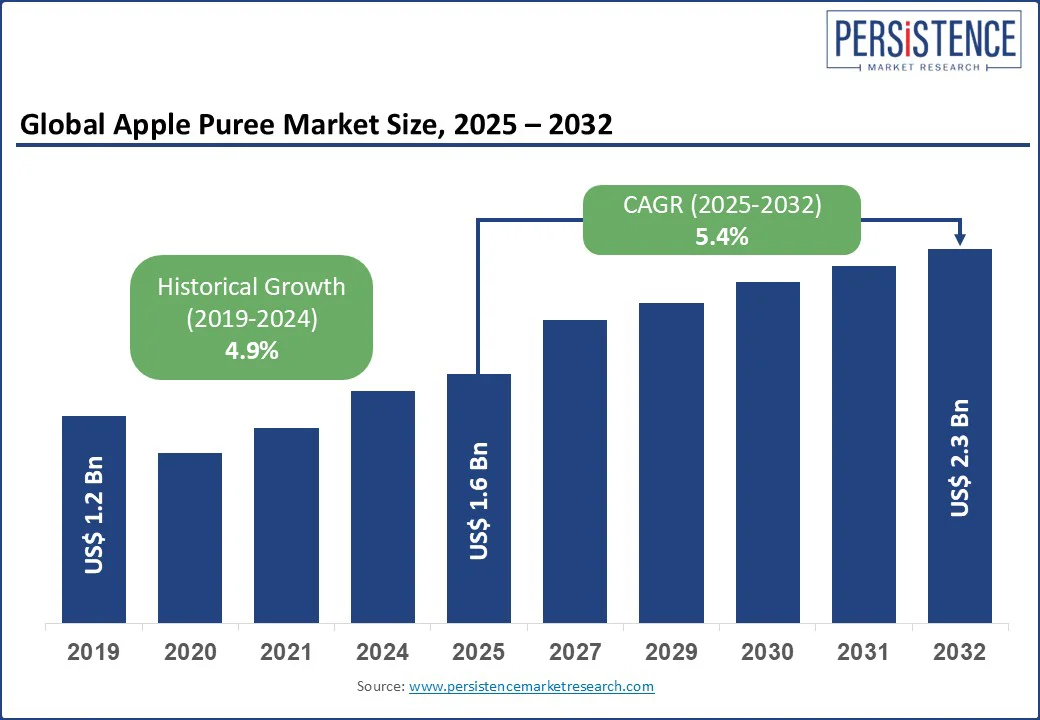
The global apple puree market is likely to value at US$ 1.6 Bn in 2025 and is expected to reach US$ 2.3 Bn by 2032, registering a CAGR of 5.4% during the forecast period 2025 - 2032.
The market growth is driven by rising consumer demand for healthy, natural, and versatile food ingredients, particularly in baby food, beverages, and bakery applications. Apple puree, valued for its nutritional benefits, natural sweetness, and adaptability, is gaining traction across various industries.
The sector is propelled by increasing health consciousness, the expansion of the organic food market, and the growing popularity of clean-label products that align with consumer preferences for minimally processed foods.
Key Industry Highlights:
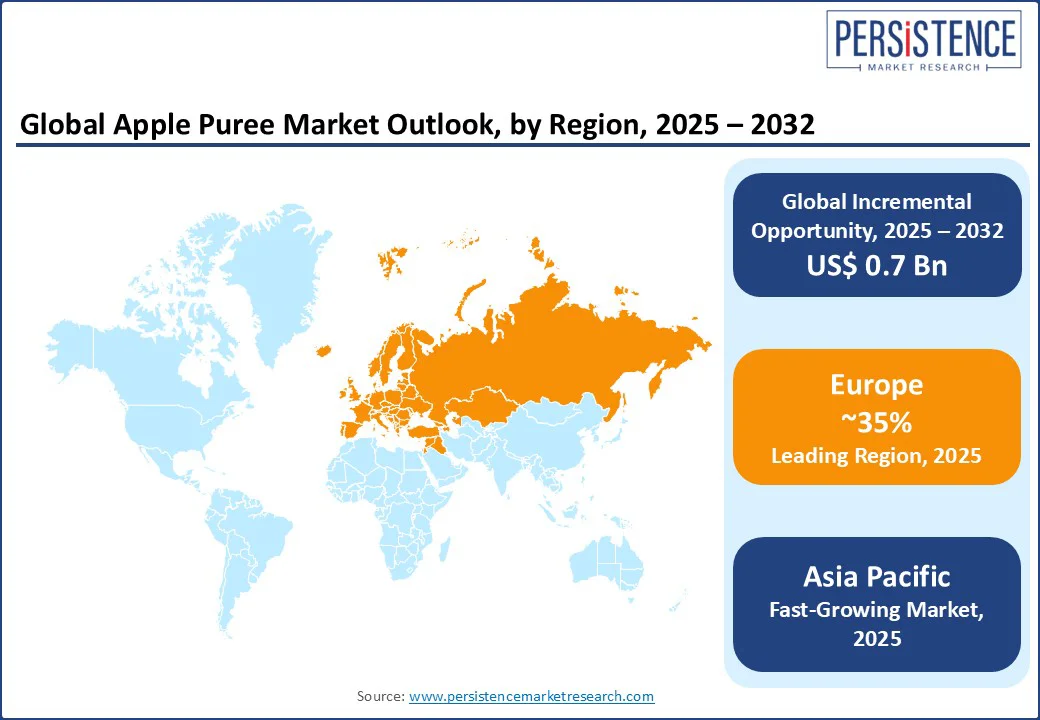
- Leading Region: Europe held the largest revenue with over 35% of total sales. This is mainly because people there buy a lot of organic and baby food products, the region has advanced food processing facilities, and countries such as Germany, France, and Poland grow and produce large amounts of apples.
- Fastest-growing Region: Asia Pacific, fueled by rapid urbanization, rising disposable incomes, and growing awareness of healthy eating habits.
- Dominant Product Type: Organic apple puree, commanding significant market share, reflecting consumer preference for natural and chemical-free products.
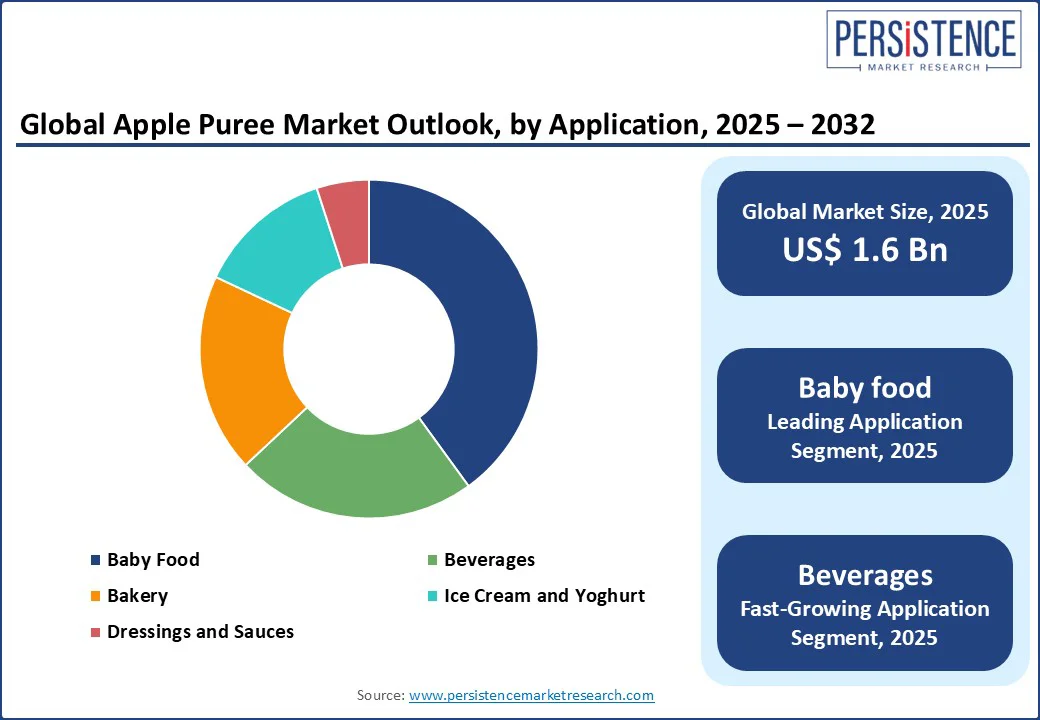
- Leading Application: Baby food, accounting for over 40% Share, driven by the demand for nutritious and safe infant nutrition.
- Historical Growth: The sector registered a CAGR of 4.9% from 2019 to 2024, driven by increasing demand for healthy and food ingredients.
|
Global Market Attribute |
Key Insights |
|
Apple Puree Market Size (2025E) |
US$ 1.6 Bn |
|
Market Value Forecast (2032F) |
US$ 2.3 Bn |
|
Projected Growth (CAGR 2025 to 2032) |
5.4% |
|
Historical Market Growth (CAGR 2019 to 2024) |
4.9% |
Market Dynamics
Driver- Surge in Demand for Organic and Clean-Label Products
The surge in demand for organic and clean-label products is a major driver for the apple puree market. Consumers are increasingly seeking food items made from natural ingredients, free from synthetic additives, pesticides, and artificial preservatives. This trend is particularly strong among health-conscious individuals and parents looking for safe, nutritious options for children. Organic apple puree aligns perfectly with these preferences, offering a product that is both wholesome and environmentally sustainable. Clean-label initiatives also boost transparency, as brands display ingredient origins and production methods, building consumer trust. The rising awareness of the health benefits associated with organic produce, combined with expanding retail availability through supermarkets, specialty stores, and online platforms, has fueled adoption.
For instance, in 2023, Materne North America expanded its GoGo squeeZ organic apple puree range, emphasizing 100% natural ingredients and no added sugar, to meet growing consumer demand in the U.S. As a result, demand continues to grow across baby food, bakery, beverage, and snack applications worldwide.
Restraint: Fluctuating Raw Material Prices
Fluctuating raw material prices pose a significant restraint on the apple puree market. Apple production is highly dependent on climatic conditions, with factors such as droughts, excessive rainfall, frost, and pests impacting yield and quality. Such variations often lead to inconsistent supply, directly influencing prices. Rising costs of fertilizers, labor, transportation, and energy contribute to market volatility. International trade dynamics, including tariffs and export restrictions in major apple-producing countries, can further drive-up raw material costs. For instance, in 2023, poor harvests in Europe due to late spring frosts caused apple prices to spike, impacting puree manufacturers’ input costs. These price fluctuations create challenges for manufacturers in maintaining stable profit margins and pricing strategies, especially for large-scale processors and exporters. The unpredictability also affects long-term contracts with retailers and foodservice providers, potentially slowing market growth and discouraging smaller producers from scaling up operations.
Opportunity: Advancements in Sustainable Processing Technologies
Advancements in sustainable processing technologies present a significant opportunity for the apple puree market. Modern innovations, such as energy-efficient pasteurization, water recycling systems, and advanced waste-to-energy solutions, are enabling manufacturers to reduce their environmental footprint while maintaining high product quality.
These technologies not only lower production costs through resource optimization but also align with growing consumer demand for eco-friendly and ethically produced food products. For instance, some processing facilities are now utilizing solar-powered operations and biodegradable packaging to enhance sustainability credentials. Improved cold chain logistics help minimize spoilage and extend shelf life, further reducing waste.
For instance, companies such as Döhler and AGRANA have implemented eco-friendly production lines with renewable energy integration, significantly reducing carbon emissions. As regulatory bodies and retailers increasingly favor suppliers with strong sustainability practices, such adopters can gain a competitive edge, expand into premium markets, and strengthen brand loyalty among environmentally conscious consumers.
Category-wise Analysis
Product Type Insights
Organic apple puree is dominant and is expected to account for the market share in 2025. Its dominance is driven by increasing consumer demand for natural, chemical-free, and sustainably produced food products.
Organic apple puree is widely used in baby food, beverages, and bakery applications due to its high nutritional value and alignment with clean-label trends. Certifications such as USDA Organic and EU Organic enhance consumer trust, driving their widespread adoption. Its compatibility with various applications and ability to meet stringent regulatory standards further solidify its market position.
The conventional apple puree segment is the fastest-growing from 2025 to 2032, driven by its cost-effectiveness and widespread availability. Conventional apple puree is extensively used in large-scale food production, particularly in emerging markets where price sensitivity is high. Advancements in processing technologies have reduced production costs, making conventional apple puree a viable option for mass-market applications such as beverages and sauces. The growing demand for affordable, high-quality food ingredients in developing economies is accelerating the adoption of conventional apple puree.
Application Insights
The baby food segment leads the apple puree market, holding a 40% share in 2025. Its dominance is driven by the increasing demand for nutritious, safe, and natural infant nutrition. Apple puree’s high fiber content, natural sweetness, and digestibility make it a preferred ingredient in baby food formulations. Major brands such as Nestlé and Earth’s Best rely heavily on apple puree to meet consumer demand for organic and clean-label baby food products. The global rise in birth rates and growing parental awareness of healthy nutrition further bolster this segment’s growth.
The beverages segment is the fastest-growing, fueled by the rising popularity of fruit-based smoothies, juices, and functional drinks. Apple puree’s natural sweetness and versatility make it an ideal ingredient for beverage manufacturers aiming to reduce added sugars while maintaining flavor. The growing trend of health-focused beverages, particularly in urban markets, is driving demand for apple puree in this segment. Innovations such as high-pressure processing enhance the shelf life and quality of apple puree-based beverages, further accelerating adoption.
Regional Insights
North America Apple Puree Market Trends
North America remains one of the major markets for apple puree, driven by a combination of high consumer awareness, strong purchasing power, and a well-established food and beverage infrastructure. Consumers in the region, particularly in the U.S. and Canada, are increasingly prioritizing healthy eating habits and choosing products made with natural and organic ingredients. This trend is reinforced by the rising popularity of clean-label and non-GMO products, especially in categories such as baby food, snacks, and beverages.
The U.S., in particular, demonstrates strong demand for organic and preservative-free apple puree, fueled by both health-conscious families and the growing plant-based food movement. Moreover, the region benefits from advanced processing technologies, efficient supply chains, and widespread retail availability, including supermarkets, specialty stores, and e-commerce channels. These factors collectively strengthen North America’s position as a key consumer and innovator in the global apple puree market.
Europe Apple Puree Market Trends
Europe held the largest revenue share in the global apple puree market, accounting for over 35% of total sales. This dominance is driven by the region’s strong consumer preference for organic and natural food products, particularly in segments such as baby food, where safety and nutrition are top priorities. European consumers are highly health-conscious and willing to pay a premium for high-quality, chemical-free options.
The region also benefits from advanced food processing facilities, enabling efficient production and maintaining stringent quality standards. Additionally, countries such as Germany, France, and Poland are major apple producers, ensuring a steady supply of raw materials for puree manufacturing.
The presence of established brands and robust distribution networks further strengthens the industry. Furthermore, strict EU regulations promoting food safety, sustainability, and traceability encourage the growth of premium apple puree products, making Europe both a production and consumption hub for the global market.
Asia Pacific Apple Puree Market Trends
Asia Pacific is emerging as one of the fastest-growing regions in the apple puree market, fueled by rapid urbanization, rising disposable incomes, and increasing awareness of healthy eating habits. As more people in countries such as China, India, Japan, and Australia move to urban areas, their access to packaged and processed food products has expanded significantly.
This shift, combined with higher spending power, is driving demand for convenient, nutritious, and premium food options such as apple puree. Growing awareness of health and wellness, supported by government initiatives promoting balanced diets, has led to greater interest in natural, organic, and preservative-free products. The expansion of modern retail formats and the rapid growth of e-commerce platforms have improved product availability across urban and semi-urban markets. With a young, health-conscious population and increasing adoption of Western-style diets, the Asia Pacific offers immense potential for sustained market growth.
Competitive Landscape
The global apple puree market is characterized by strong competition, regional strengths, and a mix of global and local manufacturers. In developed regions such as North America and Europe, large firms such as Nestlé, The Kraft Heinz Company, and Tree Top dominate through scale, advanced processing technologies, and established partnerships with baby food and beverage brands.
In the Asia Pacific, rapid urbanization and growing demand for healthy food products are attracting investments from both local and international players. Companies are focusing on sustainability, cost-efficiency, and product innovation to gain a competitive edge. The adoption of advanced processing technologies, such as high-pressure processing and cold-pressing, has emerged as a key differentiator, enabling high-quality production and extended shelf life.
Key Developments
- In May 2023, Tree Top completed significant upgrades at its Prosser, Washington, facility, now a state-of-the-art puree production site. With enhanced processing lines for apples, pears, berries, and stone fruits, the facility adds 650 tons/day capacity for apples and pears and is certified organic, Kosher, and SQF.
- In August 2023, Döhler acquired Bangkok-based flavor manufacturer Boon Flavors, boosting its global ingredient portfolio and reach in natural fruit ingredients.
Companies Covered in Apple Puree Market
- Tree Top
- Nestlé
- The Kraft Heinz Company
- Döhler
- Earth’s Best
- Ariza
- Hiltfields
- Jain Irrigation Systems
- SAS SICA SICODIS
- Others
Frequently Asked Questions
The global apple puree market is projected to reach US$ 1.6 Bn in 2025.
The surge in demand for organic and clean-label products is a key driver.
The Apple Puree market is poised to witness a CAGR of 5.4% from 2025 to 2032.
Advancements in sustainable processing technologies are a key opportunity.
Tree Top, Nestlé, The Kraft Heinz Company, Döhler, and Earth’s Best are key players.


